
Rating:
⭐⭐⭐⭐ (4.2 out of 5)
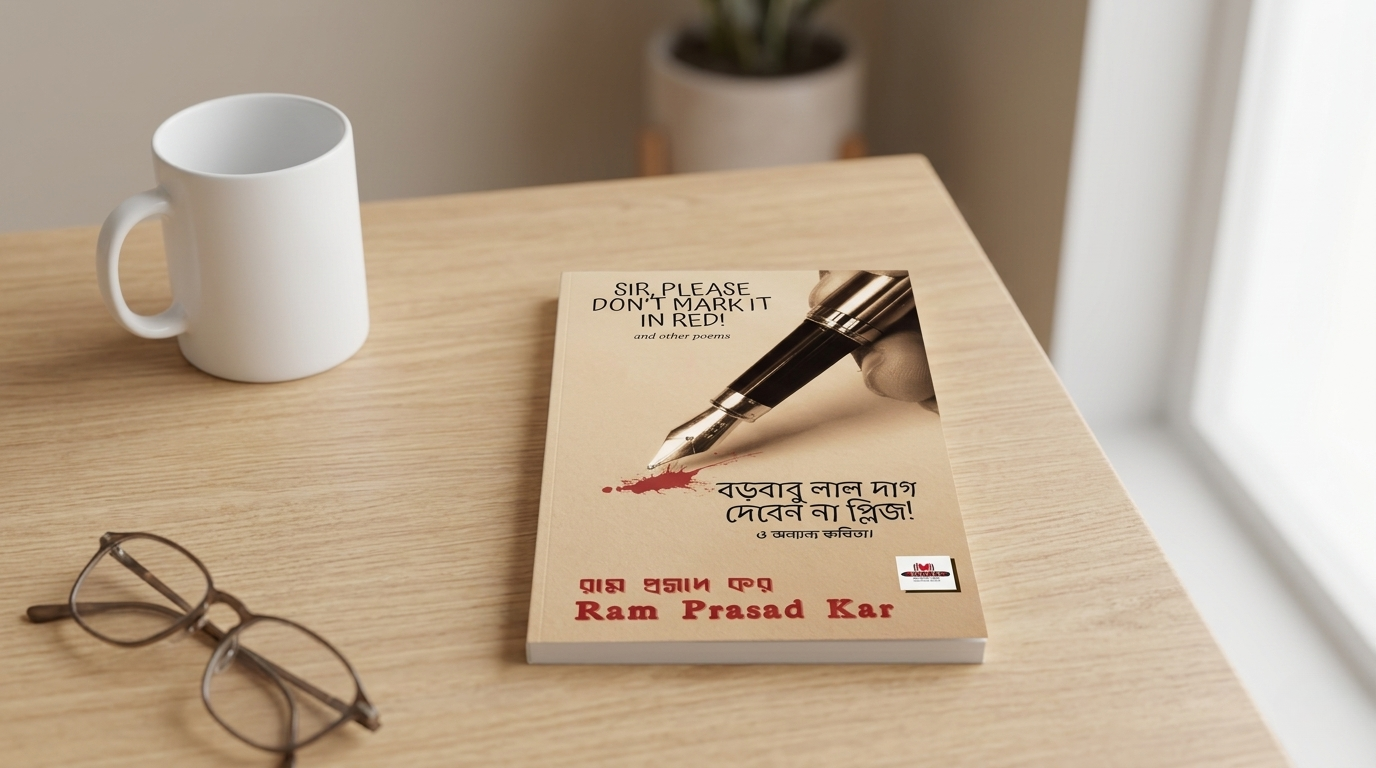
I don’t know why, but the title Boro Babu Dag Deben Na Please stayed with me longer than I expected. Maybe it’s that very specific plea. “Don’t mark it in red.” It instantly took me back to school days, those answer sheets with red ink everywhere, that small sinking feeling in the chest.
But when I started going through the poems by Ram Prasad Kar, I realized this isn’t really about exams at all. Or maybe it is, just not the kind we prepare for. It feels more like life being evaluated constantly, silently, harshly.
In my years at Deified Publication, I’ve read a lot of poetry collections. Some feel distant. Some feel decorative. This one… I think it tries to sit right next to you. Sometimes a little uncomfortably close.
And honestly, I liked that.
What the Book Is About
At its core, Boro Babu Dag Deben Na Please is a collection of poems that speak from the perspective of an ordinary person trying to survive, understand, and question the world around him.
The poems move between personal and social spaces without warning. One moment you are inside a cramped urban home where someone is juggling responsibilities and quietly giving up pieces of themselves. The next moment, you are looking at the country, the system, the violence, the hypocrisy, and wondering what went wrong.
The title poem itself is quite telling. There’s this almost desperate tone. A person explaining everything they’ve sacrificed just to meet expectations, and then still asking not to be judged too harshly. That line about being afraid of the color red stayed with me. Not because of school, but because of how it starts to feel like a symbol of failure, guilt, even shame.
And then there are other poems like “The Reporter,” where the voice shifts into someone documenting the chaos of the world. Wars, hunger, political lies, everything feels overwhelming, yet the act of writing becomes a small resistance.
There are poems about motherhood, loss, poverty, and small acts of kindness that don’t really change anything, but still matter somehow.
It’s not one single story. It’s more like fragments of many lives stitched together.
What Stood Out to Me
I think what stayed with me the most is how grounded these poems feel. They are not trying to sound complicated or poetic in a showy way. The language, even in translation, carries this simplicity that makes the emotion come through clearly.
There’s a poem where the speaker talks about trying to do good things. Helping a domestic worker, giving money to a beggar, feeling emotional about someone else’s success. But then, at the end of it, all they do is buy a cheap necklace for Malati and move on.
I paused there.
Because I’ve seen that. I think we all have. That moment where we feel like we care deeply, but our actions don’t quite match the weight of our feelings.
Another thing is how the poems shift between personal guilt and societal anger. Like in the poem about violence and injustice, where the speaker questions whether we can still call ourselves civilized after what we allow to happen around us.
It doesn’t feel preachy though. It feels tired. And that makes it more real.
Also, the bilingual nature of the book adds an interesting layer. You can sense that some emotions belong more naturally to Bengali, and even when translated, they carry that cultural weight. It reminded me how language itself holds memory.
If I had to talk about craft, I would say the strength here is in observation rather than structure. These are not tightly engineered poems. They feel more like thoughts spilling out, sometimes uneven, sometimes repetitive, but often honest.
The Emotional Core
This is where the book hit me the most.
There’s a recurring feeling of quiet exhaustion. Not dramatic despair, not loud anger. Just… a kind of ongoing tiredness. Like people are trying, but the system, the expectations, even their own choices keep pulling them down.
One poem about returning to one’s ancestral home really stayed with me. The speaker walks through memories of a mother, a simple life, small joys, and then realizes that everything is gone. The roots they were searching for don’t exist anymore.
I don’t know why, but that made me think of how fast things are changing in 2026. Cities expanding, villages disappearing, people moving on. And somewhere in that process, something soft and important gets lost.
There’s also this underlying loneliness in many poems. Even when people are surrounded by family or society, they seem disconnected. Like they are performing roles but not really living them.
And then, occasionally, there are small flickers of hope. Not big, dramatic hope. Just moments. A child playing. A memory. A simple act of kindness.
It’s the kind of book that doesn’t try to fix anything. It just sits with you and says, “this is how it is.”
Who This Book Is For
I think this book will connect most with readers who enjoy poetry that feels close to everyday life.
If you like highly abstract poetry, this might feel too direct for you.
If you like clean, structured, perfectly polished poems, you might find this a bit uneven at times.
But if you’re someone who notices small human contradictions, who thinks about society but also about your own place in it, this might stay with you.
Also, readers who understand Bengali or are familiar with Indian social realities will probably feel an extra layer of connection here.
And I’ll be honest, this is not a light read. Not in the sense of difficulty, but emotionally. You might not want to read it in one sitting. It feels better in small pieces.
Final Thoughts
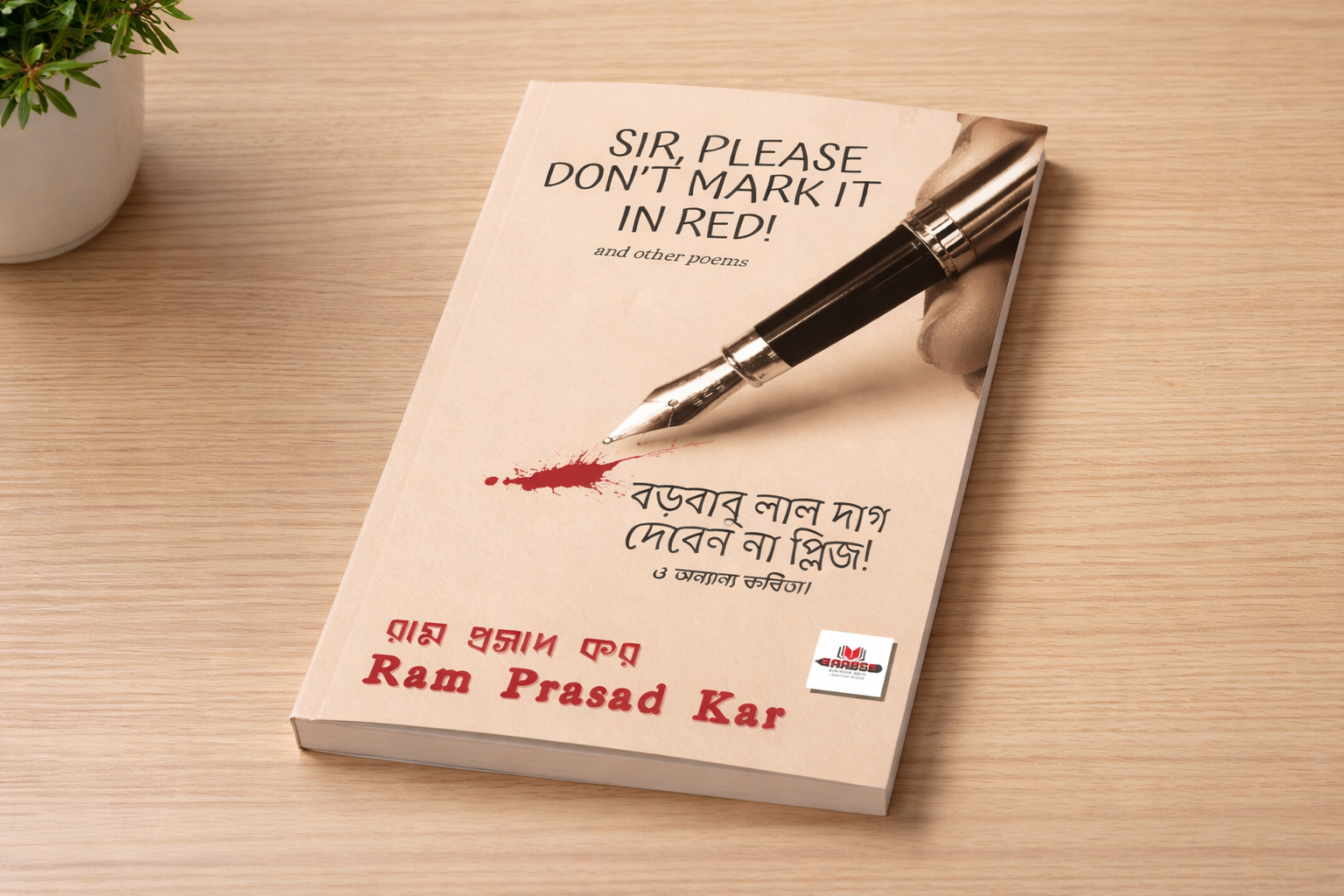
I keep coming back to that image of the red mark.
It feels like the whole book is built around that fear. The fear of being judged, of not being enough, of failing in ways that are both personal and societal.
Ram Prasad Kar doesn’t try to offer solutions here. And I think that’s intentional. These poems are more like reflections in a slightly cracked mirror. You see yourself, but not perfectly. And maybe that’s the point.
In all honesty, not every poem worked equally for me. Some felt a bit stretched, some repeated similar ideas. But then suddenly, there would be a line that hits you unexpectedly, and you pause.
And those moments make the book worth reading.
At Deified Publication, I’ve seen how difficult it is for a poet to balance honesty with readability. This book leans heavily toward honesty. And while that makes it a little rough in places, it also makes it feel real.
I think this is one of those collections that won’t shout for attention, but if you sit with it, it slowly starts speaking.
FAQs
Is Boro Babu Dag Deben Na Please worth reading?
I think yes, especially if you like poetry rooted in real life and social observation. It may not be perfect, but it feels honest.
What is Boro Babu Dag Deben Na Please about?
It is a collection of poems that reflect everyday struggles, social issues, personal guilt, and human contradictions.
Who should read this book?
Readers who enjoy grounded, emotional poetry and are interested in themes like society, identity, and personal reflection.
Is this book easy to read?
Yes in terms of language, but emotionally it can feel heavy at times.
With over 11 years of experience in the publishing industry, Priya Srivastava has become a trusted guide for hundreds of authors navigating the challenging path from manuscript to marketplace. As Editor-in-Chief of Deified Publications, she combines the precision of a publishing professional with the empathy of a mentor who truly understands the fears, hopes, and dreams of both first-time and seasoned writers.