
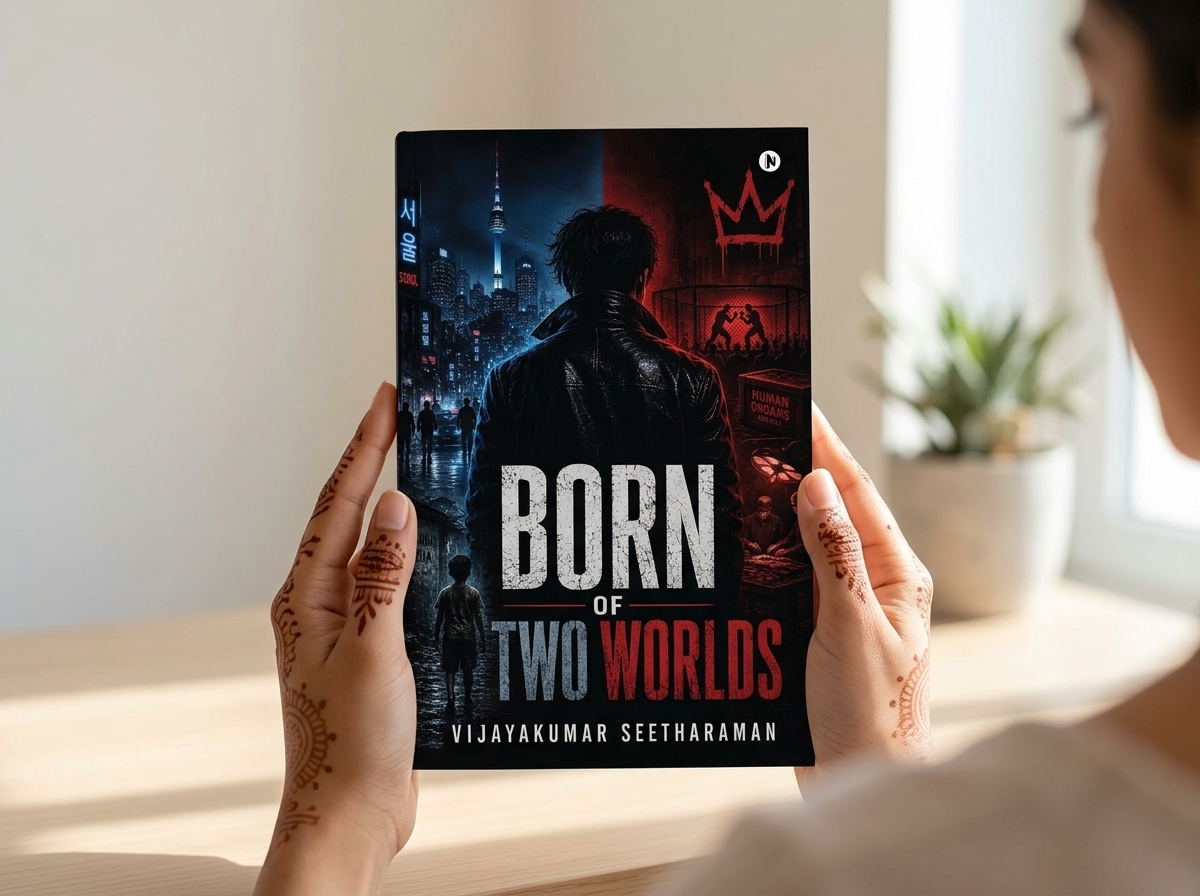
Rating: ⭐⭐⭐⭐ (4.2 out of 5)
I picked up Born of Two Worlds not knowing much beyond that unsettling line in the blurb, the one that asks what if the most dangerous man alive was once just a forgotten child. In my years reviewing books for Deified Publication, I have read enough thrillers to know that most of them promise darkness in the opening pages and then quietly soften by chapter three. This one does not do that. It opens with a phone call, a voice barely holding together, describing a gang fight inside a private medical facility in Seoul, and by the end of that same page the line has already gone dead. I remember finishing that first chapter and feeling my stomach tighten a little, the way it does when a book makes it clear early on that it is not going to hold your hand through what comes next.
Born of Two Worlds follows a man known only as V, a ghost figure at the center of a brutal gang war in Seoul that uncovers something far uglier than street violence, an underground operation running illegal organ trafficking and unlicensed fight clubs out of what looks, from the outside, like an ordinary medical building. Before he was V, he was Vetri, a boy stolen out of Chennai and raised inside years of fear and survival by people who were supposed to protect him and did not. Now he has come back, and everyone connected to his past is in danger. Around him, three police officers, Park Chang-Soo, Sung Min-Jun, and Vikh-Yaat, try to untangle two rival gangs called the Cross and the Crown, only to realize partway through that the man they are hunting is not actually the biggest threat in the room. Ra-Ni, caught in the middle of all this, has to face the possibility that the man she trusted the most is also the one who took everything from her.
What stood out to me first was how the author handles the discovery scene inside Dr. Lee’s facility. The officers split into teams, and there is this moment where one of them pushes open a hidden room and finds surgical tools, ice boxes, and a blood-stained operating bed sitting behind what looked like an ordinary private office. It is written without a single dramatic flourish, just a flat, procedural description of what the team finds, and somehow that restraint makes it land harder than if the author had reached for something more graphic. A few pages later, the death of the gang leader known as the Don is described with the same clinical distance, a katana through the chest, pinning him to the chair, and the narration simply notes that whoever did this was calm, skilled, and completely in control. I did not expect an execution scene to feel almost quiet in its precision, but that is exactly what happens here.
The second thing that stayed with me through the middle chapters was the reveal around Kim Jaa-Soos. There is a scene where a senior officer walks into the interrogation room and, without sitting down or explaining himself, simply orders that Kim be released immediately. The room goes still, nobody understands it, and then the truth comes out slowly that Kim was never just a criminal, he was a deep-cover operative who had spent years living as a gangster to gain trust from the inside. I have read enough crime fiction to know when a twist is being used just to shock the reader, and this one is not that. It is set up carefully in the pages before it, so when Officer Park realizes what it actually means, the realization feels earned rather than dropped on you.
I also want to mention the chapter where V returns to Chennai. After everything that happens in Seoul, he leaves with no announcement and no trace, and the author drops us straight into Chennai Port at two in the morning, into the heat and the noise of auto drivers calling out destinations, T. Nagar, Besant Nagar, Anna Nagar, layered over each other. There is a small, almost throwaway moment where an auto driver recognizes a movie poster and mentions being a fan, completely unaware of who is sitting behind him, and V barely responds. It is such a small human detail, and it does a lot of work, because you realize this chaos that feels so alive to the driver means nothing to V. To him this is not home yet, even though his memory has not let go of it. That contrast between a boy who once belonged here and a man who now walks through it like it does not exist is one of the more effective pieces of characterization in the book.
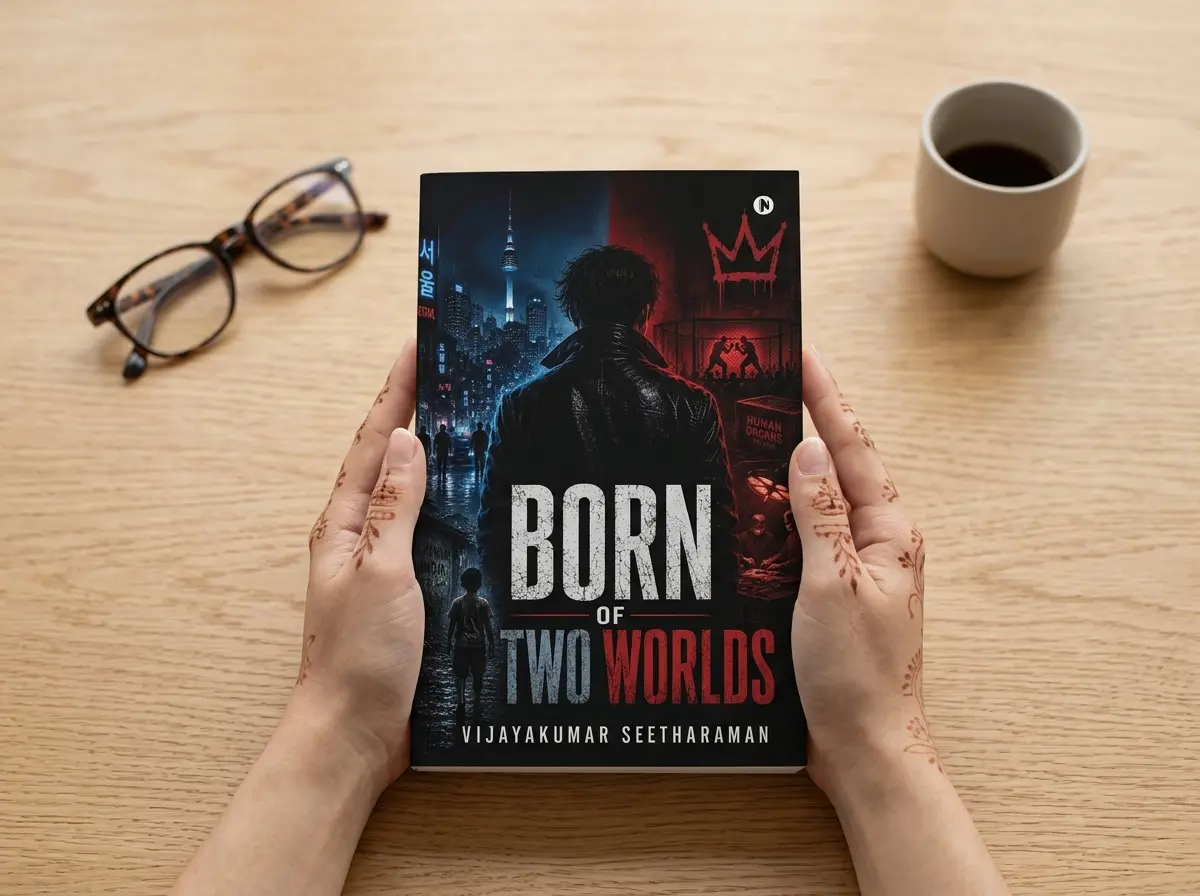
Structurally, the author does something I have not seen often in this genre, which is give the story two different endings, labeled the Black End and the White End, both built around a chess code that runs through the whole final arc. Messages like “the knight is unpredictable” or “I got the queen, name Ra-Ni” turn out to be coded communication for a manipulation game being run against the people closest to V, and once you realize Vikh-Yaat has been playing both sides using Ra-Ni, that earlier phrase takes on a completely different weight. His confession near the end, that everyone needs someone to feel alive, something to escape reality even if only for a moment, is one of the more honest pieces of dialogue in the book, because it does not try to make him sympathetic, it just tries to make him understandable.
Emotionally, this is not a comfortable book, and I do not think it wants to be. Ra-Ni’s arc is the one that hit me the hardest, particularly a scene where she is asked to help find evidence against someone she has protected for years, and you can feel her trying to hold two conflicting truths in her hands at once. Later, in the prison visitation scene, when she finally asks Vikh-Yaat why, and he answers that he was trying to protect her from the game, it does not resolve anything neatly. It just sits there as one more lie layered on top of everything else. If you go into this book expecting a clean sense of justice at the end, I think you should adjust that expectation now, because Born of Two Worlds is far more interested in showing you how people convince themselves their manipulation was actually protection.
Who is this book for. If you like dark, psychologically driven thrillers where the line between the hunter and the hunted keeps shifting, and where the villain’s logic is given enough room that you almost, almost, understand it, this will work for you. If you enjoy crime fiction that moves between two countries and cultures without treating either one as scenery, the Seoul and Chennai sections both feel specific and lived in, you will likely appreciate that too. This is probably not the book for readers who want a straightforward procedural with a satisfying, uncomplicated ending, since the dual-ending structure is deliberately unresolved by design.
My honest critique, and I think it is a fair one, is that the prose style leans heavily on short, clipped lines during the high-tension sequences, and while this creates a real sense of urgency in scenes like the underground raid, it occasionally means you have to slow down and reread a passage to keep track of who is speaking or what just happened. It is a stylistic choice more than a flaw exactly, but readers who prefer longer, more traditional narrative paragraphs throughout might find a few stretches of the book take some adjusting to.
In 2026, with organized crime and trafficking stories getting more attention in true crime media, a book that treats these themes with this much narrative care, rather than using them purely for shock value, feels genuinely timely. Born of Two Worlds is not a light read, and it does not try to be, but if you want a thriller that commits fully to its darker premise and follows through on it, this delivers.
FAQs
Is Born of Two Worlds worth reading?
If you enjoy dark, morally complicated crime thrillers with a strong sense of place, yes. It is not a gentle book, and it does not soften its subject matter, but it earns its intensity rather than relying on shock alone.
Who should read this book?
Readers who like psychological thrillers, dual narratives, and stories that move between different countries and cultures will get the most out of it. Fans of Vijayakumar Seetharaman’s approach to morally grey characters will find plenty here.
What is Born of Two Worlds about?
It follows a man known as V, once a stolen child from Chennai, whose return to Seoul unravels a gang war connected to organ trafficking, underground fight clubs, and a group of police officers who realize the real danger is a manipulation game playing out around them.
Does the book have a satisfying ending?
It has two, a Black End and a White End, built around a running chess code motif. Readers looking for one clean resolution should know upfront that ambiguity is part of the design here.
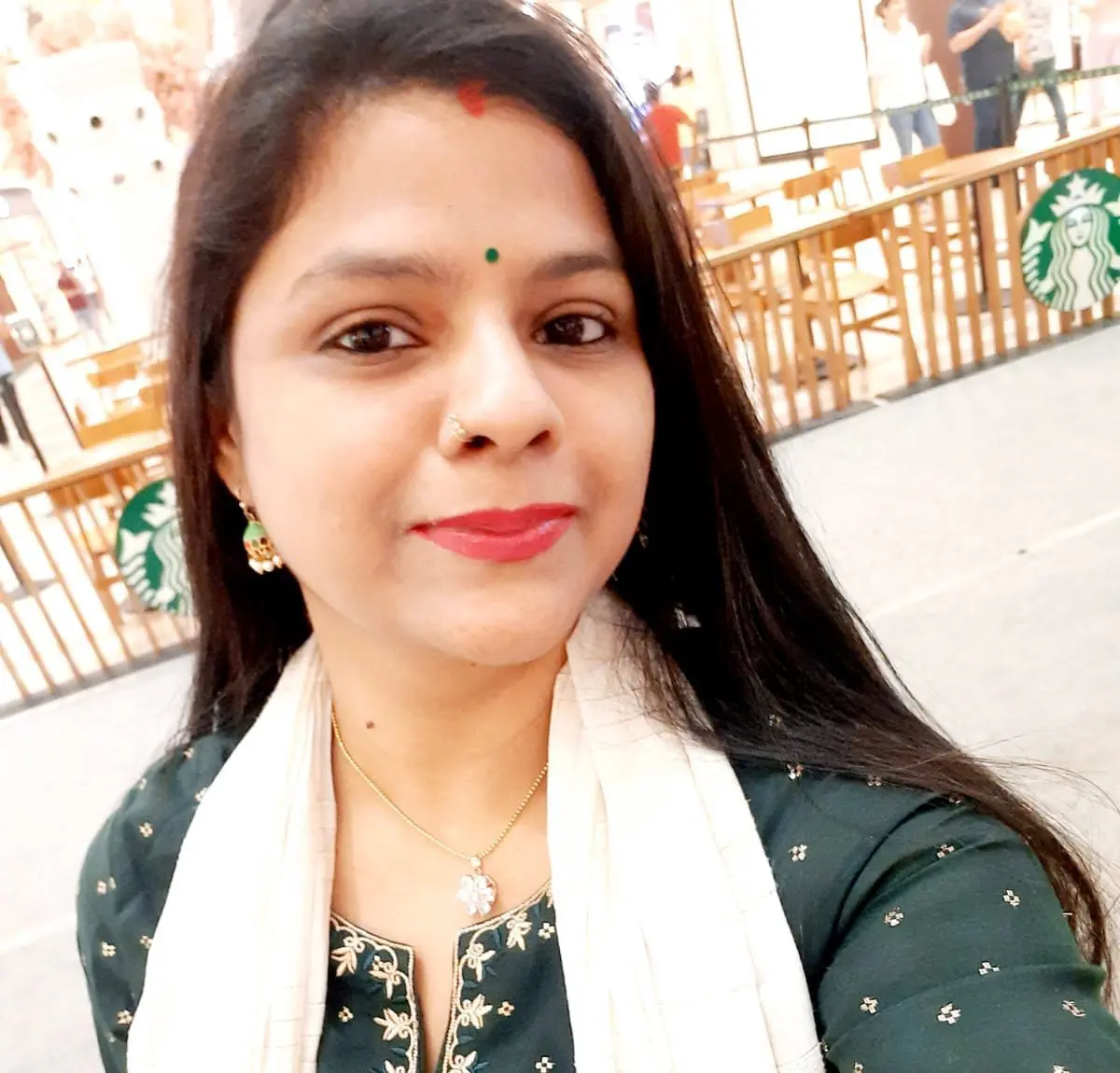
With over 11 years of experience in the publishing industry, Priya Srivastava has become a trusted guide for hundreds of authors navigating the challenging path from manuscript to marketplace. As Editor-in-Chief of Deified Publications, she combines the precision of a publishing professional with the empathy of a mentor who truly understands the fears, hopes, and dreams of both first-time and seasoned writers.