
Rating
⭐⭐⭐⭐ (4.3 out of 5)
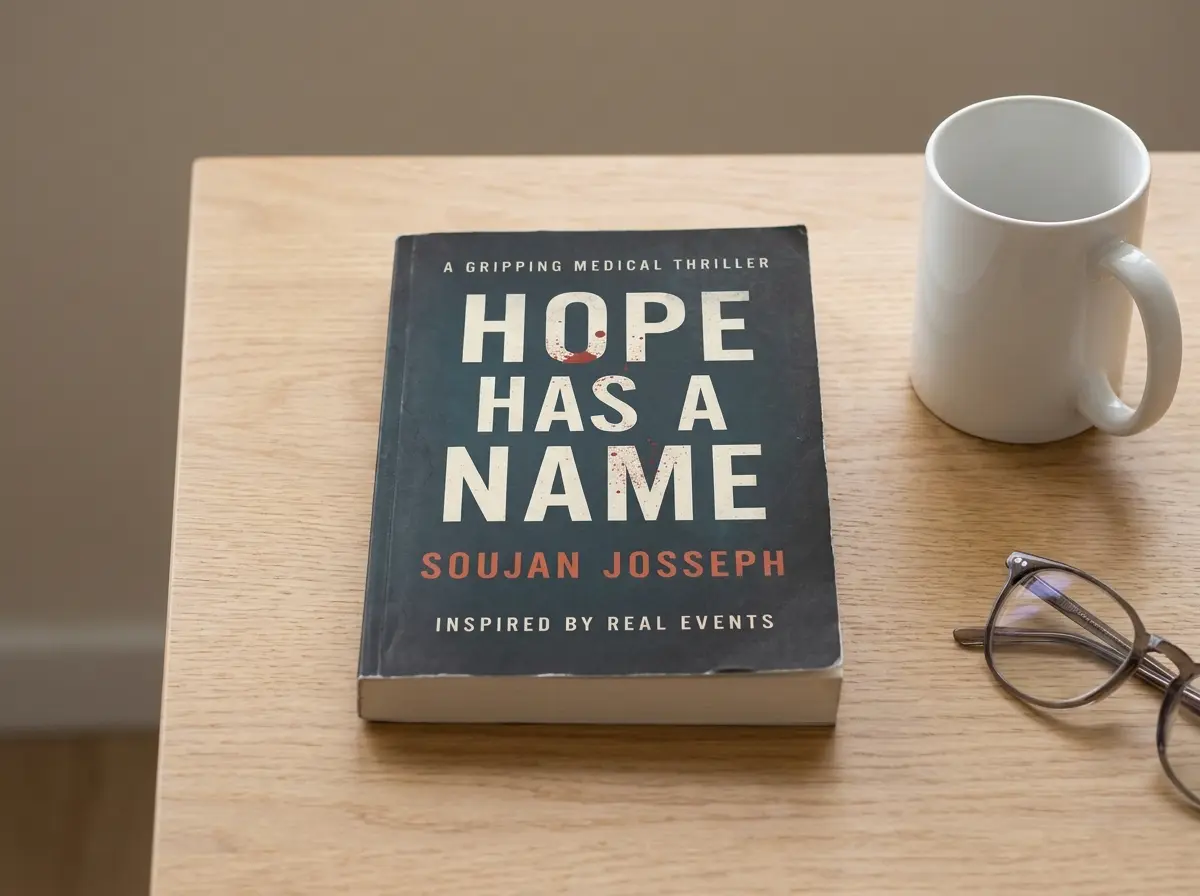
As someone who has spent more than fifteen years reading and reviewing books, very few novels manage to make me forget that I’m reading fiction. Most thrillers entertain me, some surprise me, and a handful leave me thinking about their characters for a long time. Hope Has a Name by Soujan Josseph belongs in that last category, although not for the reasons I expected.
When I first picked up this novel, I assumed I was getting another conspiracy driven medical thriller. There are plenty of books that promise hidden scandals inside hospitals, corrupt officials, and brave whistleblowers. Many of them begin with energy but lose their emotional balance somewhere in the middle. What surprised me here was that beneath all the investigations, media storms, leaked files, and political pressure, the story never forgets that every statistic represents a family whose life has been shattered.
As Editor in Chief at Deified Publication, I read manuscripts from many genres throughout the year. One thing I have learned is that suspense alone rarely carries a novel. Readers remember people before they remember plot twists. That is exactly where Hope Has a Name succeeds. The investigation matters because Arjun matters. His fight against corruption has roots that reach back into his childhood, and once you understand why he became a doctor, his decisions begin to make complete emotional sense.
I also appreciated that the novel does not present corruption as something created by one villain. Instead, it paints a larger picture where hospitals, administrators, politicians, influential businessmen, and people afraid of losing their careers all become pieces of the same machine. That perspective made the story feel more believable than many thrillers I’ve read in recent years.
What the Book Is About
At its heart, Hope Has a Name is a medical thriller built around organ trafficking, hospital corruption, manipulated medical records, and the frightening consequences of telling the truth.
The story follows Arjun, a young doctor whose life has been shaped by personal tragedy long before he steps into the world of modern medicine. His childhood is marked by poverty and loss. One of the earliest chapters describes his mother’s desperate struggle to receive treatment at a government hospital because the family cannot afford private healthcare. That sequence immediately explains why medicine becomes more than a profession for him. It becomes a promise.
Years later, that promise begins to crack.
While working inside a prestigious medical institution, Arjun discovers irregularities that seem impossible to ignore. Files are locked. Consent records disappear. Patients declared brain dead appear in suspicious circumstances. Administrative overrides replace proper medical procedure. At first these look like isolated incidents. Gradually they reveal something much darker.
One scene that genuinely caught my attention involves Meera secretly handing Arjun a flash drive hidden inside a metal tiffin box. Instead of dramatic speeches, the tension comes from how ordinary the moment feels. Inside that encrypted drive are reports, schedules, donor information, confidential documents, and screenshots suggesting that illegal transplant operations have been hidden behind official paperwork. It reminded me that some of the most frightening discoveries in fiction happen in ordinary places rather than dramatic laboratories or secret underground bunkers.
From there, the story grows steadily larger. What begins as one doctor’s search for answers becomes a nationwide movement involving nurses, junior doctors, whistleblowers, journalists, lawyers, and eventually ordinary citizens. Hospitals become battlefields of information rather than weapons. The conflict is not simply between good and evil. It becomes a fight between truth and institutions determined to protect themselves.
Without giving away every major development, I can say that the novel expands naturally from personal tragedy into a larger social confrontation. By the time Parliament becomes involved and public confessions begin shaking the medical establishment, the story has earned that scale because the emotional groundwork was laid much earlier.
What Stood Out to Me
The first thing that impressed me was the structure. Soujan Josseph keeps introducing new developments at moments that feel earned rather than forced. Every revelation builds on something introduced earlier. Information doesn’t simply appear to move the story forward. It usually arrives through characters who have something to lose.
For example, there is a chapter where anonymous messages begin arriving from doctors and nurses across different cities. One message comes from a nurse in Delhi. Another comes from doctors in Chennai and Assam. A mother pleads for help after her husband is arrested for exposing transplant database irregularities. Instead of repeating the same emotional note, each new testimony widens the scale of the conspiracy while reminding readers that many people have been carrying similar fears in isolation.
I also liked the way media is portrayed throughout the novel. Television debates, international news coverage, political reactions, and public demonstrations become active forces inside the narrative instead of background decoration. Once evidence begins spreading, the story changes from an individual investigation into something much bigger. That transformation feels believable because it grows through accumulated voices rather than a single heroic speech.
Another moment I found particularly effective comes during the creation of “Project Antidote.” Arjun and his growing network stop thinking like isolated survivors and begin acting like investigators. They divide responsibilities, document illegal transplants, connect patient records with donor charts, identify political connections, and organize evidence systematically. I enjoyed this section because it shows intelligence instead of relying only on dramatic confrontations. Good thrillers often reward careful thinking, and this novel understands that.
The parliamentary confession is another high point. Rather than resolving everything through violence or revenge, the story places truth at the center. Watching a former healthcare architect publicly admit decades of manipulated policies, forged consent documents, and institutional failures carries far more weight than another action sequence would have.
The author’s decision to include ordinary healthcare workers also deserves appreciation. Doctors receive attention, but nurses, technicians, ambulance drivers, junior residents, and families all contribute to the movement. That broad perspective prevents the novel from becoming a story about one extraordinary individual saving everyone else.
If I have one small criticism, it is that the pace occasionally becomes almost too relentless. There are moments where new revelations, media reactions, political developments, and whistleblower testimonies arrive one after another without giving readers much breathing space. Personally, I would have enjoyed a few additional chapters allowing Arjun and Meera’s relationship to develop further between these major events. Their partnership has emotional potential that could have been explored even more deeply.
That said, the momentum rarely becomes confusing. The story always knows where it is heading.
The Emotional Core
The strongest part of Hope Has a Name isn’t actually the conspiracy. It’s grief.
Everything Arjun does connects back to his mother’s death outside a hospital that could have helped her. That memory never disappears from the novel. Even after encrypted servers, leaked databases, political cover ups, and nationwide protests enter the picture, the story keeps returning to the simple human question that started everything.
What happens when healthcare becomes something only the powerful can fully access?
I found myself thinking about the early chapters more than the spectacular ones. There is something deeply heartbreaking about Arjun entering medical college wearing borrowed shoes after his family sacrifices almost everything for his education. His mother’s earrings are sold. His father takes on debt. They believe medicine will allow him to change lives. That dream gives the later discoveries enormous emotional weight.
Another sequence that affected me involved the growing network of whistleblowers. Watching doctors from different cities finally decide that they can no longer remain silent creates hope without becoming sentimental. Nobody suddenly becomes fearless. People simply reach a point where fear no longer feels acceptable.
The final chapters continue carrying that emotional thread. Public confession, nationwide protests, and institutional accountability certainly provide dramatic satisfaction, but I think the ending succeeds because it remembers ordinary people. Families. Patients. Nurses. Medical students. People who entered healthcare wanting to heal instead of participate in corruption.
Reading this in 2026 also feels particularly meaningful. Across the world, conversations around ethics, healthcare transparency, patient rights, and institutional accountability continue growing. Because of that, this novel feels connected to discussions many readers are already having outside fiction.
Who This Book Is For
If you enjoy fast moving medical thrillers that combine investigation with social commentary, I think Hope Has a Name deserves your attention. Readers who appreciate books where institutions become as important as individual villains will probably connect with this story.
I would especially recommend it to readers interested in medical ethics, healthcare systems, legal investigations, journalism, and political thrillers. It also works well for people who enjoy stories where ordinary professionals become unexpected heroes through persistence rather than extraordinary abilities.
On the other hand, readers looking for a light weekend escape may find parts of the novel emotionally demanding. The story discusses organ trafficking, hospital negligence, corruption, death, and institutional abuse. None of these subjects are handled casually, but they can still be difficult depending on your reading preferences.
Final Thoughts
When someone asks me, “Is Hope Has a Name worth reading?” my answer is yes, but probably not for the reason they expect.
Yes, there are secrets, investigations, encrypted files, corrupt officials, media battles, and courtroom level revelations. Those elements keep the story moving. What makes the novel memorable, though, is its belief that truth only becomes meaningful when ordinary people decide it is worth protecting.
Soujan Josseph has written a story that combines suspense with genuine emotion. I appreciated that the novel refuses easy victories. Success comes through persistence, sacrifice, documentation, courage, and collective action rather than one miraculous breakthrough. That approach made the ending feel earned.
Not every section moves at exactly the same rhythm, and I would have welcomed a little more time spent developing a few personal relationships before the story reached its largest confrontations. Even so, those are relatively small observations in a novel that succeeds on far more levels than it misses.
I closed the book thinking less about the conspiracy and more about Arjun himself. Somewhere between a frightened medical student carrying borrowed dreams and a doctor willing to challenge powerful institutions, he becomes someone readers can genuinely believe in. That transformation is what gives Hope Has a Name its heart.
For me, that is what separates a good thriller from one people continue recommending years later.
FAQs
Is Hope Has a Name worth reading?
Yes. If you enjoy medical thrillers grounded in realistic ethical dilemmas rather than exaggerated action, this novel offers an engaging mix of suspense, emotion, and social relevance.
Who should read Hope Has a Name by Soujan Josseph?
Readers who enjoy medical fiction, investigative thrillers, healthcare based stories, political conspiracies, and novels centered on whistleblowers will likely appreciate this book.
Is Hope Has a Name only about organ trafficking?
No. While illegal organ transplantation forms the central investigation, the novel also focuses on family sacrifice, medical ethics, corruption, patient rights, journalism, and the personal cost of exposing institutional wrongdoing.
Does the novel rely more on action or emotion?
It balances both, but I think its emotional foundation is stronger than its action. Arjun’s personal history and the growing community of healthcare workers fighting for accountability give the story much of its impact.

With over 11 years of experience in the publishing industry, Priya Srivastava has become a trusted guide for hundreds of authors navigating the challenging path from manuscript to marketplace. As Editor-in-Chief of Deified Publications, she combines the precision of a publishing professional with the empathy of a mentor who truly understands the fears, hopes, and dreams of both first-time and seasoned writers.