
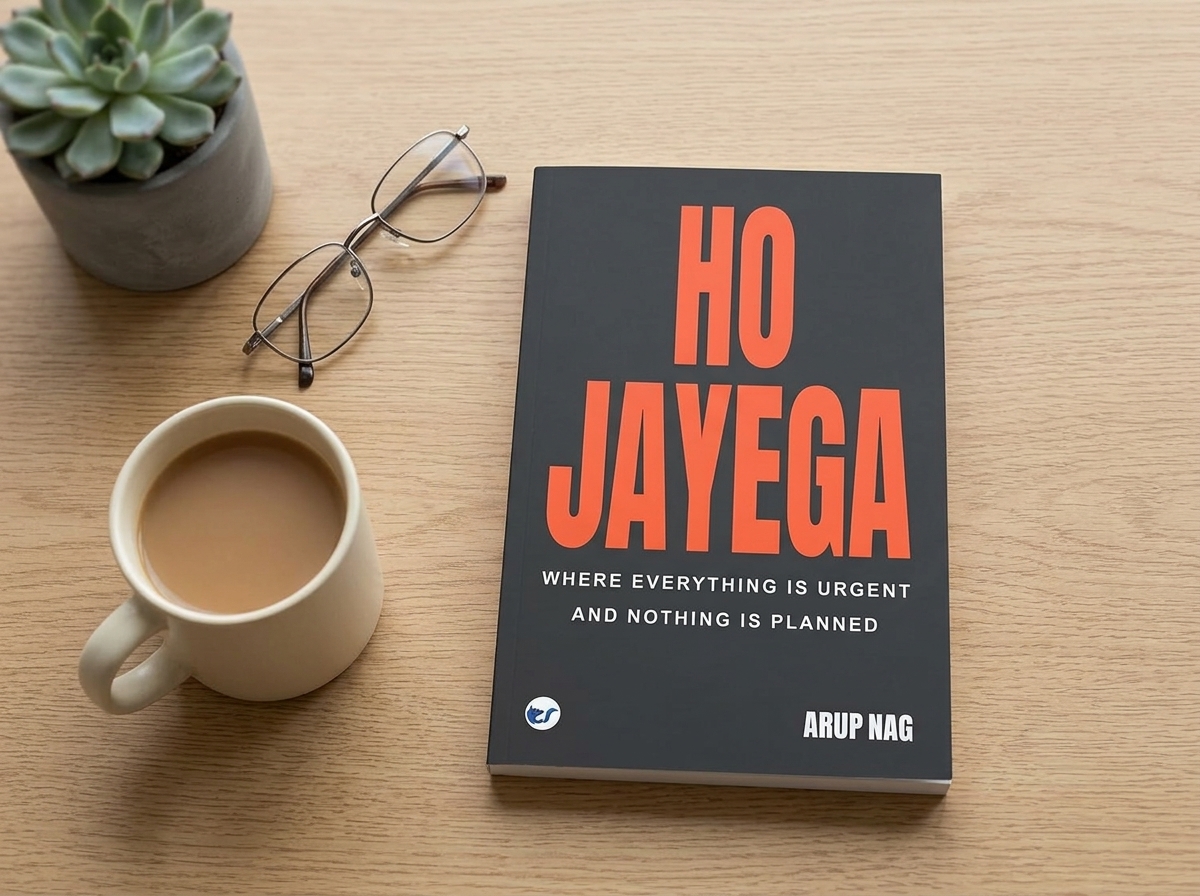
Rating:
⭐⭐⭐⭐ (4.4 out of 5)
As someone who has spent more than fifteen years reading and reviewing books across genres, I rarely come across a workplace book that makes me laugh, cringe, nod in agreement, and reflect on human nature all at the same time. Most corporate books fall into one of two categories. They either try to teach you how to become successful, or they try to convince you that every challenge can be solved with the right framework.
Ho Jayega by Arup Nag does neither.
And honestly, that is exactly why it works.
When I picked up this book, I expected funny corporate anecdotes. What I didn’t expect was how much humanity I would find hidden inside the humor. Beneath the absurd situations, impossible deadlines, strange colleagues, eccentric managers, and endless workplace chaos, there is a surprisingly warm portrait of ordinary people trying to get through their workdays.
As Editor in Chief at Deified Publication, I read a lot of books that claim to capture workplace reality. Very few actually do. Ho Jayega feels less like a polished corporate memoir and more like sitting with an experienced colleague over chai while they tell you stories that are funny today but were probably stressful when they happened.
And some of those stories are unforgettable.
What the Book Is About
Ho Jayega: Where Everything Is Urgent and Nothing Is Planned is built around thirty years of professional experiences across multiple industries. Rather than presenting a chronological autobiography, Arup Nag structures the book as a collection of stories, incidents, observations, and workplace memories.
The book is divided into sections that reflect different phases of professional life. The early chapters focus on workplace absurdities and memorable incidents. Later sections move into leadership, systems, management challenges, organizational dysfunction, personal setbacks, rebuilding after failures, and the emotional cost of corporate life.
What makes the book interesting is that there is no attempt to present the author as a hero.
In one story, an employee locks herself in a washroom because she is devastated by news involving Salman Khan. In another, a staff member repeatedly responds to every task with the classic phrase “Ho Jayega,” only to discover that confidence without execution eventually catches up with you. Elsewhere, we encounter interviews scheduled according to astrology, managers dealing with workplace meltdowns, trainees making embarrassing mistakes, conmen posing as intelligence officers, and countless examples of organizational chaos that feel strangely familiar.
The result is not a business book in the traditional sense.
It is a collection of workplace stories about people.
And that distinction matters.
What Stood Out to Me
The first thing that stood out was the author’s observational skill.
Many people experience strange workplace situations. Very few can capture them in a way that feels authentic. Arup Nag understands that the humor is already present in real life. He doesn’t need to exaggerate it.
Take the story of the employee who keeps saying “Ho Jayega.” On the surface, it is funny. Most of us have worked with someone exactly like that. Someone who is always optimistic, always confident, always assuring everyone that everything is under control.
But beneath the humor, the story becomes a lesson about accountability.
What I liked is that the author never turns it into a lecture. He simply tells the story and trusts readers to understand the point.
The same approach appears throughout the book.
Another strength is the pacing. Most stories begin with a simple situation and then slowly reveal an unexpected twist. The chapter involving the trainee who accidentally offers to “light” his manager instead of lighting a cigarette had me smiling because it felt so believable. Anyone who has managed young employees knows how nervous people become when they are trying too hard to impress someone.
I also appreciated the variety.
Some stories are funny. Some are frustrating. Some are surprisingly emotional.
The section involving a trainee who considers quitting after being publicly humiliated by a team leader particularly stood out. The author could have treated it as a management case study. Instead, he approaches it as a human problem.
That decision gives the story emotional weight.
There is also an interesting thread running through the entire book. Again and again, we see that organizations are not really run by systems alone. They are run by people with insecurities, beliefs, fears, ambitions, habits, superstitions, strengths, and weaknesses.
In my experience reviewing workplace literature, books often forget this simple truth.
Ho Jayega never does.
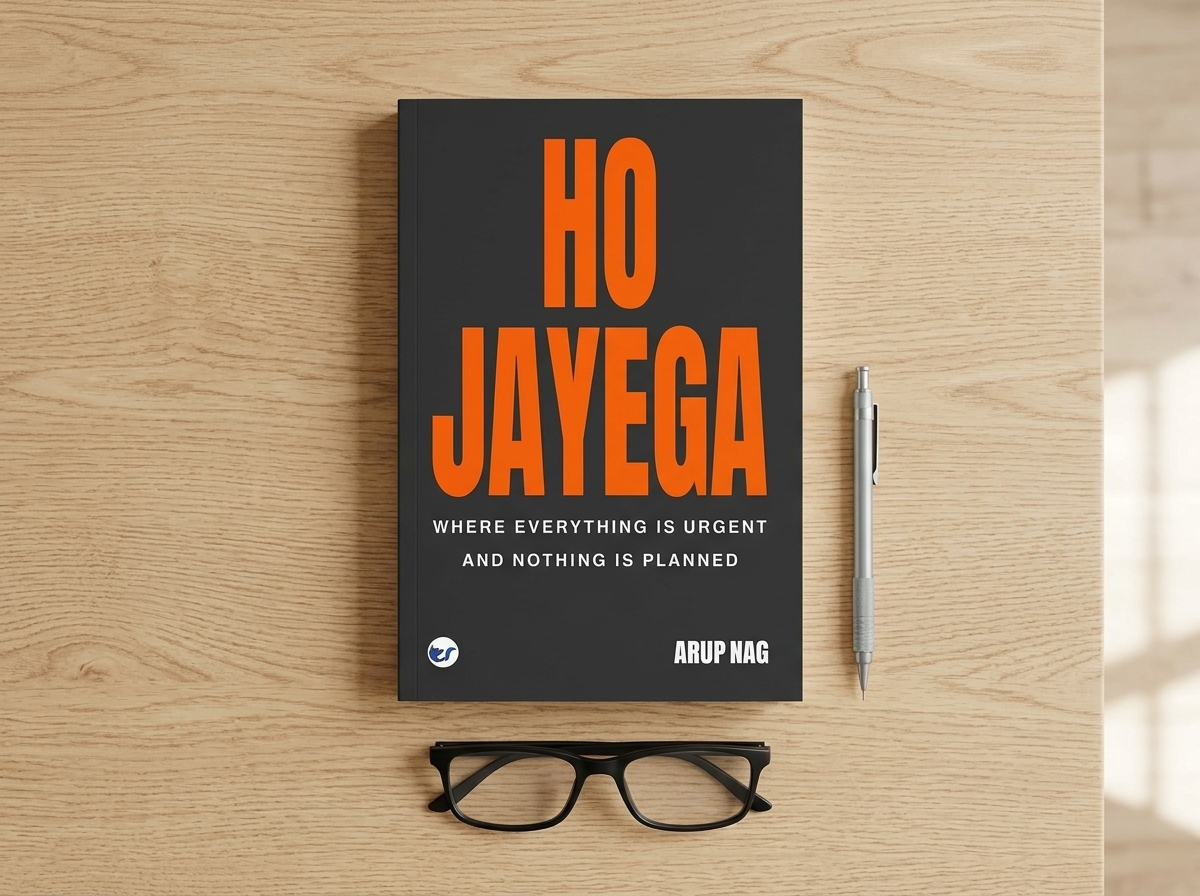
The Emotional Core
I think the emotional center of this book is empathy.
That may sound surprising because much of the book is humorous, but hear me out.
The author could have mocked many of these people. Some situations are genuinely ridiculous. Yet there is very little cruelty in the storytelling.
Even when people make mistakes, they are treated as human beings rather than punchlines.
The employee crying over celebrity news. The worker who constantly says “Ho Jayega.” The trainee who embarrasses himself. The candidate consulting astrology before an interview. The employee struggling after public criticism.
These people could easily become jokes.
Instead, they become characters we recognize.
They remind us of colleagues, friends, relatives, and sometimes even ourselves.
One section that affected me more than I expected was the epilogue. After spending an entire book meeting these individuals, the author revisits them years later and tells us where life took them.
There is something deeply human about that choice. Life moved on. Some succeeded. Some disappeared. Some remained exactly as they were. And some were lost.
The section about Vikram particularly changes the emotional tone of the book. Up until that point, many stories are humorous. Then suddenly we are reminded that behind every workplace memory is a real person with a real life beyond the office.
I wasn’t expecting that shift, but it adds depth to the entire book.
In 2026, when discussions around work often focus on productivity, hustle culture, and career growth, this perspective feels refreshing. The book reminds us that careers are ultimately made up of human experiences, not PowerPoint presentations.
Who This Book Is For
If you are looking for detailed career advice, productivity frameworks, or leadership models, this may not be the book you want.
The author makes it clear that this is not a success manual.
However, if you have spent even a few years working in corporate India, retail, hospitality, telecom, customer service, or any people facing profession, there is a strong chance you will recognize yourself somewhere in these pages.
I would especially recommend this book to:
- Corporate professionals who are tired of motivational business books.
- First time managers trying to understand people better.
- Readers who enjoy workplace humor grounded in reality.
- Young professionals who think workplace chaos is unique to their company.
- Anyone interested in human stories rather than management theories.
This might not be for readers who prefer highly structured narratives with a single central storyline. The book is episodic by design, and that structure may not appeal to everyone.
But for the audience it is written for, I think it delivers exactly what it promises.
Final Thoughts
At its heart, Ho Jayega is not really about corporate life.
It is about people trying to make things work despite imperfect systems, incomplete plans, impossible expectations, and occasional absurdity.
What impressed me most was the author’s restraint. Arup Nag never tries to sound smarter than his readers. He never turns every story into a life lesson. He allows situations to speak for themselves.
That confidence gives the book authenticity.
I laughed often while reading it. A few moments made me uncomfortable because they felt so real. And several stories reminded me of people I have known throughout my own professional life.
Those are usually signs that a book has done something right.
If someone asked me whether Ho Jayega is worth reading, I would say yes, especially if you’ve spent time navigating the strange and wonderful ecosystem known as the Indian workplace.
It is funny. It is honest.
And beneath the humor, it has a surprisingly generous view of human beings.
FAQ
Is Ho Jayega worth reading?
Yes, especially if you enjoy workplace stories rooted in real experiences rather than corporate advice. The humor works because it comes from recognizable situations.
Who should read Ho Jayega by Arup Nag?
Corporate employees, managers, entrepreneurs, HR professionals, and anyone who has experienced workplace chaos will likely connect with it.
Is Ho Jayega a business book?
Not in the traditional sense. It is closer to a collection of workplace memoirs and observations than a management guide.
What is Ho Jayega about?
The book chronicles three decades of professional experiences across industries through humorous, emotional, and insightful workplace stories.

With over 11 years of experience in the publishing industry, Priya Srivastava has become a trusted guide for hundreds of authors navigating the challenging path from manuscript to marketplace. As Editor-in-Chief of Deified Publications, she combines the precision of a publishing professional with the empathy of a mentor who truly understands the fears, hopes, and dreams of both first-time and seasoned writers.