
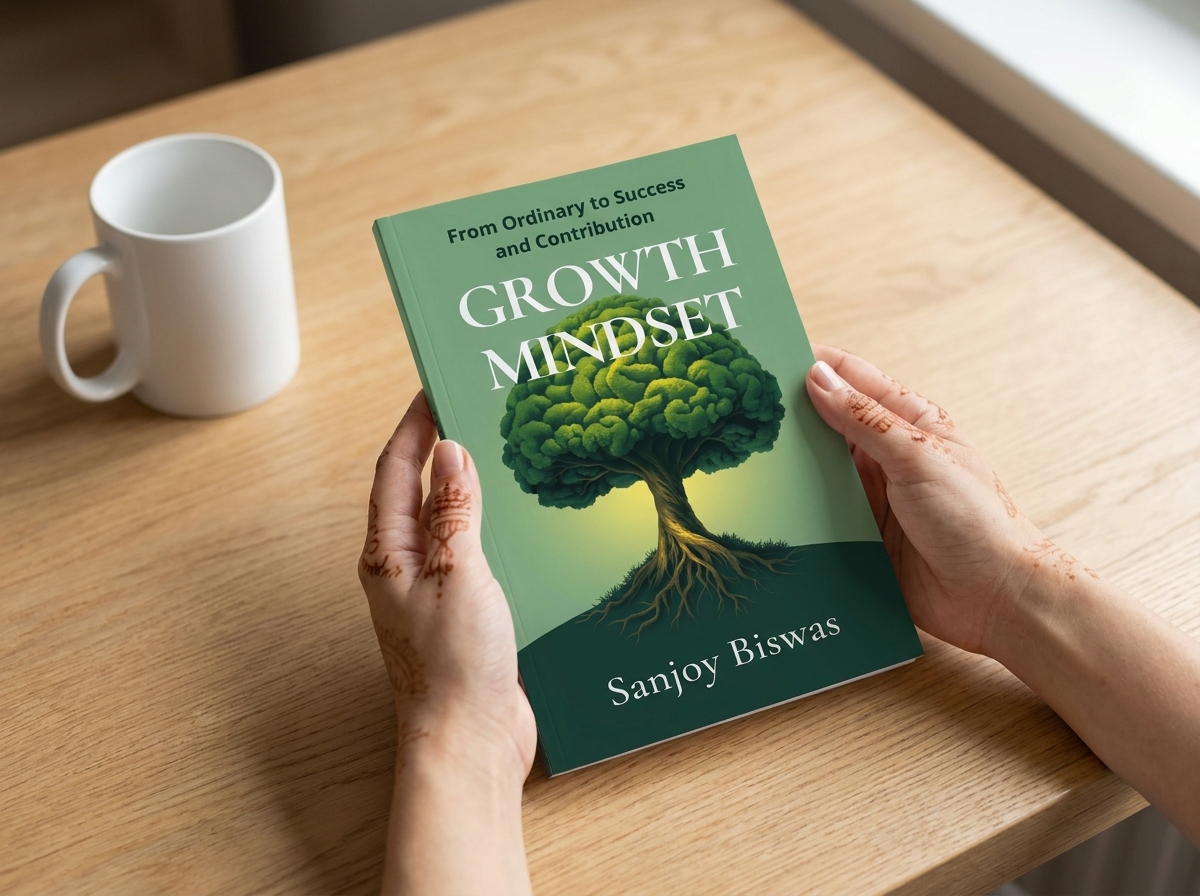
Rating: ⭐⭐⭐⭐ (4.2 out of 5)
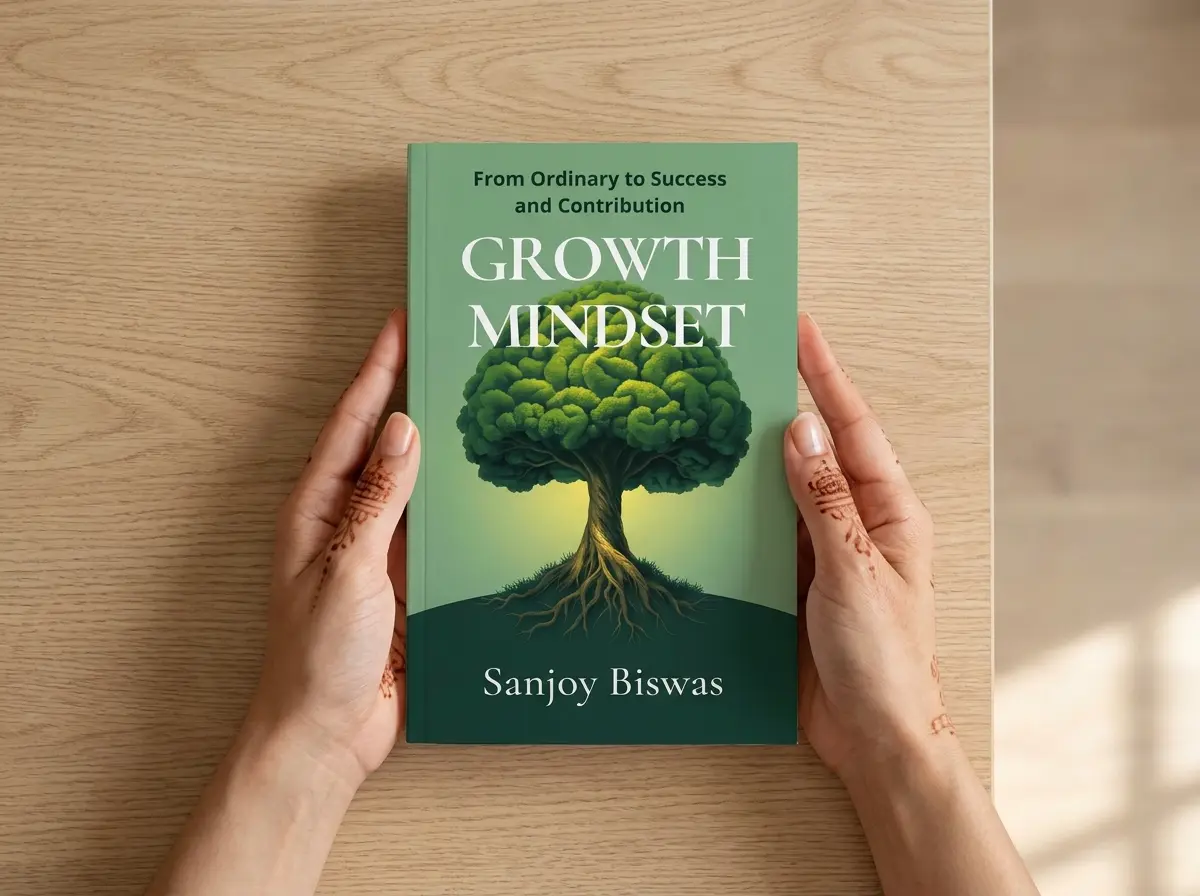
I finished this book late at night, the kind of late where you tell yourself one more chapter and then somehow you are on the last page anyway. In my years reviewing books for Deified Publication, I have read a fair number of memoirs and biographies, and most of them fall into one of two traps. Either they turn the subject into a saint with no rough edges, or they get so caught up in listing achievements that you forget there was a human being living through all of it. Growth Mindset: From Ordinary to Success and Contribution by Sanjoy Biswas manages to avoid both traps, mostly because of a choice the author makes early on that I found genuinely smart. He does not tell his own story in the first person. He tells it through the eyes of his son, Saheb Bose, writing about his father, Sam Bose. That framing changes everything about how the book lands.
What the Book Is About
At its core, this is the life story of Sam Bose, a man born in December 1983 in a small village near Barasat in West Bengal. His father died when Sam was only two and a half years old, and the book opens with a detail I was not expecting to find so early: Sam has only two pictures of his own father frozen in his mind, one of being carried on his father’s shoulders through open fields, and one of a stranger telling him “Baba has gone” while people around him cried. From there, the narrative moves through a childhood of real, unglamorous poverty. He grew up in his maternal uncle’s crowded household, sleeping near the kitchen with his brother under one thin blanket on some nights, in a house with clay floors where mushrooms grew in the corners during the rainy season. The book does not dress this up. It just lays it out, plainly, the way someone tells a family story at the dinner table.
From there, the author, through his son’s narration, follows Sam through school, through a diploma in art that he completed as the first student from his art school in 1997, through the WBJEE entrance exam, into a Tier 2 engineering college when Jadavpur was out of reach, and eventually into a career at TX Motors that stretches across roles from PGET to Deputy General Manager, ten granted patents, twenty five published technical papers, a Six Sigma Black Belt, and a PhD completed while working full time. It is a lot of ground to cover, and the book covers nearly all of it.
What Stood Out to Me
What stood out most to me was not the list of accomplishments, which is genuinely impressive on paper, but the small scenes tucked between them. There is a moment where his mother, who worked as a daily wage worker at a cosmetics brand in Kolkata, would come home so late that her sons saw her for only a few minutes each night, and the only questions she had time to ask were whether the studying was going well and whether he had eaten. That is such a specific, ordinary kind of exchange, and it says more about the pressure of that household than a paragraph of explanation ever could. There is also the story of his first job, when he stood in front of 104 fellow trainees during an introduction round and said out loud, “I will prove myself. You will remember me.” Some people in the room smiled politely, some looked surprised, and the book tells you plainly that he meant every word. I have read enough memoirs to know that a lot of authors would have cut that line for being too bold, but here it works because you have already seen everything that led him to say it.
The writing style itself has a habit of breaking into short, list-like lines in certain sections, almost like bullet points of memory rather than full paragraphs, especially when covering timelines or milestones. It is a stylistic choice that some readers will find efficient and others might find a little clipped, particularly in the more data-heavy sections around his career progression, which read more like a résumé than a scene. I noticed this most in the chapter covering his engineering years, where achievements are stacked one after another. It is not a flaw exactly, more a shift in rhythm that a tighter edit could have smoothed out.
The Emotional Core
The emotional weight of the book really lands in the chapters covering his mother’s stipend crisis during his postgraduate studies. Out of thirty mechanical M.Tech students, seventeen failed a subject in one semester, including him, and the university stopped his stipend immediately. For a family already stretched thin, that was close to a disaster. He applied for a review of his mathematics paper instead of accepting the result, and nine months later, he was told he was the only student who cleared the subject on review, with the full stipend arrear paid out at once. I found myself rereading that section because it captures something true about resilience that a lot of self-help books talk about in the abstract. Here it is just one young man refusing to give up on a paper he loved, math, even after his seniors warned him it was a subject that broke people every year.
The chapter about becoming a father hit differently as well. There is a scene where, in the middle of family conflict and pressure, Sam holds his newborn son for the first time and whispers, “My child, you will never see the struggles I saw.” Reading that as someone who has interviewed a lot of parents for review pieces over the years, I can tell you that line rings true in a way that feels earned rather than written for effect, because by that point in the book you have already read fifty pages of exactly what those struggles looked like.
Who This Book Is For
This is not a polished, ghostwritten corporate memoir, and I do not think it is trying to be one. It reads like a son who genuinely wanted to record his father’s story before the details faded, and who chose honesty over performance. If you are looking for a tightly plotted narrative arc with dramatic tension building toward a single climax, this might not be the book for you, since it moves chronologically through decades and sometimes reads closer to an extended family history than a conventional memoir. But if you are drawn to real stories about first-generation professionals, about what it actually takes to move from rural poverty into a corporate leadership role in India, or if you have a parent whose sacrifices you have never fully understood, this book will likely resonate. It will also appeal to readers interested in the mentorship and social contribution angle, since a good portion of the later chapters focuses on Sam Bose’s plans to build a welfare trust supporting underprivileged girl children through education, something the book frames not as charity but as a repayment of what education gave him.
Final Thoughts
I think what I appreciated most about Growth Mindset is that it does not oversell its subject. Sam Bose is not presented as flawless. The book mentions his own regrets plainly, including one line where he says he could not give anything back to his grandmother because he started earning only two months before she passed away. That kind of honesty is rare in books built around a single person’s achievements, and it is what makes the whole thing feel trustworthy rather than promotional. In 2026, with so much conversation online about hustle culture and personal branding, there is something worth noticing about a book whose actual thesis, stated plainly near the end, is that growth is not a solo journey and that the measure of a life is how many people rise because of you. Whether or not that message is new to you, watching one specific family live it out across four decades makes it land with more weight than it would in a quote card.

With over 11 years of experience in the publishing industry, Priya Srivastava has become a trusted guide for hundreds of authors navigating the challenging path from manuscript to marketplace. As Editor-in-Chief of Deified Publications, she combines the precision of a publishing professional with the empathy of a mentor who truly understands the fears, hopes, and dreams of both first-time and seasoned writers.