
Rating: ⭐⭐⭐⭐1/2 (4.5 out of 5)
I often find myself sitting by my office window at Deified Publication with a cup of warm cardamom tea, watching the rain hit the glass and thinking about the books that actually leave a lasting mark. Over my fifteen years of reading and reviewing literature, I have learned that the most memorable writing does not always come from loud, dramatic stories. Sometimes, it is the simple books of verse that make us look up from the page and take a deep breath. Last week, I picked up a slim poetry collection that made me think about how we carry our hidden struggles when everyone else is looking the other way. It made me reflect on my own youth and how easily we can feel separate from the crowd.
Finding Identity Behind the Medical Numbers
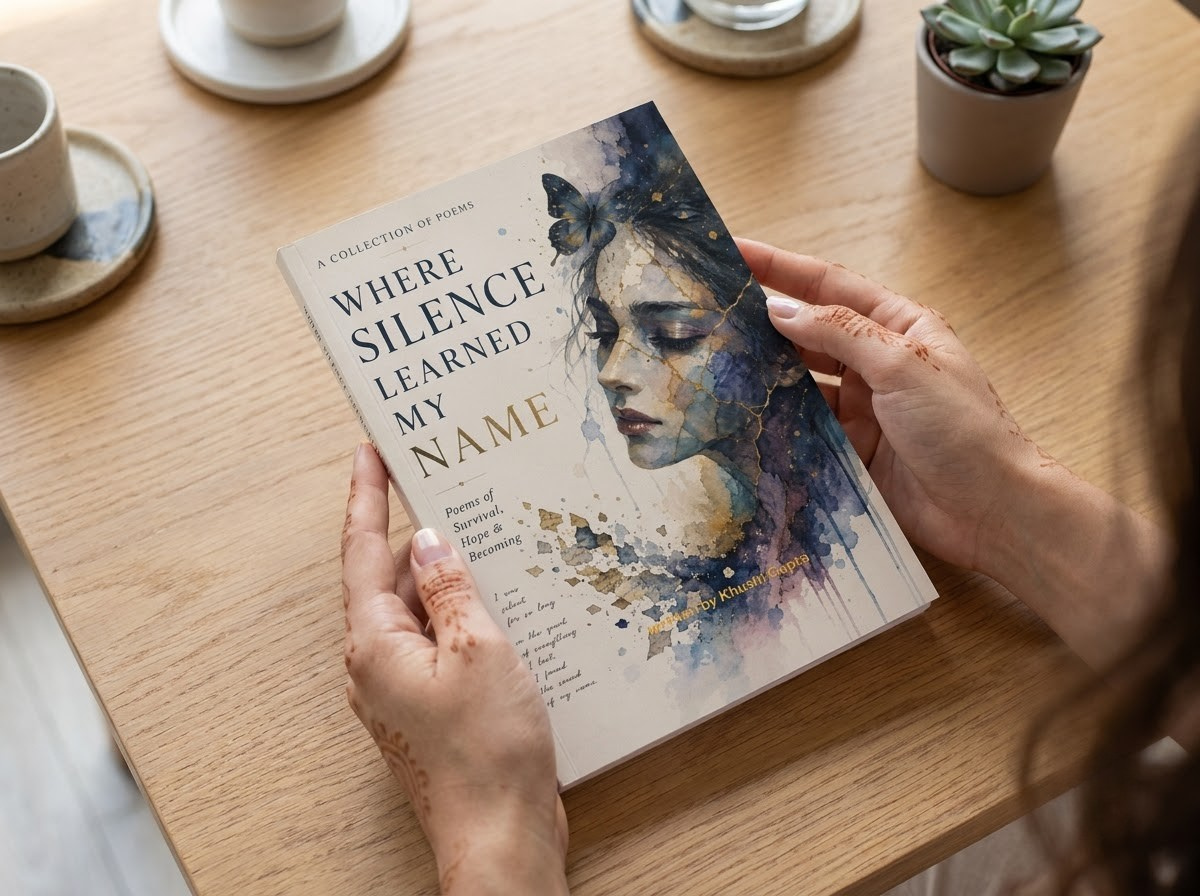
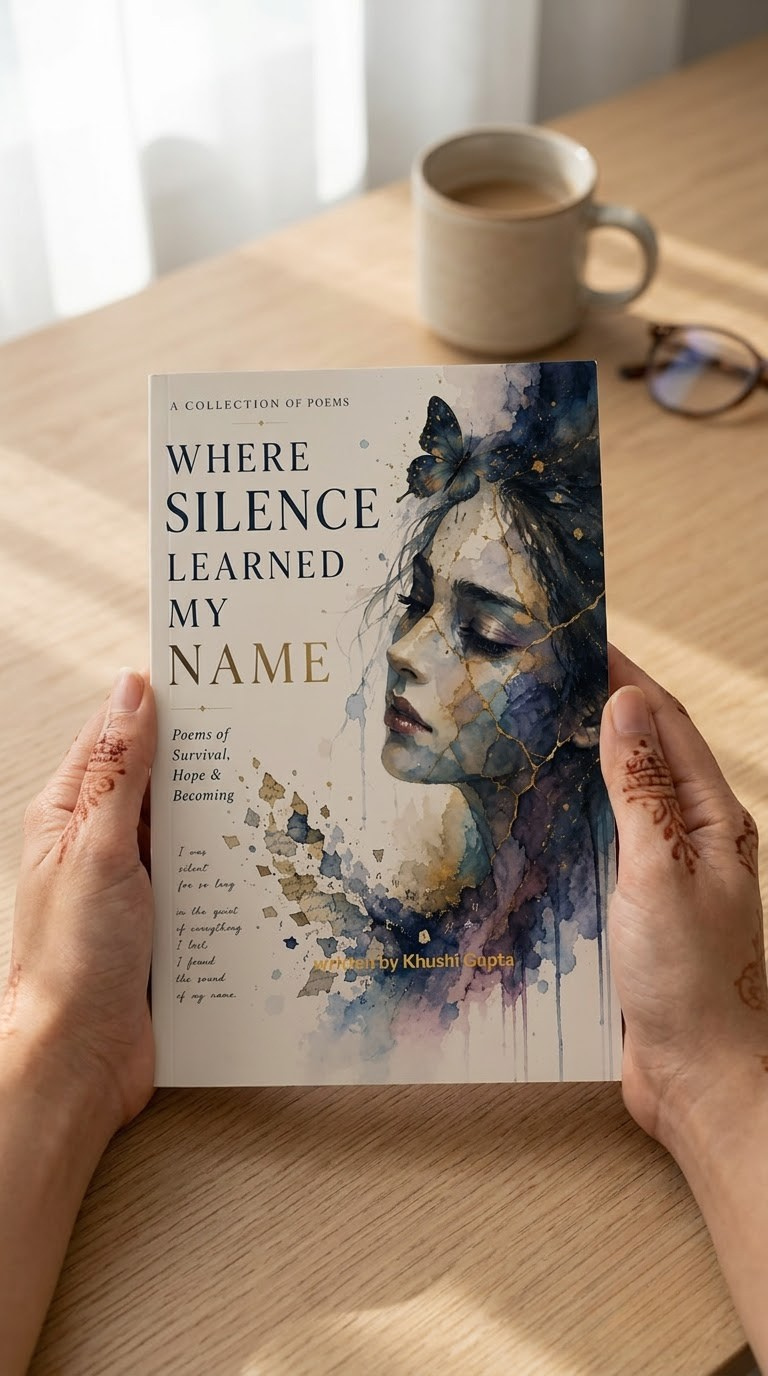
The book I am referring to is Where Silence Learned My Name by Khushi Gupta, and in this Where Silence Learned My Name Book Review, I want to focus on how she handles the realities of chronic illness. When we look at a book summary or ask what is it about, we often expect a standard medical memoir filled with clinical terms and hospital visits. Instead, this collection of poetry shows us the inner life of a young girl who was diagnosed with diabetes at thirteen. Through simple yet sharp lines, the writer explains how her life changed in an instant when her daily routine became centered around medical devices and insulin injections. It is a deeply personal look at how an early medical diagnosis can isolate a child.
There is a very specific moment early in the collection where the author writes about being thirteen and carrying insulin in her pockets instead of the normal, careless dreams of youth. She describes how every single heartbeat suddenly felt like a question that only a small glucometer machine could answer. I found this description incredibly striking because it captures the loss of childhood innocence so beautifully, showing how quickly a young person can be forced to grow up. Later on, she mentions how people would notice her medical equipment long before they actually saw her. They would immediately start predicting an incomplete life for her, worrying about her future instead of simply asking her what she wanted.
The collection also looks closely at the difficult dynamics of the author’s household. In the third section, titled Home Was Never Home, she explains that a child can feel completely homeless even when they are living inside a house with four walls. She recalls how every loud argument and raised voice in her house taught her heart to prepare itself for something terrible, even on ordinary evenings. I was not expecting to feel this way, but the domestic tension is written with a raw honesty that made me feel deeply for her younger self. She describes dreaming of a future where a closed door at night feels like safety and protection, rather than a warning sign of incoming conflict.
Reflecting on Style, Structure, and Minor Limitations
As someone who has spent more than a decade reading modern poetry, I paid close attention to the structural choices and the overall pacing of this book. Khushi Gupta writes in a very accessible, minimalist style that relies on plenty of open space on the page and short, impactful lines. This technique works well because it mimics the feeling of waiting for medical test results to appear on a screen. The collection is organized into numbered sections, which creates a helpful sense of progress as we watch the writer grow from a terrified child into a self-reliant adult. It is a smart way to structure the collection, allowing the reader to feel the gradual shift in her perspective.
However, I do have one mild criticism regarding the style of some of these pieces, which might prevent the book from appealing to everyone. Some of the shorter poems feel extremely brief, almost like simple statements or notes that you might find online. At times, this extreme brevity can make the poems feel slightly repetitive, as if the same basic idea about surviving pain is being restated in slightly different words. For instance, the transition between discussing medical numbers and family arguments sometimes feels abrupt, leaving me wishing for more descriptive detail. If you prefer highly traditional poetry with complex rhyme schemes, this style might feel a bit too simple for your tastes.
In many ways, the formatting and emotional directness of Where Silence Learned My Name remind me of the work of modern writers like Sabrina Benaim. Like those authors, Gupta has a talent for taking complex, heavy emotional states and condensing them into a few highly relatable lines. Yet, what makes Gupta’s writing stand out is her focus on the specific physical reality of chronic illness, which is a topic that we do not often see addressed in poetry. She writes about the reality of counting carbohydrates, measuring insulin units, and waiting for the next reading on her medical monitor. This specific focus gives her work a concrete grounding that helps it stand out from general self-help poetry.
The Painful Physicality of Healing and Letting Go
One of the most memorable pieces in the book is titled The Last Piece of Cake, and it perfectly illustrates this unique focus on medical reality. The author remembers a birthday from her early childhood, back before her condition had a name, when her mother placed the final slice of dessert on her plate without counting numbers. Then, she contrasts this memory with her current life, where she watches another person reach for a second slice of cake without a single thought. This contrast hit differently, showing how a chronic illness can alter the simplest daily pleasures that most of us take for granted. She describes a deep physical reaction, a sudden memory of her body remembering a free life that it was forced to leave behind.
Another beautiful aspect of the book is the way the author handles the concept of healing, which she shows is a slow process of self-acceptance. In the section where she lists the things she no longer blames herself for, she mentions the release of carrying guilt that never belonged to her. She writes about learning to accept her body’s need for rest when other people are constantly running, and choosing to leave a message unanswered as a form of self-care. This part of the book felt incredibly real and honestly made me reflect on the pressure we feel to pretend we are perfectly productive all the time. She notes that strength does not mean hiding your struggles to avoid becoming an inconvenience.
Who Should Pick Up This Book and Who Should Avoid It
In this reader review, I think the answer to whether you should read this collection or if it is worth it depends heavily on what you seek from a poetry book. If you have ever lived with a long-term illness, or if you have grown up in a chaotic household where you had to walk on eggshells, this book will feel like a warm hand holding yours. The author’s words offer a deep sense of companionship, showing that you can build a stable, beautiful life even when your environment feels like a constant battleground. However, if you are looking for a complex, intellectual puzzle to solve, or if reading about medical anxiety makes you uncomfortable, you might want to skip this release.
Final Thoughts on Reclaiming One’s Voice
In the final pages of the collection, particularly in the poem titled The Way Home, Gupta reflects on what she would say to her younger self if she could sit beside that terrified child in the doctor’s office. She admits that she would not promise an easy path forward, because she has learned that promises are easily broken. Instead, she would tell her younger self that there will be birthdays celebrated without tears, and that her solitude will no longer feel like a punishment. This perspective feels incredibly honest, avoiding cheap optimism while still offering a genuine sense of hope. It is the kind of writing that makes me want to recommend it over tea.
For me, this book succeeds because of its vulnerability and its refusal to simplify the difficult process of healing. While the minimalist style can occasionally feel a bit repetitive, the emotional clarity of the collection more than makes up for its minor structural flaws. I am rating this collection based on how deeply it made me care about the author’s struggle and how gracefully she communicates her survival. It is a lovely addition to any poetry lover’s shelf, especially as we look forward to new literary releases in 2026.
FAQs
What is the main theme of Where Silence Learned My Name?
The collection primarily explores the emotional and physical reality of growing up with a chronic medical condition, specifically juvenile diabetes. Khushi Gupta details how a sudden diagnosis at thirteen years old reshaped her sense of self, her relationship with her body, and her family dynamics. It is a deeply personal look at reclaiming your voice after feeling defined by clinical numbers, hospital visits, and the well-meaning but invasive opinions of other people.
Is Where Silence Learned My Name suitable for readers who do not have a chronic illness?
Yes, absolutely, because the themes of feeling isolated, living in a stressful household, and learning to let go of unearned guilt are universal experiences. While the specific imagery of insulin pens and glucometers is unique to the author’s life, the broader emotional journey of learning to accept yourself and setting boundaries with others will speak to anyone who has ever felt unseen or broken. It is a very accessible collection for general poetry lovers.
How does this collection compare to other modern poetry books?
In terms of style and layout, this book is very similar to contemporary minimalist poetry collections that rely on short lines and lots of white space on the page. However, it stands out because it focuses on a concrete physical reality rather than purely abstract emotions. Instead of just writing about vague heartbreak, Gupta grounds her poems in specific moments like counting carbohydrates at meal times or watching someone else eat a slice of birthday cake without worry.

With over 11 years of experience in the publishing industry, Priya Srivastava has become a trusted guide for hundreds of authors navigating the challenging path from manuscript to marketplace. As Editor-in-Chief of Deified Publications, she combines the precision of a publishing professional with the empathy of a mentor who truly understands the fears, hopes, and dreams of both first-time and seasoned writers.