
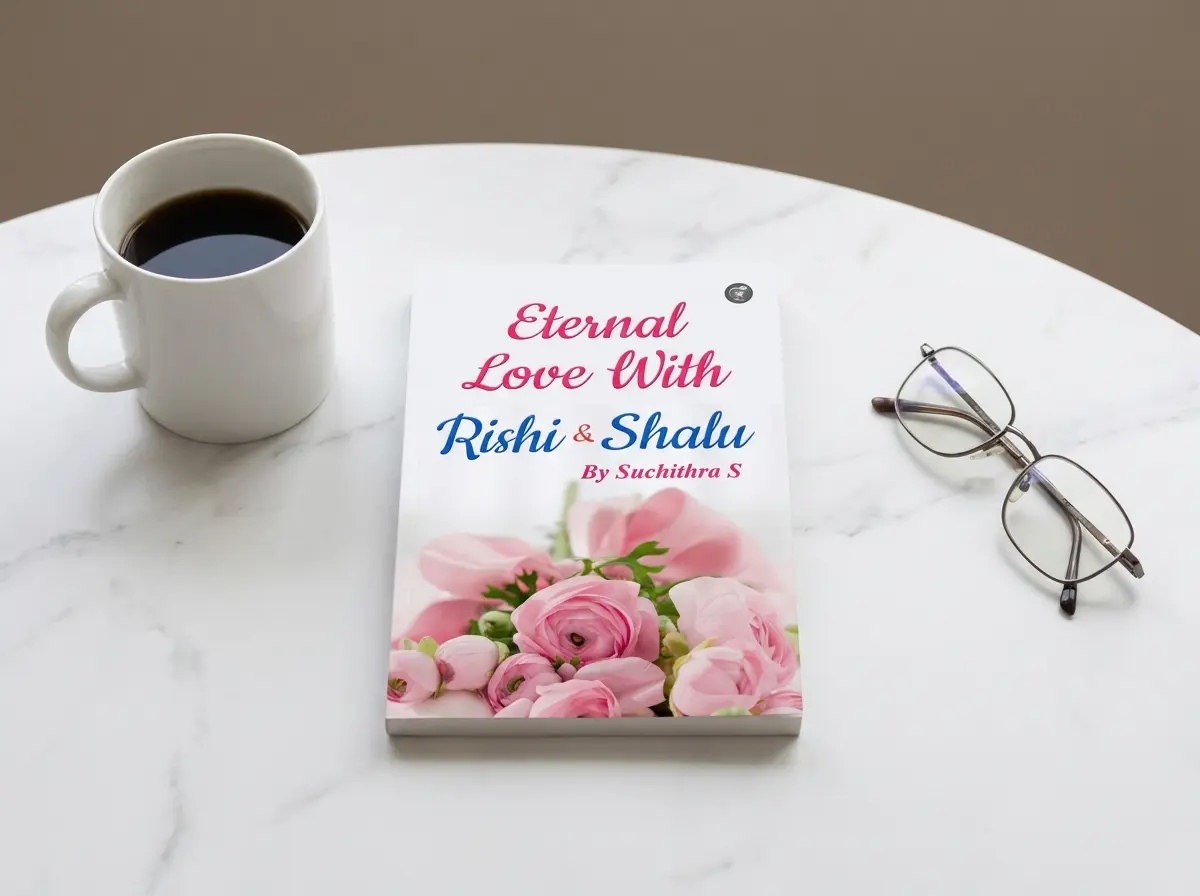
Rating: ⭐⭐⭐⭐ (4.2 out of 5)
As the Editor in Chief of Deified Publication, I’ve spent more than fifteen years reading stories from every corner of literature. Some books impress me with beautiful language. Some surprise me with unusual ideas. Then there are books that remind me of conversations I’ve heard in ordinary homes, where love isn’t expressed through dramatic declarations but through a cup of coffee prepared without being asked, a worried glance across the room, or someone quietly noticing that another person is struggling before anyone else does.
Eternal Love With Rishi and Shalu by Suchithra S belongs to that second category. It isn’t trying to reinvent romance. It doesn’t depend on impossible coincidences or larger than life heroes. Instead, it asks a much simpler question. What happens when two people who hardly know each other suddenly become husband and wife, carrying equal amounts of confusion, hesitation, fear and hope?
That premise immediately caught my attention because arranged marriages often appear in fiction, but very few novels choose to spend so much time on what happens after the wedding rituals end. Life begins once the guests leave, and this novel seems far more interested in that everyday reality than in dramatic twists.
While reading, I found myself smiling more than once at the small interactions between Rishi and Shalu. They don’t fall in love overnight. Their relationship grows through routine, misunderstandings, conversations, family expectations and countless little gestures that slowly build trust. Those moments felt more believable than exaggerated romance, and I think many readers will recognize pieces of their own relationships in these pages.
What the Book Is About
At its heart, Eternal Love With Rishi and Shalu tells the story of two people whose lives become connected unexpectedly. Their marriage happens before they truly understand one another, leaving both of them emotionally unsettled. Instead of beginning with certainty, the story begins with questions. Can two strangers become lifelong companions? Can affection grow from responsibility? Can trust be learned day by day?
The novel follows Rishi and Shalu through different stages of their relationship, beginning with their early interactions among friends and family before moving into married life. The author brings together college memories, family traditions, temple visits, anniversaries, workplace responsibilities and domestic routines to show how love gradually develops.
One thing I appreciated was that the story never forgets its cultural setting. Rituals are not inserted merely for decoration. Hanuman temple visits, sacred threads, blessings from elders and references to Radha Krishna become part of the emotional foundation of the relationship. They influence the characters’ decisions rather than simply filling pages with ceremonial descriptions.
Another aspect that stands out is the importance given to families. Parents, cousins, friends and elders continue to shape the lives of both protagonists long after the marriage. The story repeatedly reminds readers that marriage is rarely about only two individuals. It also brings together two families, different expectations and different ways of expressing care.
What Stood Out to Me
One of the first scenes that genuinely caught my attention comes during the wedding gathering, when Rishi quietly notices Shalvi while everyone else is busy talking. There is a bouquet in his hands, encouragement from friends surrounding him, and an awkwardness that feels very natural. He wants to express his feelings but keeps second guessing himself. It reminded me how uncertain many real relationships begin. Confidence is often something we imagine in romantic stories, but reality usually looks much more hesitant.
I also enjoyed the sequence where everyone starts asking about the meanings of their names. It could easily have become a forgettable conversation, but the author uses it to reveal personality. Shalvi’s hesitation, Rishi’s curiosity and the playful atmosphere among friends allow readers to understand these characters without lengthy descriptions. I’ve read many romance novels that explain personalities directly. Here, small conversations often do the work instead.
Another memorable stretch comes after the marriage when the couple shifts into their new home. Instead of rushing into idealized romance, the author focuses on ordinary domestic life. Rishi insists on arranging the kitchen, serving food packed by Shalu’s mother, reminding her that both of them now share responsibilities, and even teasing her before making sure she feels comfortable. Those scenes may sound simple on paper, but they add credibility to the relationship. Love isn’t always expressed through dramatic speeches. Sometimes it appears through shared chores and gentle encouragement.
I particularly smiled during the playful moment where Rishi jokingly tells Shalu that he feels like “eating” her, only to watch her panic before revealing that he was simply teasing. It is a light hearted exchange, but it also reveals how carefully he observes her reactions. The humour feels innocent rather than exaggerated, making the relationship more believable.
Later chapters continue building this emotional rhythm. The anniversary scenes especially stood out because they avoid making the celebration entirely about romance. Family members become part of the occasion, conversations shift naturally between affection and responsibility, and everyday life continues around the celebration. That balance reflects real married life more accurately than many contemporary romances.
Another scene I found surprisingly touching involves breakfast. Rishi prepares food, packs lunch and gently encourages Shalu to become more independent rather than allowing him to do everything. I liked this because his affection isn’t possessive. Instead, he wants her to grow, learn and become confident in managing their shared life. That small detail says more about his character than pages of romantic dialogue could.
Throughout the novel, Suchithra S repeatedly returns to simple domestic moments. Preparing coffee, discussing office work, shopping for anniversaries, sitting together after dinner, speaking with parents over the phone and celebrating small victories become the building blocks of the relationship. Readers looking for nonstop suspense may find this pace slower, but those who enjoy character driven romance will probably appreciate this approach.
From a craft perspective, the dialogue carries much of the story. The conversations are direct, uncomplicated and emotionally sincere. At times I wished the author had trimmed some repetitive exchanges because similar expressions of affection appear frequently. A little more variation in dialogue would have strengthened the emotional impact even further. That said, the consistency also reflects how these two characters communicate with one another. Their relationship develops through conversation more than dramatic action.
The Emotional Core
The strongest quality of Eternal Love With Rishi and Shalu is its belief that love is something people build rather than instantly discover.
Many recent romance novels depend on conflict created by secrets, misunderstandings or external villains. Here, the larger challenge is learning to become dependable partners. I honestly appreciated that choice. There is something comforting about watching two people slowly understand each other instead of constantly pulling apart.
I also noticed that respect appears before romance in many scenes. Rishi repeatedly observes Shalu’s emotions, encourages her, apologizes when necessary and gives her room to express herself. Likewise, Shalu gradually learns to trust him despite entering the marriage with understandable uncertainty. Their relationship feels less like a competition and more like two people learning the rhythm of living together.
As someone who has reviewed hundreds of books over the years, I think emotional honesty often matters more than complicated plotting. This novel succeeds because it focuses on ordinary experiences that many readers have either lived themselves or witnessed within their own families. That familiarity gives the story its warmth.
At the same time, readers should know that this novel leans heavily toward idealism. Rishi often behaves with remarkable patience, kindness and emotional awareness. Some readers may find that aspirational rather than realistic. Personally, I didn’t mind it because the novel clearly presents him as the kind of partner the author admires rather than an attempt at a morally ambiguous protagonist.
What also makes the story distinctive is its spiritual foundation. References to Radha Krishna, temple visits, blessings and traditional rituals are woven naturally into the relationship. They never feel disconnected from the romance itself. Instead, they reinforce the author’s belief that marriage is built on trust, respect, responsibility and shared values as much as attraction.
For me, that message gave the novel its own identity among contemporary Indian romance fiction.
Who This Book Is For
I always think a review should help readers decide whether a book matches their taste instead of simply praising it. Eternal Love With Rishi and Shalu has a very clear audience, and I actually see that as one of its strengths.
If you enjoy relationship driven stories where emotional growth matters more than dramatic twists, this novel deserves your attention. It doesn’t chase suspense or shocking revelations every few chapters. Instead, it focuses on two people learning how to become husband and wife after an unexpected marriage. That slower emotional progression will appeal to readers who appreciate character interactions over fast paced plotting.
I also think this book will resonate with readers who enjoy Indian family values reflected naturally in fiction. Festivals, temple visits, blessings from elders, conversations around marriage, respect for parents, and everyday domestic moments are woven into the narrative without feeling forced. Rather than existing as background decoration, these traditions influence the characters’ choices and relationships throughout the novel.
Young couples may also find something meaningful here. I found myself thinking that several conversations between Rishi and Shalu aren’t really about romance at all. They’re about learning how to communicate, support one another, and handle ordinary life together. Those scenes often felt more genuine than dramatic declarations of love.
If you’re someone who enjoys highly intense psychological romances or stories filled with unpredictable twists, this may not completely satisfy that expectation. The novel prefers warmth over shock and consistency over constant conflict. Personally, I appreciated that choice because it fits the story the author wanted to tell.
Final Thoughts
When I finished Eternal Love With Rishi and Shalu, I didn’t remember one dramatic scene above everything else. Instead, I remembered dozens of little moments that slowly built a relationship.
I remembered Rishi awkwardly trying to give Shalvi the bouquet while everyone around them unknowingly complicated his simple intention. I remembered the conversation about the meanings of their names, where Shalvi’s hesitation revealed her gentle nature and Rishi instinctively stepped in to make her comfortable. I remembered them arranging their first home together, discussing responsibilities instead of fantasy. I remembered Rishi preparing breakfast, packing lunch, encouraging Shalu to become independent while continuing to care deeply for her. I remembered their playful teasing after moving into their own house and the anniversary celebrations that reflected how much their families had become part of their shared life.
Those scenes may sound ordinary on paper, but perhaps that’s exactly the point.
Love isn’t always dramatic. More often, it’s found in everyday conversations, shared meals, small apologies, gentle encouragement, and choosing the same person again tomorrow.
As an editor, I’ve seen many debut and independently published romance novels rely on exaggerated drama to hold attention. Suchithra S takes a different approach. She trusts the emotional sincerity of her characters. Sometimes that means the pacing becomes slightly repetitive, and a few conversations could certainly be shorter. Even so, I never doubted the honesty behind the writing, and that honesty carries the novel through its quieter moments.
I also appreciated that spirituality never overshadows the human relationships. The references to Radha Krishna, temple rituals, blessings, and faith remain connected to the characters’ emotional lives rather than existing as separate messages. They become part of the atmosphere instead of interrupting the narrative.
Would I recommend Eternal Love With Rishi and Shalu?
Yes, especially if you’re looking for a romance built on affection, responsibility, patience, and emotional partnership rather than spectacle. It isn’t trying to compete with commercial romances filled with endless twists. It simply tells its story with sincerity, and sometimes that sincerity is enough.
For readers who believe love continues to grow after marriage rather than ending there, this novel offers an affectionate and heartfelt reading experience.
FAQs
Is Eternal Love With Rishi and Shalu worth reading?
If you enjoy relationship focused romance that values emotional maturity, family bonds, and everyday life over dramatic conflict, I think it’s worth picking up. Readers looking for realistic emotional growth will likely appreciate it.
Who should read Eternal Love With Rishi and Shalu?
This novel is best suited for readers who enjoy Indian contemporary romance, family centered fiction, and stories where trust slowly develops between the main characters. Fans of gentle romances will probably connect with it the most.
What is Eternal Love With Rishi and Shalu about?
The story follows Rishi and Shalu, whose marriage begins unexpectedly before they truly know one another. The novel follows their gradual journey toward understanding, companionship, shared responsibility, and lasting love while balancing family, faith, and everyday life.
Is Eternal Love With Rishi and Shalu a fast paced romance?
Not really. The novel takes its time developing the relationship. The emotional progression is gradual, with much of the story unfolding through conversations, family interactions, and everyday experiences.

With over 11 years of experience in the publishing industry, Priya Srivastava has become a trusted guide for hundreds of authors navigating the challenging path from manuscript to marketplace. As Editor-in-Chief of Deified Publications, she combines the precision of a publishing professional with the empathy of a mentor who truly understands the fears, hopes, and dreams of both first-time and seasoned writers.