
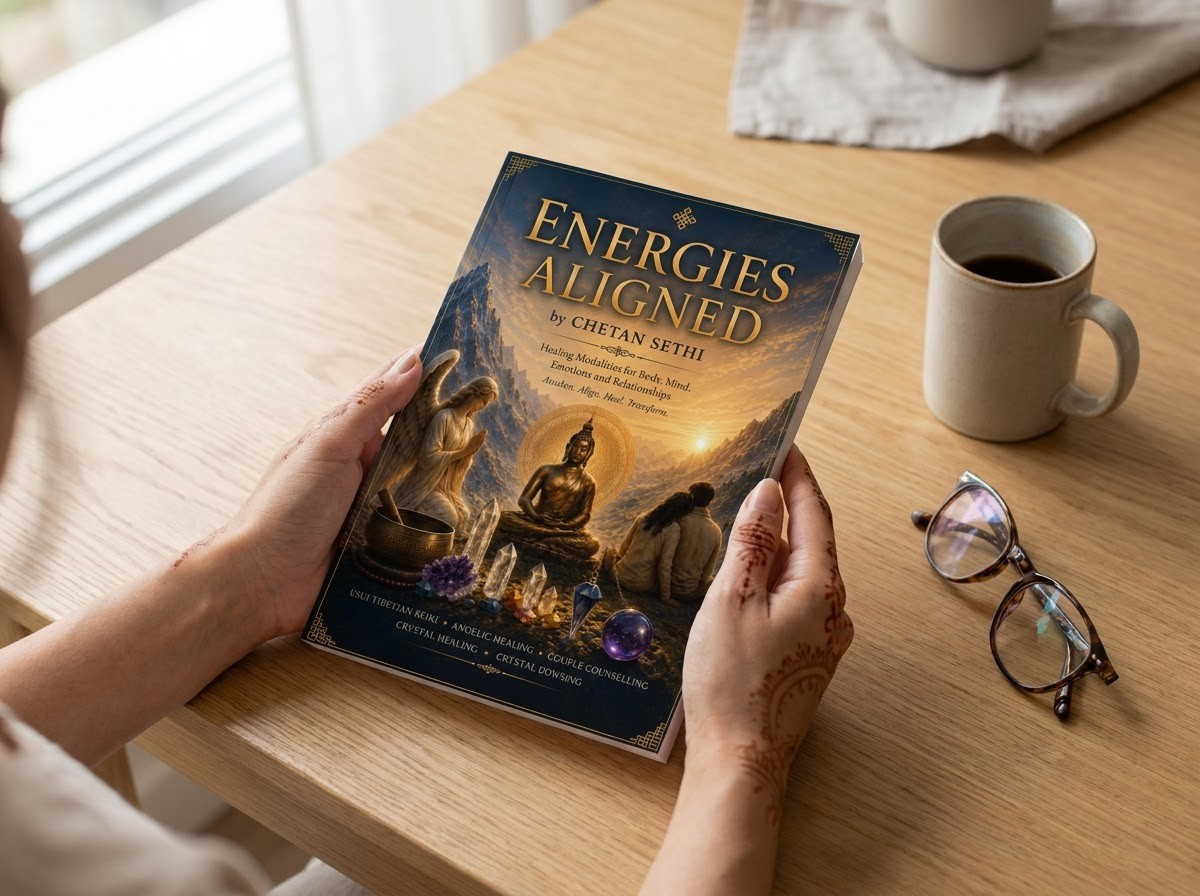
Rating: ⭐⭐⭐⭐ (4.2 out of 5)
I have often noticed that the body speaks before we are ready to listen. A clenched jaw, a heavy chest, or a sudden wave of tiredness can reveal what we have been pushing aside for weeks. Reading ENERGIES ALIGNED brought that familiar truth back to me, especially in the sections that ask readers to notice warmth, tingling, tension, and changes in breath. After more than fifteen years of reading fiction, non-fiction, poetry, and spiritual writing, I have learned that advice matters most when it can be carried into an ordinary Tuesday. This book frequently manages that.
As Editor-in-Chief at Deified Publication, I read many books that promise personal change, and I have become cautious about grand claims. Chetan Sethi writes with considerable faith in energy healing, but he also gives readers practices rather than leaving them with abstract encouragement. One early example is his comparison of a comforting touch and a harsh word, both of which can alter how a person feels within seconds. I have seen this happen in real life, especially in families where tone carries more weight than the actual sentence. This ENERGIES ALIGNED Book Review therefore begins with a simple observation, the book is strongest when invisible ideas are connected to recognisable human experience.
What the book is really about
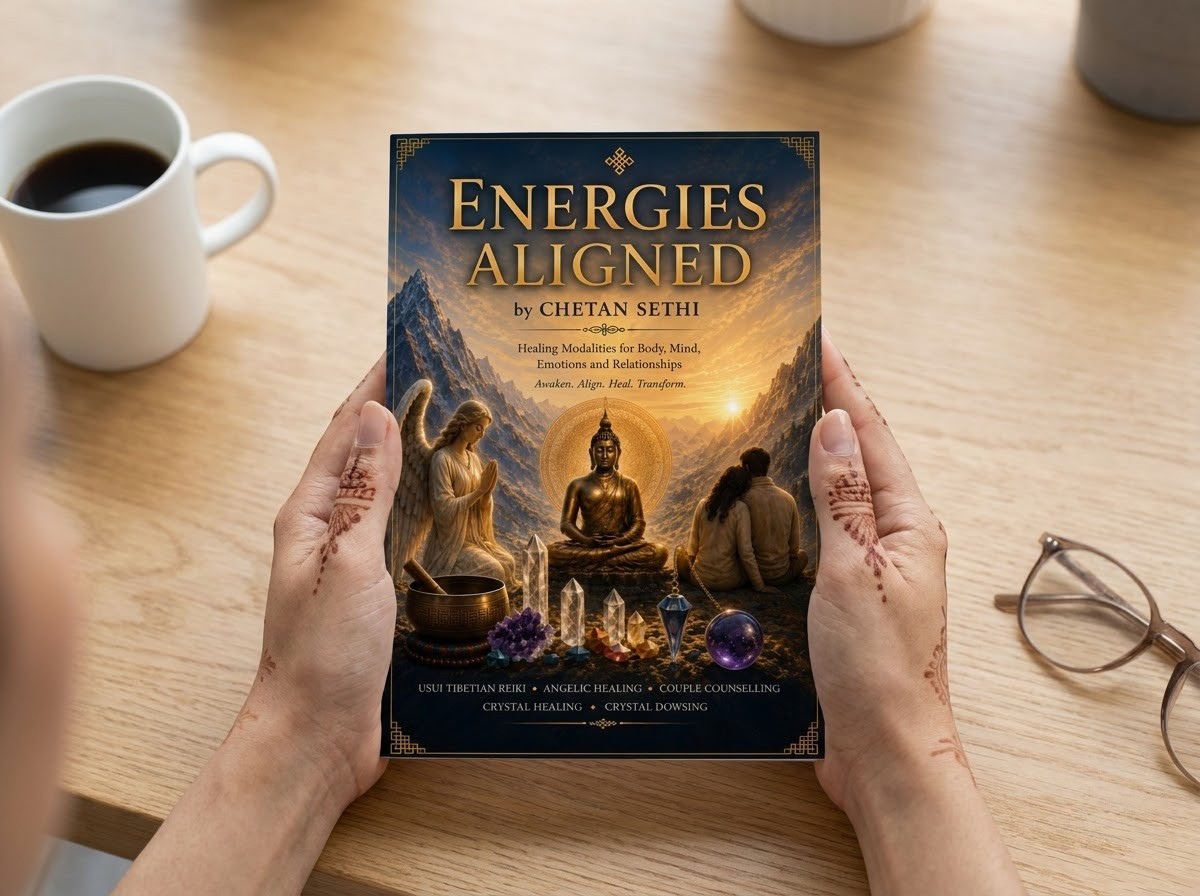
If you are looking for a short book summary or asking what is it about, the answer is broader than Reiki alone. The book presents the human being as an interconnected system of body, emotion, thought, relationship, and spiritual awareness. It introduces chakras, meridians, the aura, and subtle bodies before moving into Angelic Healing, Usui Tibetan Reiki, crystal work, couple counselling, financial beliefs, nutrition, movement, and daily energetic care. The structure progresses from basic concepts to more involved rituals. A final alignment practice brings angelic invocation, Reiki hand positions, crystals, breath, clearing, and affirmations into one sequence.
Sethi begins with the seven major chakras and explains their associations in accessible language. The root chakra is connected with security, the solar plexus with personal power, the heart with love and forgiveness, and the throat with communication. Later sections make those ideas practical, such as placing the hands at the crown, forehead, jaw, chest, abdomen, knees, and feet during Reiki. The progression is easy to follow because each method grows from the same central belief, blocked energy can affect several areas of life at once. Even readers unfamiliar with this vocabulary can understand the internal logic.
The range is unusually wide. Clear quartz is presented as an amplifier, rose quartz is linked with compassion, hematite with grounding, and citrine with confidence and abundance. The crystal care section also includes a useful warning that selenite should not be submerged in water, while strong sunlight may fade amethyst or rose quartz. That practical caution caught my attention because spiritual books sometimes treat tools as symbols and forget their physical properties. Here, readers are encouraged to use water, smoke, sound, earth, sunlight, or moonlight according to the nature of each stone.
Where the writing and structure work best
The book’s greatest craft strength is organisation. Chapters move from explanation to method, then often to an example, which prevents the material from becoming a loose collection of beliefs. The Reiki sequence is especially clear because the movement from head to feet gives readers a physical map to follow. Similarly, the 4-7-8 breathing exercise offers an exact rhythm, inhale for four counts, hold for seven, and exhale for eight. I was not expecting such a large book to feel this usable, but its repeated emphasis on breath, bodily awareness, and regular practice gives it a dependable backbone.
The human stories add character to material that could otherwise feel clinical or overly mystical. Sophia arrives burdened by grief, strained relationships, and a stalled career, then gradually begins to release emotion during Angelic Healing sessions. Michael works with amethyst and rose quartz while dealing with anxiety, and his changes are described through better sleep, reduced panic, and greater ease around others. Daniel’s Reiki session brings unexpressed sorrow connected with childhood loss to the surface. These people are not written as dramatic miracles, and that restraint helps, since their progress unfolds over months rather than after one extraordinary session.
The relationship chapters also contain some of the book’s most grounded exercises. Couples are asked to sit facing each other, match their breathing, maintain eye contact, and notice sensations such as warmth or tightness. In another practice, partners hold their palms roughly six inches apart and observe any sense of pressure, temperature, or tingling. The book also suggests replacing blame with bodily language, for example describing chest tightness during an argument rather than accusing the other person of always shutting down communication. Honestly, that shift feels useful even for readers who remain doubtful about energy fields.
The prose, however, can become repetitive. Similar ideas about light, vibration, alignment, and universal energy appear across many chapters, sometimes in almost interchangeable language. I also felt that the science sections reached beyond what their discussion firmly establishes, particularly when quantum concepts are used to frame healing mechanisms. The book does acknowledge measurement difficulties, placebo effects, and the need for scrutiny, which is welcome, but firmer distinctions between established findings and spiritual interpretation would improve its credibility. Readers should treat its medical claims with discernment and use these practices alongside qualified professional care, a point the book itself makes.
The emotional center beneath the methods
Beneath all the crystals, hand positions, and visualisations lies a compassionate idea, people are not problems to be repaired. They are participants in their own care, and their fear, grief, resentment, or shame deserves attention rather than dismissal. There is this moment where Raj and Priya place their hands together over their hearts during a joint Reiki session after years of resentment and miscommunication. The gesture is simple, but I kept thinking about this scene for days. It reminded me that reconciliation often begins with two people becoming willing to witness each other without immediately defending themselves.
Some parts hit differently because the book connects spiritual practice with everyday vulnerability. The financial chapters, for instance, do not speak only about attracting money. They examine childhood conditioning, inherited scarcity beliefs, guilt, fear of loss, and the habit of equating wealth with moral compromise. Practical budgeting and mindful spending are mentioned alongside affirmations and abundance rituals, which gives the discussion more balance than I expected. I am not sure every reader will accept money as an energetic frequency, but many will recognise how shame and family history influence financial choices.
The emotional core also appears in the repeated invitation to work without force. Readers are told that discomfort may surface, that resistance can be protective, and that change may unfold gradually. That approach felt kinder than the aggressive positivity found in some wellness books. Donna Eden readers may recognise the emphasis on daily energy care, while Caroline Myss readers may find familiar links between emotional patterns and the body. Sethi’s style is more instructional than either, with a stronger focus on combined rituals and angelic guidance.
Who may appreciate it, and who may not
This book will suit readers who already feel curious about Reiki, chakras, crystals, sound healing, breathwork, or angelic practice. Beginners receive definitions and basic routines, while experienced practitioners may appreciate the attempt to combine several modalities into a personalised system. Couples may find value in synchronized breathing, energy check-ins, mirroring exercises, and shared gratitude rituals. Readers searching for a 2026 spiritual wellness guide with substantial practical material will find plenty to try. It works best when read slowly, with a notebook nearby and only one or two exercises attempted at a time.
It will not suit everyone. Readers who want strictly evidence-based health guidance may find its treatment of biofields, angels, manifestation, and quantum theory too speculative. Those uncomfortable with invocation, sacred altars, spiritual guides, or abundance affirmations may also feel distant from large portions of the text. The book is long, and readers seeking a concise introductory manual may find the recurring explanations tiring. Should you read it, then, depends largely on whether you can approach spiritual practice with openness while retaining personal judgment.
My honest closing thoughts
ENERGIES ALIGNED is generous in scope and sincere in intention. Its best material asks readers to breathe with awareness, observe the body, communicate without blame, care for emotional boundaries, and build routines that support steadiness. I especially appreciated the final ritual’s preparation, which includes cleansing the room, arranging crystals, grounding through the feet, invoking guidance, moving the hands through chakra points, and closing with gratitude. The sequence shows how carefully the book has gathered its many strands. It is not necessary to accept every spiritual explanation to benefit from that attention and discipline.
Is it worth it? For a receptive reader, yes, particularly as a reference book rather than something to rush through. Chetan Sethi offers many entry points, from a few rounds of conscious breathing to extensive chakra and crystal rituals. My mild reservation remains the repetition and the occasional blurring of scientific possibility with spiritual conviction. Still, the responsible note that energy work should complement medical or therapeutic care matters. As a reader review, my plain answer is that this book offers useful practices, emotional warmth, and enough breadth to reward selective, discerning reading.
FAQs
What is ENERGIES ALIGNED about?
ENERGIES ALIGNED explains a holistic view of the human energy system and introduces methods including Reiki, Angelic Healing, crystal care, breathwork, relationship exercises, and financial belief work. It also covers nutrition, movement, aura care, chakra balancing, and community support. The book combines explanations with guided practices and client stories. Its central aim is to help readers build a personal routine that connects physical, emotional, relational, and spiritual well-being.
Is the book suitable for beginners?
Yes, beginners receive clear explanations of chakras, meridians, subtle bodies, Reiki hand positions, and common crystals. The early chapters establish the vocabulary before the later material introduces combined and advanced practices. Some sections are dense, so new readers may prefer to work through one method at a time. Prior experience is not required, but comfort with spiritual language will make the material easier to accept and apply.
Does the book replace medical or psychological treatment?
No, and it should not be used that way. The book explicitly describes Angelic Healing and related practices as complementary to conventional medical and therapeutic care, particularly for serious physical or psychological concerns. Breathwork, journaling, movement, and relaxation may support personal well-being, but they are not substitutes for diagnosis or treatment. Readers should consult qualified professionals and use sound judgment when applying any health-related practice.
Who should skip this book?
Readers seeking only clinically established methods may prefer another source because much of the book rests on spiritual and metaphysical beliefs. It may also feel overly detailed for someone wanting a brief chakra or Reiki introduction. People who dislike angelic invocation, crystal rituals, manifestation practices, or aura language will probably connect with only selected chapters. Even so, the sections on breathing, compassionate communication, bodily awareness, and daily routines may still offer practical value.

With over 11 years of experience in the publishing industry, Priya Srivastava has become a trusted guide for hundreds of authors navigating the challenging path from manuscript to marketplace. As Editor-in-Chief of Deified Publications, she combines the precision of a publishing professional with the empathy of a mentor who truly understands the fears, hopes, and dreams of both first-time and seasoned writers.