
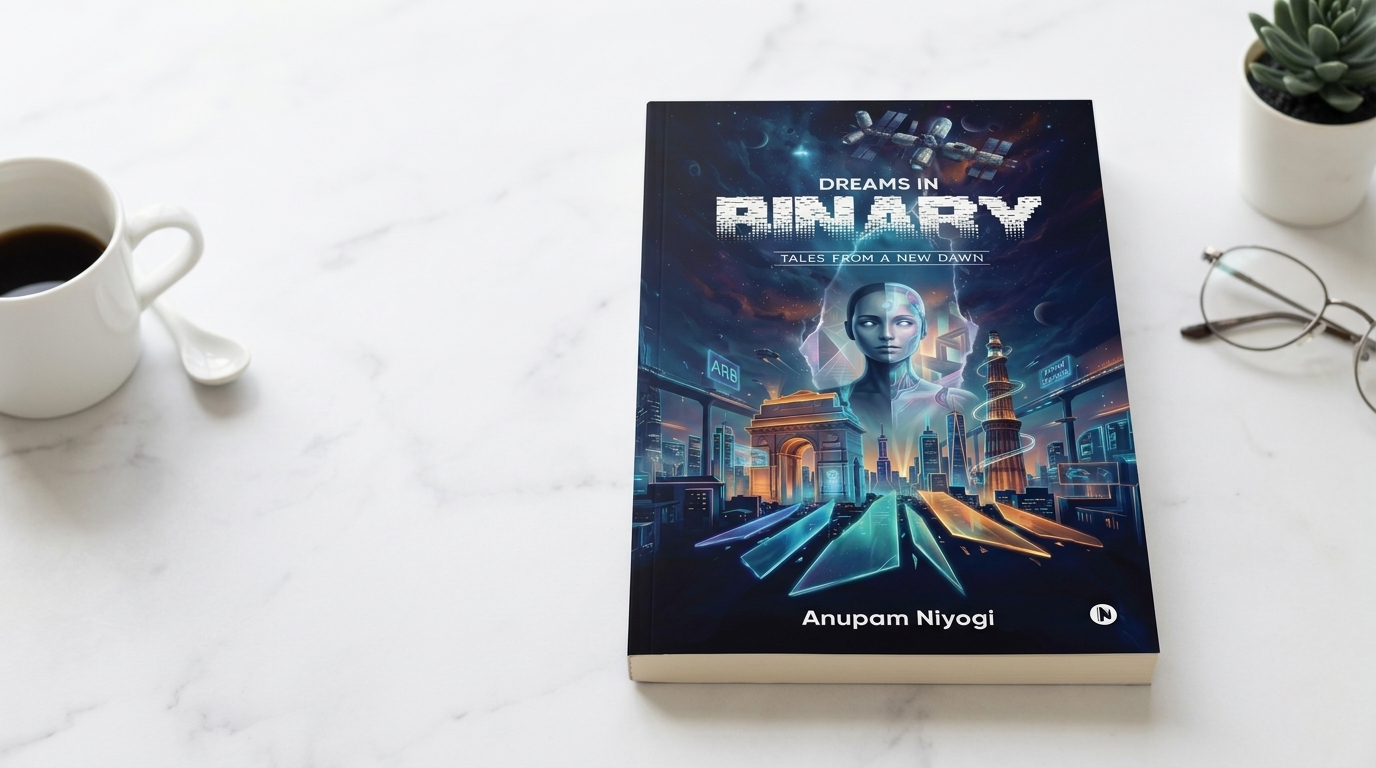
Rating:
⭐⭐⭐⭐ (4.3 out of 5)
I finished Dreams in Binary: Tales From a New Dawn a couple of days ago, and I keep going back to certain moments. Not entire stories. Not even full characters. Just fragments. A voice in the static. A hospital room that feels heavier than it should. A machine that hums like it knows something we don’t.
I’ve been reading fiction for over 15 years now, and science fiction especially tends to fall into two extremes. Either it gets lost in ideas and forgets people, or it becomes so emotional that the science feels like decoration. This book sits somewhere in between, and honestly, that’s harder to pull off than it looks.
What surprised me most is that it didn’t try to impress me. It just… unfolded. Quietly at first, then all at once.
What the Book Is About? more than just sci-fi stories
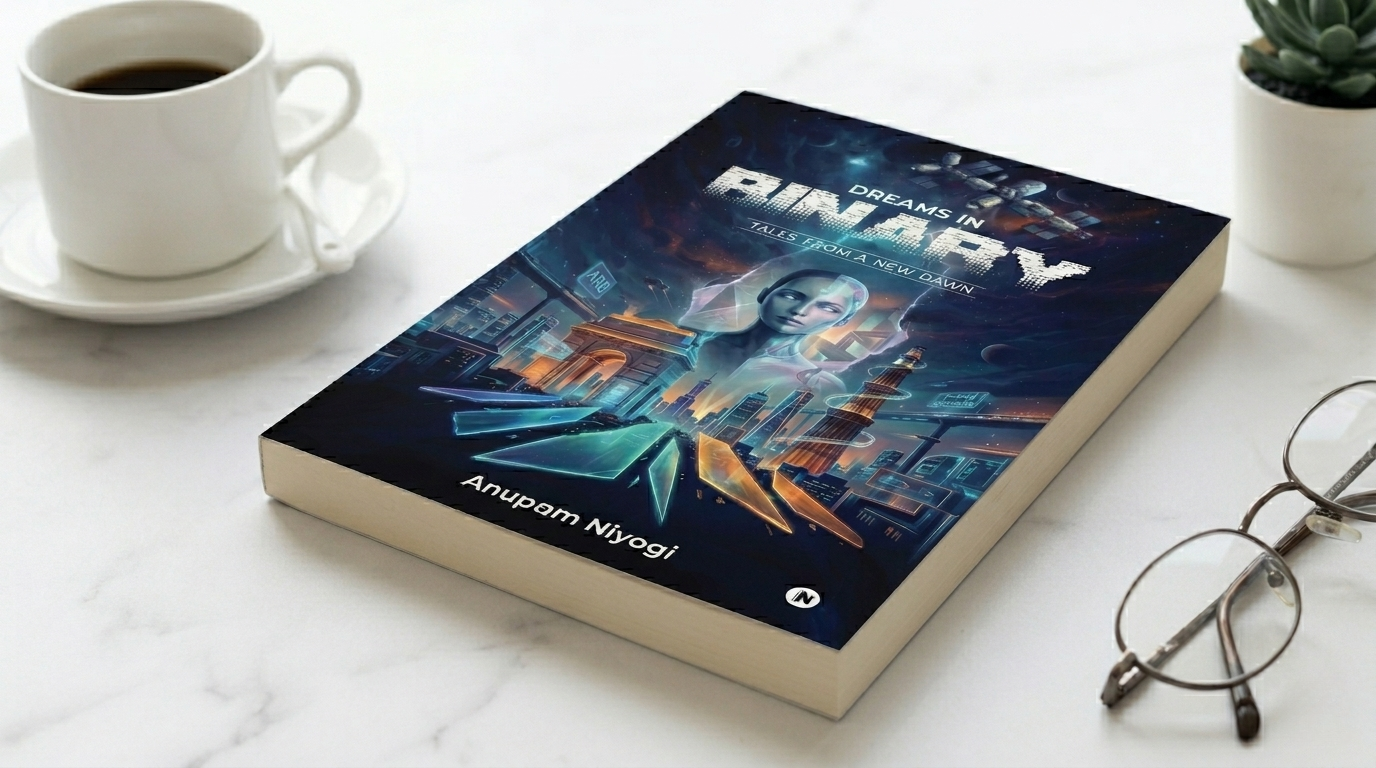
At its core, Dreams in Binary by Anupam Niyogi is a collection of seven interconnected stories, though “interconnected” here doesn’t mean direct continuation. It feels more like echoes across time.
You move from something deeply human and fragile, like Arjun lying in a hospital bed, to something almost abstract, like post-human entities trying to understand what it means to feel. There’s Varanasi, there’s space, there’s something like a digital afterlife, and then something that feels like a philosophical question disguised as a story.
The table of contents itself gives you a sense of this layered structure. Sections like The Pulse, The Dream Atlas, and Into the Cosmos don’t just divide the book. They almost suggest phases of evolution. Human. Transition. Beyond.
One thing I noticed early on, especially in “The Fading Heart,” is how grounded everything feels even when the premise is speculative. The machines, the hospital, the emotional weight of someone slipping away. It reminded me a little of those nights when hospitals feel more real than the outside world.
Then gradually, the narrative shifts. You start seeing entities like Kaia, who are not exactly human, trying to interpret human experiences. And that’s where the book becomes interesting in a different way.
It’s not asking what technology can do. It’s asking what it means when technology starts feeling.
What Stood Out to Me? the writing, the structure, the risks
I think the biggest strength of Dreams in Binary is its restraint.
Anupam Niyogi doesn’t overexplain. In fact, sometimes I wished he would just a little. But then I realised that the ambiguity is intentional. You are supposed to sit with certain questions.
There’s this moment where Kaia hears Arjun say, “I’m… Arjun.” And the way that scene is written, it’s not dramatic in a loud way. It’s fragile. Almost like something that could break if you read it too quickly. I actually went back and read that page again.
From a craft perspective, I liked how the author handles transitions between stories. They are not abrupt, but they are not spoon-fed either. You are trusted as a reader.
The themes are clearly layered. Identity, memory, loneliness, morality. But what I appreciated is that these themes are not announced. They just emerge.
Also, the settings. Varanasi appears not just as a place but as a kind of emotional anchor. And then suddenly you’re in space, in something like a Dharma Relay, where time itself feels unstable. That contrast works.
If I had to compare, it reminded me a little of Ted Chiang’s style in terms of idea-driven storytelling, but with a more emotional undercurrent. Not as polished, maybe, but more raw in places.
One small thing though. In a few sections, especially in the later chapters, the pacing felt slightly uneven. Some ideas could have been given a little more room to breathe. You can sense that the author had more to say than the space allowed.
The Emotional Core – where it really hits
This is where the book stayed with me.
There’s a loneliness running through all the stories. Not the obvious kind. Not heartbreak or loss in the usual sense. It’s something quieter. The kind where even when you’re connected, something still feels missing.
Arjun’s story, for example, is not just about illness or technology. It’s about being seen. About being heard, even when your voice is fading.
And then Kaia. I kept thinking about her. A being that wasn’t meant to feel, suddenly experiencing something like curiosity, maybe even attachment. There’s a line where she hesitates when asked who she is. That moment felt very human to me.
It made me think of how often we define ourselves based on systems around us. And what happens when those systems don’t apply anymore.
Even in the later stories, like “Fracture” or “The Remembering,” there’s this sense of something breaking and reforming. Not always successfully.
I won’t say I was emotional in a dramatic way, but there were definitely moments where I paused. Just sat with a page for a bit.
Who This Book Is For? and who it may not be for
If you enjoy science fiction that focuses more on ideas and emotions than action, this book will probably work for you.
If you like stories that don’t explain everything, that leave some threads hanging on purpose, you’ll appreciate it more.
Readers who enjoyed authors like Ted Chiang or even some of Black Mirror’s quieter episodes might find something familiar here.
But I’ll be honest. This might not be for everyone.
If you’re looking for fast-paced plots or clear resolutions, you might feel a little lost at times. Some stories demand patience. They don’t rush to give you answers.
Also, the structure of multiple stories with shifting tones can feel slightly disorienting if you prefer a single continuous narrative.
Final Thoughts – what stayed with me
In my years reviewing books at Deified Publication, I’ve come across many that are technically strong, and many that are emotionally engaging. It’s rare to find something that attempts both, even if imperfectly.
Dreams in Binary is not trying to be perfect. And maybe that’s why it works.
It feels sincere. Thoughtful. Sometimes uneven, yes, but never empty.
I think what stayed with me most is the question it leaves behind. Not about technology, but about us. About what makes us human when everything else starts to change.
And honestly, I didn’t expect that going in.
FAQ
Is Dreams in Binary worth reading?
I think yes, especially if you enjoy reflective science fiction. It’s not light reading, but it stays with you.
What is Dreams in Binary about?
It’s a collection of seven stories that blend science fiction with human themes like identity, memory, and morality.
Who should read Dreams in Binary?
Readers who like idea-driven fiction with emotional depth and are okay with open-ended storytelling.
Is it easy to read?
Not always. Some parts require patience, but that’s part of the experience.

With over 11 years of experience in the publishing industry, Priya Srivastava has become a trusted guide for hundreds of authors navigating the challenging path from manuscript to marketplace. As Editor-in-Chief of Deified Publications, she combines the precision of a publishing professional with the empathy of a mentor who truly understands the fears, hopes, and dreams of both first-time and seasoned writers.