
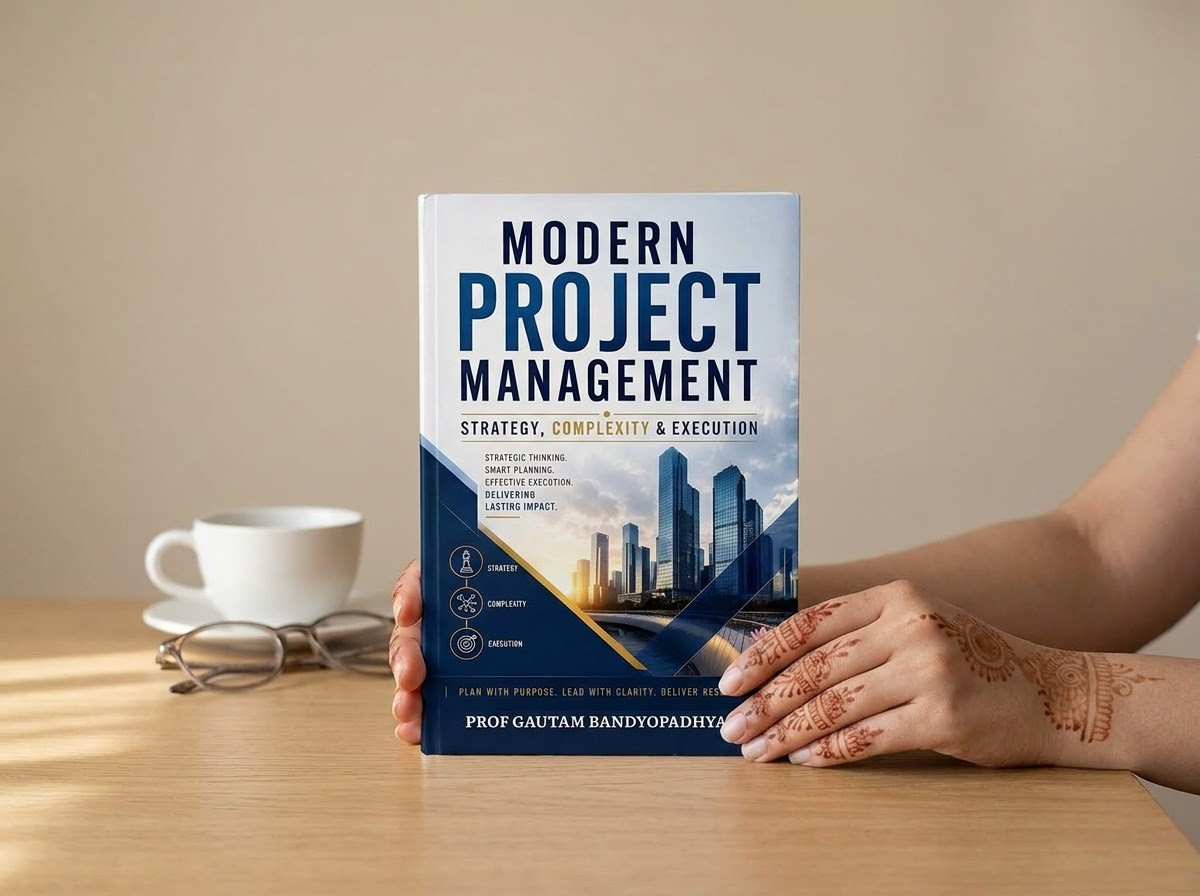
Rating: ⭐⭐⭐⭐ (4.2 out of 5)
I have spent the last few rainy evenings sitting in my favorite armchair with a steaming mug of strong ginger chai, surrounded by towering stacks of manuscripts. Usually, my desk at Deified Publication is covered in literary fiction or memoirs, so cracking open a textbook on industrial engineering and corporate execution felt like a complete departure from my usual routine. Yet, there is a strange, gentle beauty in how human beings attempt to organize chaos, which is exactly what drew me to this volume. We often assume that managing massive construction tasks is purely a matter of concrete and steel, but this text shows that it is actually a deeply human endeavor.
As someone who has spent fifteen years evaluating how authors structure their arguments, I found myself strangely drawn to the organized clarity of these pages. It made me wonder about the invisible managers who build the world around us, and how they handle the weight of such massive responsibilities, especially when so many lives and fortunes depend on their decisions. It is the kind of reading that sits with you, forcing you to look at every bridge and high-rise with a completely new appreciation. Honestly, I did not expect to find myself thinking about organizational flowcharts while drinking my evening tea, but the clarity of this presentation won me over.
Unlocking the Architecture of Massive Projects
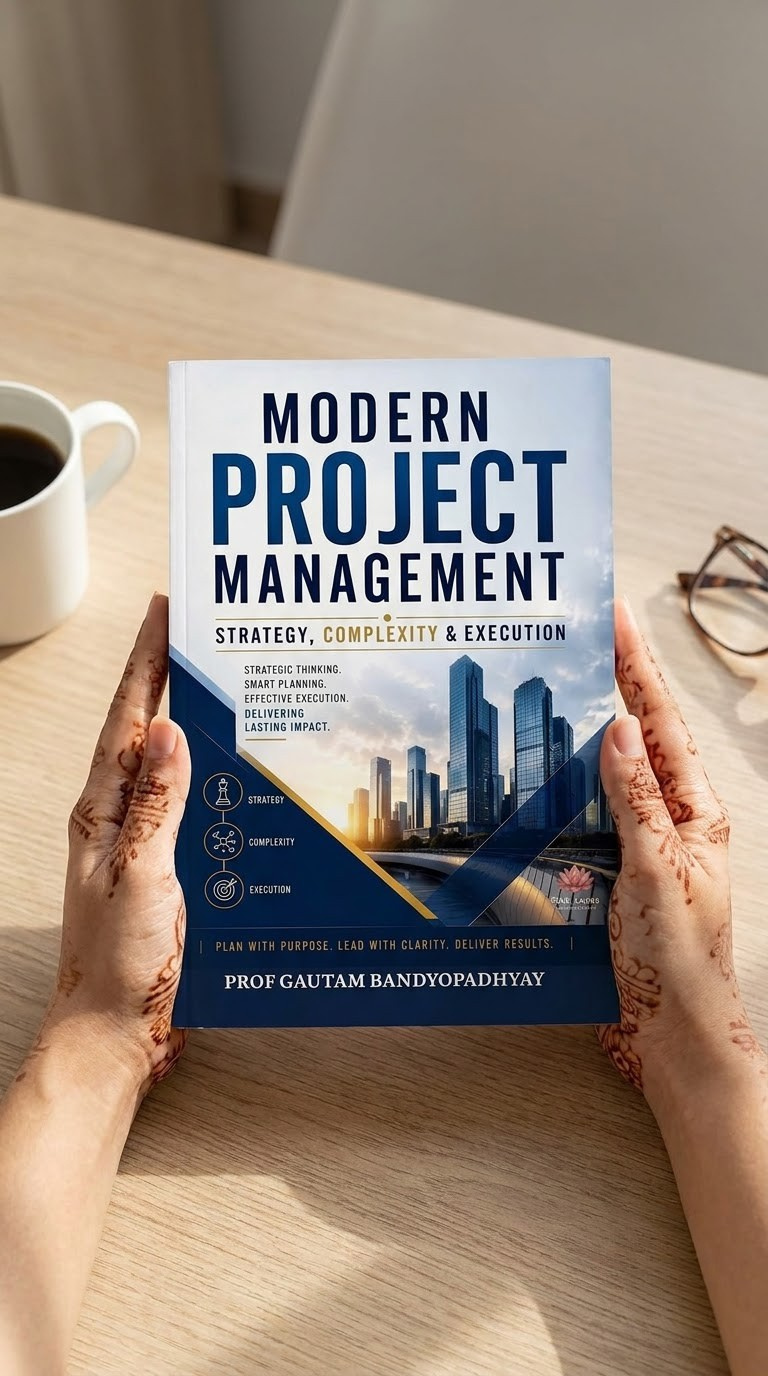
To understand what is it about, we must look at how the author organizes his extensive experience. In this MODERN PROJECT MANAGEMENT Book Review, I want to unpack a book that is essentially a guide to managing the massive projects that shape our modern world. Written by Prof. Gautam Bandopadhyay, the text provides a comprehensive breakdown of everything from simple planning structures to complex legal disputes and financial planning. If you are looking for a simple book summary, this volume covers the lifecycle of projects, structural designs, and control systems.
It explains the differences between routine operations and temporary endeavors, showing how projects involve high risk, tight budgets, and cross-functional teams. When readers ask if is it worth it to read such a technical manual, the answer depends on whether you want to see the skeleton behind massive corporate and civil undertakings. It is a highly structured guide, filled with charts and case studies, designed to help managers keep large initiatives from falling apart under the pressure of delays and budget overruns. For any professional wondering should you read this guide, it acts as a very practical blueprint.
The book covers essential topics like project team formation, risk management, tax impacts, and contract tendering. I was surprised to find detailed sections on management information systems and digital transformation, showing how tools like artificial intelligence are changing the field. This is not just a theoretical guide, because the author grounds every chapter in real-world scenarios. It explains how communication flows upward, downward, and horizontally, which is vital for anyone managing a large workforce. Every page reflects the author’s decades of experience in civil engineering and mentoring, making it a reliable resource for serious study. This reader review hopes to show that while the subject is dry, the presentation is highly organized and practical.
The Grit and Friction of Real Corporate Failures
What stood out to me most was the specific structural formatting of the book and how the author uses failures to teach valuable lessons. Instead of just presenting dry theories, Prof. Gautam Bandopadhyay includes short case studies that read like brief, cautionary tales of corporate missteps. For instance, on page 171, there is a fascinating breakdown of a role failure in a twelve-hundred crore project. The engineering manager reported directly to corporate headquarters instead of the project manager, which caused a three-month delay and huge cost escalations.
This simple reporting error showed me how a small break in the chain of command can disrupt an entire giant operation. I kept thinking about this simple reporting line for hours, marveling at how easily things can go wrong when human lines of communication get tangled. In another section on page 173, the author highlights a highway project failure where the company insisted on using a rigid functional structure. The planning team was isolated in the distant headquarters, leaving the actual site team with very limited authority to make decisions.
When delays occurred, they could not get quick manpower approvals, causing their schedule performance index to drop drastically to zero point eighty-two. I also loved reading Case Study Four on page 176, which describes a power plant project crippled by a fifteen percent productivity loss. The construction team blamed the engineering department for late drawings, while the engineering department blamed the client for slow approvals. They eventually resolved this stalemate through a collaborative root cause workshop and shared milestone responsibilities, which boosted their performance index back up to zero point ninety-five. These real-world examples give the book a gritty realism that standard academic textbooks often lack entirely.
The Emotional Force Behind Steel and Concrete
Although this is a technical manual, the emotional core of the book lies in its understanding of human conflict and cooperation. Projects are built by people, and people are famously messy, stubborn, and prone to miscommunication. The author spends a significant amount of time discussing leadership styles, from autocratic to democratic, and how they influence the actual workers on the ground. I felt a real sense of relief seeing an engineering textbook acknowledge that emotional intelligence and conflict management are just as important as cost sheets and schedules.
There is a section on page 176 that outlines common conflict resolution methods, such as collaborating, compromising, and smoothing. It made me realize that even in multi-crore infrastructure projects, success often comes down to simple conversations and whether managers can convince their teams to work together toward a single goal. Honestly, I did not expect to feel so much empathy for project managers, but reading about their daily struggles with delays and coordination made me appreciate their difficult work. I think this human perspective is what keeps the textbook from becoming completely dry and unreadable.
Dense Tax Formulas and Finding the Right Audience
No book is perfect, and my role as a reviewer of MODERN PROJECT MANAGEMENT requires me to be completely honest about where this volume might lose some readers. While the practical case studies are highly engaging, the transition to dense financial math can feel very sudden and jarring. For example, on page 293, the text explores directly the calculations for tax shields, minimum alternate tax, and depreciation rates. It calculates a nine-crore annual tax shield on a two-hundred-crore plant, which is useful for accountants but quite dry for general readers. For a reader who is more interested in leadership and team dynamics, these heavy accounting formulas and dry tables can feel like hitting a brick wall.
It is also important to state plainly that this book is not for casual readers who are looking for light bedtime reading. It is a dense, academic textbook designed for business students, engineering professionals, and project managers. Looking forward to 2026, as industrial projects grow even more complex and tech-driven, this detailed financial and operational knowledge will be highly valuable, but it requires serious dedication to study. If you have no interest in spreadsheets or municipal tenders, you will likely want to skip this one entirely.
A Reliable Companion for Professional Builders
In the end, MODERN PROJECT MANAGEMENT is an incredibly thorough and practical guide that bridges the gap between classroom theory and field realities. Prof. Gautam Bandopadhyay has written a text that is both educational and deeply rooted in real-life practice, drawing on his decades of engineering experience. I appreciate how the book does not shy away from the messy, complicated realities of corporate projects, choosing instead to analyze them with clear frameworks and lessons. If you are willing to work your way through the dense charts and financial calculations, you will gain a profound appreciation for how our modern world is planned and constructed.
It is a solid, reliable guide that will serve as a faithful companion for anyone entering the demanding world of project management, and it deserves a respectable place on any professional’s bookshelf. While it can be dry in places, the practical value of the real-world case studies far outweighs any formatting stiffness. For those who need to master the structural, financial, and human elements of execution, this volume is an incredibly useful asset that will pay dividends in real-world knowledge. It is not a book for everyone, but for its intended audience, it is a very solid addition to their collection.
FAQs
Is MODERN PROJECT MANAGEMENT suitable for readers without an engineering background?
Yes, absolutely. While the book contains technical case studies and some financial formulas, the core concepts of leadership, team dynamics, and project lifecycle are explained in plain language. If you are a business student or a general manager looking to understand how large organizations coordinate complex tasks, you will find the strategic sections very accessible. You might want to skim over the heavy accounting formulas, but the human lessons on communication and conflict resolution are universal. This makes it a great educational tool even for non-engineers.
What makes this book different from a standard project management guide?
The biggest difference is the author’s focus on real-world failure rather than just sanitized success. Most standard guides present a perfect world where plans are executed flawlessly if you follow a checklist. In contrast, this book uses concrete examples of real mistakes, such as communication breakdowns, poor reporting lines, and isolated planning teams. This practical, realistic approach makes the theories much easier to understand because you see exactly how they apply to messy, high-stakes situations on the ground.
Is it worth it for experienced professionals to read this volume?
Yes, seasoned managers will find the book highly valuable as a reflective tool. It provides structured frameworks to analyze problems they have likely faced in their own careers, such as resource conflicts or contract disputes. The chapters on digital transformation and management information systems also offer a useful look at how modern technology is reshaping project control. It is an excellent resource to help veteran professionals refine their strategies and improve their governance systems, making it well worth the reading time.

With over 11 years of experience in the publishing industry, Priya Srivastava has become a trusted guide for hundreds of authors navigating the challenging path from manuscript to marketplace. As Editor-in-Chief of Deified Publications, she combines the precision of a publishing professional with the empathy of a mentor who truly understands the fears, hopes, and dreams of both first-time and seasoned writers.