
Rating:
⭐⭐⭐⭐ (4.2 out of 5)
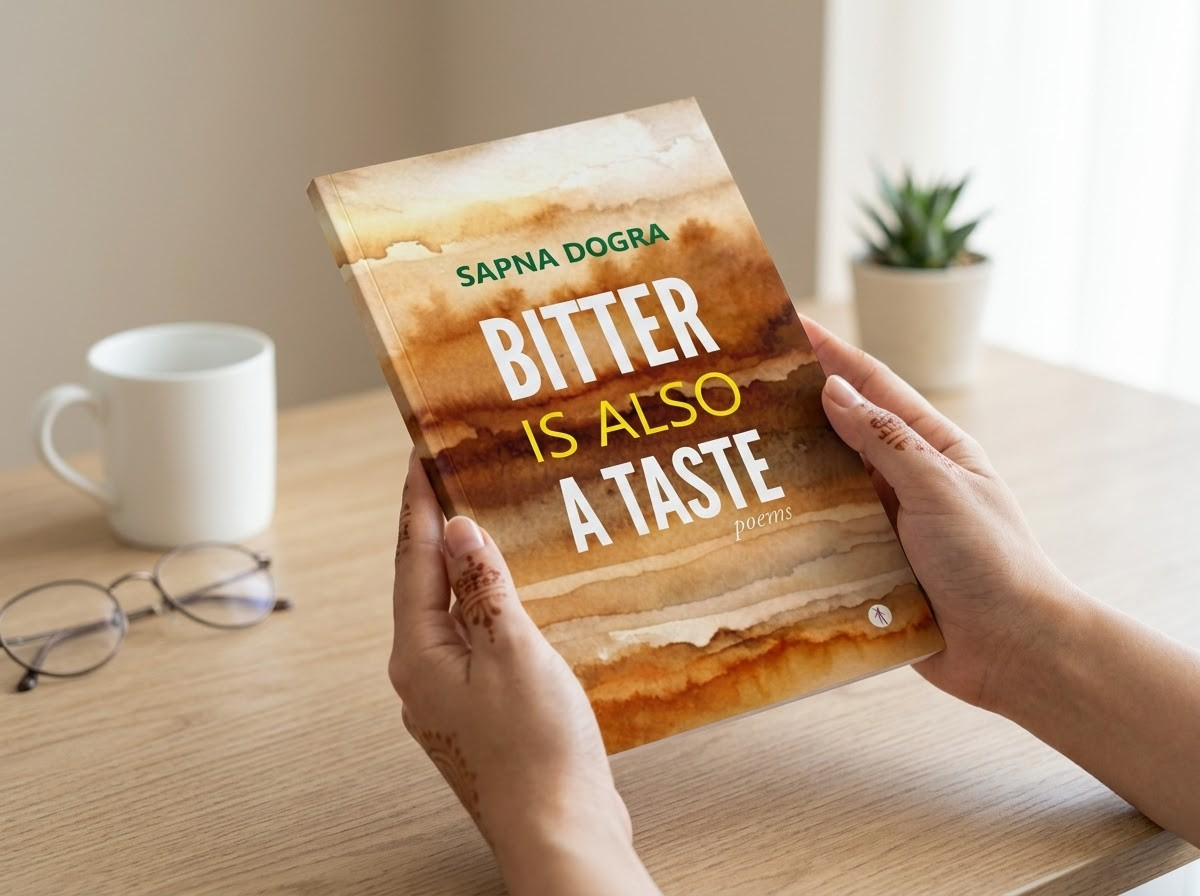
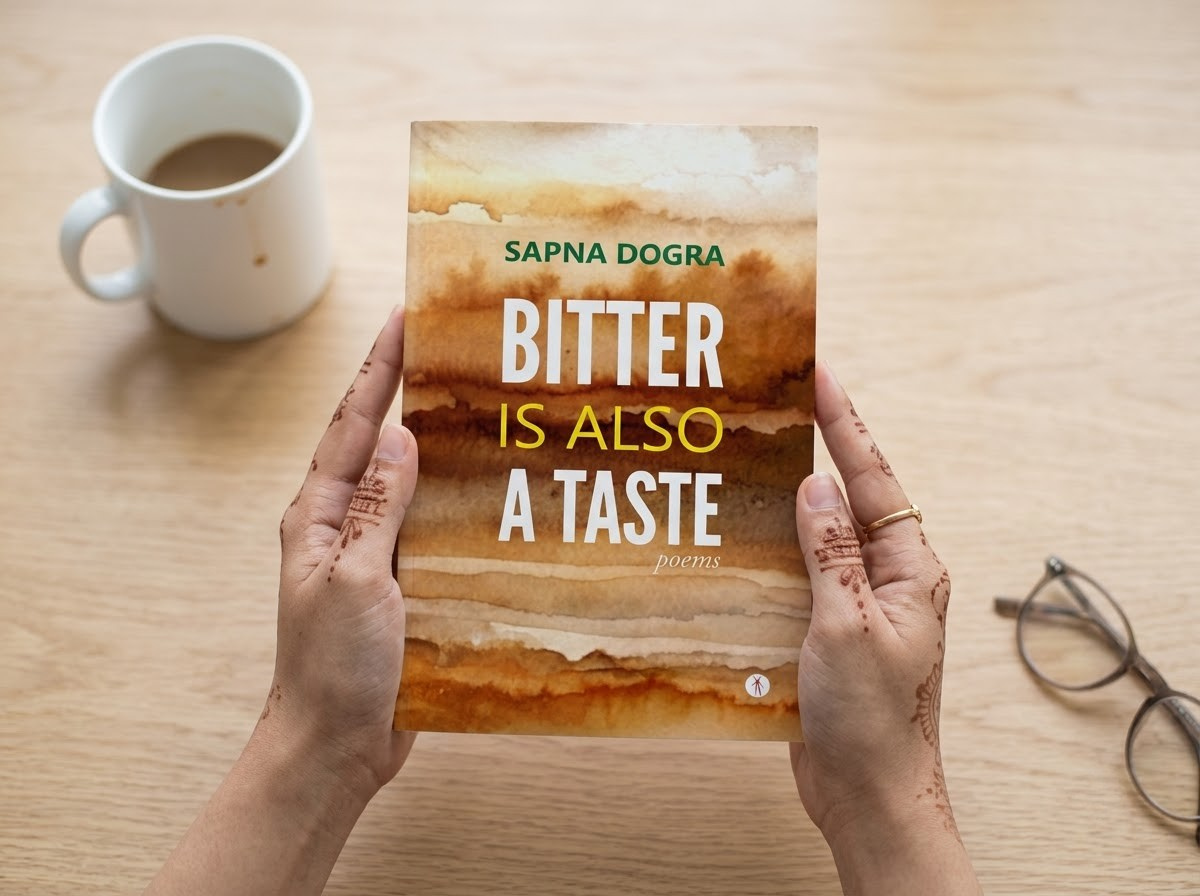
I picked up Bitter Is Also a Taste on a day when I’d had one too many overly sweet conversations, the kind where everyone tells you what you want to hear because it’s easier than telling the truth. Reading Sapna Dogra’s poems felt like someone finally handed me a cup of black coffee instead. As Editor-in-Chief at Deified Publication, I read a lot of poetry that wants to please a reader before it wants to be honest with them. This collection doesn’t really do that, and I mean that as a compliment. It’s built around three sections, Sour, Bitter and Savoury, and by the time I’d finished the first one, I understood exactly why the book earned its title.
There’s no subtitle here, no gentle framing to soften what’s coming. Just a woman writing about desire, guilt, cities, bodies and the small daily indignities that most of us swallow without saying anything out loud. Bitter Is Also a Taste is a collection of short, direct poems, most of them just a handful of lines, and each one reads like a single thought caught mid-flight before the poet could talk herself out of writing it down. In my years reviewing books, I’ve noticed that short poetry collections either coast on vibes or they commit to a real point of view. Dogra commits.
What the Book Is About
The three-part structure isn’t decorative, it’s actually the spine of the whole collection. The Sour section opens with poems about the city, about being a woman moving through public space, about friendships that curdle and love that gets complicated. The Bitter section, which is the largest of the three, digs into guilt, shame, boredom, grief and the private negotiations we make with ourselves when nobody’s watching. Savoury, the final stretch, softens slightly into intimacy and something closer to peace, though even here Dogra doesn’t let herself off the hook easily.
What struck me is how literal the taste metaphor gets without ever feeling like a gimmick. There’s a poem called Cold Soup where she writes about hating cold soup, comparing it to old, dulled desire that’s “been through the fire” and is just “longing for release.” It’s such a small, almost silly image on the surface, but it works because she trusts the reader to sit with it instead of explaining it to death. A few pages later, in Pleasure, she notes how the demands of pleasure shift by the day, some days a quick itch, other days something slower, “a slithering snail,” and on the day she’s writing about, it’s “a piece of cake on a full stomach.” I’ve read enough confessional poetry to know how easily that kind of comparison can tip into cute. Here it doesn’t, mostly because the tone stays dry and a little unimpressed with itself throughout.
What Stood Out to Me
A few poems genuinely surprised me, and not always in a comfortable way. Peepal Tree is one of the strongest pieces in the Sour section. Dogra writes about the tree as “the people’s tree,” irrigated by “the red juice of men red in teeth and jaws,” which is a sly, specific reference to paan stains that I haven’t seen handled quite this way before. Then in the same poem she moves from clay gods decorating the trunk to a drug peddler waiting under its shade for a schoolboy, and finally to men lining up at night for the liquor store behind it. It’s a compact portrait of a very real Indian street corner, sacred and grimy at the same time, and she never once tells you how to feel about it.
Misogynist Driver is shorter and sharper, almost a punchline poem, where a driver insists “Women can’t drive!” while the poet quietly notes it drives him crazy that women drive the desire that drives the world. I laughed reading it, then felt a little uneasy about laughing, which I think was the point. Triptych, on the other hand, is one of the more layered pieces in the book, following a woman looking at her own face, “divine in the morning but slathered and warped in cheap colours,” and then following her into a cosmetic surgeon’s office where she asks for “a little simulation” of a better nose and better lips because she wants “to be perfect amidst imperfection.” It’s an uncomfortable poem about beauty culture and self-image, and it earns that discomfort instead of just performing it.
In the Savoury section, Patience reads almost like a small meditation guide, calling patience “the foundation of spiritual realization” and ending on “Breathe and Let Go,” which felt like a genuine tonal shift after all the anger and guilt earlier in the book. Prevailing Eternally closes with a line I keep thinking about, where the poet says she’s never prayed in a temple but God always answered anyway, ending on the imagined voice saying “Trust in Me, My Child.” It’s one of the few moments in the collection where the poet lets herself be soft without irony.
The Emotional Core
If there’s one thread holding this whole book together, it’s guilt, and how differently it shows up depending on where you are in a woman’s life. The poem simply called Guilt is blunt about it, calling guilt “a reminder to silence the corrupt self” and describing the specific ache of “things said pretentiously inadvertently.” That’s such a precise way to describe the kind of regret that isn’t about a big mistake, just an ordinary social misstep that won’t leave you alone. Testing and Trials picks up a similar thread but through faith instead of guilt, describing “unanswered calls” and “chimes and pebbles to tell the time,” small, almost domestic images standing in for a much bigger question about whether anyone is listening.
Honestly, some of these poems made me a little uncomfortable in a good way. Menstruation, for instance, is barely eight lines long, but the way she describes the hours during her period refusing to “melt into one another,” like time itself gets heavier, is something I haven’t seen written about quite this plainly in poetry before. It’s the kind of detail that only makes sense if you’ve lived it, and I think that’s exactly the point of this whole collection. Dogra isn’t interested in universal, softened emotion. She’s interested in the specific, sometimes unglamorous truth of being a woman navigating a city, her own body and her own conscience, all at once.
Who This Book Is For
I’d recommend this to readers who like poetry that reads more like a diary entry than a greeting card, people who enjoyed Rupi Kaur’s early work but wished it had more edge and less polish. If you’re drawn to Instagram-style short verse but want something with a sharper, more unsentimental urban voice underneath it, this will likely land well. I’ll also say plainly that this isn’t for everyone. If you prefer longer, formally structured poems with traditional meter, or if you’d rather your poetry stay comfortably metaphorical instead of naming things like cosmetic surgery, periods and gossip directly, this might feel too blunt for your taste. That’s not a flaw exactly, it’s just a matter of fit.
Final Thoughts
What I appreciated most is that Dogra doesn’t oversell any of it. There’s no poem here trying to convince you it’s profound. A few pieces in the Bitter section, especially in the middle stretch, do start to feel a little similar in rhythm and subject, and I found myself wishing for one or two fewer poems about ordinary daily boredom so the sharper pieces could stand out even more. But that’s a minor complaint in a book this consistent in voice. Bitter Is Also a Taste earns its title honestly. It doesn’t pretend bitterness is bad for you, it just asks you to notice it instead of masking it with something sweeter.
FAQs
Is Bitter Is Also a Taste worth reading?
If you want poetry that’s direct, urban and unafraid of uncomfortable subjects, yes, I think it’s worth your time.
Who should read this book?
Readers who enjoy short, confessional poetry with a feminist, city-dwelling point of view, and anyone tired of poems that soften every hard edge.
What is Bitter Is Also a Taste about?
It’s a three-part collection organized around Sour, Bitter and Savoury themes, covering guilt, desire, city life, womanhood and small moments of peace.
How does Sapna Dogra’s style compare to other contemporary poets?
It sits closer to the short-form confessional style popularized by poets like Rupi Kaur, but with a drier, more unsentimental edge and a stronger focus on Indian urban detail.

With over 11 years of experience in the publishing industry, Priya Srivastava has become a trusted guide for hundreds of authors navigating the challenging path from manuscript to marketplace. As Editor-in-Chief of Deified Publications, she combines the precision of a publishing professional with the empathy of a mentor who truly understands the fears, hopes, and dreams of both first-time and seasoned writers.