
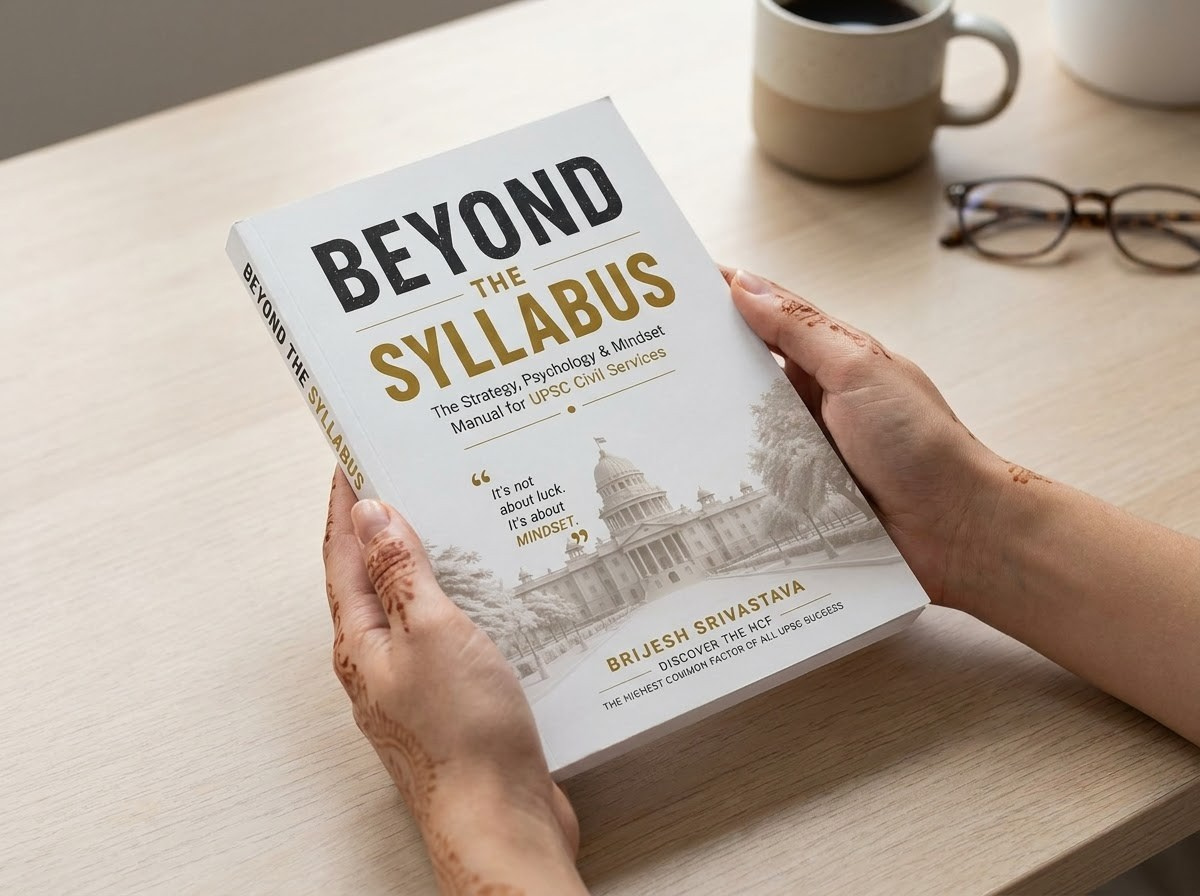
Rating: ⭐⭐⭐⭐ (4.4 out of 5)
Every year around exam season, I watch young people in my neighborhood carry thick armfuls of study material into tea shops and libraries. They sit for hours under dim lights, highlighting line after line until their pages look like bright yellow walls. As Editor-in-Chief at Deified Publication, I have spent fifteen years reading books across every genre imaginable, and I have seen dozens of preparation manuals come across my desk. Most of them promise secret formulas or shortcut tricks to clear tough competitive tests, yet they rarely address what actually happens inside a person’s head when the pressure builds up. When I opened Beyond The Syllabus by Brijesh Srivastava, I felt an immediate shift in tone from the usual coaching literature. Instead of offering another massive list of topics to memorise, this book looks directly at the person holding the pen. It made me reflect on how often we confuse being extremely busy with actually making real progress in life.
I have seen this happen in real life with friends and family members who spent years preparing for competitive examinations. They knew their subjects inside out, yet when they entered the test center, something broke down under time pressure. Brijesh Srivastava addresses this exact disconnect right from his opening pages. He introduces an idea he calls the Highest Common Factor, or HCF, which is not a academic topic but the trained state of the human mind itself. This concept suggests that while candidates choose different optional subjects or read different textbooks, the successful ones share a specific mental operating system. They know how to process facts deeply rather than just collecting them on paper. It is the kind of book that sits with you, forcing you to question your daily habits and how you handle stress when the stakes are high.
What Is It About? Decoding the Core Framework
If you are looking for a quick book summary, this work is structured as an eighteen chapter manual for civil services preparation, but its core focus is cognitive training. The author splits the journey into clear tactical areas including Prelims strategy, General Studies Mains papers, the Essay, and the Personality Test. However, the backbone of the text rests on how the brain learns, retains, and retrieves information. He explains how most aspirants prepare in a reactive state driven by anxiety rather than a reasoning mode governed by the prefrontal cortex. To fix this, he outlines active reading habits like the stop-recall-continue method, structured note-making using the Cornell system, and a four-stage spaced repetition calendar designed to defeat the natural memory forgetting curve.
What is it about beyond the exam details is a philosophy of total mental discipline. The book explains how to manage your daily environment, build habit chains that do not rely on fragile willpower, and set up an execution system that can survive real life disruptions. There is a whole section dedicated to the elimination mindset needed for Prelims, where questions are treated as decision-making exercises rather than memory checks. For Mains, he breaks down answer structure into a clean sequence of context, cause, effect, and analysis, while emphasizing that the Essay paper is really a test of your authentic intellectual voice. Towards the end, the text addresses the internal psychological struggles of long-haul preparation, offering concrete daily practices to maintain focus and recover from inevitable setbacks.
Craft, Style, and the Story Behind the Guidance
What stood out to me most in terms of style was the unusual blend of engineering precision, cognitive science, and personal history. Brijesh Srivastava is an IIT Roorkee civil engineering graduate who spent thirty-six years building railway lines, bridges, and metro systems at RITES Ltd before retiring as General Manager. That background shows in the way he constructs his arguments, treating preparation like a solid structural framework rather than an emotional scramble. Yet the narrative is grounded in a deeply personal memory from his childhood in a village in Basti district, Uttar Pradesh. He describes sitting in the dust while a local mystic showed him a simple focus technique involving a point drawn inside a rectangle and holding the tongue gently against the roof of the mouth. Decades later, while studying psychology in college, he recognized that this ancient focus practice matched modern neuroscience findings about prefrontal cortex activation.
There is a distinct, measured voice throughout the chapters that reminded me of reading foundational self-improvement classics like Cal Newport’s Deep Work or James Clear’s Atomic Habits, though tailored specifically for Indian competitive exams. There is a specific moment where a three-stage interview candidate named Paras Malik notes in an endorsement that while other books explain what or how to study, this text focuses on who to be while studying. That observation captures the tone well. The writing style is direct and clear, using short, firm statements to break down complex psychological concepts into simple daily routines. Honestly, I found the chapter on note-making particularly practical, especially his rule that notes should never be created during a first reading because divided attention reduces comprehension quality.
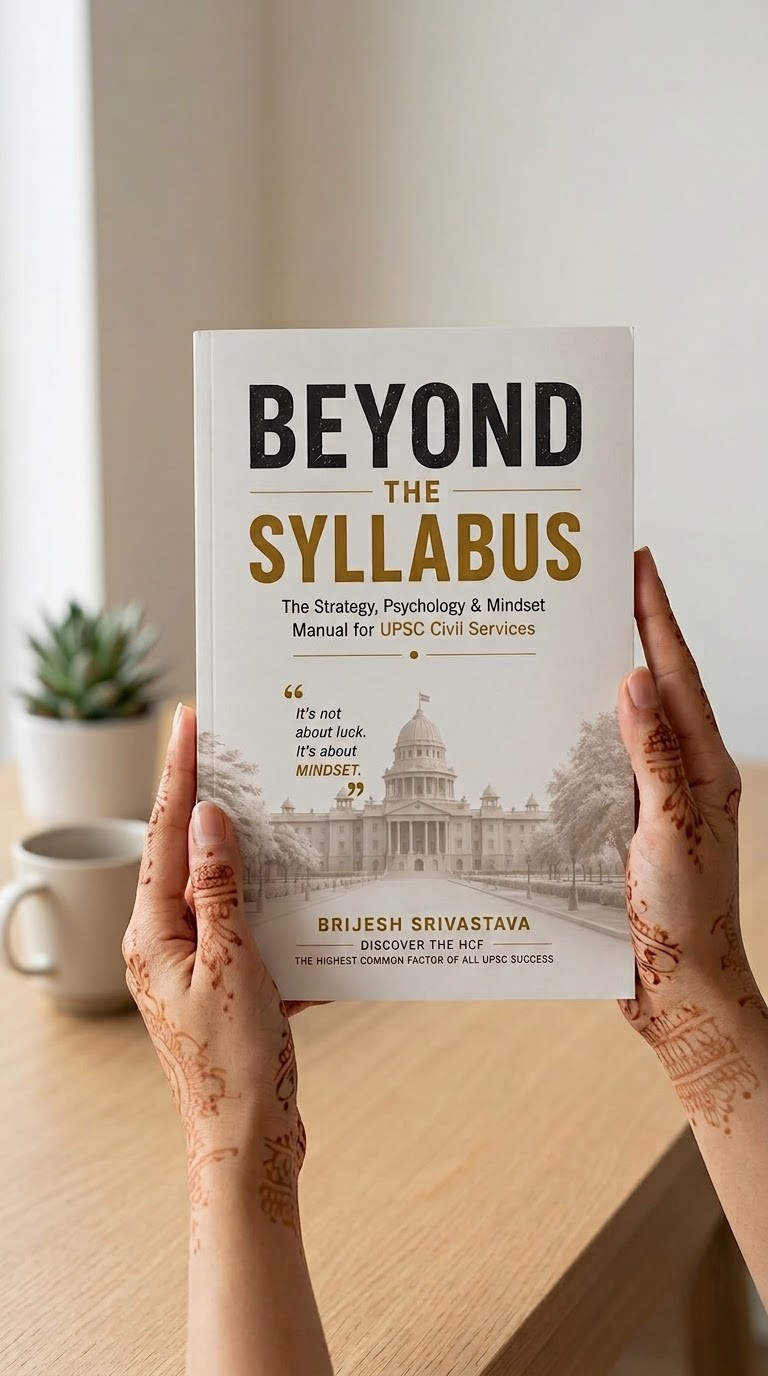
The Emotional Core and How It Lands on the Reader
Beyond the technical advice, there is a strong emotional current running through the middle of the book. In Chapter 16, which deals with the psychology of long preparation, the author speaks directly to what he calls the midnight aspirant. This is the student sitting alone at two in the morning, staring at a pile of books and wondering if all the sacrifice will ever lead anywhere. I was not expecting to feel this way while reading an exam guide, but I teared up a bit during that section because it captures the heavy social weight that young people carry. He discusses the pressure from well-meaning families, the comparison traps fueled by social media, and the fear of failure that causes candidates to panic during tests. His response to these struggles is wonderfully ground in reality, telling readers that feeling the journey is hard does not mean they are weak, it simply means they are human.
Some parts hit differently because the author does not offer cheap cheerleading or false promises. He states plainly that no book or coaching center can clear an examination for a candidate, and that success comes down to daily, unglamorous execution across months and years. In a warm letter addressed to the reader near the end, he shares a tradition from his village where elders would bless departing travelers not by wishing them success, but by hoping they would return having become more than they were when they left. That emphasis on personal growth over mere exam outcome gives the text a dignified, reassuring quality. It shifts the reader’s perspective from viewing preparation as a painful delay of life to seeing it as a meaningful period of self-building.
Who Should Read This Book and Who Might Want to Skip It
If you are wondering should you read this, the answer depends heavily on what you expect from a preparation guide. This book is ideal for serious candidates who feel overwhelmed by information overload and are struggling to maintain daily consistency. It will benefit self-study aspirants, working professionals managing tight schedules, and college students who want to build proper study habits early in their journey. Even if you are not appearing for civil services, the cognitive techniques regarding active recall, spaced revision, and habit architecture apply to almost any demanding intellectual pursuit. Anyone looking for a clear reader review will tell you that the text offers an excellent blueprint for structured learning and mental resilience.
On the other hand, some readers might find reasons to hesitate. If you are looking for a quick subject guide with subject summaries, syllabus shortcuts, or ready-made answer templates, you will not find them here. The author explicitly avoids teaching specific syllabus topics, choosing instead to focus entirely on mental training and study strategy. At times, the tone can feel somewhat stern, and the author’s insistence on strict study schedules and phone removal might feel intense for casual readers. A minor criticism I had while reading was that certain core ideas about active engagement and prefrontal focus get repeated across multiple chapters, which can feel a little iterative if you read the book in a few sittings.
Honest Closing Thoughts
Is it worth it to add another book to your study table when your shelf is already overflowing? I think it is, precisely because this text helps you streamline everything else you are reading. Brijesh Srivastava has drawn from his decades of civil engineering leadership, his mentoring experience, and his lifelong study of human performance to create a manual that respects the reader’s intelligence. Published looking ahead toward 2026, the guidance feels completely relevant to the realities of modern digital distraction and high competition. It strips away the hype surrounding topper interviews and replaces it with actionable, evidence-based systems that anyone can implement starting today.
In the end, this is a thoughtful, honest manual that treats exam preparation as a test of character and cognitive discipline rather than a brute-force memory contest. It reminds us that behind every study schedule, every syllabus, and every written test, there is a human mind that needs care, structure, and focus. If you choose to apply even two or three of the core systems described in these pages, your daily routine will become vastly more efficient and far less stressful. It is a solid, practical read that offers genuine clarity in a noisy market.
FAQs
What is the main concept of Beyond The Syllabus by Brijesh Srivastava?
The main concept of the book is the Highest Common Factor, or HCF, which the author defines as the trained, activated, and reasoning human mind. Instead of focusing on subject content or reading lists, the book explains how to build the cognitive habits, focus techniques, active reading methods, and emotional resilience needed to master any complex syllabus and perform well under exam pressure.
Is this book useful for exams other than the UPSC Civil Services?
Yes, while the specific exam architecture discussed in the book refers to the Indian Civil Services Examination including Prelims, Mains, and the Personality Test, the core methods are universal. The sections covering the neuroscience of focus, active recall, the SQ3R reading system, habit stacking, and spaced repetition can be applied to any major competitive exam or intensive learning program.
Does Beyond The Syllabus contain study material or topic summaries for General Studies?
No, the book does not contain subject-specific study notes, historical facts, or general knowledge summaries. It is strictly a strategy, psychology, and mindset manual that teaches you how to study, how to structure your notes, how to write analytical answers, and how to manage your daily schedule effectively using primary sources.

With over 11 years of experience in the publishing industry, Priya Srivastava has become a trusted guide for hundreds of authors navigating the challenging path from manuscript to marketplace. As Editor-in-Chief of Deified Publications, she combines the precision of a publishing professional with the empathy of a mentor who truly understands the fears, hopes, and dreams of both first-time and seasoned writers.