
Rating:
⭐⭐⭐⭐ (4.4 out of 5)
There are books that tell stories, and then there are books that collect feelings.
Between What We Say And What We Feel: Relationships Unlayered by Priti Jain belongs firmly in the second category.
As someone who has spent more than fifteen years reading books across genres, I have noticed that relationship writing often falls into one of two extremes. Either it becomes overly dramatic, filled with declarations and heartbreak, or it becomes analytical, treating emotions like case studies. What I appreciated about this book is that it chooses a different path. It focuses on the small emotional spaces most people recognize but rarely discuss.
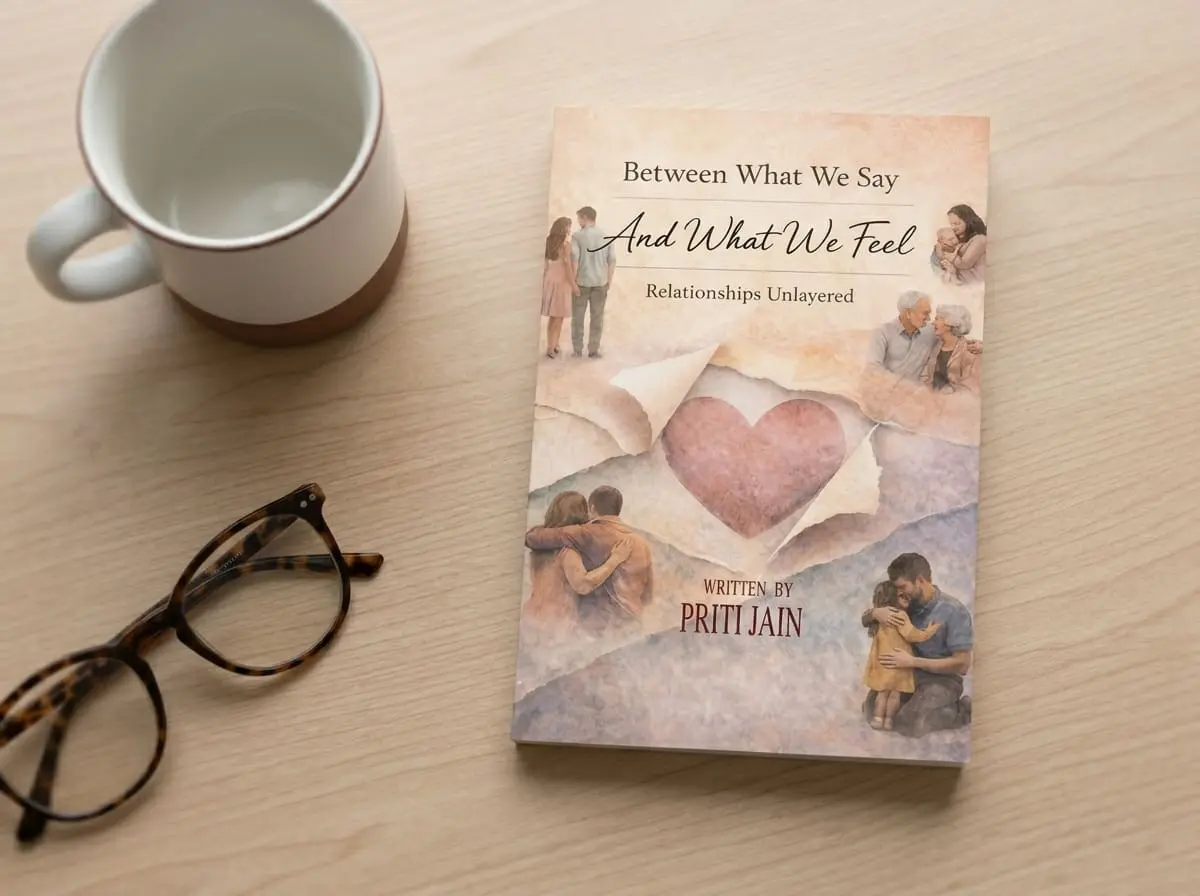
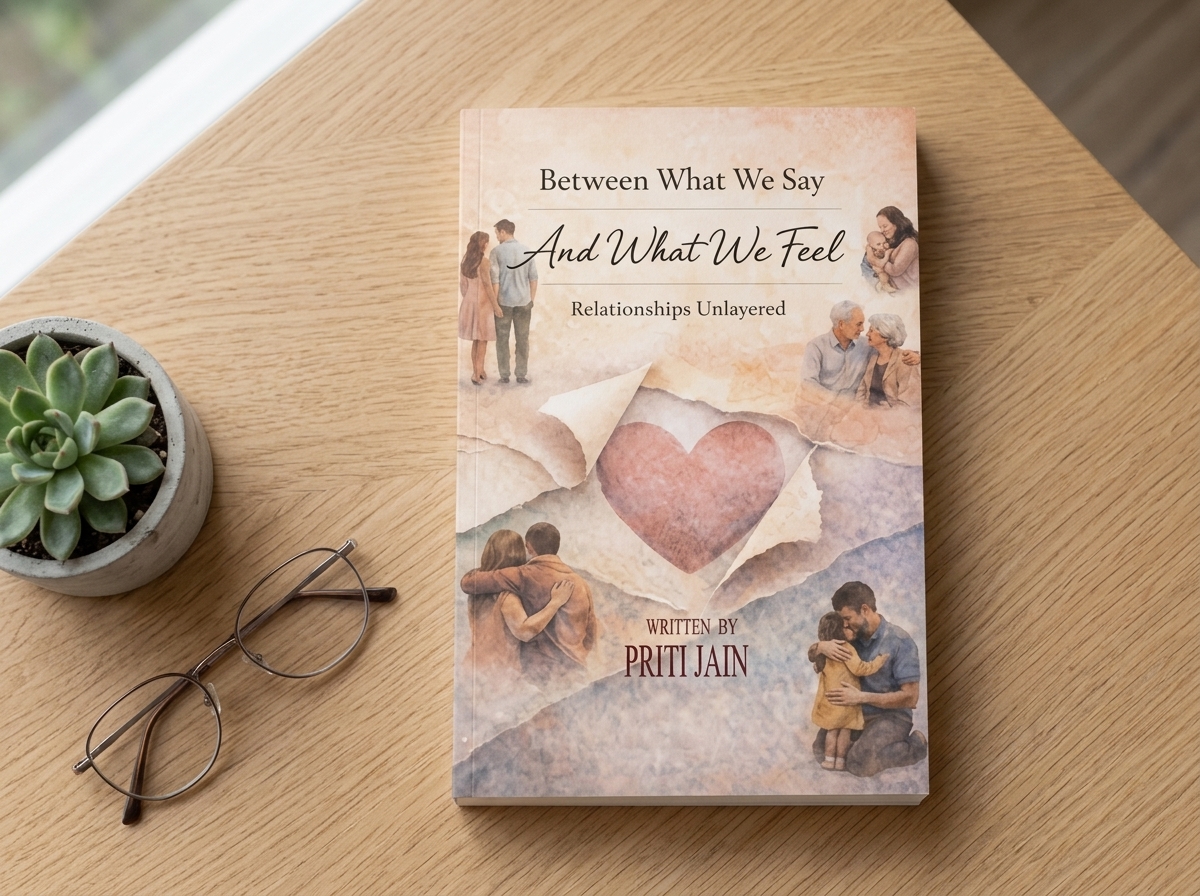
The cover itself hints at this intention. Couples, families, parents, children, and a heart hidden beneath torn layers immediately suggest that relationships are rarely as simple as they appear. The subtitle, Relationships Unlayered, feels appropriate because the book spends its pages peeling back emotions that usually remain hidden beneath everyday conversations.
What struck me from the very beginning was the author’s honesty. In the preface, Priti Jain tells readers that they will not find perfection here. Instead, they will find glances, misunderstandings, reconciliations, hope, and emotional subtleties. That statement serves as an accurate introduction to everything that follows.
What the Book Is About
At its core, Between What We Say And What We Feel is a collection of reflections, poems, and emotional snapshots centered around human relationships.
The book moves through many forms of connection. There is parental love. Romantic love. Friendship. Longing. Emotional dependence. Self discovery. Heartbreak. Acceptance. Healing. And perhaps most importantly, the relationship we have with ourselves.
Rather than constructing one continuous narrative, Priti Jain presents individual pieces that function like emotional windows. Each chapter captures a particular feeling, moment, or realization.
In All It Takes… Just One Word, the author captures the almost magical power of a child calling their mother “Mumma.” The frustrations of daily life dissolve instantly in the face of love. It is a simple idea, yet one that many parents will immediately understand.
In What Holds Us Together, two people appear fundamentally different in expectations and perspectives, yet remain connected by a shared desire to remain in each other’s lives. The poem captures a truth that many long term relationships eventually discover: compatibility is not always similarity.
As the collection progresses, the emotional landscape becomes broader. We encounter desire, friendship, workplace pressures, abandonment, grief, self respect, emotional neglect, acceptance, and eventually self love.
What ties everything together is the author’s fascination with what exists beneath spoken language. Again and again, the book asks readers to consider the emotional realities hidden beneath ordinary conversations.
What Stood Out to Me
The strongest aspect of this book is its emotional accessibility.
Many poets attempt complexity and end up creating distance between themselves and their readers. Priti Jain does the opposite. Her language is straightforward and easy to understand, yet the emotions often land with surprising force.
One of the pieces that lingered in my mind was The Things I Forgot. On the surface, it describes everyday interactions between partners. Did you eat? How was your day? Good morning. Good night. These phrases seem routine until the author reveals something heartbreaking: eventually both people stop remembering. The final realization that one person was never truly waiting but merely replying changes the meaning of everything that came before it.
I also found What I Left Behind particularly relevant for modern readers. The poem addresses something many professionals experience but rarely acknowledge openly. Careers grow, responsibilities increase, targets multiply, and somewhere along the way meaningful friendships receive less attention than they deserve. The accompanying note about friendship and career balance adds further depth.
Another standout piece is Yes We Exist. I appreciated this one because it challenges a common assumption. Society often believes that people from supportive families or comfortable circumstances should somehow be immune to emotional pain. The poem firmly rejects that idea. It argues that vulnerability remains valid regardless of privilege. I thought that was an important and mature perspective.
Then there is The One Who Stayed, which may be my favorite piece in the entire collection. For most of the poem, readers are led to believe the author is describing a friend, partner, or family member. The revelation that the relationship being described is actually with oneself transforms the entire poem. It becomes a celebration of self acceptance rather than dependence on external validation.
That shift feels earned rather than forced.
The Emotional Core
What makes this collection effective is not its discussion of love.
It is its discussion of emotional recognition.
Throughout the book, people are searching for something deeper than affection. They are searching for understanding.
Many of the poems focus on situations where words fail. A person wants reassurance but cannot ask for it. Someone continues waiting long after the other person has emotionally left. A relationship survives despite conflicting expectations. Someone realizes they have been loving alone.
These experiences are deeply familiar.
Reading the book reminded me of conversations I’ve had with friends over tea, where the real issue emerges only after twenty minutes of talking about something else. Human emotions rarely arrive in direct language. We circle around them. We hide them. We minimize them. We hope someone notices them without being told.
Priti Jain understands this tendency very well.
I think that is why several pieces feel personal even when readers have never experienced the exact circumstances described.
The collection also contains an undercurrent of self respect that I appreciated. While there is longing, there is also growth. While there is heartbreak, there is also recognition. Pieces like Unholding You demonstrate the difficult realization that love should not require endless begging, convincing, or emotional exhaustion.
That emotional evolution gives the collection a satisfying arc.
It begins with relationships centered around others and gradually moves toward a healthier relationship with oneself.
The Writing Style
Priti Jain writes with sincerity.
That may sound like a simple observation, but sincerity is harder to achieve than many people realize. Readers can usually sense when emotions are exaggerated for effect.
Here, the emotions feel lived rather than manufactured.
The author favors clarity over complexity. Most poems rely on relatable situations rather than elaborate imagery. That decision makes the collection accessible to readers who may not typically read poetry.
I also noticed a recurring emphasis on emotional contrasts. Presence versus absence. Words versus feelings. Expectation versus reality. Holding on versus letting go. These tensions appear throughout the collection and reinforce its central themes.
If I had one minor criticism, it would be that some poems revisit similar emotional territory. Longing, waiting, and emotional dependence appear frequently throughout the book. A slightly wider range of themes could have created even more variety.
That said, relationship centered collections often return to recurring emotions because relationships themselves do.
Who This Book Is For
I think Between What We Say And What We Feel will resonate strongly with readers who enjoy reflective writing about relationships.
It is particularly suited for:
- Readers who enjoy contemporary poetry
- People navigating love, heartbreak, or emotional healing
- Readers who appreciate introspective writing
- Young adults exploring relationships and identity
- Anyone who has ever struggled to express what they truly feel
This may not be the ideal collection for readers seeking highly experimental poetry or dense literary techniques.
Its strength lies elsewhere.
Its strength lies in emotional relatability.
Final Thoughts
When I finished Between What We Say And What We Feel, I found myself thinking about the title again.
The title is actually the book’s central idea.
Most relationships are shaped not only by what we say but by everything we don’t say. Expectations remain unspoken. Hurt remains hidden. Affection appears through actions rather than declarations. Understanding often exists in gestures rather than conversations.
Priti Jain captures that reality with warmth and honesty.
What I appreciated most was that the collection never presents relationships as perfect. Misunderstandings happen. People disappoint each other. Love sometimes becomes one sided. Friendships drift. Yet despite these realities, the book continues to believe in human connection.
That optimism gives the collection its emotional heartbeat.
As Editor-in-Chief at Deified Publication, I read many books that attempt to discuss relationships. Few manage to feel as personal and approachable as this one.
It is a collection that reminds readers that emotional experiences do not need grand events to matter.
Sometimes the most significant moments happen between what we say and what we feel.
FAQ
Is Between What We Say And What We Feel worth reading?
Yes, especially if you enjoy emotionally driven poetry and reflections about relationships, self awareness, love, and personal growth.
Who should read this book?
Readers who enjoy contemporary poetry, relationship themes, emotional introspection, and reflective writing will likely connect with it.
What is Between What We Say And What We Feel about?
The collection examines various forms of human connection, including romance, friendship, family bonds, heartbreak, healing, and self acceptance.
Is this book only about romantic relationships?
No. While romance is an important theme, the collection also explores friendship, motherhood, emotional resilience, and the relationship people have with themselves.

With over 11 years of experience in the publishing industry, Priya Srivastava has become a trusted guide for hundreds of authors navigating the challenging path from manuscript to marketplace. As Editor-in-Chief of Deified Publications, she combines the precision of a publishing professional with the empathy of a mentor who truly understands the fears, hopes, and dreams of both first-time and seasoned writers.