
Rating
⭐⭐⭐⭐ (4.4 out of 5)
As someone who has spent more than fifteen years reading and reviewing books across genres, I have noticed that many books about spirituality make one of two mistakes. They either become so philosophical that ordinary readers feel excluded, or they become so simplified that the wisdom loses its depth.
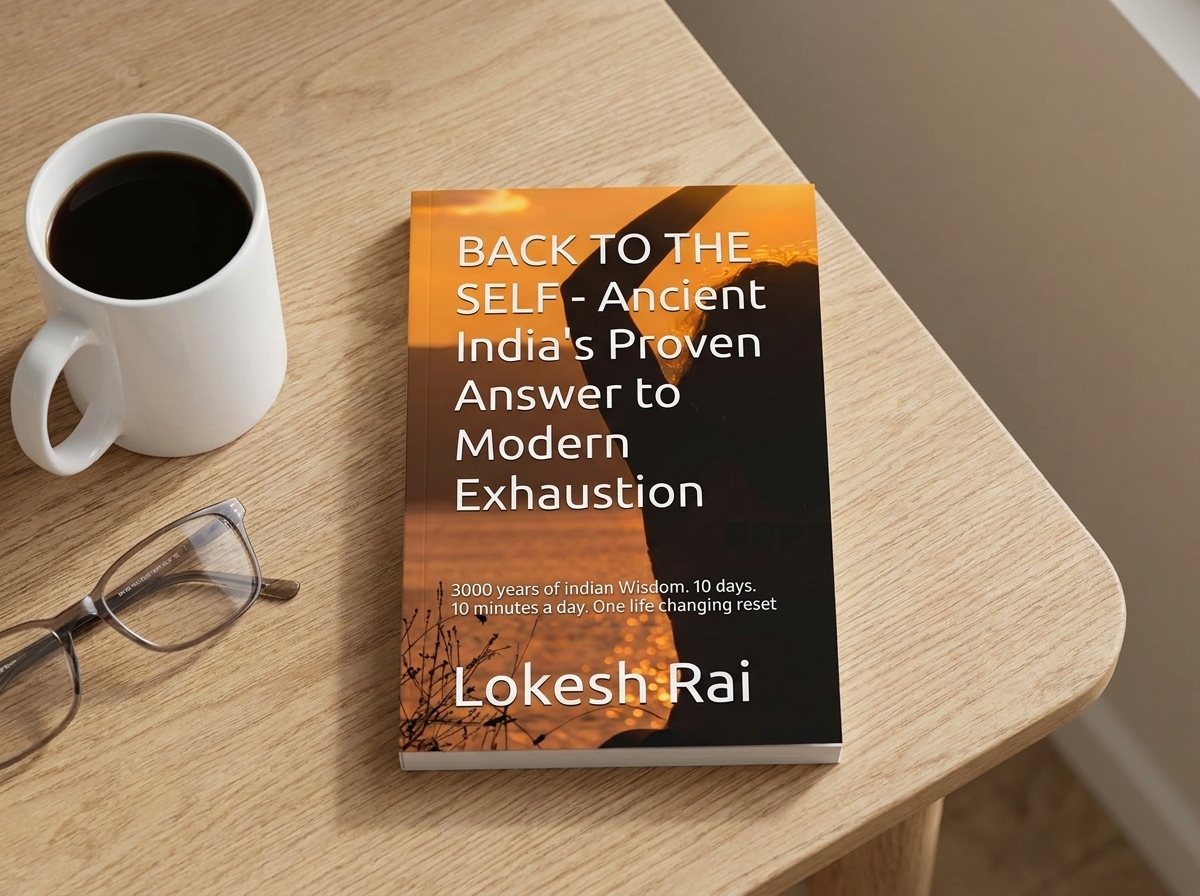
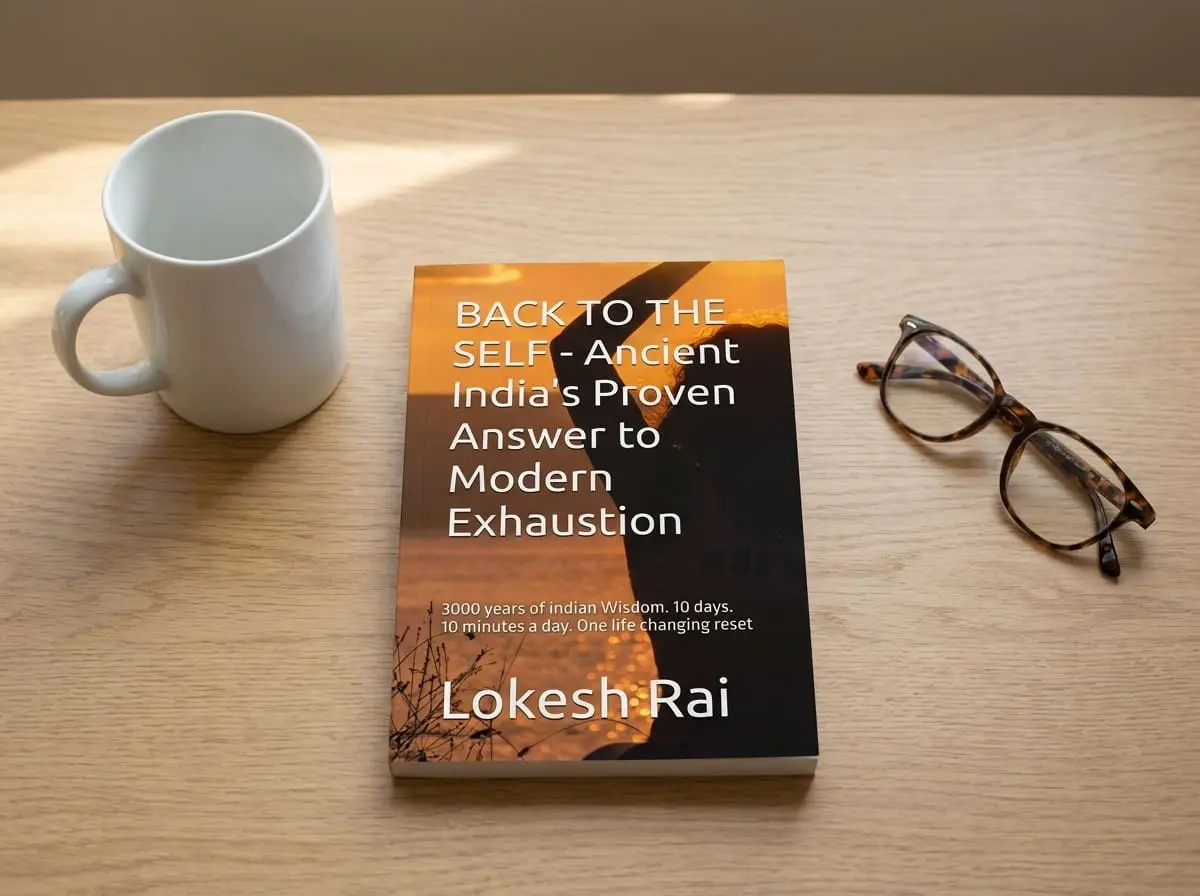
BACK TO THE SELF: Ancient India’s Proven Answer to Modern Exhaustion by Lokesh Rai manages to walk an interesting middle path. After reading it, I felt that this is not a book trying to impress readers with complex terminology. Instead, it feels like a sincere attempt to introduce ancient Indian wisdom to people who are tired, overwhelmed, and searching for something meaningful in the middle of busy lives.
What struck me immediately was the author’s background. Lokesh Rai is not writing as a monk living in isolation. According to the book, he is a long time Vipassana practitioner who also works in the corporate technology world. That combination matters because the book constantly speaks to modern exhaustion, workplace pressure, responsibility, and the feeling that something important has been lost amid achievement and productivity.
What the Book Is About
At its core, BACK TO THE SELF is a beginner friendly ten day meditation and self reflection program built around teachings from the Upanishads, Vedic philosophy, and Vipassana meditation. Rather than presenting hundreds of techniques, the author introduces one key idea and one practical exercise for each day.
The opening chapters make it clear who this book is written for. It speaks directly to people in midlife who may have successful careers, family responsibilities, and outward stability, yet still find themselves asking deeper questions about meaning, identity, and fulfillment. The author argues that many people have lost connection with their inner selves and that ancient Indian wisdom offers practical tools for rebuilding that connection.
The structure is simple and approachable. Day One introduces breath awareness through the Vipassana practice of Anapana. Day Two focuses on calming what the author calls the “Monkey Mind” through mantra awareness. Subsequent days guide readers through body scanning, self inquiry, impermanence, the witness consciousness, loving kindness meditation, gratitude, conscious action, and ultimately integration of all these practices into daily life.
What I appreciated is that every chapter combines philosophy with action. Readers are not simply told what ancient sages believed. They are given a specific practice and reflection questions that encourage personal experience.
What Stood Out to Me
The strongest aspect of this book is its accessibility.
I have read many books based on the Upanishads and Indian spiritual traditions. Some assume prior knowledge and can feel intimidating for newcomers. Lokesh Rai avoids that problem. Concepts like Atman, Sakshi, Anicca, and Neti Neti are explained in straightforward language without losing their significance.
One chapter that particularly stood out was the discussion around identity. The author asks readers to examine the labels they carry, such as professional, parent, spouse, caregiver, and consider whether those roles fully define who they are. The exercise based on Neti Neti encourages questioning every identity until something deeper remains. Whether one agrees with the philosophical conclusion or not, it is an interesting exercise in self observation.
I also found the section on impermanence meaningful. The author connects the Buddhist concept of Anicca with modern experiences such as changing careers, aging, shifting relationships, and uncertainty. Instead of presenting change as a problem to solve, he presents it as a reality to understand. In 2026, when many people are dealing with rapid technological and social change, this message feels particularly relevant.
Another strength is the emphasis on observation rather than achievement. Many self help books create pressure by promising transformation, success, or extraordinary outcomes. Here, the repeated message is simply to observe, notice, and become aware. There is something refreshing about that.
The Emotional Core
I think the emotional heart of this book is not meditation itself.
It is exhaustion.
The subtitle mentions modern exhaustion, and that theme appears repeatedly throughout the text. The author recognizes that many people are carrying invisible burdens. Stress. Anxiety. Expectations. Regret. Responsibility. The book speaks to readers who may appear fine on the outside but feel disconnected internally.
There is a line early in the book suggesting that what people have lost is not their wallet or their keys but the thread leading back to themselves. That idea captures the emotional tone of the entire work.
While reading, I found myself thinking about conversations I’ve had with friends who are successful by conventional standards yet often describe feeling emotionally drained. This book seems written for exactly those people.
The sections on loving kindness and gratitude add warmth to what could otherwise have become a purely intellectual exercise. They remind readers that spiritual growth is not only about understanding concepts. It is also about developing compassion toward oneself and others.
Who This Book Is For
This book will likely appeal to several types of readers.
First, it is ideal for beginners who are curious about meditation but feel intimidated by large spiritual texts.
Second, it may resonate with professionals experiencing burnout or emotional fatigue. The author clearly understands the pressures of modern work life and speaks directly to that audience.
Third, readers interested in Indian philosophy will appreciate seeing concepts from the Upanishads and Vipassana presented in a practical format.
However, this book may not satisfy readers looking for highly academic scholarship or detailed historical analysis. Its goal is application rather than intellectual debate. Similarly, experienced meditation practitioners may find some sections introductory.
That is not necessarily a weakness. It simply reflects the audience the author is trying to serve.
Final Thoughts
As Editor in Chief at Deified Publication, I read a large number of books every year. Some offer information. Some offer inspiration. A smaller number offer practical tools that readers can actually use the same day they finish a chapter.
BACK TO THE SELF belongs to that third category.
What I liked most is its sincerity. Lokesh Rai does not position himself as a guru with all the answers. Instead, he writes like someone sharing practices that have helped him navigate the demands of modern life while remaining connected to ancient wisdom traditions.
The book is concise, accessible, and structured in a way that encourages action rather than passive reading. At times I wished certain concepts had been explored in greater depth, particularly for readers who may want more context around the philosophical foundations. Yet the simplicity is also part of its appeal.
If you are feeling mentally overloaded, spiritually curious, or simply looking for a structured introduction to meditation and self inquiry, this book offers a thoughtful starting point.
FAQs
Is BACK TO THE SELF worth reading?
If you are interested in meditation, self awareness, and practical applications of Indian wisdom, it offers a useful introduction.
Who should read BACK TO THE SELF?
Beginners, busy professionals, midlife readers, and anyone curious about Vipassana and Upanishadic teachings.
Is this a religious book?
The book draws heavily from Indian spiritual traditions but presents them in a practical and accessible manner focused on personal experience.
Do you need meditation experience before reading it?
No. The book is specifically written for beginners and introduces practices step by step.

With over 11 years of experience in the publishing industry, Priya Srivastava has become a trusted guide for hundreds of authors navigating the challenging path from manuscript to marketplace. As Editor-in-Chief of Deified Publications, she combines the precision of a publishing professional with the empathy of a mentor who truly understands the fears, hopes, and dreams of both first-time and seasoned writers.