
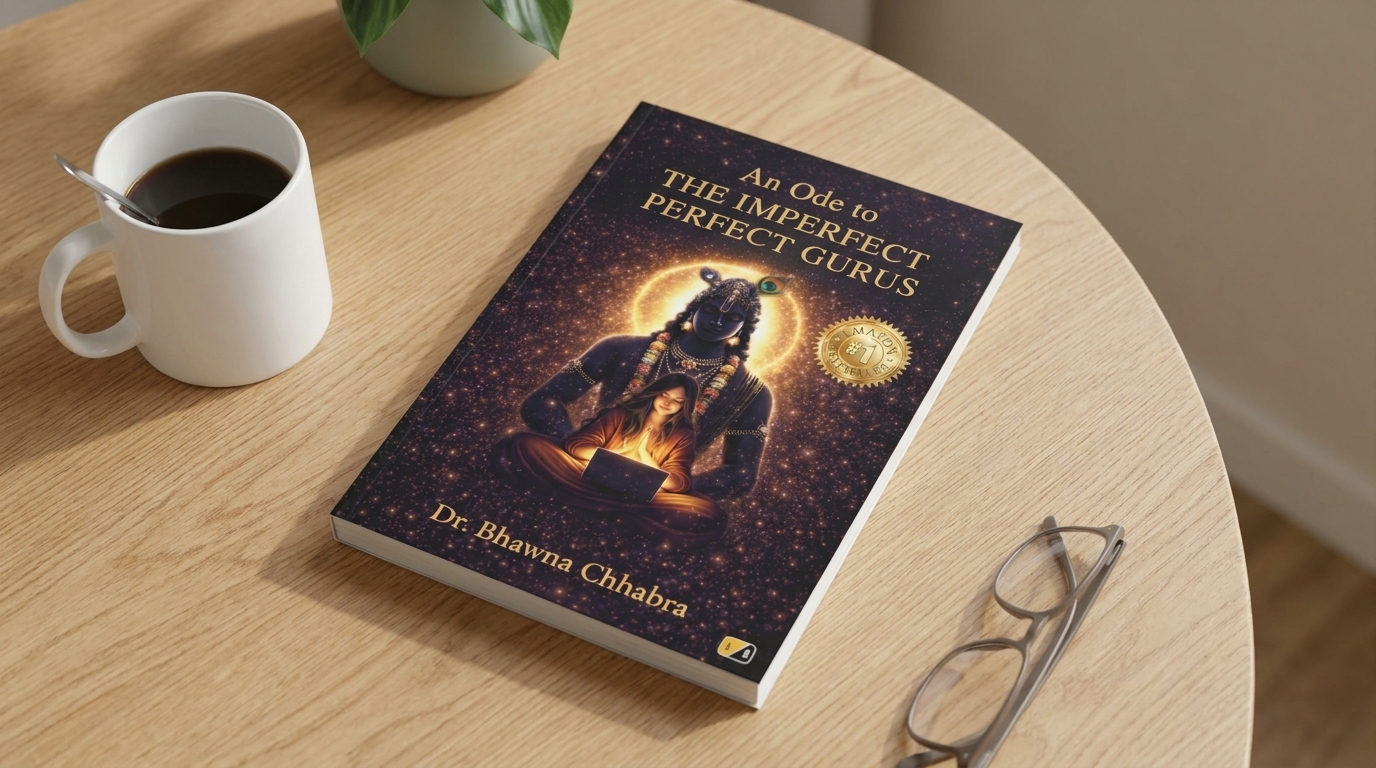
Rating:
⭐⭐⭐⭐ (4.3 out of 5)
I have spent years reviewing books across genres, from literary fiction to spiritual memoirs, and I can usually tell within the first few pages what kind of emotional relationship a book wants to build with its reader. Some books try to impress you. Some try to educate you. Some want to sound intelligent.
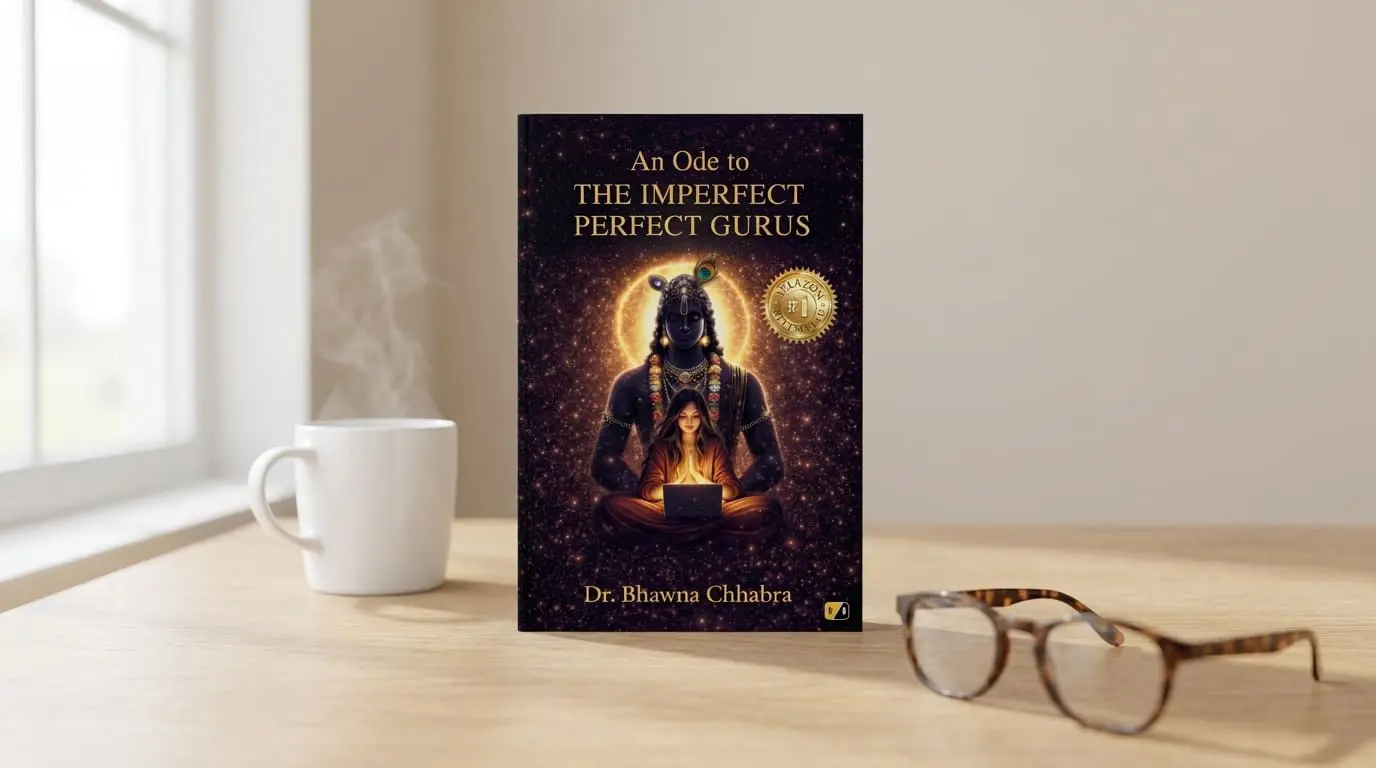
But An Ode To The Imperfect Perfect Gurus by Dr. Bhawna Chhabra feels different. This book does not stand in front of you trying to prove anything. It feels more like someone opening an old family album at midnight and saying, “These are the people who made me who I am.”
And honestly, I think that sincerity is the book’s greatest strength.
The first thing that struck me was the emotional nakedness of the writing. Dr. Bhawna Chhabra is not hiding behind polished spirituality or motivational language. She writes about illness, grief, faith, family tensions, workplace struggles, mentors, teachers, and ordinary acts of kindness with a level of vulnerability that many writers avoid. Sometimes it works beautifully. Sometimes it becomes a little too emotionally dense. But even in those moments, I never doubted the honesty behind the words.
In 2026, when everyone seems obsessed with productivity, personal branding, and becoming “successful,” this book arrives with a completely different question:
Who held your hand when you were falling apart?
That question sits at the center of this entire work.
What the Book Is About
At its core, An Ode To The Imperfect Perfect Gurus is a gratitude memoir rooted in Indian spiritual philosophy, particularly the idea that teachers are not limited to formal gurus or saints. Inspired by Lord Dattatreya’s concept of finding wisdom everywhere, Dr. Bhawna Chhabra writes about the people who shaped her life emotionally, spiritually, and psychologically.
And I appreciated that she doesn’t romanticize them into flawless beings.
Her mother becomes a Guru not because she performs miracles, but because she shows extraordinary emotional steadiness during frightening medical crises. Her father becomes a Guru because of his resilience, his humanity, and even his failures. Workplace mentors become Gurus because they taught her dignity, self respect, and leadership. A monk becomes a Guru because he answered late night calls and helped her family survive grief without collapsing emotionally.
There is one line from the book that really captures its essence. Dr. Chhabra writes that guidance does not live only in scriptures. It lives in people.
That idea echoes throughout every chapter.
The structure of the book is deeply personal. Each chapter focuses on a different “Guru” from the author’s life. We meet her mother, father, brother, workplace mentors Tina and AP, spiritual figures like Ghanshyam Mahatmaji and Upendraji, and even a child named Nakshu who brings joy into the family during difficult years.
What surprised me was how grounded many of these stories feel despite the spiritual framework. This is not abstract spirituality floating above real life. Hospitals appear constantly. ICU rooms. Cancer diagnoses. Financial instability. Anxiety attacks. Workplace politics. Long commutes. Family exhaustion. Emotional burnout.
The spirituality here is woven into daily survival.
And maybe that is why the book feels emotionally believable.
What Stood Out To Me
The chapter about the author’s mother was probably the strongest section for me emotionally. I have read countless books where mothers are praised in exaggerated, almost performative ways. This felt more intimate and specific.
There is a moment where the author recounts suffering from neurocysticercosis and losing the ability to walk properly. Her mother takes her every Friday to a temple while continuing to believe she will recover, even when doctors are uncertain. The description is vivid without becoming melodramatic. I could actually picture the temple corridors, the exhaustion, the stubborn hope of a mother refusing surrender.
What I liked was that Dr. Bhawna Chhabra doesn’t present her mother as superhuman. She presents her as spiritually disciplined. There’s a difference.
The workplace chapters also genuinely surprised me. Usually, spiritual memoirs become disconnected from professional life, as though offices and corporate environments cannot contain meaningful human relationships. But the sections about Tina and AP felt very real to me because I’ve seen similar people in my own professional life. Those managers who protect your dignity publicly. Those mentors who push you harder because they see potential in you before you see it yourself.
There’s one scene where Tina tells the author to stop apologizing for her own success and take credit for her work. I smiled reading that because I know how deeply such moments can affect someone’s confidence, especially in Indian work culture where humility sometimes turns into self erasure.
The spiritual chapters are interesting too, especially the portions involving Ghanshyam Mahatmaji and the Mahanubhav Panth. I learned things I genuinely did not know before reading this book. The descriptions of discipline, humility, renunciation, and service are detailed without sounding preachy.
At the same time, I think readers who are completely disconnected from Indian spiritual traditions may need some patience initially. Certain references and emotional rhythms are deeply rooted in Indian cultural memory. Personally, I enjoyed that authenticity instead of seeing it diluted for broader appeal.
Another thing worth mentioning is the author’s handling of grief.
The chapters surrounding her father’s illness and death are painful to read at times because they feel lived rather than manufactured. There’s a section where the family collectively decides against invasive medical suffering during his final days. I had to stop reading for a few minutes there because it reminded me of conversations many Indian families quietly face but rarely discuss openly.
And yet, even inside that grief, the book keeps returning to gratitude.
Not toxic positivity. Not denial.
Gratitude.
That distinction matters.
The Emotional Core
I think the emotional heart of An Ode To The Imperfect Perfect Gurus lies in its understanding that love is often expressed through service rather than language.
Indian families are complicated. Affection is not always verbal. Sometimes people irritate you while loving you deeply. Sometimes the person helping you the most is also the person frustrating you. Dr. Bhawna Chhabra captures that contradiction very well.
One of the most memorable ideas in the book is that spiritual duty often arrives in imperfect human packaging.
Honestly, that line stayed in my mind because it applies far beyond spirituality.
Parents fail us sometimes while still loving us.
Teachers misunderstand us while trying to guide us.
Friends annoy us while protecting us.
Mentors push us in uncomfortable ways because they believe we can become stronger.
The book understands this emotional complexity.
I also appreciated that the author repeatedly resists turning people into gods. Even while calling them Gurus, she reminds readers that they are flawed, ordinary human beings. That restraint gives the book credibility.
Emotionally, this is not an easy read in the traditional sense. It is deeply sentimental, intensely reflective, and often spiritually charged. Some readers may find certain passages overly devotional or emotionally repetitive. I did feel that a few sections could have benefited from tighter editing. At times, the emotional intensity becomes so continuous that the impact slightly weakens because there are not enough lighter breathing spaces.
But then again, grief itself is repetitive. Gratitude is repetitive too.
Human beings repeat emotions when they are overwhelmed by them.
And strangely, that repetition began making sense to me after a while.
The Writing Style
Dr. Bhawna Chhabra writes in a very lyrical, emotionally immersive style. It is rich with imagery, spiritual references, and reflective language. Readers who prefer minimalist prose may struggle initially because this book wears its emotions openly.
Personally, I think the writing works best when it becomes intimate and concrete rather than grand. The strongest moments are not philosophical declarations. They are specific memories.
- A mother placing her hand on her daughter’s spine in a temple.
- A mentor handing over her own laptop during a workplace crisis.
- A monk traveling all night on a bike to perform funeral rituals.
- A child climbing onto a gas cylinder and casually entering a family’s heart.
Those moments are where the book becomes genuinely beautiful.
Who This Book Is For
I think An Ode To The Imperfect Perfect Gurus will connect deeply with readers who enjoy spiritual memoirs, reflective nonfiction, and emotionally driven personal narratives.
If you are someone who values Indian cultural spirituality, family centered storytelling, gratitude based reflections, or books about human relationships, there is a good chance this book will resonate with you.
It may especially speak to readers who are grieving someone, reconnecting with faith, or rethinking the meaning of mentorship and guidance in their own lives.
At the same time, this book may not work for everyone. Readers looking for fast pacing, sharp plot driven storytelling, or highly analytical spiritual writing may find it emotionally overwhelming at times. This is a deeply feeling oriented book. It asks you to surrender emotionally rather than intellectually dissect every idea.
And honestly, I think the right reader will understand exactly what the author is trying to do here.
Final Thoughts
By the end of An Ode To The Imperfect Perfect Gurus, I found myself thinking about my own life more than the book itself. And I mean that as praise.
I thought about my teachers. Old mentors. Family members. Friends who appeared during difficult years and disappeared afterward. The people who shaped me quietly without ever demanding recognition.
That is what this book does well.
It rehumanizes gratitude.
Not gratitude as a motivational slogan.
Not gratitude as social media performance.
But gratitude as remembrance.
I also respect the fact that Dr. Bhawna Chhabra does not write from superiority. She writes from indebtedness. That emotional posture gives the entire book warmth.
In my years at Deified Publication, I’ve read many spiritual books that try very hard to sound enlightened. This one feels more human than enlightened, and I think that makes it far more relatable.
There are flaws. The prose occasionally becomes too ornate. Some passages repeat emotional ideas multiple times. Certain readers may wish for more restraint. But the emotional sincerity here is undeniable.
And sometimes sincerity matters more than perfection.
FAQ
Is An Ode To The Imperfect Perfect Gurus worth reading?
Yes, especially if you enjoy emotionally reflective books about gratitude, spirituality, family, and mentorship. It feels deeply personal rather than commercially manufactured.
Who should read An Ode To The Imperfect Perfect Gurus?
Readers interested in Indian spirituality, memoir style nonfiction, emotional healing, and relationship centered storytelling will probably connect strongly with it.
Is this book religious or spiritual?
It is strongly spiritual and rooted in Indian traditions, particularly teachings connected to Lord Krishna and the Mahanubhav Panth. But its central message is human gratitude more than religious preaching.
Does the book feel overly emotional?
At times, yes. The emotional intensity remains high throughout the book. Some readers will love that sincerity, while others may prefer more restraint.

With over 11 years of experience in the publishing industry, Priya Srivastava has become a trusted guide for hundreds of authors navigating the challenging path from manuscript to marketplace. As Editor-in-Chief of Deified Publications, she combines the precision of a publishing professional with the empathy of a mentor who truly understands the fears, hopes, and dreams of both first-time and seasoned writers.