
⭐⭐⭐⭐ (4.5 out of 5)
I remember sitting on my grandmother’s veranda during the summer holidays, flipping through heavily illustrated books that smelled of fresh paper and printing ink. Those books did not just tell stories, they made the distant corners of our country feel close, colorful, and alive. Now, after spending more than fifteen years reading all kinds of literature, I still find myself drawn to books that try to capture that same sense of childhood wonder. In my role as Editor-in-Chief at Deified Publication, I see dozens of children’s books every month, yet it is rare to find one that feels so unapologetically traditional and vibrant right from its cover. While preparing this The Three Kids Meet CM Yogi Adityanath Book Review, I spent several afternoons looking at the details on these pages, and they brought back many fond memories.
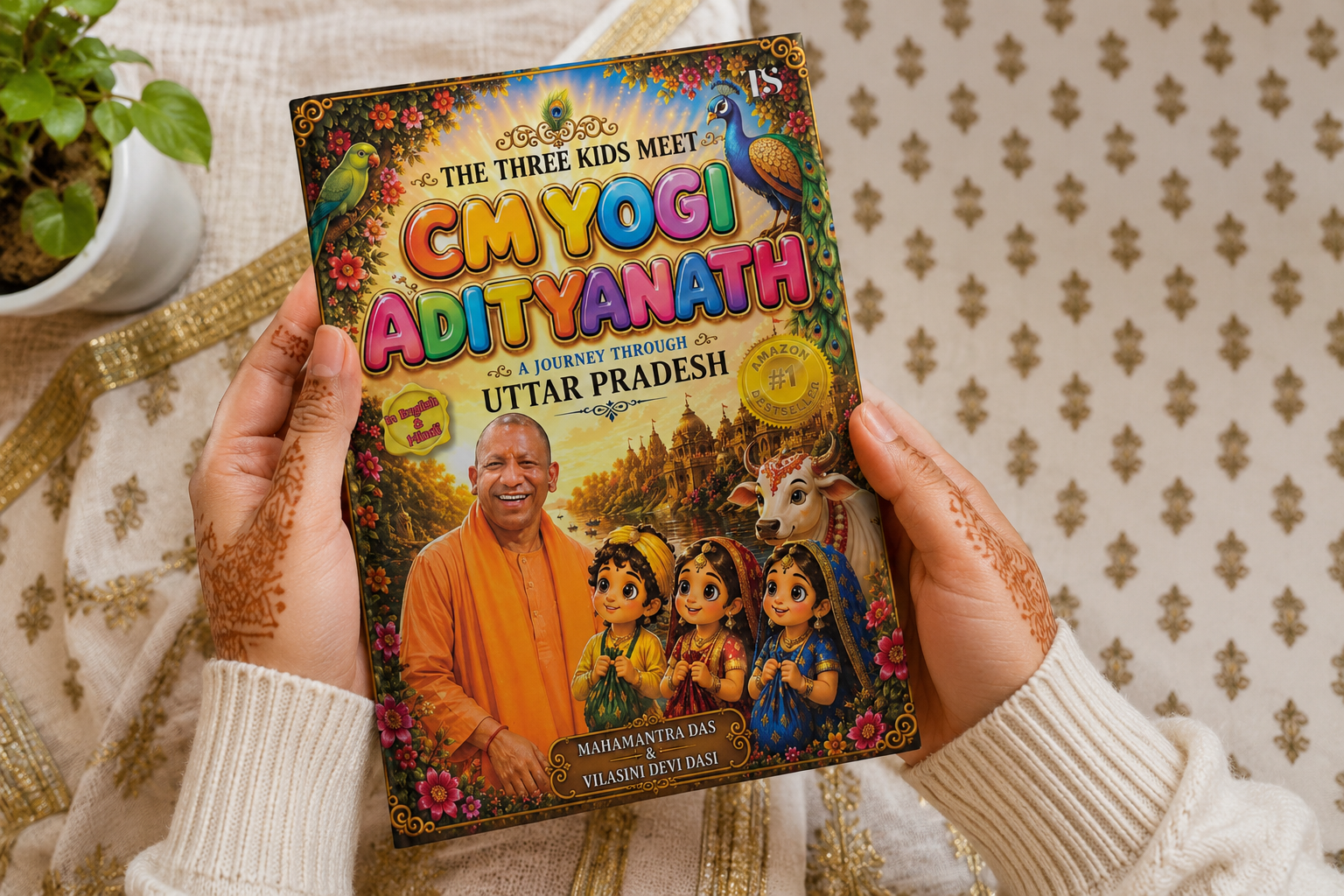
When I first held the physical cover of this new release, the sheer explosion of gold, emerald, and saffron immediately caught my eye. It reminded me of the old calendar art that used to hang in family homes, where every corner was filled with flowers, peacocks, and smiling faces. There is a certain comfort in that style of art, a warmth that modern minimalist designs often fail to capture. I wanted to see if the story inside could live up to the festive, bright energy of its illustrations.
Unpacking the Adventure of Syama, Shanti, and Lali
If you are wondering what is it about, this colorful book, The Three Kids Meet CM Yogi Adityanath, tells the story of three young children named Syama, Shanti, and Lali. Together with their companion, whom they call APA, the children set off to discover the historical and spiritual landmarks of Uttar Pradesh. Along their path, they meet the state’s Chief Minister, Yogi Adityanath, who acts as a guide to help them understand the deep-rooted heritage of the region. The authors, Vilasini Devi Dasi and Mahamantra Das, have structured the book as a series of visits to famous cities, making it a blend of a travelogue and a moral values story.
In this book summary of their travels, the little group visits several famous destinations that have defined Northern Indian history for thousands of years. First, they walk through the ancient, bustling ghats of Kashi, where the river Ganga flows. Next, they experience the massive spiritual gathering of the Kumbh Mela in Prayagraj. The story also brings them to Ayodhya, which is the birthplace of Lord Rama, before taking them to the peaceful ruins of Kushinagar and the green, cheerful gardens of Vrindavan. Each stop is designed to teach the children, and the young readers, a specific lesson about history, spirituality, or simple human goodness.
Artistic Details, Bright Calves, and Visual Pacing
What really stood out to me during my reading was the distinct visual style chosen by the creators. The three children, Syama, Shanti, and Lali, are depicted with very large, expressive eyes that resemble traditional Indian clay dolls or classical animation characters. They wear beautiful, detailed ethnic clothes, with the boy in a bright yellow and green outfit, and the girls in rich red, gold, and blue dresses. This choice makes them look instantly endearing to a child, and the illustrations maintain this high level of detail on every single page.
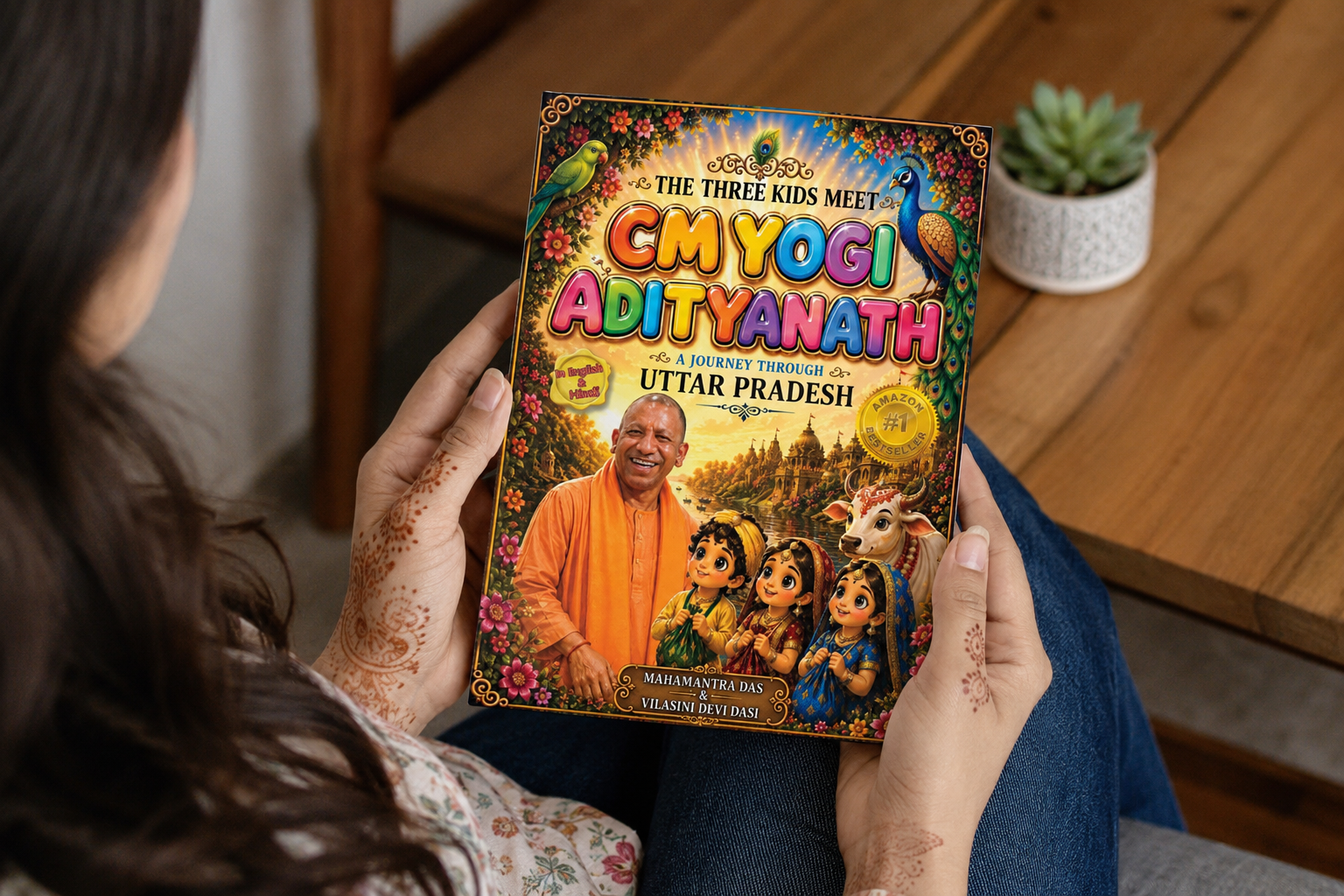
There are also several animals scattered throughout the pages, including two incredibly cute young calves decorated with marigold flower garlands around their necks. On the back cover, we see these calves standing near Yogi Adityanath, who is gesturing with a peace sign. Bright peacocks and a parakeet frame the edges of the scene. The book also contains a special badge on the front cover indicating that it is available in both English and Hindi, which is a fantastic addition for families who want to encourage bilingual reading in their homes.
From a craft perspective, the pacing of the text is quite fast, moving the children from one magnificent city to another without letting them get bored. The writing style is simple, direct, and accessible for young minds. However, it does introduce several heavy Sanskrit and Hindi terms that might require a parent to explain. I like that the authors did not shy away from using authentic terms for the cultural elements, because children are often much better at absorbing new vocabulary than we give them credit for.
Spiritual Heritage, Kindness, and the Role of Leadership
In this segment of my The Three Kids Meet CM Yogi Adityanath Book Review, I want to discuss the themes of leadership and tradition. At its core, the book tries to bridge the gap between ancient history and modern leadership by showing a prominent political figure interacting directly with curious children. Yogi Adityanath is portrayed in his signature saffron robes, always smiling and welcoming, which helps demystify the leader for a young audience. The authors use this interaction to teach lessons about respect for elders, love for animals, and pride in national heritage. They also encourage a sense of cultural appreciation and patriotism in young minds.
For parents asking should you read this with your children, the answer depends largely on what you want your child to learn. If you want them to feel connected to the traditional sacred places of India, the book provides a very warm and positive introduction. It emphasizes values like kindness to animals, which we see through the gentle portrayal of the flower-garlanded cows, and respect for spiritual traditions. It is a gentle way to introduce complex ideas of faith, history, and civic respect without making them feel like a dry classroom lesson.
But is it worth it for readers who might not follow this specific spiritual or cultural path? I think there is still value in the book because it functions as an illustrated geography and culture guide. Even if your family does not practice these specific traditions, seeing how festivals like the Kumbh Mela are celebrated or learning about the peaceful legacy of Kushinagar can expand a child’s understanding of the world. It shows how diverse and rich the history of Uttar Pradesh really is, and that is a lesson of tolerance and curiosity that any child can benefit from.
Finding the Right Audience and Identifying the Flaws
In my honest opinion as an experienced reviewer, this book will find its most enthusiastic home among families who are actively trying to connect their children with Indian spiritual traditions. It is particularly well suited for the Indian diaspora living abroad, who often struggle to find engaging, high-quality English books that explain local festivals and holy places. The colorful pages and simple prose make it easy for children to visualize these sacred geography spots. The story also provides a great jumping-off point for deeper family conversations about faith and history.
However, to keep this reader review entirely fair, I must point out a few things that might not appeal to everyone. The prominent inclusion of a living political leader, CM Yogi Adityanath, means that families who prefer their children’s books to remain entirely secular or politically

With over 11 years of experience in the publishing industry, Priya Srivastava has become a trusted guide for hundreds of authors navigating the challenging path from manuscript to marketplace. As Editor-in-Chief of Deified Publications, she combines the precision of a publishing professional with the empathy of a mentor who truly understands the fears, hopes, and dreams of both first-time and seasoned writers.