
Rating
⭐⭐⭐⭐1/2 (4.5 out of 5)
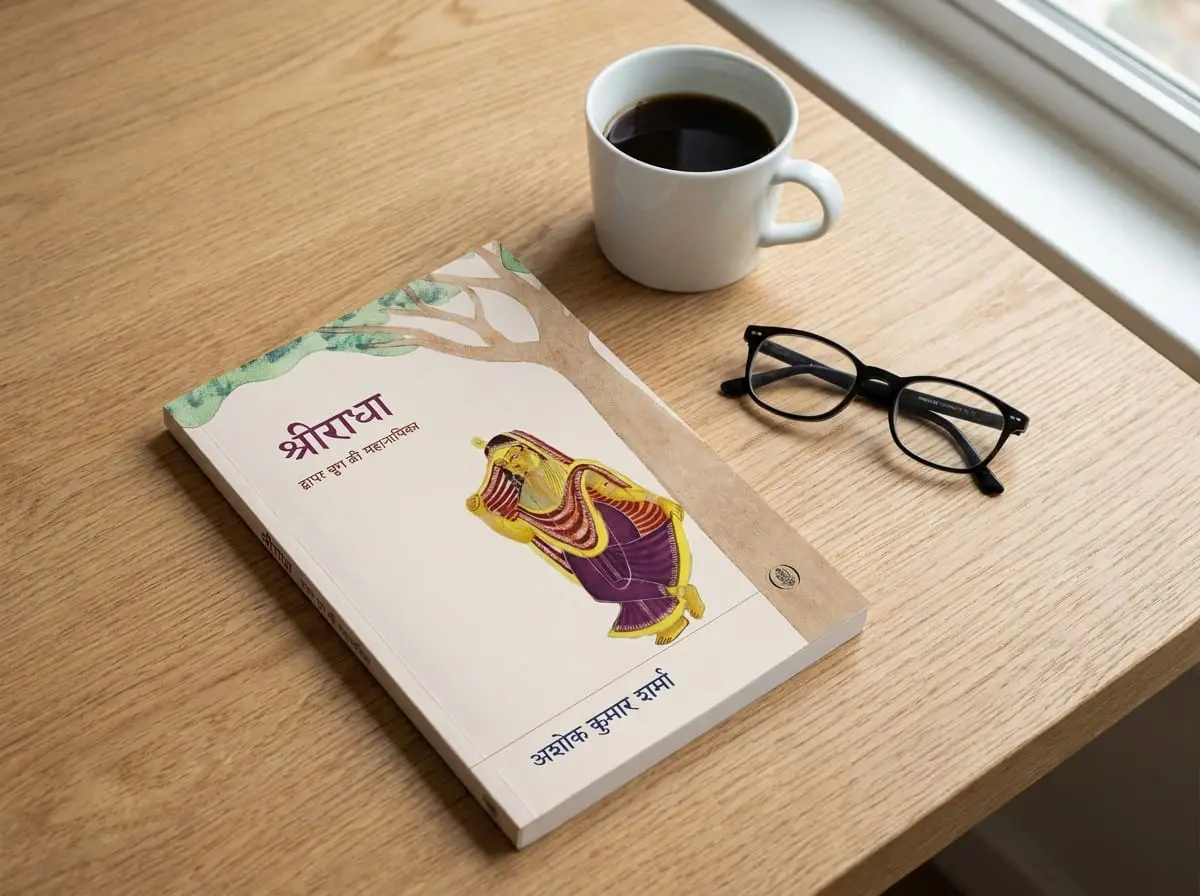
As someone who has spent more than fifteen years reading and reviewing books, I have learned that mythological fiction usually falls into one of two categories. Some books simply retell stories we already know. Others try to challenge what readers think they know. Shri Radha Dwapar Yug Ki Mahanayika by Ashok Kumar Sharma belongs firmly to the second category.
What immediately caught my attention was not just the focus on Radha, but the author’s determination to address long standing assumptions surrounding her life. Most readers in India grow up hearing different versions of the Radha Krishna story. Depending on the region, family tradition, spiritual lineage, or popular culture, the details often change. This book steps directly into that space and says, “Let’s examine these beliefs again.”
I found that interesting because it is not an easy thing to do. When a writer chooses to revisit figures as beloved as Radha and Krishna, readers come with strong emotions and deeply held beliefs. That makes the task much more challenging than writing a completely original story.
What the Book Is About
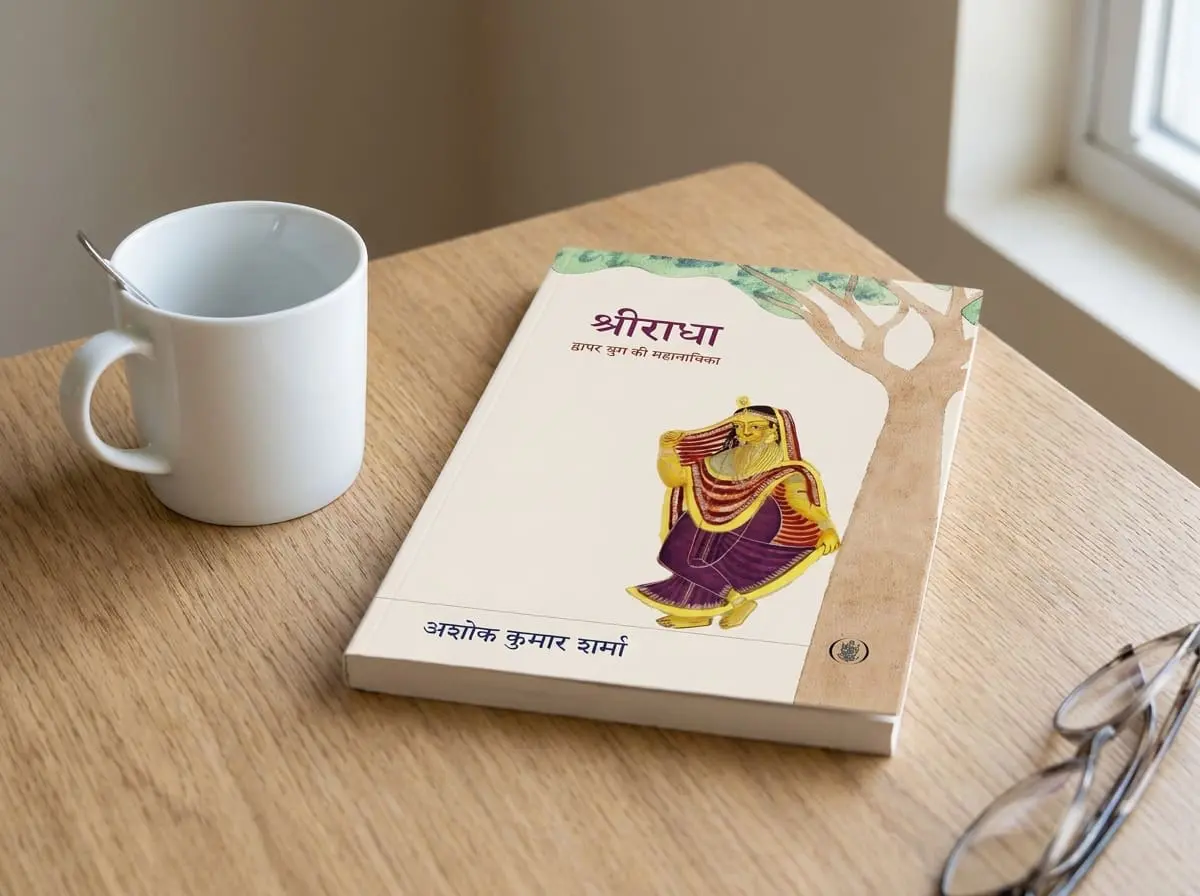
At its core, Shri Radha Dwapar Yug Ki Mahanayika presents Radha not merely as a romantic figure associated with Krishna, but as a central personality whose life deserves attention in its own right.
Based on the material provided in the book and the author’s stated intent, Ashok Kumar Sharma attempts to reconstruct a narrative that draws from traditional sources, scriptures, and interpretations. The novel argues that several commonly accepted ideas about Radha may not be historically or scripturally accurate. One of the major discussions concerns Radha’s relationship with Krishna and the question of marriage, a subject that has generated debate for generations.
The story unfolds through a narrative style that combines mythology, dialogue, family relationships, political tensions, spiritual teachings, and social dynamics. The table of contents itself suggests a broad canvas. Chapters such as Rahasyamay Swayamvar, Jarasandh Ka Vadh, Chinta Aur Aashanka, Rukmini Ki Mahattvakanksha, and Radha Valli indicate that the novel is not limited to a single emotional thread. Instead, it attempts to connect Radha’s story with larger events taking place in the Dwapar era.
One thing I noticed while reading the provided sections is that Krishna is certainly present throughout the narrative, but the author repeatedly guides the reader back toward Radha’s significance. The title is not symbolic. The novel genuinely wants readers to view Radha as a major historical and spiritual figure.
What Stood Out to Me
The first thing that stood out was the author’s confidence.
Many mythological novels today try very hard to sound modern. Ashok Kumar Sharma takes a different route. He seems more interested in defending a particular interpretation of tradition than in modernizing it. Whether a reader agrees with every conclusion or not, there is sincerity in that approach.
The second thing I appreciated was the effort to create scenes rather than simply present arguments.
For example, the sections involving Krishna, Arjuna, Balarama, Sandipani Rishi, and the gurukul environment are written through conversations and interactions. The narrative often moves through dialogue, which helps transform theological discussions into story moments. I think that was a smart choice because purely philosophical exposition can become exhausting very quickly.
There is also a noticeable emphasis on relationships.
We often think of mythology in terms of wars, kingdoms, and divine events. Here, many scenes focus on families, guardians, mentors, marriages, responsibilities, and emotional bonds. The discussions around Radha’s upbringing, family circumstances, and place within the broader social structure give the novel a more grounded feeling than some readers may expect.
Another aspect worth mentioning is the author’s commitment to detail. Throughout the excerpts, there are references to scriptural traditions, lineages, historical figures, and cultural practices. The book clearly comes from extensive reading and research. Even readers who disagree with certain interpretations will likely recognize the effort that has gone into assembling the narrative framework.
The Emotional Core
For me, the emotional heart of this book is not romance.
That might surprise some readers because Radha and Krishna are among the most celebrated symbols of love in Indian culture.
Yet what I felt while reading was something slightly different.
The novel seems deeply concerned with dignity.
Again and again, the narrative returns to questions of misunderstanding, misrepresentation, and forgotten truths. The author appears determined to restore what he believes is Radha’s rightful place within the larger story of Indian civilization.
I found myself thinking about how often important figures become simplified over time. A complex human being or spiritual personality gradually turns into a symbol. Then the symbol becomes more famous than the person.
In many ways, this novel feels like an attempt to reverse that process.
There are scenes where characters discuss duty, truth, social perception, and moral responsibility. These moments create an emotional foundation that goes beyond romance. The message seems to be that love cannot be separated from character, sacrifice, and spiritual purpose.
In 2026, that idea feels surprisingly relevant.
We live in a time when people often consume mythology through short videos, social media posts, and simplified retellings. A book like this asks readers to spend more time with the subject and consider alternative perspectives.
That does not mean everyone will agree with the conclusions. But disagreement is not necessarily a weakness. Sometimes a book succeeds because it encourages readers to revisit assumptions they have never questioned before.
The Writing Style
The writing style is straightforward and traditional.
Readers looking for highly literary prose or experimental storytelling may not find that here. Ashok Kumar Sharma is more interested in clarity than stylistic innovation.
The narrative frequently relies on dialogue. In some places, the conversations become quite extensive, especially when discussing philosophical or historical points. Personally, I did not mind this because it matched the book’s objectives. However, readers who prefer fast moving action may occasionally feel that the pace slows down.
At the same time, those slower sections serve an important purpose. They allow the author to explain the reasoning behind his interpretations and give characters space to express ideas rather than simply move the plot forward.
Who This Book Is For
I think this book will appeal most strongly to three groups of readers.
First, readers interested in Radha Krishna literature. If you have spent years reading devotional works, Puranic narratives, or mythological novels, you will likely find the author’s perspective interesting.
Second, readers who enjoy mythological fiction with a research oriented foundation. The book repeatedly signals its engagement with traditional sources and scriptural references.
Third, readers who are curious about alternative interpretations of familiar stories. If you have ever wondered why different traditions describe Radha differently, this novel gives you plenty to think about.
On the other hand, if you are looking primarily for a modern romantic retelling of Radha and Krishna’s relationship, this may not be exactly what you expect. The book’s focus is broader and more argumentative in nature.
Final Thoughts
I came away from Shri Radha Dwapar Yug Ki Mahanayika feeling that Ashok Kumar Sharma has written a book with a clear purpose. He is not simply telling a story. He is making a case.
Whether one agrees with every interpretation is ultimately a personal matter. What impressed me more was the seriousness with which the author approached his subject. The narrative combines mythology, devotion, family dynamics, scriptural references, and historical reconstruction into a work that clearly emerges from long engagement with the material.
As an editor and lifelong reader, I value books that have conviction. This novel certainly has that. It invites readers into a conversation that has existed for centuries and asks them to reconsider what they know about one of the most beloved figures in Indian spiritual tradition.
For readers interested in Radha, Krishna, and the cultural imagination surrounding them, this is a book worth considering.

With over 11 years of experience in the publishing industry, Priya Srivastava has become a trusted guide for hundreds of authors navigating the challenging path from manuscript to marketplace. As Editor-in-Chief of Deified Publications, she combines the precision of a publishing professional with the empathy of a mentor who truly understands the fears, hopes, and dreams of both first-time and seasoned writers.