
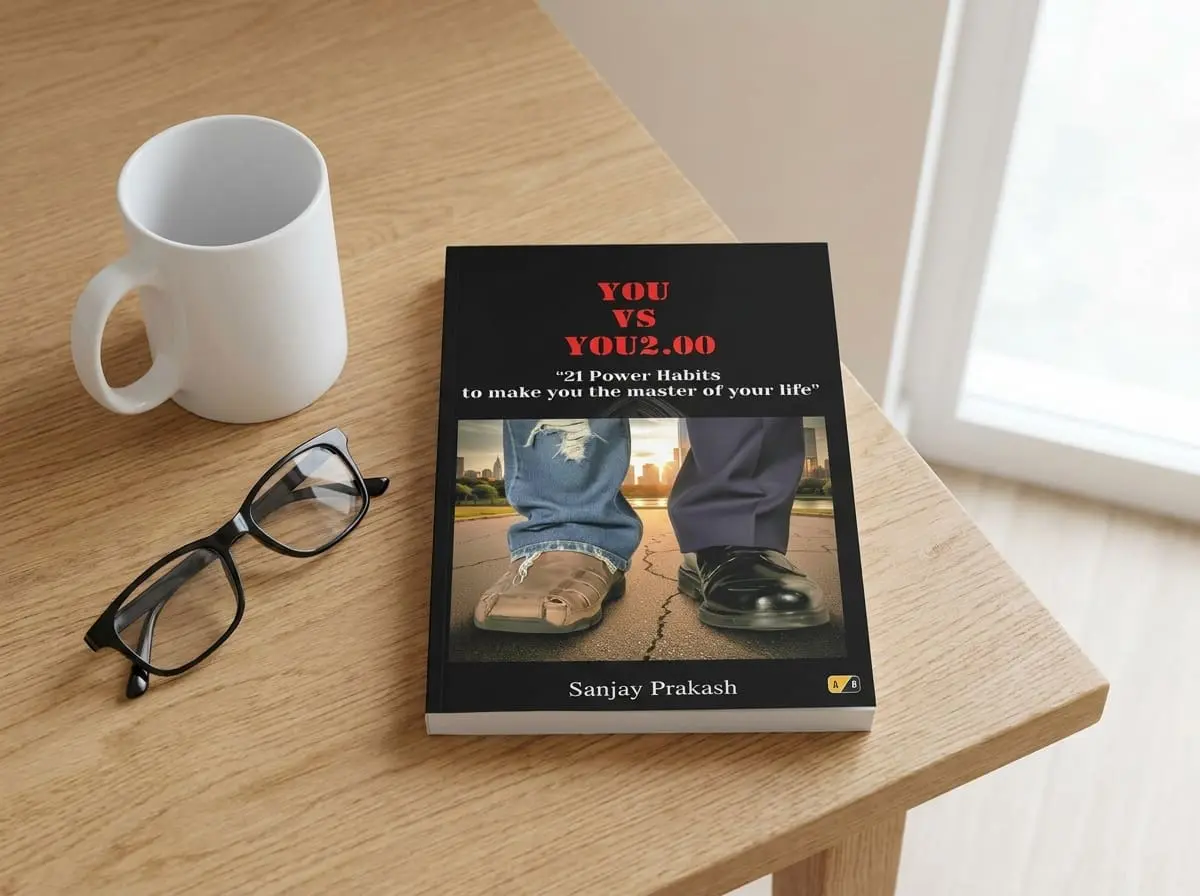
Rating:
⭐⭐⭐⭐ (4.3 out of 5)
Over the years, I have read hundreds of self help books. Some focus on motivation. Some focus on productivity. Some promise success in thirty days, ninety days, or one year. Most of them leave you feeling excited for a few hours and then life continues exactly as before.
While reading You Vs You 2.00: 21 Power Habits To Make You The Master Of Your Life by Sanjay Prakash, I found myself returning to one recurring idea that appears throughout the book.
What if the biggest obstacle in your life is not your boss, your family circumstances, your finances, your competitors, or even bad luck?
What if it is simply your own habits?
That question sits at the heart of this book.
This is not a book built around complicated theories or psychological jargon. Sanjay Prakash writes in a straightforward manner. Sometimes it feels like a mentor sitting across from you and speaking directly. Sometimes it feels like a coach refusing to accept your excuses. And occasionally it feels like a friend reminding you of things you already know but haven’t acted upon.
I think that directness will divide readers. Some will love it. Others may find it repetitive at times. Personally, I understood why the author does it. His goal is not merely to inform. His goal is to create action.
What the Book Is About
At its core, You Vs You 2.00 is a habit transformation handbook.
The book is structured around twenty one habits that the author believes can help a person gain greater control over their thoughts, actions, productivity, health, and overall direction in life.
What I appreciated is that the book does not present habits as isolated activities. Instead, Sanjay Prakash treats them as interconnected systems.
The early chapters focus on the importance of habits themselves. One section that caught my attention compares positive habits with everyday actions like brushing teeth, bathing, and eating. The author’s argument is simple. We perform these activities consistently because they became part of our identity from childhood. The challenge, according to him, is turning beneficial actions such as exercise, reading, and self improvement into habits of the same nature.
From there, the book moves into self belief, visualization, goal setting, time management, affirmations, gratitude, prayer, nature, fitness, and personal responsibility.
Several practical tools appear repeatedly throughout the book:
- Goal Book
- Vision Board
- Commitment Band
- Writing Affirmations
- Counting Affirmations
- Power Breathing
- Gratitude Practices
Rather than presenting these concepts as abstract ideas, the author encourages readers to physically perform them.
One thing that becomes clear very quickly is that this book believes transformation happens through repetition, not inspiration.
What Stood Out To Me
The biggest strength of You Vs You 2.00 is its practicality.
Many self development books spend hundreds of pages explaining why change matters. This book spends most of its energy discussing what to do next.
For example, the chapter on self love presents a surprisingly simple exercise. The author asks readers to think of the people they love most. Then he challenges them with an uncomfortable realization. Most people forget to include themselves on that list.
Whether readers agree with every detail or not, the chapter succeeds because it forces reflection.
The visualization chapter was another interesting section.
I have read many books discussing visualization over the years. What makes this chapter different is that Sanjay Prakash emphasizes sensory involvement. He doesn’t simply suggest imagining a future house or achievement. He encourages readers to mentally walk through that future experience in detail. Opening doors, sitting on furniture, interacting with family members, experiencing daily life. The focus is on creating emotional connection rather than merely looking at mental pictures.
The chapter on time management also deserves mention because of its simplicity.
Instead of introducing complicated productivity frameworks, the author asks readers to divide their day into thirty minute blocks and honestly identify whether each activity contributes toward their goals or takes them away from them.
Honestly, that exercise sounds almost too simple. Yet I have seen versions of this work in real life. Sometimes awareness alone changes behavior.
One of my favorite sections was the chapter on the Commitment Band.
A rubber band on the wrist may sound like a small thing. But the author uses it as a psychological reminder. Every glance becomes a trigger to reconnect with goals and intentions.
I think what impressed me was not the object itself but the underlying principle. Human beings often fail because they forget. We get distracted. We drift. Small reminders can sometimes create surprisingly powerful behavioral changes.
The chapters on gratitude and nature also add warmth to a book that could otherwise become heavily focused on discipline.
The gratitude chapter includes practical exercises such as gratitude journaling, appreciation messages, and daily thankfulness practices. These sections provide emotional balance and prevent the book from becoming excessively achievement oriented.
Similarly, the chapter on being close to nature argues that personal growth is not only about doing more. Sometimes it is also about reconnecting with something larger than ourselves.
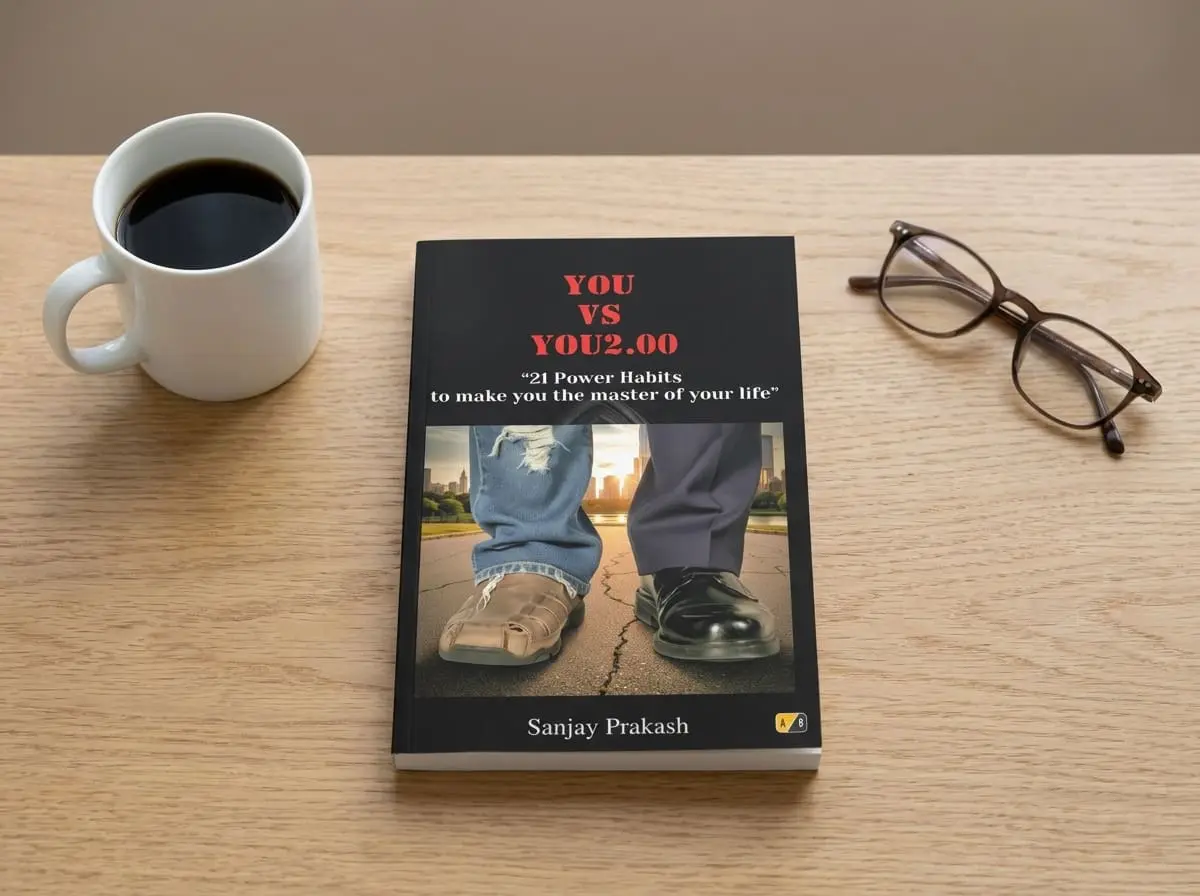
The Emotional Core
Although the book discusses habits, goals, affirmations, and productivity, I don’t think those are the true emotional center of the book.
The emotional center is responsibility. Throughout the chapters, Sanjay Prakash keeps returning to the same message. Improvement starts with “I.” That line appears in different forms throughout the book, and it feels like the foundation upon which everything else is built.
In 2026, when so many conversations revolve around external circumstances, algorithms, distractions, and comparison culture, this message feels particularly relevant.
The author is not saying life is fair. He is not saying everyone starts from the same place. What he is saying is that lasting change begins when we stop waiting for perfect conditions. I think many readers will connect with that.
There is also an underlying optimism running through the book. Not the kind of optimism that promises instant success. Instead, it suggests that small actions performed consistently can create major changes over time.
That belief gives the book its energy.
Who This Book Is For
This book will work best for readers who enjoy practical self development.
If you like books that give exercises, action steps, and daily practices, there is a good chance you will find value here.
It is particularly suited for:
- Students trying to build discipline
- Young professionals struggling with consistency
- Readers interested in habits and mindset
- Individuals working on personal transformation
- People who enjoy structured self improvement systems
However, this book may not be ideal for everyone.
Readers looking for deep scientific explanations or evidence based psychology may find some sections less analytical than they would prefer.
Similarly, people who dislike affirmations, visualization, manifestation concepts, or spiritual elements may not connect equally with every chapter.
That said, even readers who disagree with certain techniques will likely find useful ideas in areas such as habit formation, time management, gratitude, and personal accountability.
Final Thoughts
As an editor and lifelong reader, I often ask myself a simple question after finishing a book:
Did this book genuinely try to help its reader? With You Vs You 2.00, my answer is yes.
Sanjay Prakash has written a book that wants readers to act, not merely consume information. The exercises, reflection prompts, habit systems, and practical tools all point toward one goal: helping people become more intentional about the way they live.
No book can transform a person on its own. The author understands that. In fact, much of the book is built around that reality. Change comes from action repeated over time. I think readers who approach this book with sincerity and a willingness to implement even a handful of its ideas will find meaningful value here.
It is not trying to impress you with complexity. It is trying to get you moving. And sometimes, that’s exactly what people need.
FAQs
Is You Vs You 2.00 worth reading?
If you enjoy practical self improvement books focused on habits, discipline, accountability, and personal growth, then yes. The book provides exercises and systems rather than motivational speeches.
Who should read You Vs You 2.00?
Students, professionals, entrepreneurs, and anyone trying to improve consistency in daily life may benefit most from the book.
What is You Vs You 2.00 about?
The book focuses on twenty one habits designed to help readers improve self discipline, mindset, productivity, fitness, gratitude, and personal responsibility.
Is You Vs You 2.00 based on action or motivation?
The book leans heavily toward action. Many chapters include practical exercises such as vision boards, goal books, affirmations, gratitude practices, and habit building techniques.

With over 11 years of experience in the publishing industry, Priya Srivastava has become a trusted guide for hundreds of authors navigating the challenging path from manuscript to marketplace. As Editor-in-Chief of Deified Publications, she combines the precision of a publishing professional with the empathy of a mentor who truly understands the fears, hopes, and dreams of both first-time and seasoned writers.