
Rating:
⭐⭐⭐⭐ (4.3 out of 5)
Every year I read dozens of books about self improvement. Many of them promise transformation. Many of them offer motivation. Some offer philosophy. Very few actually answer a simple question: What exactly should I examine within myself?
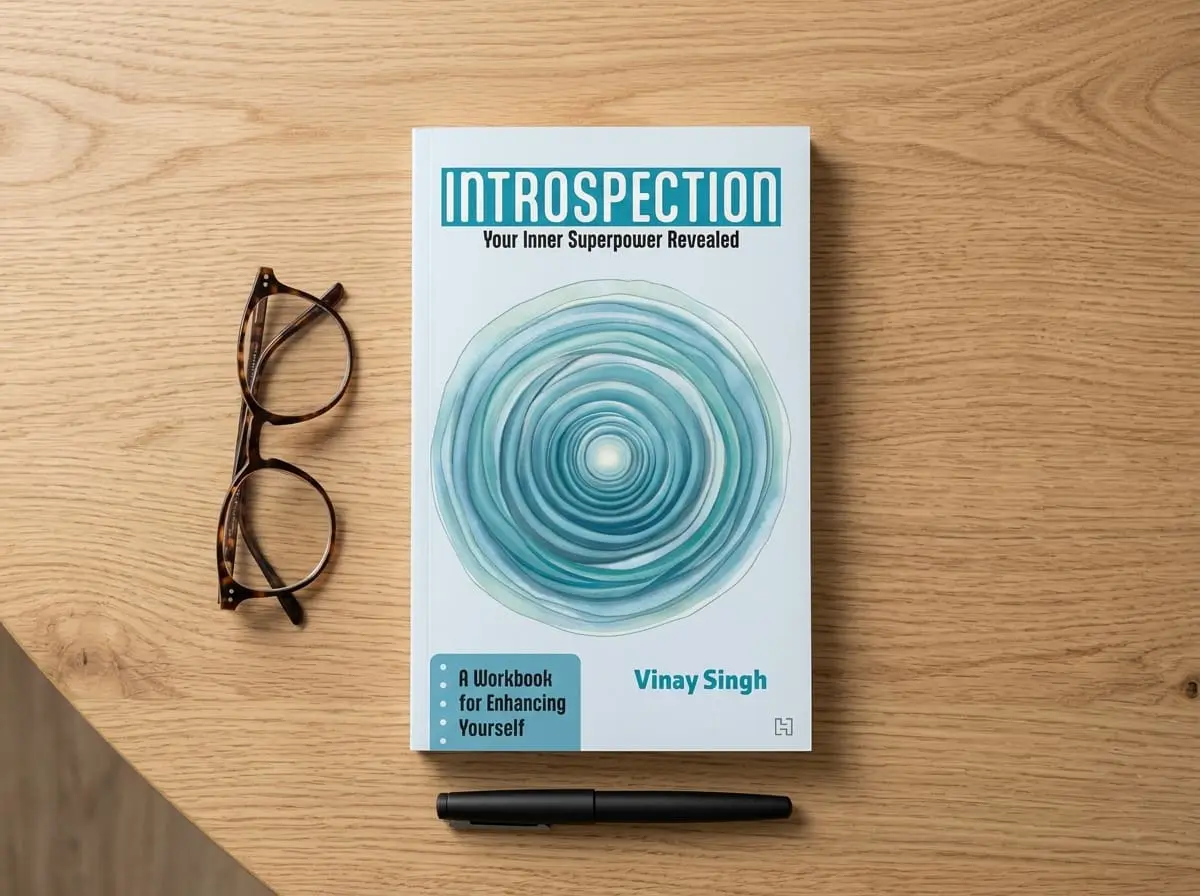
That question kept coming to mind while reading Introspection: Your Inner Superpower Revealed by Vinay Singh.
What struck me early on is that this is not really a motivational book. It is not trying to excite you with grand promises. It is trying to help you develop a habit that most of us avoid. Looking honestly at our own thoughts, emotions, habits, reactions, relationships, and recurring patterns.
I think that is why the book felt different from many titles in the personal growth category. Instead of focusing on success hacks or productivity systems, it repeatedly brings the reader back to self observation.
And honestly, that is often the harder work.
What the Book Is About
At its core, Introspection is a structured workbook designed to help readers assess themselves across a wide range of human qualities.
The table of contents alone reveals the ambition of the project. The book is organized into major sections covering core attributes, emotional intelligence, tendencies, habits, and conduct. Readers are invited to examine everything from courage, patience, acceptance, and love to fear, jealousy, confidence, resentment, overthinking, approval seeking, listening skills, humility, punctuality, and truthfulness.
What impressed me is that the author does not treat personal growth as a single trait. Many books focus on confidence. Others focus on emotional intelligence. Some focus on habits.
Vinay Singh attempts to bring all these dimensions together into one framework.
The book repeatedly argues that our relationships, conflicts, emotional struggles, and recurring life challenges often originate from patterns within us that remain unnoticed. Rather than blaming circumstances or other people, the author encourages readers to examine their own reactions, assumptions, and conditioning.
One of the strongest examples appears early in the book through the story of Yash and his manager Daniel. Yash initially sees his manager as the problem. Through conversations with Keshav Uncle, he gradually begins examining his own behaviour, communication gaps, sensitivity to criticism, and attachment to being right.
I liked this example because it feels familiar. Most working professionals have had their own “Daniel” at some point.
What Stood Out to Me
The first thing that stood out was the book’s use of stories.
Instead of presenting abstract theories, the author frequently uses characters like Yash, Keshav Uncle, Vaibhavi, Arjun, and others to demonstrate concepts in everyday situations. These stories make the lessons easier to understand because readers can see themselves in the situations.
The Yash and Daniel storyline is particularly effective because it demonstrates introspection in action rather than merely explaining it.
Another aspect I appreciated is the scoring system used throughout the workbook.
For example, in the chapter on introspection, readers are not simply told to become more self aware. They are given practical descriptions ranging from superficial self reflection to deep self awareness. This helps people identify where they currently stand rather than imagining where they would like to be.
As someone who has reviewed books for years, I know that self assessment tools can sometimes feel gimmicky. Here, however, they seem thoughtfully integrated into the book’s broader purpose.
I was also intrigued by the chapter structure.
The section on emotional quotient covers an unusually broad range of emotions. Fear, shame, gratitude, compassion, loneliness, jealousy, pride, anxiety, resentment, regret, bitterness, contentment, admiration, hope, boredom, and many more are discussed individually.
That breadth matters because emotional growth is rarely about managing only one feeling.
Life does not arrive in neat categories.
Sometimes we feel gratitude and jealousy in the same week.
Sometimes confidence and insecurity coexist.
The book appears to acknowledge that reality.
The section on tendencies was another highlight. Chapters such as harbouring hurt, complaining, seeking approval, conflict resolution, aggression, overthinking, and addiction address patterns many people struggle with but rarely discuss honestly.
The chapter on harbouring hurt particularly caught my attention. Using the story of Karna from the Mahabharata, the author illustrates how old wounds can shape identity and decision making for years.
I thought that was one of the stronger narrative choices in the book because it connects an ancient story with a very modern emotional challenge.
The Emotional Core
If I had to identify the emotional heart of this book, it would be this idea:
Most people spend enormous energy trying to change circumstances while spending very little energy understanding themselves.
That message appears again and again.
There is a line of thinking throughout the book that many difficult relationships can become teachers if we are willing to examine our reactions honestly.
The Yash and Daniel example demonstrates this beautifully. What begins as frustration gradually becomes self awareness. What initially appears to be an external problem eventually reveals an internal lesson.
I found myself thinking about my own professional experiences while reading those sections.
In publishing, I have worked with wonderful people and difficult people. Looking back, some of the individuals who challenged me most also taught me the most. Not because they were always right, but because they forced me to examine my own assumptions.
That is why parts of this book feel relatable.
The emotional quotient section also deserves mention. Rather than treating emotions as weaknesses, the author presents them as signals carrying information about our inner state.
Readers who are accustomed to suppressing emotions may find this perspective valuable.
At the same time, the book carries a strong spiritual influence. References to meditation, acceptance, forgiveness, Heartfulness teachings, and Indian philosophical traditions appear throughout the text.
Some readers will connect deeply with this approach.
Others may prefer a more psychology focused framework.
Neither approach is wrong. It simply depends on what resonates with you.
Who This Book Is For
I think Introspection will work particularly well for three groups of readers.
First, professionals who feel stuck in recurring workplace conflicts.
The Yash and Daniel story alone offers useful insights into feedback, criticism, communication, and personal accountability.
Second, readers interested in self development beyond productivity and career success.
This book is far more concerned with character, emotional maturity, and relationships than with achievement metrics.
Third, people who enjoy structured self assessment.
If you like journaling, reflection exercises, scoring frameworks, and personal growth workbooks, there is a good chance you will appreciate the format.
That said, this book may not be ideal for readers looking for fast paced storytelling or purely scientific discussions of psychology. The author’s approach combines practical reflection with spirituality, philosophy, and anecdotal learning.
Final Thoughts
In 2026, when conversations about growth often revolve around performance, visibility, and external success, I found the central message of Introspection refreshing.
Vinay Singh repeatedly asks readers to shift their attention inward.
Not for self criticism.
Not for guilt.
But for understanding.
What I appreciated most is that the book does not pretend transformation happens overnight. The framework is built around observation, awareness, correction, and gradual improvement.
If I had one small criticism, it is that the sheer number of attributes covered can occasionally feel overwhelming. Some readers may wish the book spent even more time developing a smaller set of themes in greater depth.
Even so, the overall value remains strong.
As an editor and longtime reader, I believe the biggest strength of Introspection is that it gives readers a practical structure for examining areas of life many books only discuss in theory.
And sometimes that structure is exactly what people need.
FAQ
Is Introspection worth reading?
If you enjoy self improvement books that focus on self awareness, emotional growth, habits, and relationships, I think it is worth your time.
Who should read Introspection by Vinay Singh?
Professionals, students, spiritual seekers, and readers interested in personal development will likely benefit most.
What is Introspection about?
The book is a workbook focused on self assessment across emotions, habits, conduct, tendencies, and core personal attributes.
Is Introspection practical or philosophical?
It combines both. There are practical scoring systems and exercises, but there is also a strong philosophical and spiritual dimension.

With over 11 years of experience in the publishing industry, Priya Srivastava has become a trusted guide for hundreds of authors navigating the challenging path from manuscript to marketplace. As Editor-in-Chief of Deified Publications, she combines the precision of a publishing professional with the empathy of a mentor who truly understands the fears, hopes, and dreams of both first-time and seasoned writers.