
Rating:
⭐⭐⭐⭐1/2 (4.5 out of 5)
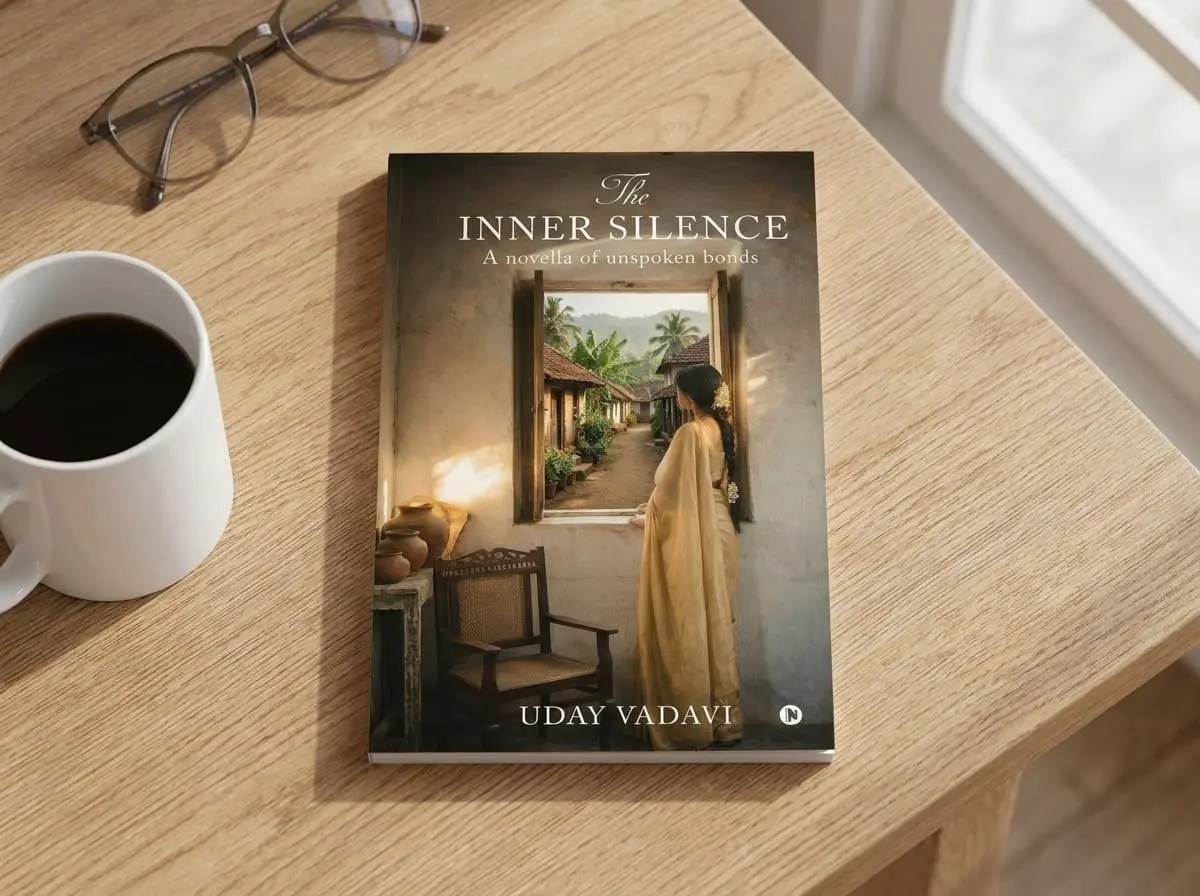
There are some books that try very hard to impress you. Big twists, dramatic dialogues, endless emotional speeches. And then there are books like The Inner Silence by Uday Vadavi that move in a completely different direction. This novella does not scream for your attention. It simply opens a door into the lives of ordinary people carrying extraordinary emotional burdens.
I finished going through this book with a strange heaviness in my chest. Not because it is tragic in the usual sense, but because it feels painfully believable. I have met women like Divya. Maybe all of us have. Women who compromise so naturally that even their suffering becomes invisible to the people around them.
In my years of reviewing books, especially Indian literary fiction, I have noticed that stories about sacrifice often become melodramatic very quickly. Authors sometimes turn pain into performance. Uday Vadavi avoids that trap for the most part. He writes with restraint, and because of that, many scenes land harder than expected.
What affected me most was not one grand emotional moment. It was the accumulation of small moments. Divya reading letters from home. Her hesitation before speaking. Prakash standing near her without demanding answers. The school interview scene. The window imagery repeated across chapters. These details create emotional continuity in a very human way.
And honestly, in 2026, when conversations around relationships are becoming louder and more performative online, this book feels almost unusual because it talks about affection through responsibility, patience, and emotional endurance instead of dramatic declarations.
What the Book Is About
The Inner Silence: A Novella of Unspoken Bonds is set in 1960s India and follows Divya, a thoughtful young woman whose life changes after a painful family decision involving marriage. A proposal initially meant for her eventually shifts toward her younger sister Varsha, largely because Divya believes saying no would create emotional chaos within the family.
That emotional setup could have become overly dramatic in weaker hands, but the novel treats it with surprising maturity. Divya is hurt, deeply hurt in fact, but she is never reduced into bitterness alone. She questions herself constantly. There is a scene where Varsha cries while trying to understand why Divya is agreeing to everything, and Divya responds with a painful practicality that honestly felt very real to me. She says that sometimes people must choose peace over desire, even when it breaks something inside them.
At the same time, Prakash enters the story. He is a former soldier trying to rebuild his life after the Sino Indian War. I appreciated that the novel did not turn him into some exaggerated heroic figure. He feels uncertain, bruised by life, financially unstable, and emotionally restrained. His affection for Divya grows gradually through conversations, glances, shared routines, and concern rather than dramatic romance.
The middle portions of the novella were probably my favourite. Especially the scenes where Divya starts rediscovering purpose through teaching. There is a lovely emotional progression there. At first she feels lost after marriage and relocation, almost disconnected from herself. Then slowly, through books, children, work, and small achievements, she begins rebuilding her identity.
One scene that really stayed in my mind involved Divya attending a school interview near the library where she once spent time with Prakash. The old librarian encouraging her felt symbolic without becoming too obvious. I liked that.
The final chapters bring emotional closure without trying too hard to manufacture tears. The ending focuses more on healing and dignity than dramatic payoff.
What Stood Out to Me
The strongest aspect of The Inner Silence is emotional observation. Uday Vadavi notices how people speak around pain instead of directly about it. That is difficult to write convincingly.
There is a recurring pattern in the book where major emotional shifts happen during ordinary activities. Walking home. Folding letters. Looking through windows. Waiting near college gates. Drinking tea. That domestic realism gives the novella its emotional credibility.
I also appreciated how the novel portrays family pressure. Nobody here is purely evil. That makes the conflict harder. Divya’s parents are not villains. Varsha is not selfish. Even Vinay, the original prospective groom, comes across as decent. Everyone is trying to make practical decisions within social expectations. That moral complexity gives the story maturity.
The relationship between Divya and Varsha was honestly more emotionally affecting to me than the romantic thread. There is one scene where Varsha says she would rather reject the proposal than wound her sister, and Divya responds by trying to protect everyone else despite her own heartbreak. That exchange felt painfully authentic.
Another thing I admired was the pacing. The novella does not rush emotional transitions. Divya’s recovery is gradual. Her emotional state shifts in layers. First confusion, then grief, then numbness, then reluctant acceptance, then purpose. That progression feels earned.
Now, I will say this honestly. Some readers may find the prose overly reflective at times. There are stretches where characters think deeply about emotions and philosophy instead of moving the plot forward quickly. Personally, I did not mind it because the emotional atmosphere is the entire point of the novella. But if someone prefers highly plot driven fiction, this may feel slower in sections.
There are also moments where the dialogue becomes slightly formal. Especially during emotionally intense conversations. But considering the 1960s setting and the social environment being portrayed, it mostly fits the world of the story.
One more thing worth mentioning is how respectfully the book handles masculinity through Prakash. He is protective but never dominating. Supportive without trying to rescue Divya. Their relationship grows through emotional recognition rather than fantasy.
That is rarer in fiction than people realize.

The Emotional Core
At its heart, The Inner Silence is about identity after emotional rejection.
Not dramatic rejection. Not betrayal in the cinematic sense. Something much more ordinary and therefore much more painful. The feeling of slowly becoming secondary in your own life.
Divya’s emotional journey works because it never becomes self pity. She hurts deeply, but she continues functioning. She teaches. She writes letters home. She supports Prakash. She rebuilds herself piece by piece.
There is one line early in the book where the narration mentions that sometimes not being chosen becomes the beginning of choosing yourself. I think that idea forms the emotional backbone of the entire novella.
I also think many Indian women readers will connect with this book strongly because it understands emotional labour inside families. The way daughters absorb tension. The way compromise gets romanticized. The way silence becomes a survival mechanism.
And yet, despite all this sadness, the book is not hopeless.
The teaching scenes especially bring warmth into the narrative. When Divya interacts with children and slowly regains confidence, the emotional energy of the story changes. You begin feeling that healing is possible, even if life never becomes perfect.
The final portions involving Santosh and Divya’s later life carried an entirely different emotional texture. By then, the novel becomes less about longing and more about endurance. Aging, motherhood, distance, memory, and rediscovering meaning after loss all begin entering the narrative.
Honestly, some sections made me think about the women in older generations of our own families. Women whose emotional worlds were never fully spoken aloud.
Who This Book Is For
I think The Inner Silence will work best for readers who enjoy emotional literary fiction rooted in Indian social realities.
If you like fast thrillers or heavily plot driven novels, this may not fully work for you. The story spends more time inside emotional transitions than external action.
But if you enjoy books about relationships, sacrifice, family expectations, healing, and personal dignity, there is a good chance this novella will connect with you deeply.
Readers who liked the emotional realism found in classic Indian family dramas may appreciate this. Especially those who enjoy stories centered around women rebuilding themselves after emotional upheaval.
I would also recommend this to readers who are tired of exaggerated modern romance tropes. The affection in this novel grows through patience, respect, routine, and understanding. That emotional tone feels refreshing today.
And honestly, if you have ever experienced the strange loneliness of doing the “right thing” while hurting internally, parts of this book may feel uncomfortably familiar.
Final Thoughts
As an editor at Deified Publication, I read a large number of manuscripts every year. Many books understand events. Fewer books understand emotional residue. The Inner Silence understands emotional residue.
It understands what remains unsaid inside homes.
It understands the emotional exhaustion of constantly being practical.
And it understands that healing is rarely dramatic. Sometimes it arrives slowly through work, routine, letters, classrooms, conversations, and the presence of people who ask for nothing from you except honesty.
No, the novella is not perfect. A few sections could have benefited from tighter editing, and some introspective passages run longer than necessary. But the emotional sincerity of the story outweighs those flaws for me.
I think Uday Vadavi has written something genuinely heartfelt here. Not flashy. Not fashionable. Just deeply human.
And maybe that matters more.
FAQ
Is The Inner Silence worth reading?
Yes, especially if you enjoy emotionally grounded literary fiction about relationships, sacrifice, and personal healing. It is less about dramatic twists and more about emotional truth.
Who should read The Inner Silence by Uday Vadavi?
Readers who enjoy Indian family dramas, reflective fiction, and character driven stories will probably connect with it most.
What is The Inner Silence about?
The novella follows Divya, a woman navigating heartbreak, family duty, marriage, and emotional recovery in 1960s India after stepping aside for her younger sister in a deeply personal situation.
Is The Inner Silence an emotional book?
Very much so. But it earns its emotions through realism rather than manipulation. The emotional impact comes from ordinary human moments.

With over 11 years of experience in the publishing industry, Priya Srivastava has become a trusted guide for hundreds of authors navigating the challenging path from manuscript to marketplace. As Editor-in-Chief of Deified Publications, she combines the precision of a publishing professional with the empathy of a mentor who truly understands the fears, hopes, and dreams of both first-time and seasoned writers.