
Rating:
⭐⭐⭐⭐1/2 (4.5 out of 5)
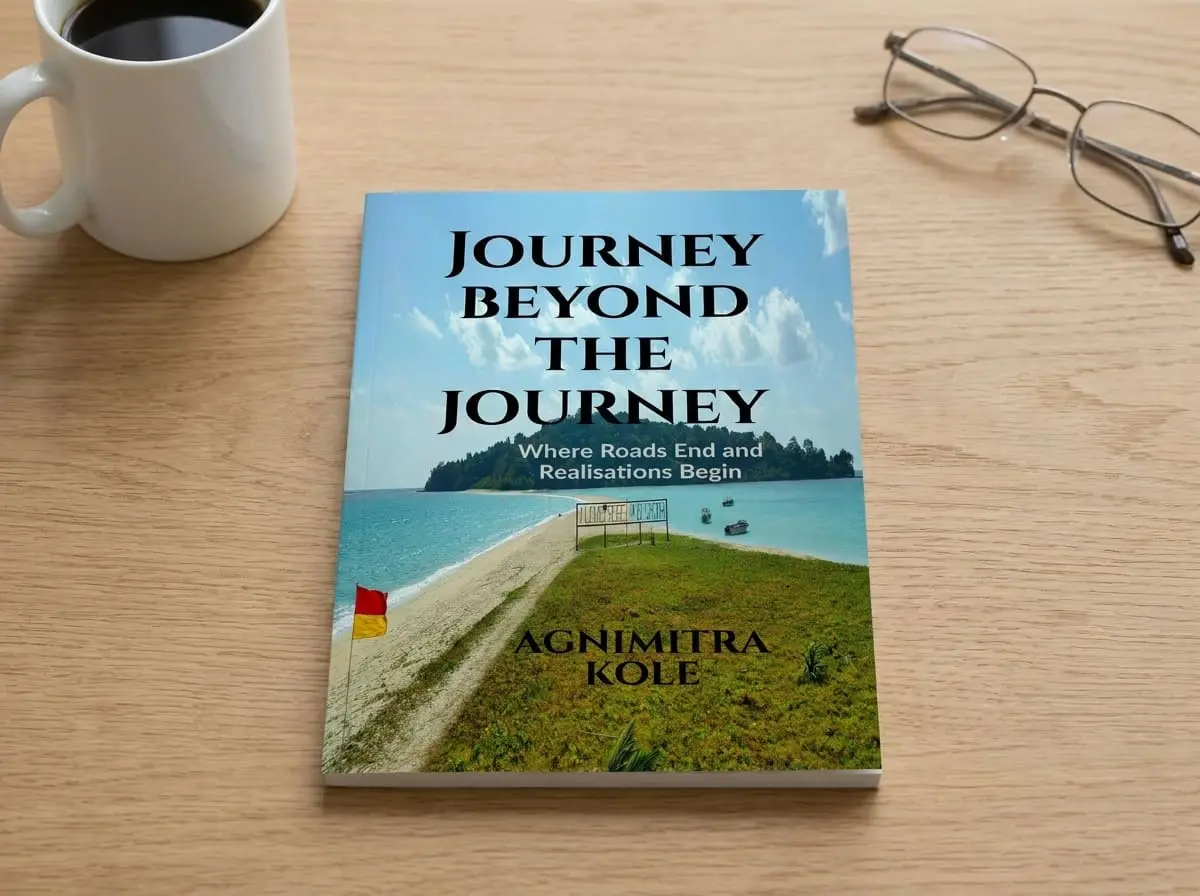
I have read a lot of books centered around pain, healing, memory, mental health, and self discovery over the years. Some of them are beautifully written but emotionally distant. Some are emotionally loud but forgettable after a day or two. And then there are books like Journey Beyond the Journey by Agnimitra Kole that feel surprisingly personal from the very first pages.
What struck me first was how ordinary the setup is.
A bus ride in the Andaman Islands. One traveler. One stranger sitting beside him. A shared bottle of water. That is all.
And honestly, maybe that is why the book works.
Life changing conversations rarely happen in dramatic movie moments. Sometimes they happen beside dusty windows on long roads while strangers speak more honestly than people we have known for years.
I think Agnimitra Kole understands that deeply.
The book opens on a January morning in 2023. The narrator boards a bus from Port Blair to Diglipur. He chooses Seat 21 by the window. Seat 22 remains empty until a tired looking stranger named Chakradoot sits beside him. The first exchange between them is so simple that it almost feels forgettable at first. He asks for water. They begin talking. Slowly the conversation opens into something much heavier and more intimate.
What follows is not a dramatic redemption arc. There are no cinematic speeches or unbelievable transformations. Instead, the book moves through fragments of a man’s life. OCD. Stammering. Cricket dreams. A psychiatric ward during Diwali. Online addiction. Marriage. Fear. Shame. Recovery. Tiny acts of self respect.
And somewhere between those stories, the reader begins reflecting on their own life too.
That is what happened to me while reading it.
What the Book Is About
At its surface, Journey Beyond the Journey: Where Roads End and Realisations Begin is a conversational travel narrative. But emotionally, it feels more like listening to someone finally explain the hidden battles behind their everyday behavior.
Chakradoot is not introduced as some larger than life personality. In fact, he feels painfully real. He stammers. He overthinks. He struggles with compulsions. He admits uncomfortable truths without trying to sound wise.
There is a section where he describes checking locks and doors repeatedly before leaving home. Another moment where he talks about being admitted to a mental nursing home shortly before Diwali 2001. Those pages genuinely affected me because the writing does not sensationalize suffering. The author lets the details speak for themselves.
One line that hit me particularly hard was when Chakradoot says:
“People think stammering is in the tongue. It’s not. It’s in the breath.”
I actually reread that sentence twice.
As someone who has spent years reviewing books, I can usually predict when an author is trying too hard to sound profound. This did not feel like that. It felt lived in.
The structure of the book also deserves mention. The chapters move almost like emotional checkpoints along the road journey. “The Stranger Speaks,” “The Voice Within,” “The Illusion of Winning,” and “The Season of Promises” each focus on a different layer of Chakradoot’s life.
The travel backdrop of the Andaman Islands gives the story a reflective atmosphere without overpowering it. Ross and Smith Island becomes especially symbolic by the end. Two islands connected by a sandbar that appears and disappears with the tide. It is a strong image, but thankfully the author does not over explain it.
He trusts the reader to understand.
I appreciated that restraint.
What Stood Out to Me
The strongest part of this book is its honesty. Not polished honesty. Human honesty. There is a difference.
A lot of books about mental health either become overly clinical or emotionally manipulative. This one avoids both traps. Chakradoot speaks the way real people speak when they finally stop pretending everything is okay.
I also liked how the book handles masculinity. Indian men are often raised to hide vulnerability until it becomes unbearable. Here, we see a man speaking openly about fear, addiction, embarrassment, and emotional exhaustion without turning it into self pity.
That feels important in 2026.
There is one chapter where Chakradoot discusses fantasy sports addiction after winning money online. Initially he feels unstoppable. Then the addiction slowly consumes him. I thought the writing in those sections was especially sharp because it captures the psychology of addiction very accurately. Not the glamour of winning. The emptiness after it.
The cricket references throughout the book are another interesting layer. The NatWest Final of 2002 becomes symbolic of a life that never received its own comeback story. I think many readers, especially Indian readers in their late twenties and thirties, will connect with that emotion instantly.
One thing I genuinely admired was how the author connects external journeys with internal ones without becoming overly philosophical. The bus ride, the ferry crossing, the changing roads, the islands, the sea, all of it mirrors Chakradoot’s emotional state in subtle ways.
And then there is the writing style itself. It is simple. Very simple, actually.
Some readers may want more literary complexity or richer prose. Personally, I think the simplicity works in the book’s favor because the emotional weight comes from the experiences themselves. Agnimitra Kole writes in a very accessible voice. You do not feel like the author is trying to impress you.
You feel like he is trying to tell the truth as clearly as possible.
That matters more.

The Emotional Core
I think the emotional center of this book is the idea of “small promises.” Not giant achievements. Not perfect healing. Small promises.
- Drink water regularly.
- Attend therapy.
- Delete one destructive app.
- Speak even when your voice shakes.
- Show up for your marriage.
- Keep going.
There is something deeply human about that philosophy.
A lot of motivational books push transformation as if people wake up one day completely changed. This story understands that recovery is usually slower and messier. Sometimes progress is invisible from the outside.
One of my favorite sections comes near the end when Chakradoot says:
“Small promises. That is how we rebuild ourselves.”
That line explains the entire emotional philosophy of the book.
I also think readers struggling with anxiety, OCD, stammering, loneliness, or emotional burnout may feel seen while reading this. Not fixed. Not magically healed. Just seen. And honestly, that itself can mean a lot.
At the same time, this is not a depressing book. There is warmth throughout it. Human connection. Unexpected tenderness. Even humor in places.
The marriage portions especially surprised me. Instead of idealizing love, the book describes it as showing up when things get difficult. There is a line where Chakradoot says some days he and his wife live in the same house and some days in separate emotional worlds, but love is still about showing up when needed.
That felt mature. Not romanticized. Mature.
Who This Book Is For
I think Journey Beyond the Journey will resonate most with readers who enjoy emotionally reflective books rather than plot heavy fiction.
If you loved books like Tuesdays with Morrie or When Breath Becomes Air, there is a good chance this book will connect with you too. Not because the stories are identical, but because all three books are interested in emotional truth more than spectacle.
This book may also speak strongly to Indian readers because the emotional details feel culturally familiar. Cricket references. Family expectations. Mental health stigma. College experiences. Marriage pressures. They are woven naturally into the narrative instead of inserted artificially.
That said, this may not work for everyone.
Readers looking for fast paced drama or highly layered literary experimentation might find the simplicity too straightforward. The narrative is intentionally conversational. Personally, I think that directness helps the emotional material land more naturally, but some readers prefer denser prose.
Still, I would much rather read a sincere book with emotional clarity than a technically brilliant book that feels emotionally empty.
And this one definitely has heart.
Final Thoughts
By the time I finished Journey Beyond the Journey, I kept thinking about how rare it is to find books that speak softly without sounding weak.
Agnimitra Kole has written something intimate here. Not flawless. There are moments where I wished certain scenes lasted longer or dug deeper emotionally. A few transitions between memories could also have been smoother. But none of that took away from the sincerity at the center of the story.
As an editor at Deified Publication, I read manuscripts constantly. Many try to sound important. Very few feel emotionally honest. This one does.
In 2026, when conversations around mental health are often reduced to slogans, this book feels refreshingly human. It reminds readers that healing is not always dramatic. Sometimes it is just one honest conversation on a bus. One difficult truth spoken aloud. One promise kept.
And maybe that is enough.
FAQ
Is Journey Beyond the Journey worth reading?
Yes, especially if you enjoy reflective books centered around human conversations, mental health, emotional healing, and personal growth. It is less about plot twists and more about emotional truth.
Who should read Journey Beyond the Journey by Agnimitra Kole?
Readers who enjoy memoir style fiction, Indian travel narratives, and emotionally grounded stories will likely connect with it most. It may especially resonate with readers dealing with anxiety, OCD, addiction recovery, or feelings of emotional isolation.
What is Journey Beyond the Journey about?
The story follows a solo traveler in the Andaman Islands who meets a stranger named Chakradoot on a bus ride to Diglipur. Their conversation slowly unfolds into deeply personal discussions about OCD, stammering, addiction, marriage, and rebuilding life through small promises.
Is this book emotionally heavy?
Some parts are emotionally intense, especially discussions around mental health and addiction, but the book also carries warmth, hope, and human connection throughout.

With over 11 years of experience in the publishing industry, Priya Srivastava has become a trusted guide for hundreds of authors navigating the challenging path from manuscript to marketplace. As Editor-in-Chief of Deified Publications, she combines the precision of a publishing professional with the empathy of a mentor who truly understands the fears, hopes, and dreams of both first-time and seasoned writers.