

Rating:
⭐⭐⭐⭐ (4.6 out of 5)
I don’t usually pick up business biographies expecting to feel anything beyond mild curiosity. Numbers, timelines, achievements… they can sometimes feel distant. But with TATA: A Promise is a Promise by Gunjar Patil, I found myself thinking less about “business” and more about people. Real people. Their decisions, their stubbornness, their values.
And maybe it’s because in India, the name “Tata” isn’t just a company. It’s something we grow up hearing almost like a standard. Trust, honesty, dignity. Big words, honestly. Easy to say. Hard to live by.
While reading this book, I kept asking myself a simple question. How did one family manage to carry these values across generations without losing them completely? Because let’s be honest, most businesses don’t.
As someone who has spent over fifteen years reading and reviewing books at Deified Publication, I’ve seen many attempts at telling legacy stories. Some feel like glorified timelines. Some feel too dry. This one sits somewhere in between, but in a way that feels surprisingly human.
What the Book Is About
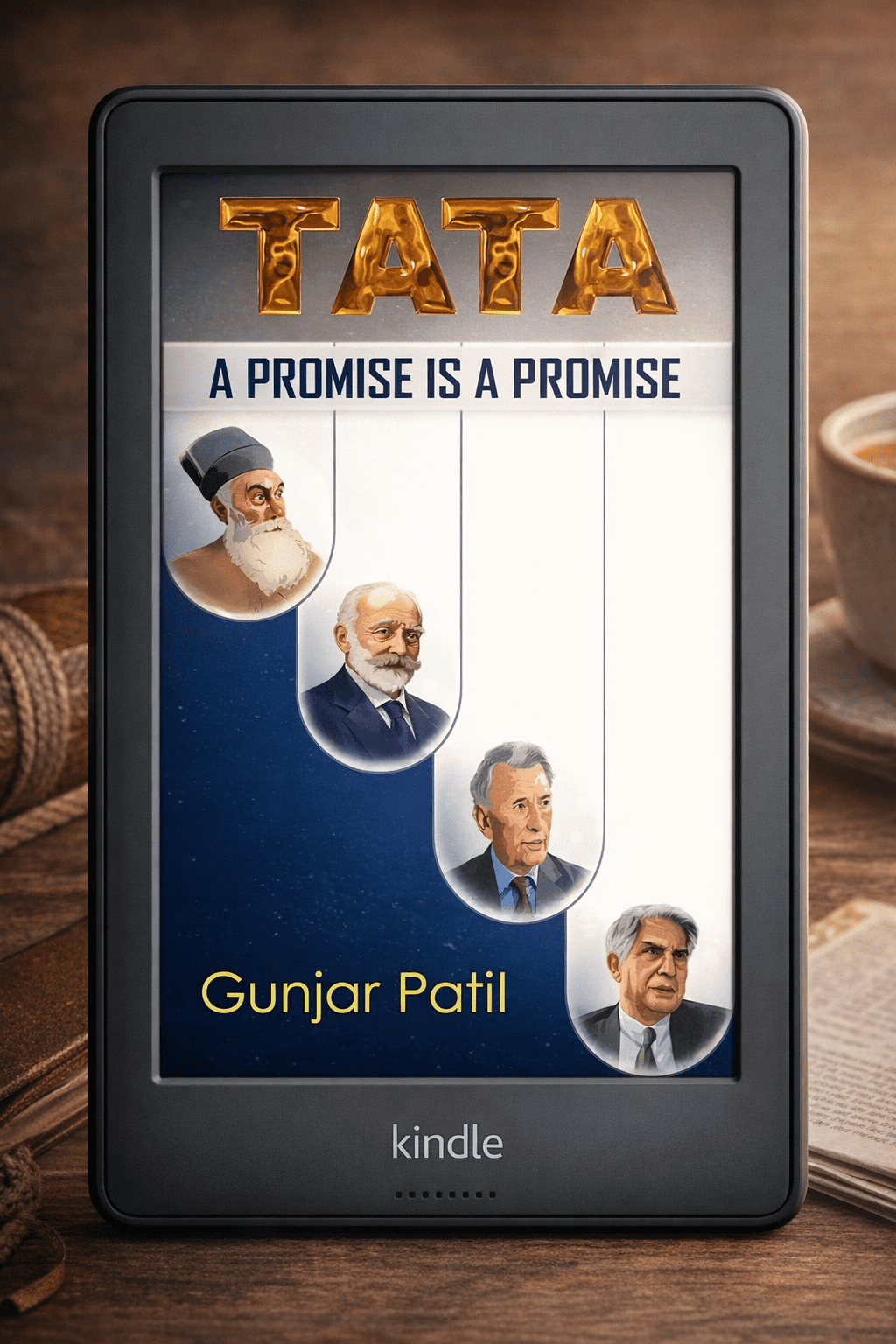
At its core, TATA: A Promise is a Promise is a chronological account of how the Tata family built one of India’s most respected business groups.
It starts with Nusserwanji Tata, who steps out of his traditional background and chooses trade over priesthood. That early decision already sets the tone. There’s this quiet rebellion there. Not loud, not dramatic, but firm.
Then comes Jamsetji Tata, who, honestly, feels like the emotional center of the book. His journey from a young boy in Navsari to someone thinking globally, setting up trading networks, and later dreaming of industries for India is written in a very straightforward way. No exaggeration. No heavy dramatization. Just events, one after another.
There’s a section where Jamsetji travels to England, studies industries, and realizes that India needs manufacturing, not just trading. That shift from trader to industrialist felt important. Not just for him, but for the country at that time.
The book then moves through key milestones:
• Setting up textile mills like Empress Mill
• The dream of a steel plant and the struggle to find the right land
• The Taj Mahal Hotel, which wasn’t just a business decision but almost a statement
• Early attempts at hydroelectric power
And then it transitions into the next generation. Dorabji Tata, R.D. Tata, and later J.R.D. Tata.
What I appreciated here is that the book doesn’t rush through generations. It shows continuity. You can see how one person’s unfinished dream becomes another person’s responsibility.
J.R.D.’s story, especially around aviation, stood out. His passion for flying, starting Tata Airlines, and eventually the complications with Air India give a glimpse into how even visionary ideas don’t always stay in the hands of the people who started them.
And then, of course, Ratan Tata.
From the Nano project to leadership challenges within the group, his journey feels closer to our times. More relatable, in a way. The struggles feel more visible.
What Stood Out to Me
There’s something very interesting about the writing style of this book.
It’s simple. Almost textbook-like at times. And I’ll be honest, that can feel a bit flat if you’re expecting storytelling in a dramatic sense. But then again, I think that simplicity works in its favor too.
Because the events themselves are strong enough.
For example, the section on the steel factory. The amount of effort that went into finding the right location, testing soil, dealing with water shortages, and then finally identifying the right place… it made me realize how uncertain things were back then. Today we talk about startups and funding rounds. Back then, even finding raw materials was a full journey.
Another moment that stayed with me was about worker welfare in the Empress Mill. Jamsetji introducing benefits like provident funds and better working conditions at a time when even developed countries hadn’t fully embraced such ideas. That part made me stop and think. This wasn’t just business expansion. There was a clear intention behind it.
And then there’s the Nano story.
I remember when Nano was launched. There was so much buzz around it. But reading about the behind-the-scenes struggle, the Singur controversy, the relocation of the factory… it adds layers to something we usually see only from the outside.
The book doesn’t try to make everything look perfect. There are failures. Delays. Opposition. Internal disagreements. And that honesty makes it more believable.
If I had to point out one thing though, it’s that sometimes I wished the author had slowed down a bit more in certain sections. Some transitions feel quick. You go from one major event to another without enough emotional breathing space.
The Emotional Core
You wouldn’t expect a book like this to have an emotional core. But it does.
It’s not in the writing style. It’s in the decisions these people made.
There’s a moment where Jamsetji refunds investors by selling personal assets to maintain trust. That hit me. Because today, we hear so many stories of companies collapsing and investors losing everything. But here was someone who chose reputation over survival.
And then Dorabji Tata selling his own wealth to keep the company afloat during tough times. It made me think about responsibility in a different way. Not just leadership, but ownership.
Even in Ratan Tata’s journey, especially during internal conflicts and leadership transitions, there’s a sense of carrying forward something bigger than personal ambition.
I think that’s where the book quietly connects with you.
It makes you reflect on what it means to build something that lasts. Not just financially, but ethically.
Who This Book Is For
I wouldn’t say this book is for everyone.
If you’re looking for a fast-paced narrative or dramatic storytelling, this might feel a bit straightforward for you.
But if you’re someone who:
• Is curious about Indian business history
• Wants to understand how large institutions are built over decades
• Is interested in leadership and values
• Or just grew up hearing the name “Tata” and wants to know the story behind it
Then this book will make sense to you.
Also, for younger readers or students, this works well as an introduction. It doesn’t overwhelm you with complex language. It keeps things accessible.
Final Thoughts
After finishing TATA: A Promise is a Promise, I didn’t feel like I had just read a business book.
I felt like I had traced a lineage. A series of choices made by different people, connected by a common thread.
Is it perfect? Not really. I do wish the writing had more depth in certain moments. Maybe more storytelling, more emotional layering. But at the same time, there’s a certain honesty in how it’s written.
It doesn’t try too hard.
And maybe that fits the subject.
Because the Tata story itself doesn’t need decoration.
It stands on its own.
As an editor, and just as a reader, I found myself respecting the intent of this book. It doesn’t try to impress you. It simply tells you what happened.
And sometimes, that’s enough.
FAQ Section
Is TATA: A Promise is a Promise worth reading?
I think yes, especially if you’re interested in real business stories from India. It’s not dramatic, but it gives you a clear understanding of how the Tata group evolved.
Who should read TATA by Gunjar Patil?
Students, entrepreneurs, and anyone curious about Indian industrial history will find value in it.
What is TATA: A Promise is a Promise about?
It’s a biography-style book that traces the journey of the Tata family and their businesses from Jamsetji Tata to Ratan Tata.
Is this book easy to read?
Yes. The language is simple and direct, which makes it accessible even for new readers.

With over 11 years of experience in the publishing industry, Priya Srivastava has become a trusted guide for hundreds of authors navigating the challenging path from manuscript to marketplace. As Editor-in-Chief of Deified Publications, she combines the precision of a publishing professional with the empathy of a mentor who truly understands the fears, hopes, and dreams of both first-time and seasoned writers.