
Rating:
⭐⭐⭐⭐ (4.4 out of 5)
I don’t usually pause mid-book and just… sit there. But with Divine Yoga, I found myself doing that more than once. Not because it’s difficult to read, but because some ideas linger in a way that makes you uncomfortable in a strangely honest way.
I’ve been reading spiritual books for years now, both as a reader and in my role at Deified Publication, and I’ve seen patterns. A lot of them promise peace, happiness, clarity. Most of them repeat similar frameworks. This one felt slightly different. Not dramatically different, but enough to make me slow down and question things I usually take for granted.
There’s a line of thought running through this book that kept nudging me. The idea that we are not really the “doer” of our actions. And honestly, I kept resisting that while reading.
What the Book Is About – Not just philosophy, but a system
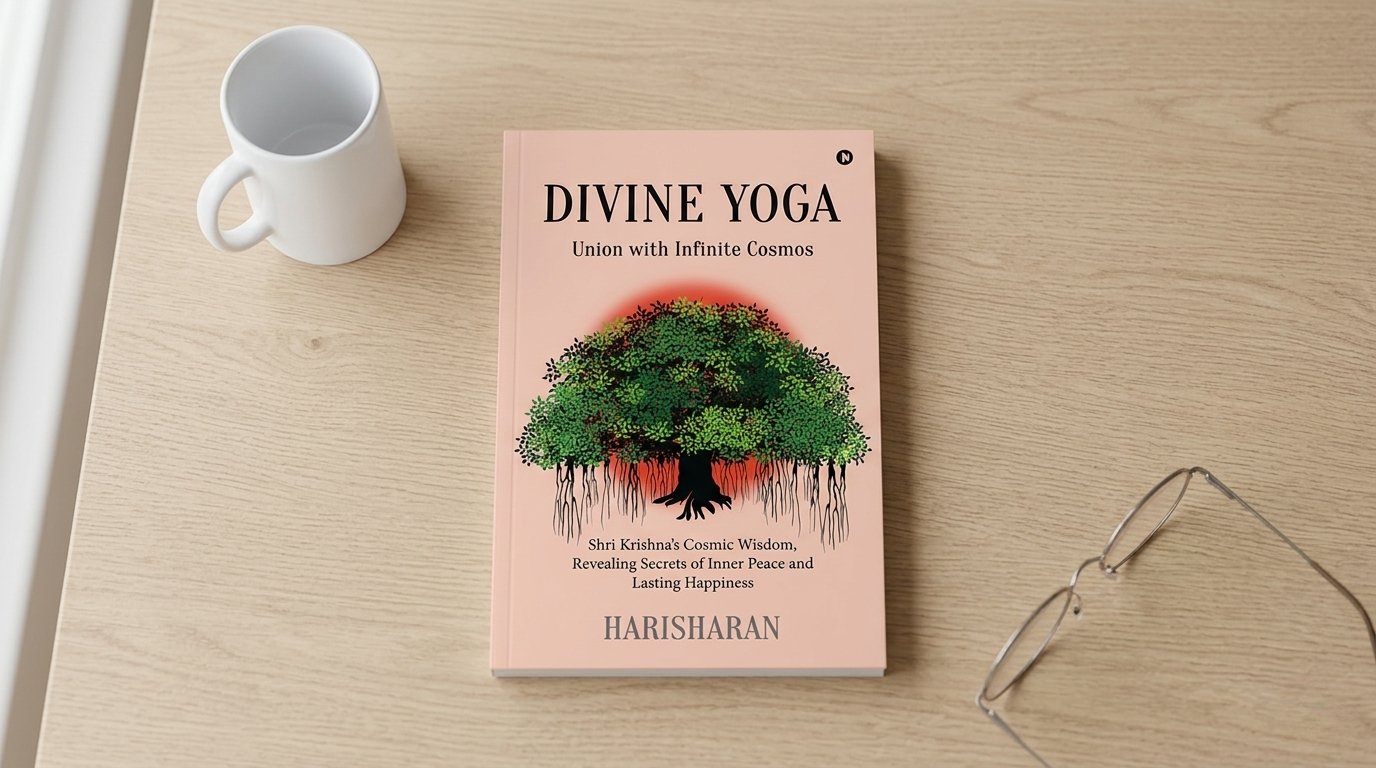
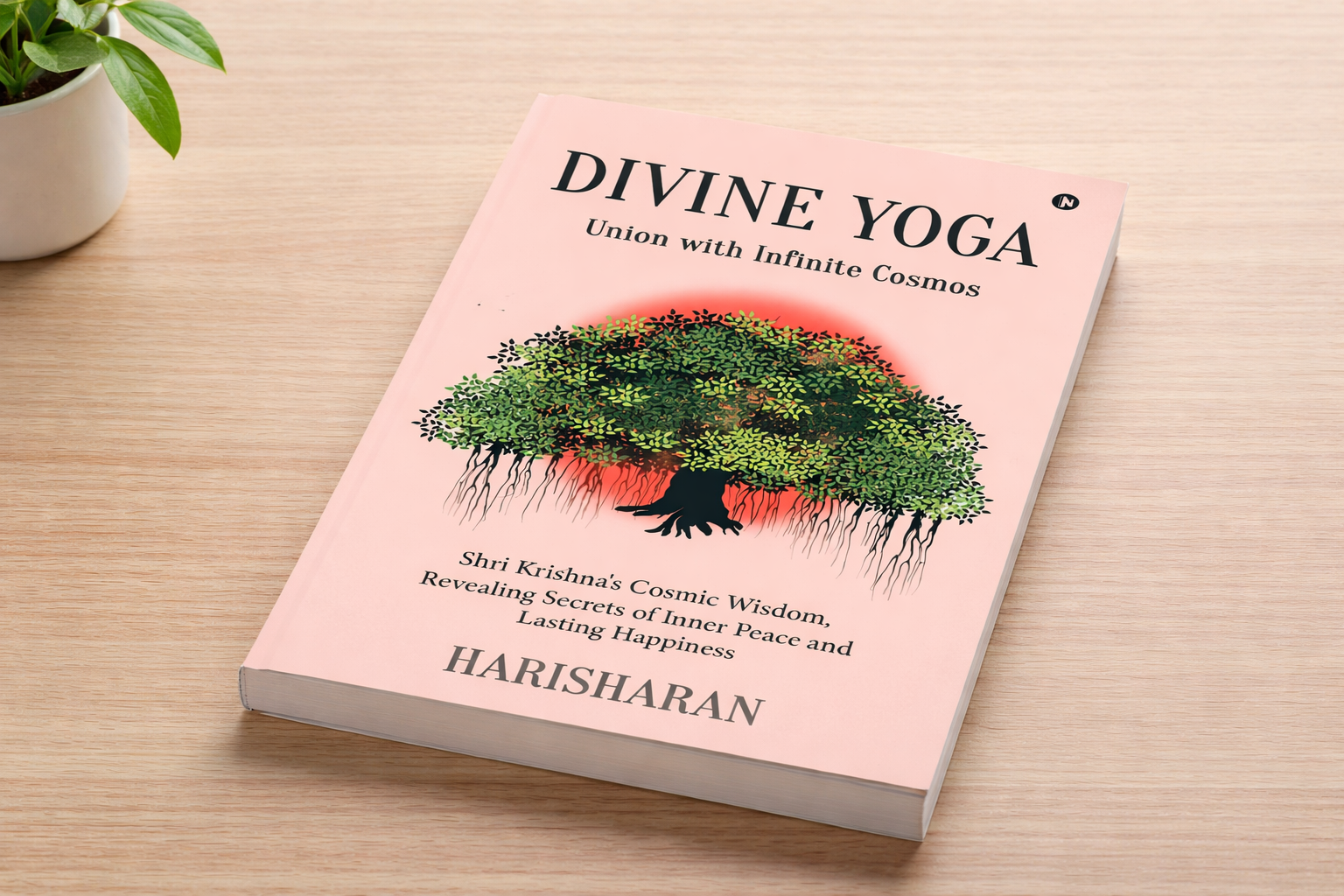
Divine Yoga: Union with Infinite Cosmos by Harisharan is rooted deeply in Indian spiritual philosophy, especially the teachings inspired by the Gita. But it’s not written like a religious text. It tries to present itself almost like a structured framework for living.
The book opens with karma and spirituality, but not in the usual motivational sense. It talks about how our actions are tied to a larger cosmic system, and how misunderstanding this creates stress, conflict, and emotional instability.
As I moved through the chapters, I noticed how systematically the author builds the idea. First, he explains the nature of existence, then the difference between gross and subtle experiences, and then gradually moves into more layered ideas like divine vision, self-realisation, and the concept of oneness.
There’s this interesting section where the book explains eight common desires of human beings. Things like wanting to be loved, wanting freedom, wanting happiness. It sounds simple, but the way it’s placed in the larger framework of cosmic existence makes you rethink how basic these desires actually are.
And then the book goes deeper. Dharma, karma, self-discipline, ego, liberation. It connects all of these in a way that tries to show that everything is part of a single system rather than separate ideas.
One part that really caught my attention was the “Banyan Tree Diagram” explanation. It uses the tree as a metaphor for existence, where the roots, trunk, and branches represent different layers of reality and consciousness. I’ve seen metaphors like this before, but here it’s explained in a more structured, almost analytical way.
What Stood Out to Me – The attempt to make spirituality feel logical
In my years of reading, I’ve noticed that spiritual books usually fall into two categories. Either they are deeply philosophical and hard to follow, or they simplify things so much that they lose depth.
This book is trying to sit somewhere in between.
What stood out to me most was how the author keeps using words like “scientific understanding” and “cosmic system.” There’s a clear attempt to make spirituality feel less abstract and more like a system you can understand and apply.
For example, when the book talks about harmful tendencies like anger, greed, and attachment, it doesn’t just say “avoid them.” It explains how they arise from ignorance of reality. That shift in explanation matters. It changes the tone from moral advice to something more observational.
There’s also a strong emphasis on self-discipline and self-awareness. Not in a harsh way, but in a way that keeps reminding you that your inner state is your responsibility.
Another thing I noticed is how the book repeatedly brings everything back to “oneness.” Whether it’s about relationships, work, or even suffering, the core idea is that separation is an illusion.
I’ve read similar ideas before, but here it felt more structured, almost like the author is trying to map it out step by step.
That said, I will be honest. At times, the language becomes a bit dense. Some sections feel like they are explaining concepts again and again with slightly different words. I understand why, because these ideas are complex, but as a reader, I did feel the repetition occasionally.
The Emotional Core – It’s not dramatic, but it unsettles you in a quiet way
This is not the kind of book that makes you emotional in an obvious way. There are no stories, no characters, no dramatic moments.
But it does something else.
It makes you question your everyday thinking.
There’s a section where the book talks about how we attach ourselves to outcomes and how that creates stress. I remember reading that and thinking about how often we measure our worth based on results.
It made me uncomfortable, honestly.
And then there’s this idea of surrendering the “false ego of the doer.” I kept going back and forth with this. Part of me resisted it because it feels like letting go of control. But another part of me understood what the author was trying to say.
I think that’s where the book works. It doesn’t try to emotionally overwhelm you. Instead, it quietly challenges your assumptions.
And sometimes that hits harder.
Who This Book Is For – And who might struggle with it
I think Divine Yoga will resonate most with readers who are already somewhat familiar with spiritual ideas.
If you’ve read the Gita, or even modern interpretations of it, this book will feel like an extension of those ideas. It adds structure and tries to make things more systematic.
If you are completely new to spirituality, you might find parts of it a bit heavy. Not impossible to understand, but it will require patience.
Also, if you are looking for quick motivation or practical life hacks, this might not be your kind of book. It’s not giving you “5 steps to happiness.” It’s asking you to rethink how you see life itself.
On the other hand, if you are someone who likes to sit with ideas, reflect, maybe even argue with them internally, then this book might stay with you longer than you expect.
Final Thoughts – A book that asks more than it answers
I keep thinking about one thing after finishing this book. It doesn’t try to comfort you in the usual way.
Instead, it asks you to look at yourself differently.
In 2026, when everything around us is fast, reactive, and constantly pulling us outward, a book like Divine Yoga feels almost like it’s asking you to pause and re-evaluate your inner framework.
I appreciated the sincerity of it. You can feel that the author genuinely believes in what he is saying. That matters.
At the same time, I do think the book could have been slightly more concise in parts. Some ideas are repeated in different ways, and a tighter structure might have made it even more impactful.
But overall, I found myself thinking about it even after I put it down. And for me, that’s usually a good sign.
As someone who has spent years reading and reviewing books, I can say this one is not trying to impress you. It’s trying to shift something inside you.
And whether it succeeds or not will depend entirely on how open you are when you read it.
FAQs
Is Divine Yoga worth reading?
I think it is, especially if you are interested in spiritual philosophy rooted in Indian traditions. It’s not light reading, but it gives you a lot to think about.
Who should read Divine Yoga by Harisharan?
Readers who are already curious about concepts like karma, dharma, and self-realisation will connect more deeply with it.
What is Divine Yoga about in simple terms?
It explains how to align your actions, thoughts, and identity with a larger cosmic system to reduce conflict and find stability.
Is Divine Yoga a beginner-friendly book?
Some parts are accessible, but overall it requires patience. Beginners can read it, but they might need to take it slowly.

With over 11 years of experience in the publishing industry, Priya Srivastava has become a trusted guide for hundreds of authors navigating the challenging path from manuscript to marketplace. As Editor-in-Chief of Deified Publications, she combines the precision of a publishing professional with the empathy of a mentor who truly understands the fears, hopes, and dreams of both first-time and seasoned writers.