
Rating:
⭐⭐⭐⭐½ (4.4 out of 5)
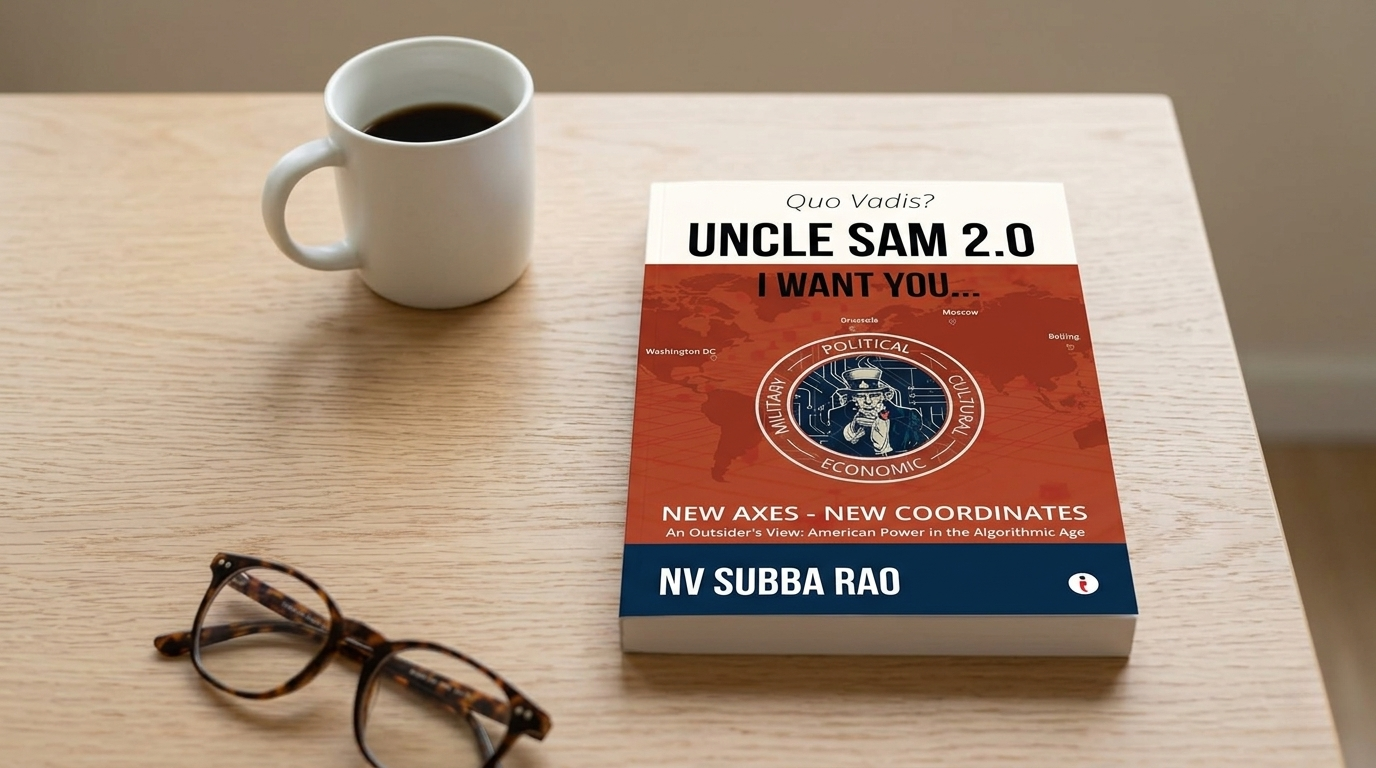
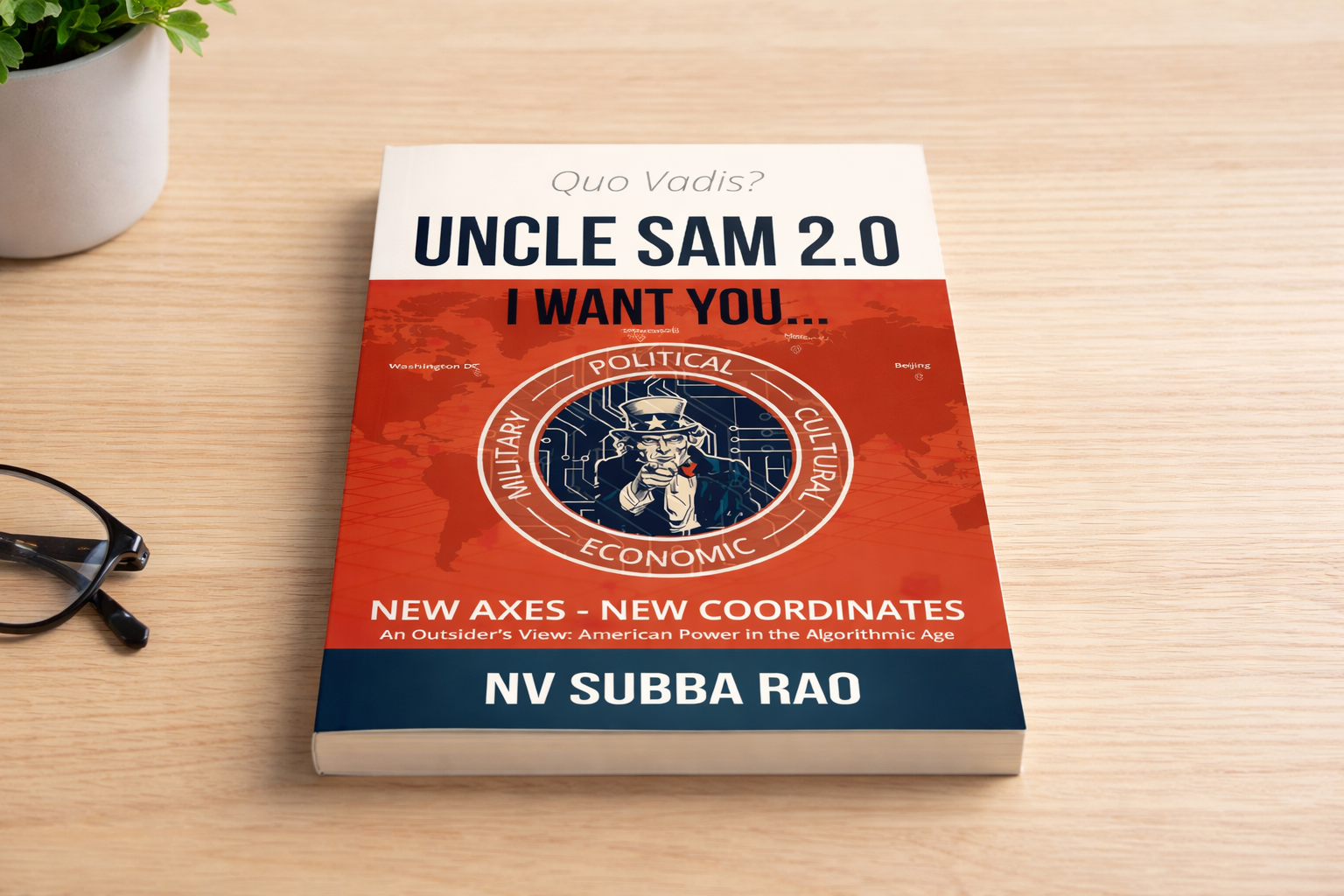
I have spent years reading books that try to explain power, culture, and the stories nations tell themselves. Very few do it with the kind of symbolic sharpness that Uncle Sam 2.0: I Want You… by N. V. Subbarao does.
What stayed with me most was not just the political argument. It was the image of a symbol aging in public. A national icon once associated with invitation, confidence, and aspiration slowly turning into something more unstable, more performative, almost algorithmically anxious. I kept returning to that central question the book asks in different ways: what happens when a nation’s symbol stops pointing outward toward possibility and starts pointing inward toward grievance?
Honestly, that hit harder than I expected.
I have read enough political nonfiction and systems books to know when a writer is merely assembling headlines versus when they are building a larger interpretive frame. Here, Subbarao is doing the latter. He is not just writing about America. He is writing about how systems become stories, and stories become systems.
And in 2026, that feels painfully timely.
What the Book Is About
At its core, Uncle Sam 2.0 Book Review is about the changing meaning of America’s global identity.
N. V. Subbarao starts with the familiar mythic America many of us grew up absorbing through cinema, diplomacy, migration dreams, and global culture. The early chapters beautifully map how the American Dream, Uncle Sam, Lady Liberty, frontier mythology, post war leadership, and the language of liberty all fused into a persuasive national narrative.
I liked that the book does not rush into contemporary critique. It first patiently shows how the idealized nation was built. The sections on immigration, national symbols, Manifest Destiny, civil rights contradictions, and the evolution of American identity give the later arguments emotional and historical weight.
Then the book pivots.
The Uncle Sam of wartime posters becomes the Uncle Sam of memes, platforms, outrage cycles, cult politics, and fragmented civic trust. From there, the structure widens into five major axes of power: political, economic, cultural, military, and technological. Through this framework, Subbarao studies how “Brand America” has weakened, adapted, or lost coherence.
What makes this more than a standard geopolitics book summary is the System Integrity Scores, the SIS framework. I found this especially interesting because it gives readers a way to think beyond ideology. Instead of asking “which president was good or bad,” the book asks: how healthy was the feedback loop of the system itself?
That shift in framing makes Uncle Sam 2.0 feel fresh.
The final epilogue lands on a sobering but not hopeless note: symbols do not govern, systems do. And when systems stop listening, decline begins.
What Stood Out to Me
The first thing that stood out was the narrative architecture.
Subbarao writes like someone with both boardroom experience and academic discipline. You can feel his strategy background in the way each section builds on the previous one. Myth leads to power. Power leads to perception. Perception leads to distortion. Distortion leads to systemic stress.
That progression feels deliberate and satisfying.
I was especially drawn to the recurring contrast between Noble Sam and Uncle S.C.A.M. That transformation from symbol to manipulated spectacle could have felt gimmicky in another book, but here it works because the author grounds it in social cybernetics, media behavior, and trust erosion.
There is also a real sharpness in how the book handles feedback loops. As an editor, I notice when a nonfiction writer finds one governing metaphor and stays disciplined with it. Here the metaphor of signal, distortion, recalibration, and system listening keeps the book coherent even when it moves across history, policy, digital culture, and leadership analysis.
Some parts I found particularly strong:
- The historical movement from Liberty to algorithm
- The reframing of immigration as part of America’s narrative machinery
- The System Integrity Scorecard across presidents
- The idea that modern decline is not accidental but partly “designed”
- The distinction between symbol worship and institutional resilience
If I had one small critique, it is that the conceptual density can occasionally become heavy. Readers looking for a lighter political read may need to slow down in the sections on systemic coordinates and AI assisted diagnostics. But honestly, I think the seriousness is part of the book’s value.
It asks readers to stay mentally present.
The Emotional Core
For all its systems language, the emotional center of Uncle Sam 2.0 is really about trust.
Trust in institutions. Trust in national stories. Trust in whether leadership still means moral responsibility rather than attention extraction.
There is something almost melancholic in the way the book treats symbols. Uncle Sam here is not just a poster figure. He feels like an aging moral metaphor. Watching that metaphor fracture under hashtags, cult dynamics, and performance politics gave the book an emotional undertow I did not fully expect.
A few moments genuinely made me pause.
The epilogue’s insistence that “I Want You” must become a conversation, not a command felt deeply human. It moved the book beyond critique into civic responsibility.
I also found the final question lingering in my mind long after finishing: can a republic still self correct when its systems are optimized for outrage instead of listening?
That is the kind of question that stays with you over chai, over news feeds, over ordinary conversations.
It is not fear mongering. It is more like a mirror held at the level of institutions.
Who This Book Is For
If you are wondering should you read Uncle Sam 2.0 and is it worth it, I think this depends on what kind of reader you are.
This book is especially for:
- Readers interested in political systems and democracy
- People who enjoy books on media, influence, and digital behavior
- Readers of geopolitics, leadership, and institutional design
- Students of communication, public policy, and social psychology
- Professionals who think in strategy frameworks
- Anyone trying to understand America’s changing global image
It may especially resonate with readers who liked books on narrative power, soft power, civilizational shifts, or democratic decline.
This might not be for someone looking for a simple partisan argument. The book is larger than that. It is more structural, more diagnostic, and in many ways more philosophical.
Final Thoughts
So, is Uncle Sam 2.0 by N. V. Subbarao worth reading?
I think yes, especially in 2026 when democracies everywhere are dealing with platform logic, institutional fatigue, and identity fractures.
What I appreciated most is that the book refuses both nostalgia and cynicism. It does not simply mourn what America was, nor does it declare collapse as destiny. Instead, it asks what recalibration would actually require.
That feels honest.
In my years reviewing books, I have learned that the strongest nonfiction titles are the ones that give readers a new lens, not just new information. Uncle Sam 2.0 gives exactly that: a way to see national identity as a living system of signals, stories, and feedback.
Some sections are dense, yes. Some arguments will spark disagreement, definitely. But I would rather read a book that makes me argue with it than one that evaporates the moment I close it.
This one stayed.
Quick Reader FAQ
Is Uncle Sam 2.0 worth reading?
Yes, if you enjoy politics, systems thinking, media analysis, and books that connect history with current digital culture.
Who should read Uncle Sam 2.0?
Policy readers, academics, leadership thinkers, startup strategists, and anyone interested in democracy under algorithmic pressure.
What’s Uncle Sam 2.0 about in simple words?
It examines how America’s identity shifted from idealized symbol to digitally distorted brand, and what that means for global leadership.
Is this book academic or readable?
It is readable, but intellectually layered. Best for readers who enjoy reflecting rather than speed reading.
With over 11 years of experience in the publishing industry, Priya Srivastava has become a trusted guide for hundreds of authors navigating the challenging path from manuscript to marketplace. As Editor-in-Chief of Deified Publications, she combines the precision of a publishing professional with the empathy of a mentor who truly understands the fears, hopes, and dreams of both first-time and seasoned writers.