
Rating:
⭐⭐⭐⭐ (4.2 out of 5)
I closed Heart Trap and just sat there for a while. Not because something dramatic happened at the end, but because it left this strange aftertaste. You know that feeling when a story doesn’t shout at you but still manages to linger somewhere inside? That’s what this book did to me.
In my years as an editor at Deified Publication, I’ve read all kinds of love stories. Some try too hard to impress. Some are overly poetic. Some feel like they were written to please a certain audience. But this one… it felt a little uncomfortable at times. And I think that’s exactly the point.
What the Book Is About
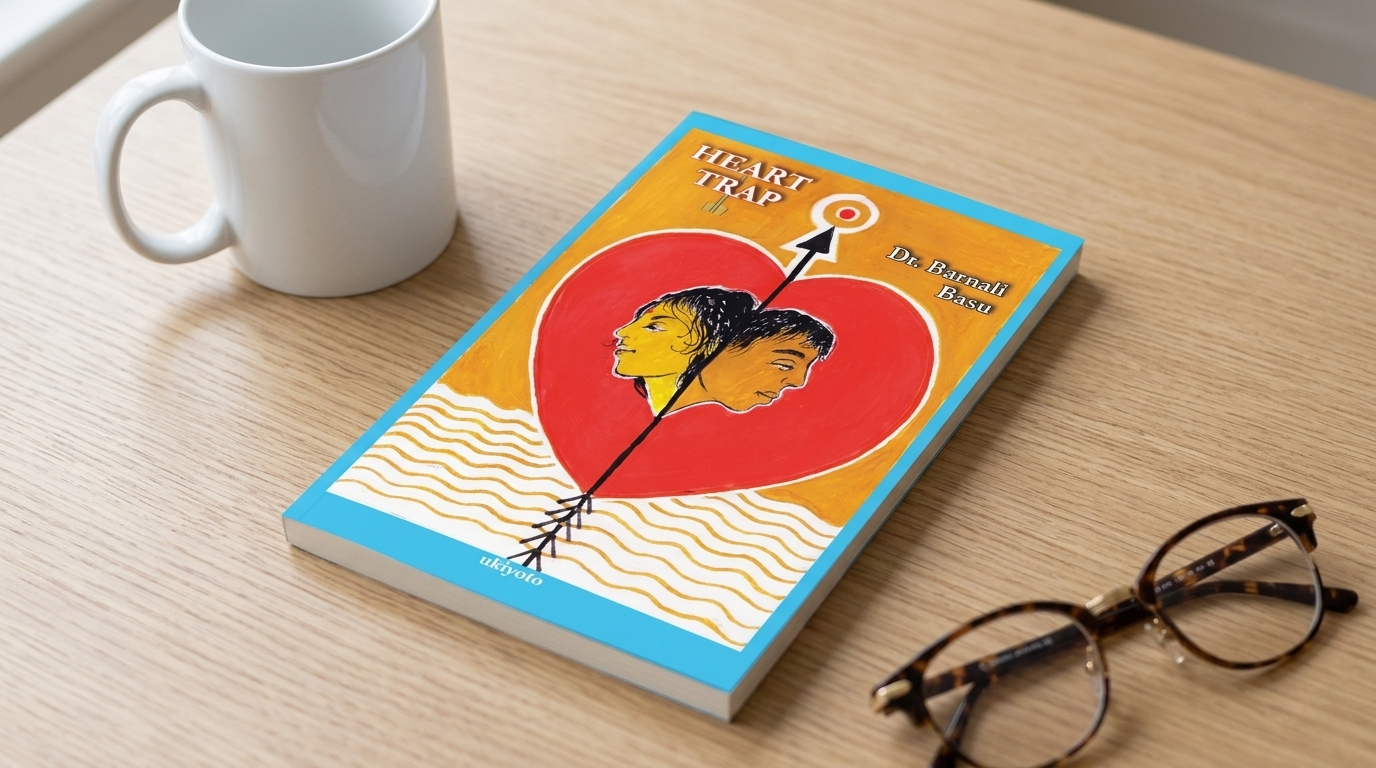
At its core, Heart Trap by Barnali Basu is about attraction, power, ego, and the strange games people play in relationships without even admitting it to themselves.
The story revolves around Purab Chaddha, a confident, almost dangerously self-assured college boy who knows he has charm and uses it like a weapon. He isn’t just flirting for fun. There’s calculation behind it. A kind of quiet arrogance.
Then there’s Pamela Chopra. She’s not the typical female lead you expect in this kind of setup. She’s observant, sharp, and honestly, a little detached in a way that feels real. She’s not impressed easily. And that already sets the tone.
What begins as a challenge, almost like a bet or a test of ego, slowly becomes something more layered. There’s attraction, yes. But there’s also manipulation, misunderstanding, and a constant push and pull between what is said and what is actually felt.
And somewhere in between all of this, you start wondering… who is really in control here?
What Stood Out to Me
There’s this thing the book does really well. It doesn’t rush.
A lot of modern romantic stories jump straight into emotions. Here, the author takes time building situations. Small conversations. Awkward pauses. Slight shifts in tone. I noticed that especially in the early interactions between Purab and Pamela. Those moments felt almost… familiar.
Like I’ve seen people talk like that. Not saying what they mean. Testing each other.
Purab as a character is interesting. Not always likable. In fact, at times I found myself slightly irritated by him. But that’s also what makes him believable. He carries that mix of confidence and insecurity that many people hide behind charm.
Pamela, on the other hand, is written with a certain restraint. She doesn’t reveal everything. And I liked that. There’s a moment where she simply observes rather than reacts, and somehow that silence says more than any dialogue could.
Also, the structure of the book caught my attention. Even the chapter titles like “The Hunter,” “The Target,” “The Trap Falls” hint at something deeper. This isn’t just a love story. It’s almost like a psychological game being played.
And I kept thinking… are we all a little like this sometimes?

The Emotional Core
If I had to describe the emotional center of Heart Trap, I’d say it sits somewhere between desire and ego.
There’s attraction, yes. But it’s not soft or dreamy. It’s layered with intention. With pride. With the need to win.
And that made me slightly uneasy in parts.
Because it reminded me of real life. Of situations where people don’t even realize they’re treating relationships like a game. Where validation matters more than connection.
There were moments where I felt for Pamela. Especially when the narrative hints at how she’s been approached repeatedly by people who don’t really see her. That felt very real.
And then there are moments with Purab where you almost understand him. Not agree, but understand. That’s a difficult balance to achieve, and I think Barnali Basu manages it well.
The ending, without giving anything away, didn’t try to tie everything neatly. And I appreciated that. Life rarely gives us clean emotional conclusions.
Who This Book Is For
I think Heart Trap will connect with readers who enjoy character driven stories more than plot heavy ones.
If you’re someone who likes observing human behavior, the small things people say, the things they avoid saying, this book will hold your attention.
It’s not for someone looking for a light, feel good romance. This one asks you to sit with discomfort a little.
Also, if you’ve ever experienced that strange space between liking someone and not fully trusting the situation, you might find parts of this story hitting closer than expected.
In 2026, when conversations around relationships are becoming more honest and less idealized, this kind of story feels relevant. It doesn’t pretend love is always pure. It shows the mess, the ego, the confusion.
And honestly, I think we need more of that.
Final Thoughts
I’ll be honest. This book didn’t “wow” me in a dramatic way. It didn’t try to.
But it stayed with me.
There were moments I kept replaying in my head. Small lines. Certain interactions. That subtle tension between the characters.
If I had one small critique, it would be that at times the pacing feels slightly stretched. A few sections could have been tighter. But even then, I understand why the author chose to let scenes breathe.
Because this story is less about what happens and more about how it happens.
Barnali Basu has written something that feels grounded in observation. Not exaggerated emotion, but real, slightly uncomfortable human behavior.
And I think that’s why it works.
FAQ
Is Heart Trap worth reading?
I think so, especially if you enjoy stories that focus more on characters and relationships than fast moving plots. It’s not flashy, but it stays with you.
Who should read Heart Trap?
Readers who like psychological undertones in romance, college based settings, and layered characters will probably appreciate it more.
What is Heart Trap about in simple terms?
It’s about a game of attraction between two people where ego, curiosity, and emotions slowly get tangled in ways neither fully expects.
Is Heart Trap a light romance?
Not really. It has romantic elements, but it leans more toward emotional tension and human behavior than feel good love.

With over 11 years of experience in the publishing industry, Priya Srivastava has become a trusted guide for hundreds of authors navigating the challenging path from manuscript to marketplace. As Editor-in-Chief of Deified Publications, she combines the precision of a publishing professional with the empathy of a mentor who truly understands the fears, hopes, and dreams of both first-time and seasoned writers.