
Rating:
⭐⭐⭐⭐ (4.3 out of 5)
There’s something about books built from real encounters that always pulls me in. Maybe because they feel less like stories and more like memories someone trusted you with.
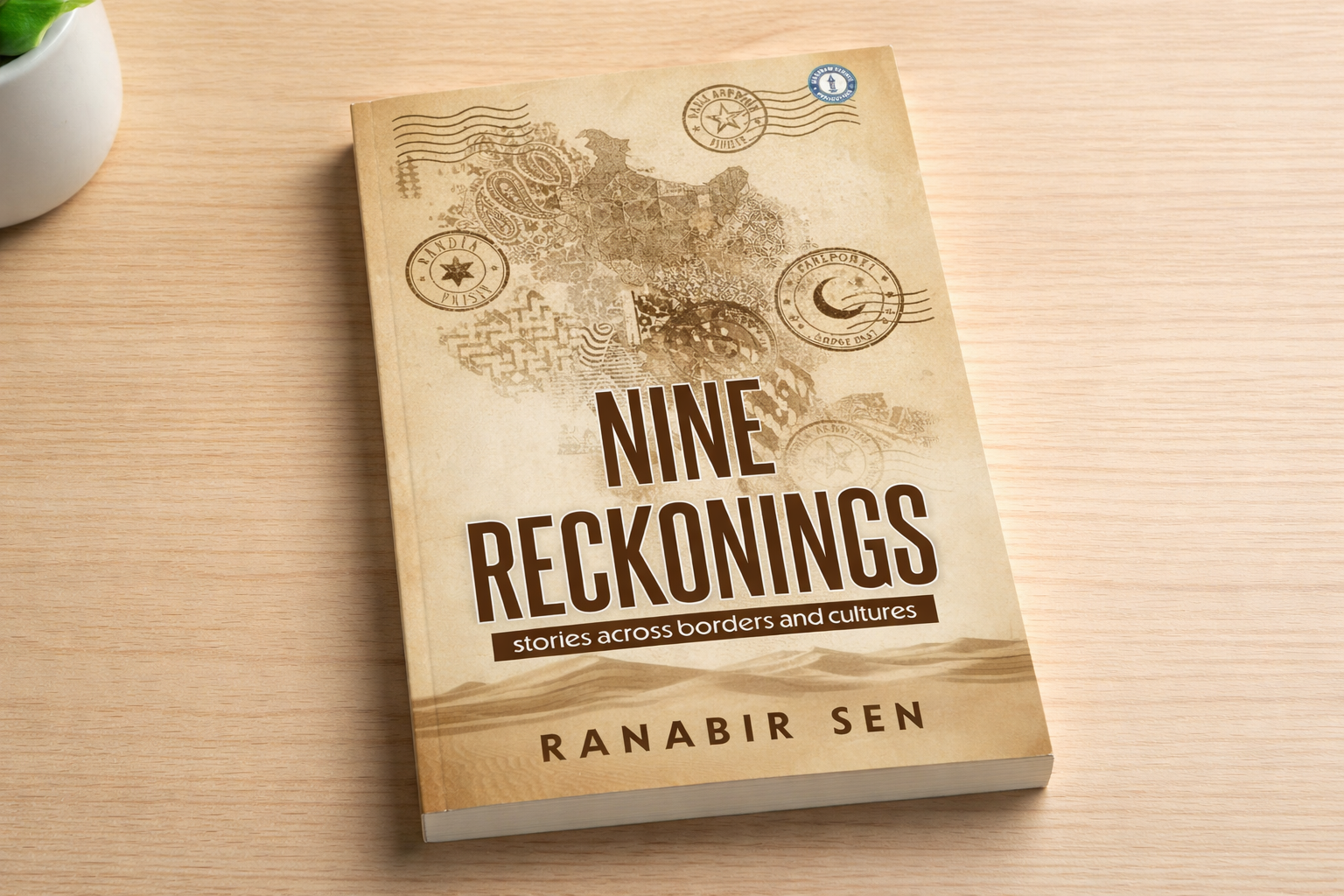
When I started going through Nine Reckonings by Ranabir Sen, I had that exact feeling. Not excitement, not curiosity in the usual sense. Something softer. Like when someone begins telling you about their life and you instinctively sit a little straighter, because you know you should listen properly.
I’ve read a lot of short story collections in my years as an editor at Deified Publication. Some are clever. Some are polished. But very few feel lived in. This one does.
And I think that comes from where these stories come from. Not imagination alone, but observation. Long years of meeting people, watching them, and then… remembering them. You can see that clearly even in the early pages, where the author reflects on decades of meeting people across regions and realizing that not everything can be reduced to data points
That line stayed with me longer than I expected.
What the Book Is About
Nine Reckonings is essentially a collection of interconnected stories drawn from real encounters across India and beyond. Each story stands on its own, but there’s a thread running through all of them. Human moments. Small turning points. The kind you don’t always recognize immediately, but later realize changed something inside you.
The book moves across places like Punjab, Bhopal, Manila, the Middle East, Jakarta. But honestly, it’s less about geography and more about people carrying their lives through these places.
Take the opening story, “Beyond Punjab.” On the surface, it’s about three men conducting a survey in a rural village. But it slowly becomes something else. Suspicion. Fear. And then unexpectedly, kindness. A woman feeding strangers. A family offering shelter when things could have easily gone wrong.
I remember pausing at that moment where the narrator says that some surveys measure numbers, but that day, they measured trust. It’s simple, but it lands.
Then there’s “Five Kg Gold,” set during a time of unrest in Bhopal. That story really unsettled me. Not in a dramatic way. More in that lingering, uncomfortable way where you keep thinking about it later. A man verifying someone for a corporate prize while witnessing real human danger around him. The contrast feels almost absurd. And painfully real.
“Family First After 6 PM” is probably the one that stayed with me the longest. The character of Eida felt so real that I almost forgot I was reading. Her small rituals, the way she folds clothes, the way she carries her son’s photograph, the way she defines work and family. There’s a line about how she carried a whole village in her cloth bag. I don’t know why, but that line stayed with me.
And then “Middle East Dreams.” That one felt heavier. Not in a depressing way, but in the sense of accumulated lives. Migrant workers, small ambitions, sacrifices that never get written down anywhere official. The narrator becoming a kind of listener, carrying people’s stories like messages.
I think what ties all these together is that none of these stories feel like they are trying to impress you. They just unfold.
What Stood Out to Me
First, the writing voice. It’s observant without being intrusive. That’s a difficult balance, and Ranabir Sen manages it well.
In many short story collections, I often feel the author trying to guide my emotions too strongly. Here, that doesn’t happen. The stories are allowed to breathe. Sometimes they even end without clear closure. And oddly, that works.
The second thing is the way professions are used. Market research, surveys, fieldwork. These are not typical storytelling lenses, and yet they become powerful here. The idea that someone enters people’s lives for “data collection” but leaves with something much deeper. That shift is subtle but consistent throughout the book.
Also, the characters. They don’t feel constructed. They feel remembered.
Like Abdul in Middle East Dreams, who keeps his life in a ledger. Or Maria, who measures her emotions against survival. Or Faizan, chasing football dreams while dealing with family realities. None of them are exaggerated. They’re just… there.
I’ve seen this in real life too. People who don’t think of themselves as stories, but if you sit with them long enough, you realize they are.
One small thing though. And I’m saying this honestly. At times, the pacing feels a bit stretched. Some descriptions linger longer than necessary. Not always, but occasionally. I found myself wanting a slightly tighter narrative in certain sections.
But then again, maybe that’s intentional. Because real life doesn’t rush.
The Emotional Core
If I had to describe how this book feels, I would say it feels like remembering something that didn’t happen to you, but still affects you.
There’s no single emotion dominating the book. It shifts. From warmth to discomfort to reflection.
There’s a moment in “Five Kg Gold” where identity, fear, and survival collide in a very raw way. I didn’t expect that from a story that begins with something as simple as verifying a contest winner.
And then there are softer moments. Like Eida fixing a situation quietly, without making it about herself. Or the simple act of feeding someone. Or carrying a photograph across countries.
In 2026, when so much of our interaction is fast, transactional, and often surface level, this book feels like a reminder to slow down and actually see people.
It made me think about how many stories we walk past every day.
Who This Book Is For
I think this book will connect most with readers who enjoy reflective storytelling. If you like fast plots, twists, and dramatic arcs, this might feel slow.
But if you enjoy stories that feel real, that focus on people rather than events, this could really work for you.
Also, if you’ve ever lived away from home, or worked in environments where you meet different kinds of people regularly, you might see parts of your own experience here.
And honestly, I think readers who appreciate writing that observes rather than explains will like this more.
Final Thoughts
As someone who has spent years reading and reviewing books, I’ve learned that not every book needs to be loud to matter.
Nine Reckonings is not trying to overwhelm you. It just sits with you.
Yes, it has its slower moments. And yes, not every story will resonate equally with every reader.
But there’s sincerity here. And that’s rare.
I closed the book feeling like I had listened to something important. Not dramatic. Not grand. Just important.
And sometimes, that’s enough.
FAQ Section
Is Nine Reckonings worth reading?
Yes, especially if you enjoy character-driven stories and real-life inspired narratives.
What is Nine Reckonings about?
It’s a collection of stories based on real encounters across cultures, focusing on human experiences and personal moments.
Who should read Nine Reckonings?
Readers who like reflective, slower storytelling and stories rooted in real life.
Is Nine Reckonings fast-paced?
Not really. It’s more about observation and reflection than speed.

With over 11 years of experience in the publishing industry, Priya Srivastava has become a trusted guide for hundreds of authors navigating the challenging path from manuscript to marketplace. As Editor-in-Chief of Deified Publications, she combines the precision of a publishing professional with the empathy of a mentor who truly understands the fears, hopes, and dreams of both first-time and seasoned writers.