
Rating:
⭐⭐⭐⭐ (4.2 out of 5)
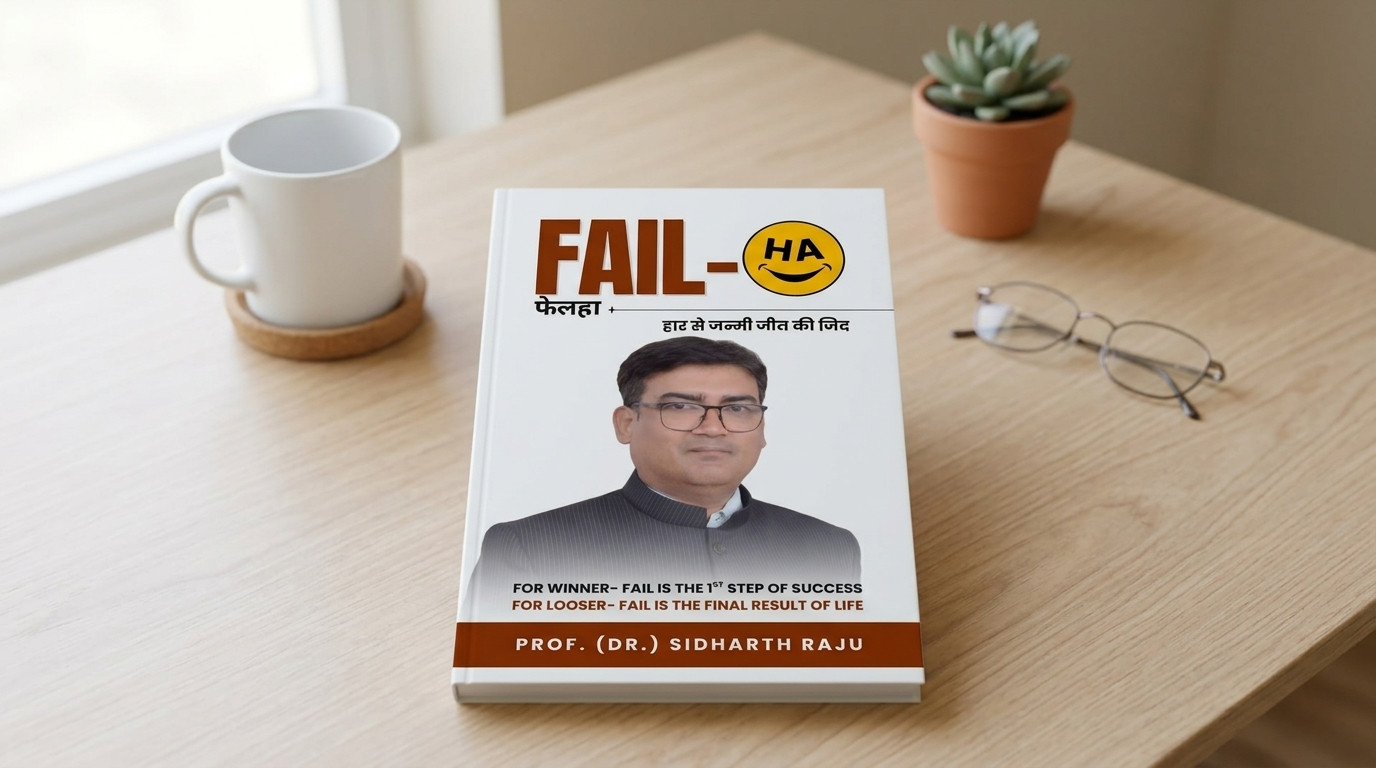
Every once in a while I come across a book whose title alone makes me pause.
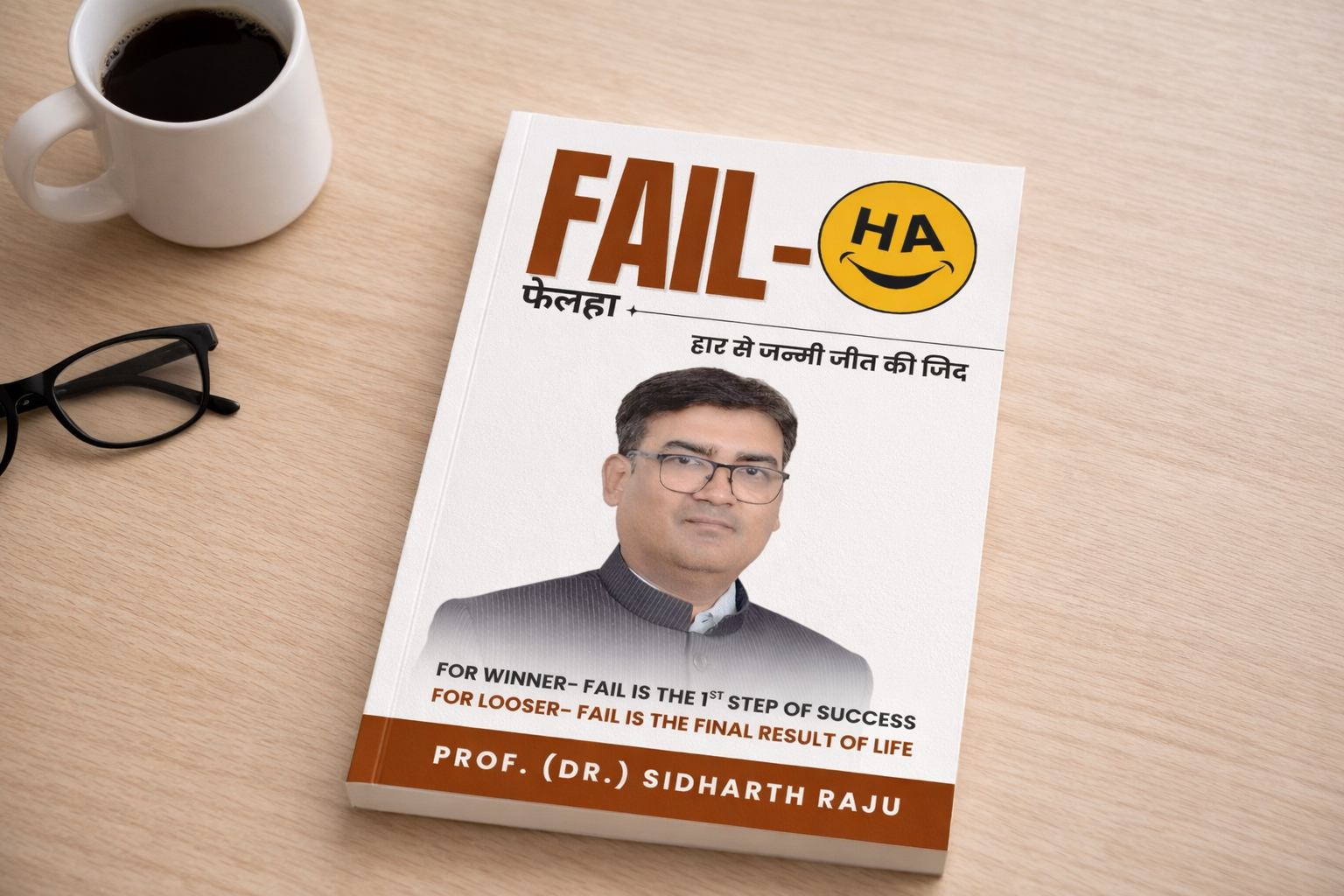
That happened with Failha by Prof. (Dr.) Siddharth Raju.
The word itself feels unusual. At first glance it almost sounds playful. But when you look a little closer, the meaning becomes sharper. Failure. Struggle. Determination.
And then the subtitle adds another emotional layer. Haar se janmi jeet ki zid. The stubborn refusal to accept defeat.
I remember looking at the cover and thinking about something many readers might recognize. Almost everyone carries a private story about failure. A moment when something collapsed. A plan that did not work. A dream that seemed distant.
In my fifteen years of reading and reviewing books, I have noticed that stories about success are everywhere. But honest reflections about failure often feel more real. They remind us that life rarely moves in a straight line.
While reading about Failha, I kept thinking about that idea. That failure is not simply an ending. Sometimes it becomes the beginning of a stronger version of ourselves.
And that is the emotional core of this book.
What the Book Is About
At its heart, Failha tells the story of a young boy slowly discovering strength inside ordinary circumstances.
The narrative grows from the life experiences and reflections of Prof. (Dr.) Siddharth Raju, an educator who has personally witnessed the realities of struggle, inequality, and perseverance. His journey from a small rural village in Bihar to becoming an academic leader is deeply woven into the spirit of the book.
The story begins in a simple environment. A child growing up in rural India. Limited resources. Limited opportunities. But also a deep curiosity about the world.
As the narrative progresses, readers see how small decisions slowly shape a life. One step leads to another. A thought becomes motivation. A challenge becomes a test of resilience.
The book captures moments from village life, family relationships, expectations from society, and the inner promises we make to ourselves.
What I personally appreciated is the emotional rhythm of the storytelling.
Instead of dramatic twists or exaggerated conflict, the story builds through everyday experiences. Moments that may seem small on the surface but carry deep meaning when viewed through reflection.
The author invites readers to witness how ordinary circumstances can slowly transform a person’s thinking. The young protagonist learns to observe life differently. Failures stop appearing as permanent defeats and start becoming lessons.
That transformation becomes the real narrative engine of the book.
And honestly, that felt refreshing.
Because sometimes the most powerful stories are the ones that feel closest to real life.
What Stood Out to Me
One of the first things I noticed while reading about Failha is the tone of sincerity.
The writing does not try to impress with complex literary tricks. Instead it carries the calm confidence of lived experience.
The story reflects nearly three decades of the author’s personal journey through struggles, dreams, and setbacks, shaping the emotional foundation of the narrative.
That authenticity matters.
In many motivational books the advice can feel abstract. But here the inspiration grows from lived moments. Village streets. Family expectations. Academic challenges. Personal doubts.
These elements create a narrative that feels grounded.
Another aspect I appreciated is how the book emphasizes small turning points.
Sometimes we expect success stories to revolve around dramatic breakthroughs. But Failha seems to focus on quieter moments. A realization. A decision to keep going. A new perspective on a problem.
Those moments accumulate slowly. And eventually they shape the direction of life.
The storytelling also captures contrasts between rural simplicity and the wider world beyond it.
The smell of village soil. The pace of city life. The emotional weight of family hopes.
These contrasts add texture to the narrative.
And they remind readers that personal growth often happens when we move between different worlds.
The Emotional Core
If I had to describe the emotional center of Failha, I would say it revolves around one idea.
Resilience.
Not the loud kind that appears in motivational speeches. But the quiet determination that grows slowly inside a person.
The book seems to ask an important question.
What if failure is not the opposite of success?
What if it is simply the first step?
I think many readers will recognize this idea in their own lives.
Maybe you did not clear an exam the first time. Maybe a career plan collapsed. Maybe someone doubted your ability.
Those experiences often feel painful in the moment.
But with time they sometimes become the fuel for something stronger.
I felt that emotional rhythm while reading about this book. The narrative invites readers to rethink their relationship with failure.
Instead of treating it as something shameful, the story treats it as a teacher.
And honestly, that perspective feels especially relevant today.
In 2026 we live in a culture where success is constantly displayed on social media. People share achievements but rarely talk about the struggles behind them.
A book like Failha gently shifts that conversation.
It reminds readers that behind every success story there is usually a long list of failed attempts.
And that is completely normal.
Who This Book Is For
I think Failha by Prof. (Dr.) Siddharth Raju will resonate with several kinds of readers.
Young students might find it especially relatable. Anyone facing academic pressure or uncertainty about the future may connect with the journey described in the book.
Readers from rural backgrounds may also feel a deep emotional connection to the early parts of the narrative. The descriptions of village life and limited opportunities reflect experiences many people understand.
Educators and mentors might appreciate the philosophical reflections scattered throughout the story. The book emphasizes that education should not only prepare people for jobs but also help them understand life more deeply.
At the same time I should say something honestly.
Readers expecting a fast paced dramatic plot might find the storytelling reflective rather than intense. The book seems to focus more on internal growth than external action.
Personally I think that works well for this kind of story. But different readers look for different things in a book.
Final Thoughts
After spending time with the ideas behind Failha, one thought stayed with me.
Failure is one of the most misunderstood experiences in life.
We often try to avoid it. Hide it. Forget it.
But sometimes failure becomes the exact moment when a person discovers their real strength.
This book appears to capture that transformation.
Through the life reflections of Prof. (Dr.) Siddharth Raju, readers see how persistence slowly reshapes destiny. A child from a modest rural background eventually becomes an academic leader and educator.
And somewhere along that journey, failure stops being an obstacle.
It becomes motivation.
I think many readers will close this book and quietly reflect on their own journeys. The moments when things did not work out. The doubts they faced. The stubborn decision to keep moving forward anyway.
Those reflections are where the book truly leaves its mark.
And that is why I believe Failha has the potential to connect with readers who are searching for courage during uncertain phases of life.
FAQ
Is Failha worth reading?
If you enjoy motivational life stories rooted in real experiences, Failha offers thoughtful reflections about perseverance and self belief.
What is Failha about?
Failha tells the story of a young boy growing through challenges and learning to transform failure into determination and personal growth.
Who should read Failha by Siddharth Raju?
Students, young professionals, and readers looking for inspiration from real life struggles will likely connect with the book.
Is Failha a biography or a novel?
The book blends autobiographical reflections with narrative storytelling, making it both a personal journey and a motivational story.

With over 11 years of experience in the publishing industry, Priya Srivastava has become a trusted guide for hundreds of authors navigating the challenging path from manuscript to marketplace. As Editor-in-Chief of Deified Publications, she combines the precision of a publishing professional with the empathy of a mentor who truly understands the fears, hopes, and dreams of both first-time and seasoned writers.