
Rating:
⭐⭐⭐⭐ (4.4 out of 5)
Sometimes Poetry Feels Like a Prayer
Every now and then I come across a poetry book that doesn’t feel like literature in the traditional sense.
It feels closer to prayer.
That was my first instinct when I looked at Tumhi Se Mangne Aayi by Akshara.
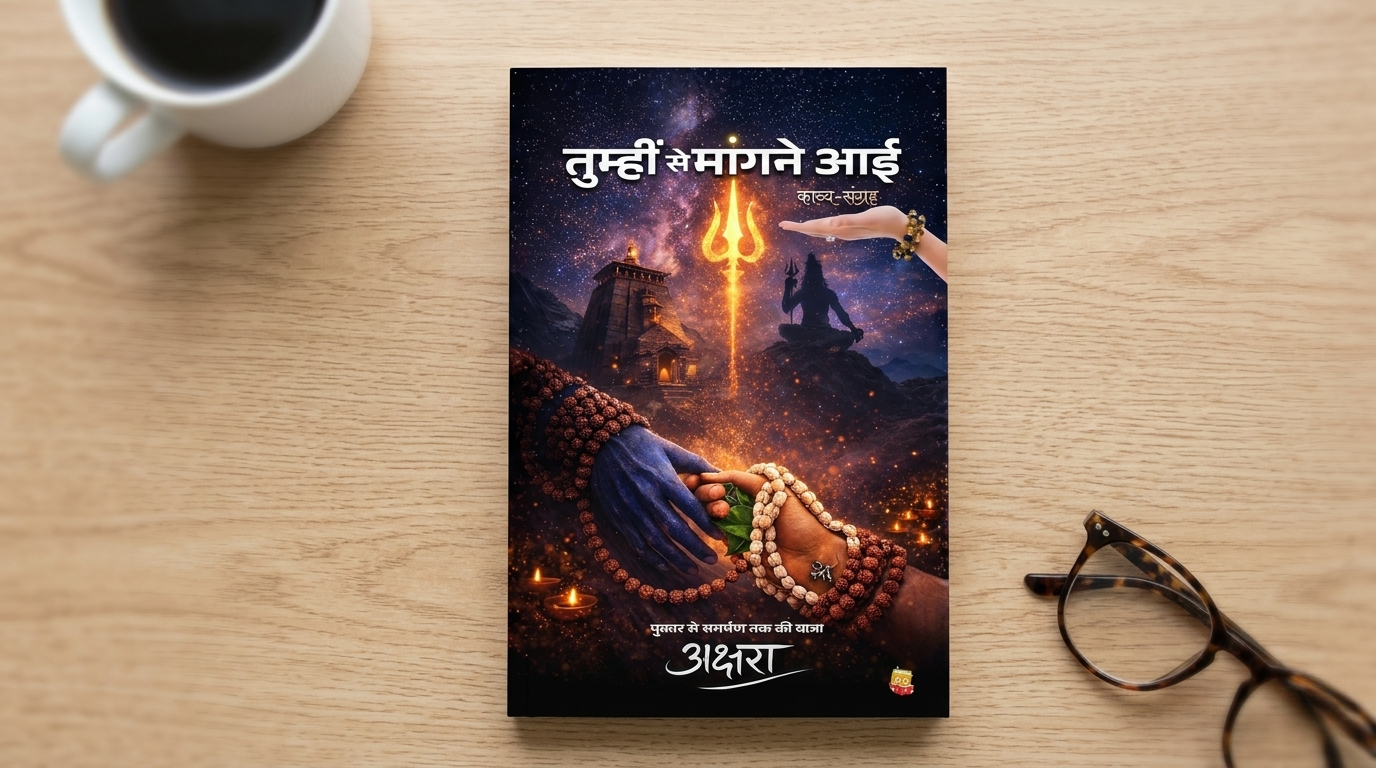
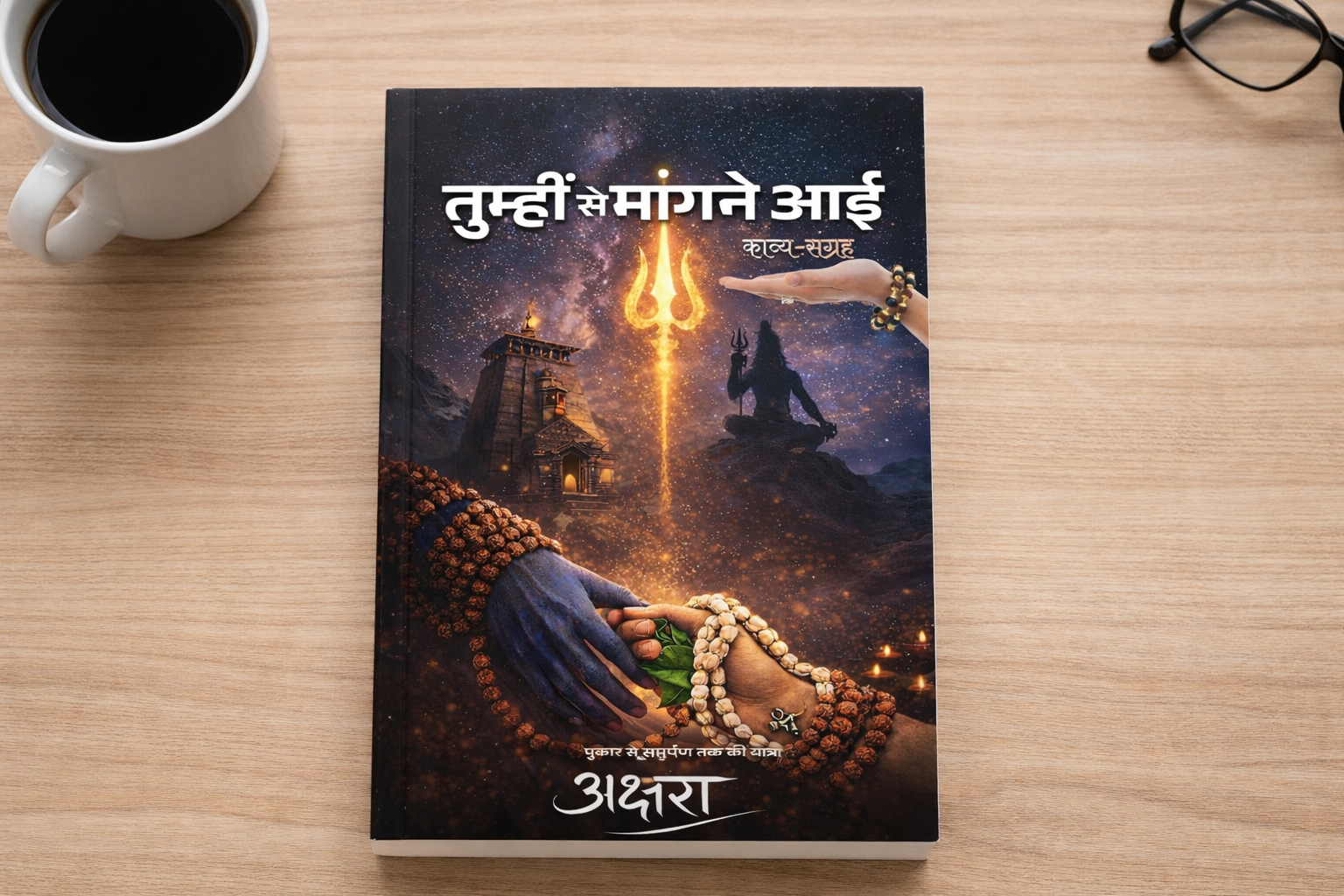
The cover itself already hints at something deeper. A glowing trident rising into the sky, a temple under a cosmic night, hands holding prayer beads, and a figure sitting in meditation. Even before reading a single line, the imagery tells you this book is rooted in devotion.
Not the loud kind of devotion that performs itself.
Something more inward.
When I read poetry manuscripts as Editor in Chief at Deified Publication, I often ask myself one simple question. Is this poetry trying to impress me or is it trying to say something honest?
The opening pages of this collection answered that very quickly.
Akshara writes like someone who discovered poetry while searching for something spiritual. The note from the poet explains that she never considered herself a poet in the beginning. The words emerged slowly from an inner call.
That admission alone made me pause.
Because many of the most sincere poems in literature began exactly like that. Someone trying to understand something larger than themselves.
And sometimes language becomes the bridge.
What the Book Is About
Tumhi Se Mangne Aayi is a Hindi poetry collection centered on spiritual longing and surrender.
The back cover describes the poems as the silent call of a seeker’s heart rather than simply a poet’s creative expression. I found that description interesting because it sets the tone for the entire collection.
These poems are not written from a purely literary impulse. They seem to arise from devotion.
Throughout the pages that I saw, the voice of the poems addresses an unnamed divine presence. Sometimes it feels like a conversation with God. Sometimes it feels like a conversation with a beloved spiritual guide.
The language frequently reflects the Bhakti tradition of Indian poetry where the boundary between love and devotion dissolves.
One of the poems titled Soyi Thi Janmon Janmon Se carries this feeling beautifully. The poem speaks about awakening after lifetimes of sleep and finding direction through divine grace.
Lines such as
“कांटों भरी थी राहें पत्थरीली थी डगर
उंगली पकड़के तुमने चलना सिखा दिया”
capture the idea that the divine presence guides the seeker through difficult paths.
Another poem titled Khojat Khojat Haari echoes a familiar spiritual theme found in many Indian devotional traditions. The search for the beloved outside eventually turns inward.
And when the poet finally turns toward the heart, the presence is already there.
Reading these poems reminded me of the long lineage of Indian devotional poetry from Meera to Kabir to modern spiritual writers.
The language may be contemporary, but the emotional roots are ancient.
What Stood Out to Me
The first thing that stood out to me in Tumhi Se Mangne Aayi was sincerity.
The poems do not feel like they were written to fit literary trends. They feel personal.
The poet even writes in her note that she never trained as a poet and never imagined calling herself one. Instead she describes how an inner voice slowly began turning emotions into words.
That vulnerability comes through clearly in the poems.
I think readers will notice that immediately.
Another aspect that caught my attention was the devotional tone that runs throughout the collection. Many modern poetry collections focus heavily on romantic relationships or personal struggles.
Here the relationship being explored is between the seeker and the divine.
That changes the emotional texture of the poems.
For example in the poem Soyi Thi Janmon Janmon Se, the poet describes awakening from spiritual sleep. The idea that someone has guided her through lifetimes of confusion.
It reminded me a little of Meera’s devotional songs where longing for Krishna becomes both spiritual and emotional.
The imagery is also quite evocative.
There are references to rivers merging into the ocean, walking on thorn filled paths, dancing after being freed from chains. These metaphors communicate transformation.
What I appreciated most is that the poems never feel preachy. The poet is not trying to teach readers anything.
She is simply sharing her experience.
And that honesty gives the collection its strength.
The Emotional Core
If I had to describe the emotional center of Tumhi Se Mangne Aayi, I would say it is about surrender.
Not defeat.
But surrender in the spiritual sense.
The poems show a gradual shift from searching to trusting. From wandering to belonging.
One of the lines that stayed in my mind speaks about searching everywhere for the beloved and feeling exhausted.
That moment feels very human.
Most people, whether spiritual or not, have experienced periods of searching in life. Searching for meaning, direction, love, or peace.
These poems seem to capture that phase of life where the search becomes intense enough that it transforms into prayer.
Another emotional layer in the book is gratitude.
Several poems express deep appreciation for the divine presence that guided the poet through hardship. There is a sense that the poet sees her life story differently now because she recognizes the invisible support that was always there.
I also noticed a quiet confidence that appears toward the end of the poet’s note.
She writes that this collection is not proof of literary skill but an honest confession of the heart.
That line stayed with me.
Because poetry that begins as confession often reaches readers more deeply than poetry written purely as performance.
Who This Book Is For
I think Tumhi Se Mangne Aayi will resonate most strongly with readers who appreciate spiritual poetry.
People who connect with Bhakti literature may feel an immediate familiarity with the tone and themes. The longing for the divine beloved has been part of Indian poetry for centuries.
Readers who enjoy poets like Meera, Kabir, or modern devotional writers might appreciate this collection.
At the same time, this book may also appeal to readers going through personal reflection or spiritual questioning. The poems speak about searching, confusion, and eventually finding a sense of peace.
If someone is looking for highly experimental poetry or complex literary symbolism, this collection may feel simple.
But simplicity can also be powerful.
Sometimes spiritual poetry works best when it speaks directly from the heart.
Final Thoughts
After spending time with the pages of Tumhi Se Mangne Aayi, I found myself thinking about something that often happens with devotional poetry.
It does not try to impress the reader.
Instead it invites the reader into a feeling.
Akshara writes with the voice of someone who discovered poetry while listening to an inner call. Her words reflect devotion, longing, gratitude, and eventually acceptance.
The imagery of temples, cosmic skies, prayer beads, and meditation seen on the cover mirrors the emotional landscape of the poems themselves.
There are moments where I wished some poems expanded their ideas further. A few poems feel like glimpses of a larger emotional experience that could have been explored even more deeply.
But the authenticity of the voice carries the book forward.
In 2026, when many readers are looking for moments of stillness in a very noisy world, spiritual poetry like this can feel comforting.
It reminds us that literature is not always about storytelling.
Sometimes it is about listening to the inner voice that asks the deepest questions.
And occasionally, writing down the answers.
FAQ
Is Tumhi Se Mangne Aayi worth reading?
Readers who enjoy spiritual Hindi poetry centered on devotion and surrender will likely find this collection meaningful.
What is Tumhi Se Mangne Aayi about?
The book is a Hindi poetry collection exploring spiritual longing, the search for the divine, and the emotional experience of surrender.
Who should read Tumhi Se Mangne Aayi?
Readers interested in Bhakti inspired poetry or reflective spiritual writing may connect strongly with the themes.
Is this poetry collection beginner friendly?
Yes. The language is accessible and emotionally direct, making it approachable even for readers new to devotional poetry.

With over 11 years of experience in the publishing industry, Priya Srivastava has become a trusted guide for hundreds of authors navigating the challenging path from manuscript to marketplace. As Editor-in-Chief of Deified Publications, she combines the precision of a publishing professional with the empathy of a mentor who truly understands the fears, hopes, and dreams of both first-time and seasoned writers.