
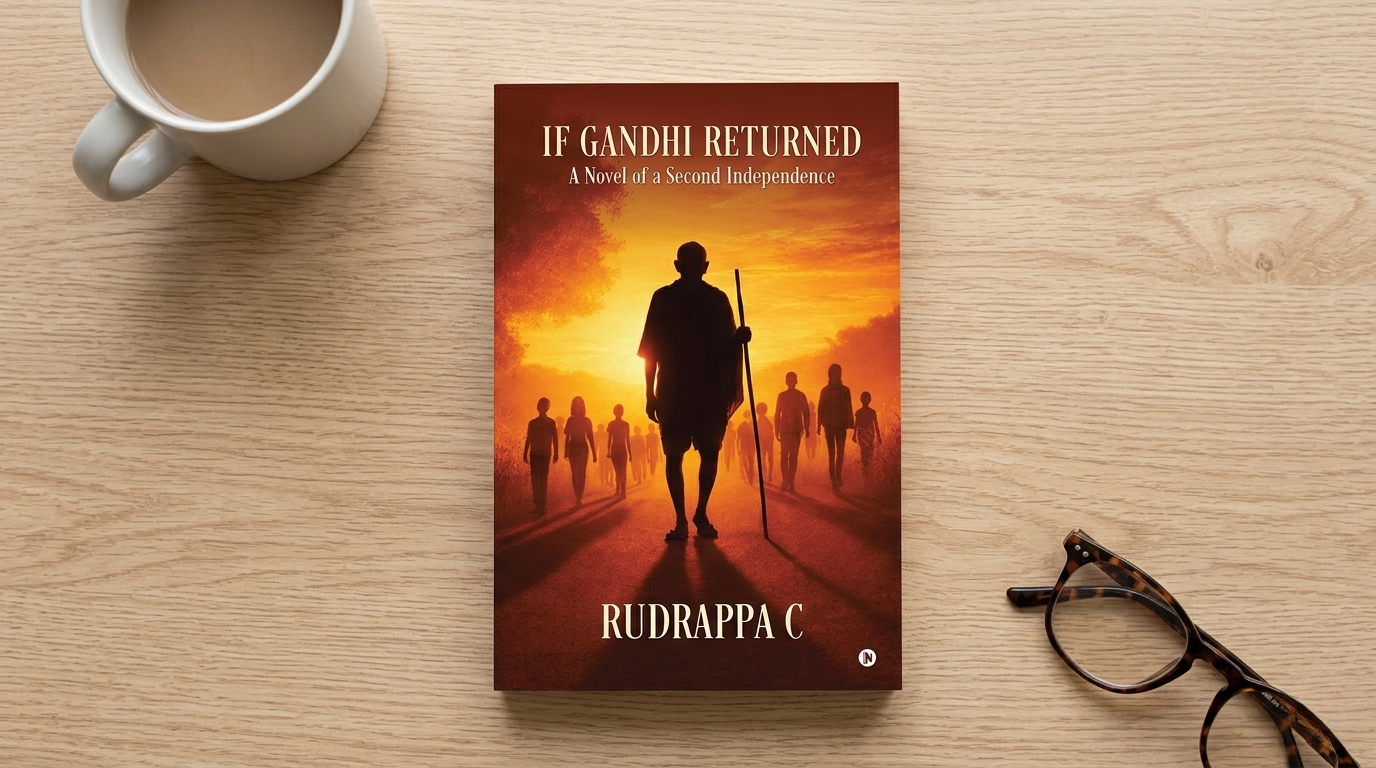
Rating
⭐⭐⭐⭐ (4.2 out of 5)
A Strange Question That Stayed With Me
Let me start with a simple thought that kept lingering in my mind while reading about this book.
What would Mahatma Gandhi actually feel if he walked through India today?
Not the Gandhi we keep on currency notes.
Not the Gandhi we quote in speeches on October 2.
But a real, breathing old man walking through our streets, watching our debates on TV, reading the headlines, seeing our celebrations and our silences.
That question sits at the center of If Gandhi Returned: A Novel of a Second Independence by Rudrappa C. And honestly, it’s a question that made me uncomfortable in a good way.
The premise is almost unsettling in its simplicity.
What if Gandhi came back today?
Not as a statue.
Not as a slogan.
But as a witness.
And the moment that idea clicked for me, I knew the book was trying to do something bigger than just telling a story.
What the Book Is About
If Gandhi Returned by Rudrappa C imagines a fictional scenario where Mahatma Gandhi suddenly appears in modern India during Republic Day celebrations.
Right from the opening scene, the atmosphere feels surreal.
A frail old man dressed exactly like Gandhi shows up at the Republic Day parade and calmly says he is Mohandas Karamchand Gandhi. People laugh. Security guards dismiss him. Cameras start recording. Social media explodes with speculation.
And then something unexpected happens.
A panel of experts eventually declares that the old man truly is Gandhi. From there, the story becomes less about the mystery and more about what Gandhi experiences as he moves across modern India.
He visits hospitals, courts, government offices, villages, and cities. He sees corruption inside bureaucracy. He witnesses the pain of ordinary citizens struggling with broken systems. He encounters political theatrics, social media debates, and the strange mixture of pride and apathy that defines modern public life.
The structure of the book reads almost like a series of moral encounters.
In one scene, Gandhi witnesses a protest after a horrific crime against a young woman and is shaken by the brutality and public indifference. In another moment, he walks into a government office where poor citizens cannot get basic services without paying bribes. There are scenes in courts discussing corruption. There are scenes involving politicians accused of wrongdoing being celebrated by supporters.
One of the recurring themes is the gap between what India claims to stand for and how it often behaves.
The author makes it very clear that the novel is not about resurrecting Gandhi as a hero figure. It is about placing him inside the moral contradictions of modern India.
The preface even states something that stayed with me for a long time after reading it.
The book is not trying to bring Gandhi back to life. It is asking whether we are still alive to the values he stood for. That line alone sets the tone for everything that follows.
What Stood Out to Me
There are several things in If Gandhi Returned that I found genuinely interesting.
First, the storytelling structure.
The book is not a traditional linear novel with a single dramatic plot. Instead, it feels closer to a moral journey where Gandhi moves from one social situation to another.
At first I wondered if this episodic structure might feel fragmented. But then I realized something.
It actually mirrors the chaos of modern public life.
Every chapter introduces a different aspect of society. Corruption. Violence. bureaucracy. media sensationalism. public apathy. moral confusion.
Each scene becomes almost like a mirror held up to the reader.
Another thing that stood out to me is the author’s tone.
Rudrappa C does not romanticize the past. Gandhi himself is not shown as triumphant or heroic in the traditional sense. Instead, he often appears confused, disturbed, even saddened by what he sees.
That choice feels important.
Because if the book had simply glorified Gandhi, it would have become predictable.
Instead, the Gandhi here is almost overwhelmed by modern reality.
There are moments where he watches national celebrations with pride. But there are also moments where he looks at corruption or social cruelty and quietly asks how things went so wrong.
And honestly, that emotional contrast is what gives the book its energy.
I also appreciated the author including debates around modern issues like digital activism and social media movements. The idea of something like a “digital satyagraha” shows how the book tries to connect Gandhi’s philosophy with contemporary tools and platforms.
It’s an ambitious idea.
Sometimes the discussions become slightly didactic, almost like essays inside a novel. That might not work for every reader. But I could see what the author was trying to do.
He wants readers to think, not just follow a story.
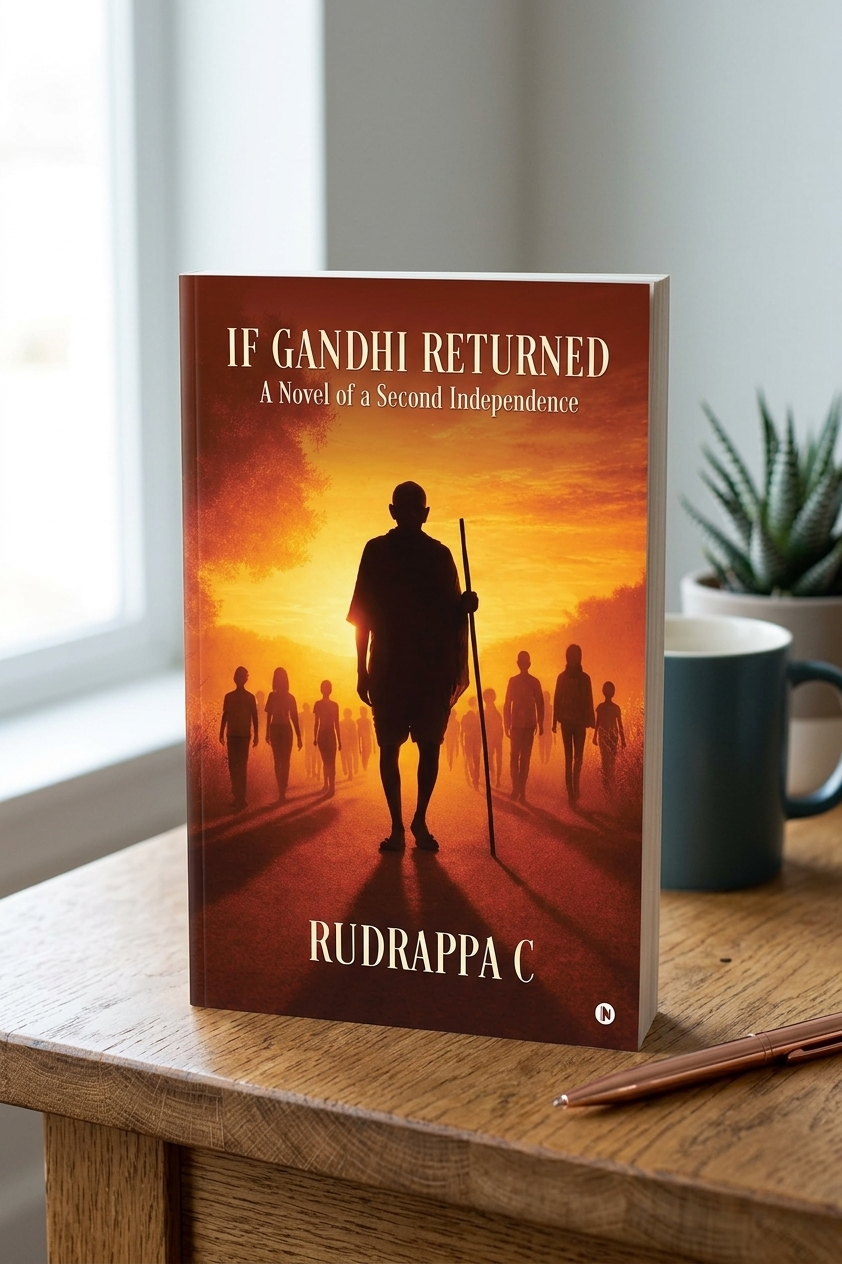
The Emotional Core
At its heart, If Gandhi Returned is really asking one uncomfortable question.
Have we drifted too far from the moral foundations that shaped India’s freedom movement?
The book repeatedly shows moments where society reacts passionately for a short time and then moves on.
A tragedy happens. People protest. Social media erupts. And then attention shifts somewhere else.
Reading those scenes, I kept thinking about how familiar that pattern feels in real life.
There is one moment where a brutal crime sparks outrage across the country. But very soon the public attention shifts to a cricket victory celebration.
That contrast is painful.
And I think that is exactly what the author wanted.
The novel keeps reminding us that indifference can be more dangerous than outright cruelty.
Because cruelty at least provokes resistance.
Indifference just absorbs everything.
As someone who reads a lot of political fiction and social commentary, I found the emotional core of this book surprisingly sincere. It does not feel cynical. It feels disappointed.
And somehow that tone feels more honest.
Who This Book Is For
If Gandhi Returned by Rudrappa C will probably resonate most with readers who enjoy political fiction or philosophical storytelling.
If you like novels that question society rather than simply entertain, this might work for you.
It will also appeal to readers interested in Indian politics, ethics, and public life.
However, I should mention something honestly.
This is not a fast paced narrative with twists and suspense. The book often pauses to reflect on ideas. Some readers might feel those sections slow down the story.
But for others, those pauses will be the most meaningful parts.
It really depends on what you look for in a novel.
If you want a story that sparks reflection about the direction of modern society, this one offers plenty of material to think about.
Final Thoughts
After spending time with If Gandhi Returned, I kept coming back to one feeling.
This book is less about Gandhi and more about us.
It is about the strange contradiction of a country that deeply reveres a moral leader yet struggles to live by the values he championed.
That contradiction runs through almost every chapter.
As an editor who reads many manuscripts every year, I appreciate when an author chooses a bold premise and stays committed to it. Rudrappa C clearly had a strong vision for this book.
Is it perfect? Not entirely. Some passages lean a bit heavily into speeches and commentary.
But the core idea remains powerful.
And in 2026, when public conversations around ethics, governance, and civic responsibility feel increasingly urgent, this story feels strangely relevant.
Sometimes fiction works best when it asks uncomfortable questions rather than offering easy answers.
This novel definitely belongs in that category.
FAQ
Is If Gandhi Returned worth reading?
If you enjoy political fiction that reflects on society and ethics, this novel offers a thoughtful exploration of modern India through Gandhi’s imagined return.
What is If Gandhi Returned about?
The book imagines Mahatma Gandhi returning to modern India and witnessing contemporary issues like corruption, social injustice, and public indifference.
Who should read If Gandhi Returned?
Readers interested in social commentary, Indian politics, and philosophical storytelling will likely find this novel engaging.
Is If Gandhi Returned a historical novel?
Not exactly. It is a fictional scenario that uses a historical figure to examine present day moral and social questions.

With over 11 years of experience in the publishing industry, Priya Srivastava has become a trusted guide for hundreds of authors navigating the challenging path from manuscript to marketplace. As Editor-in-Chief of Deified Publications, she combines the precision of a publishing professional with the empathy of a mentor who truly understands the fears, hopes, and dreams of both first-time and seasoned writers.