
Rating:
⭐⭐⭐⭐ (4.2 out of 5)
Sometimes a poetry manuscript does not arrive with noise. It arrives softly. Almost like someone knocking gently on your door and saying, “I have something to share… if you’re willing to listen.”
That is how Kuch Yun Hi felt to me.
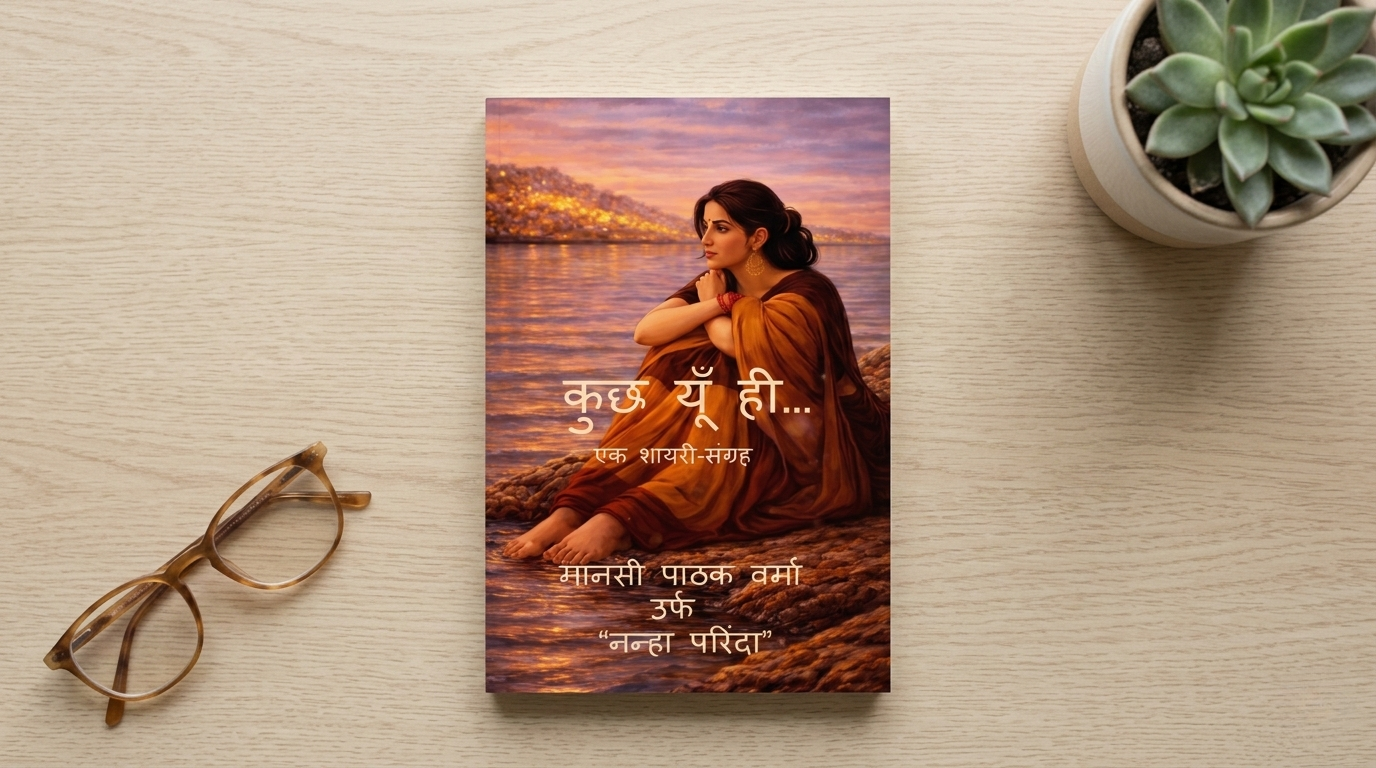
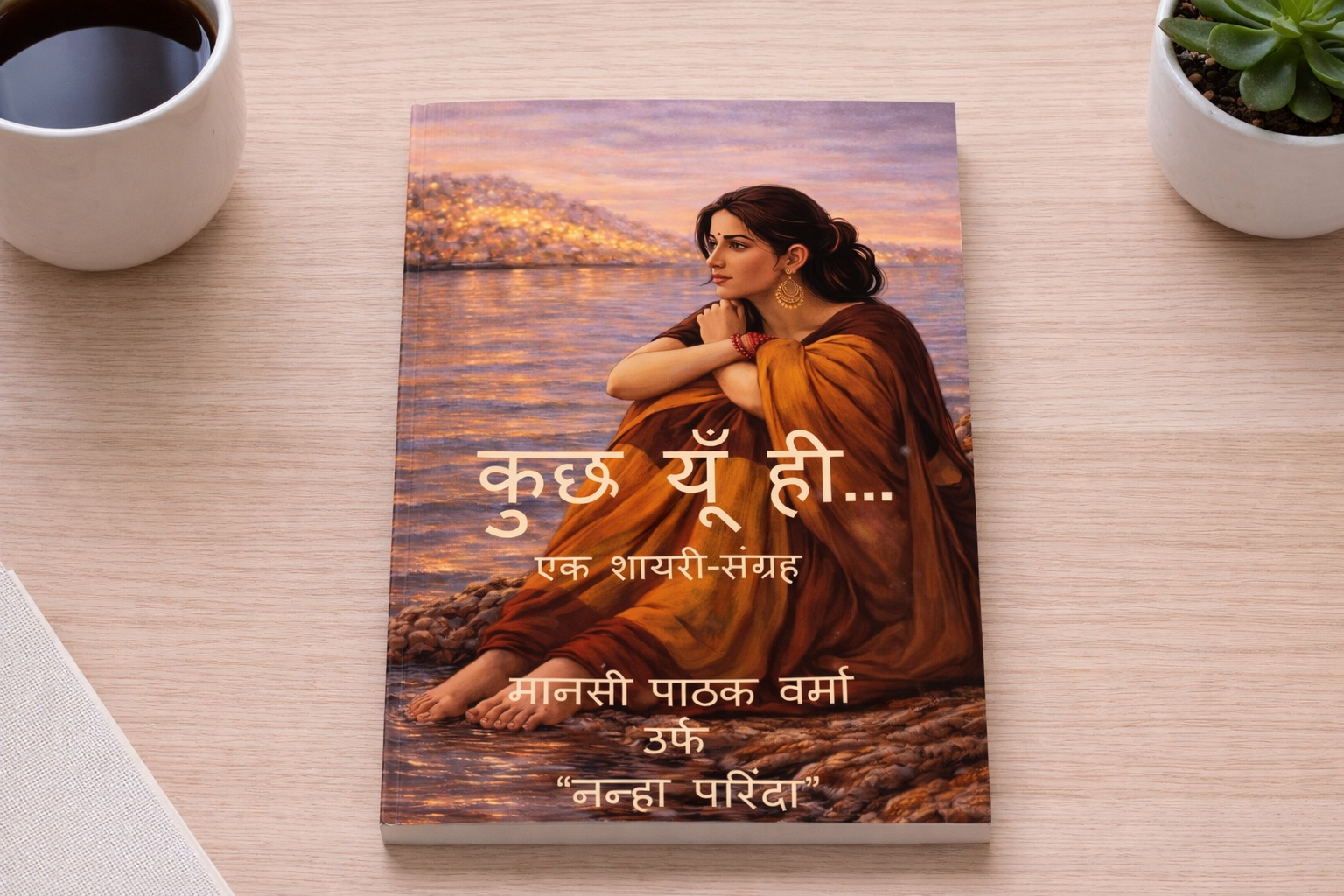
When I first saw the cover, the image of a woman sitting by the river at dusk, wrapped in earthy brown tones, staring at the horizon, I paused. There is longing in that posture. There is reflection. Not drama. Not rebellion. Just someone thinking. And I think that visual tells you a lot about this book before you even open it.
In my years reviewing books at Deified Publication, I have come across many debut poetry collections. Some try very hard to sound profound. Some hide behind complicated language. Kuch Yun Hi by Mmanasi Pathak Verma does neither. It is simple. It is direct. And that simplicity is its greatest strength.
What Kuch Yun Hi Is About
If someone asks for a quick book summary of Kuch Yun Hi, I would say it is a collection of poems drawn from everyday life, relationships, memory, faith, and the inner conversations we often avoid having with ourselves.
The internal pages reveal a heartfelt dedication. She begins by acknowledging her parents, her grandparents, her siblings, and eventually her husband and children. There is gratitude running through those lines. It is not performative gratitude. It feels rooted in family bonds and emotional inheritance.
In the foreword, Miramoon describes the poems as raw, like a young bird ready to fly. That description actually fits. These poems do not try to impress. They attempt to express. And I appreciate that honesty.
The table of contents itself reads like emotional milestones. Titles such as “Adhoori Siskariyan” (Unfinished Sighs), “Mohabbat Aur Shayari,” “Ek Ladki Ka Apni Maa Ke Naam Patra,” and “Tu… Ek Garbhvati Maa Ka Bhavpurn Vichar” suggest that this collection moves through love, motherhood, friendship, memory, identity, and self questioning.
There is also a poem titled “Kis Aur Ye Bhatka Insaan” which hints at existential confusion. Another, “Stree: Ek Naya Hathiyar,” suggests reflection on womanhood. The emotional range may not be radical, but it is honest.
And that matters.
What Stood Out To Me
First, the tone of intimacy.
These poems feel like diary entries written in moments when the house is silent and the mind is restless. The language remains accessible. It is conversational Hindi. The kind that feels close to spoken emotion rather than literary exhibition.
I kept thinking about how difficult it is to write simply without sounding shallow. Many first time poets mistake complexity for depth. Mmanasi Pathak Verma seems to trust that lived experience is enough.
Second, the recurring thread of womanhood.
From the titles alone and the tone of the opening pages, it is clear that this is a woman negotiating multiple roles. Daughter. Wife. Mother. Individual. In the foreword, there is a line about life moving between professional, mother, daughter, woman. That layering is real. I have seen it in countless women I know. Maybe you have too.
There is a poem addressed to a mother. Another reflecting from the perspective of a pregnant woman. Another examining the idea of a woman as strength rather than fragility. These are not abstract feminist declarations. They feel personal. Grounded.
Third, faith and introspection.
The preface mentions that the writing did not begin with the intention of becoming a book. It started as an attempt to understand one’s own emotions. That explains the tone. There is less performance and more processing.
In 2026, when so much writing online is about visibility, branding, projection, it is refreshing to encounter poems that feel inward. They ask the reader to pause. To breathe. To consider their own unfinished conversations.
That said, I will be honest about something. At times, the emotional directness borders on predictability. A few themes such as love, longing, hope, and struggle are familiar territory in Hindi poetry. Some lines may not surprise seasoned poetry readers who have read extensively in this genre.
But then I remind myself. Not every book is trying to revolutionize language. Some books are trying to preserve sincerity.
The Emotional Core
The emotional heart of Kuch Yun Hi lies in its acceptance of ordinary moments.
The title itself translates loosely to “Just Like That.” That phrase carries casualness. But within the poems, those casual moments hold weight. A memory of rain. A letter to a sibling. A reflection on time. A woman sitting by a river thinking about her life.
There is no grand tragedy. No political manifesto. No dramatic plot arc. Instead, there is a woman tracing her emotional journey across relationships.
I think the most powerful aspect of this collection is that it does not pretend to have answers. It is reflective rather than declarative. It acknowledges confusion. It acknowledges unfinished sighs. It acknowledges that sometimes life happens “kuch yun hi” without our control.
As someone who has read poetry for over fifteen years, I can say this: the books that endure are not always the loudest. They are the ones readers return to on certain evenings when they need companionship.
This might be that kind of book for someone.
Who This Book Is For
If you are someone who enjoys Hindi shayari rooted in daily life and family bonds, this collection will likely resonate.
If you are a woman navigating multiple roles and feeling stretched between responsibility and self reflection, you may see yourself in these poems.
If you are looking for experimental form, radical structure, or high literary density, this may not be your preference.
This book is for readers who value emotion over ornamentation.
It is also ideal for those who are new to Hindi poetry and want something accessible.
Final Thoughts
As Editor in Chief at Deified Publication, I always ask myself one question after finishing a book. Did it feel honest?
Kuch Yun Hi feels honest.
It does not try to dazzle. It tries to connect.
There are areas where the poet may grow further in metaphorical layering and tightening of lines. That is natural in a first collection. Growth comes with writing, and I sense that Mmanasi Pathak Verma has much more to say in future works.
But for a debut, this is a sincere offering. It carries gratitude, introspection, love, faith, and self dialogue in balanced measure.
And sometimes, that is enough.
FAQs
Is Kuch Yun Hi worth reading?
If you appreciate simple, heartfelt Hindi poetry centered on relationships and introspection, yes.
What is Kuch Yun Hi about?
It is a debut poetry collection by Mmanasi Pathak Verma focusing on love, family bonds, womanhood, faith, and everyday emotions.
Who should read Kuch Yun Hi?
Readers who enjoy reflective shayari and emotionally accessible poetry.
Is this book very philosophical?
It is introspective but grounded in daily life rather than abstract philosophy.

With over 11 years of experience in the publishing industry, Priya Srivastava has become a trusted guide for hundreds of authors navigating the challenging path from manuscript to marketplace. As Editor-in-Chief of Deified Publications, she combines the precision of a publishing professional with the empathy of a mentor who truly understands the fears, hopes, and dreams of both first-time and seasoned writers.