
Rating:
⭐⭐⭐⭐½ (4.5 out of 5)
I have spent more than fifteen years reading manuscripts, poetry collections, half finished drafts, and books that arrive with a lot of hope attached to them. Some books speak loudly. Others speak softly but stay with you longer. My Love with Poesy by Philip Isukapati felt like the second kind to me.
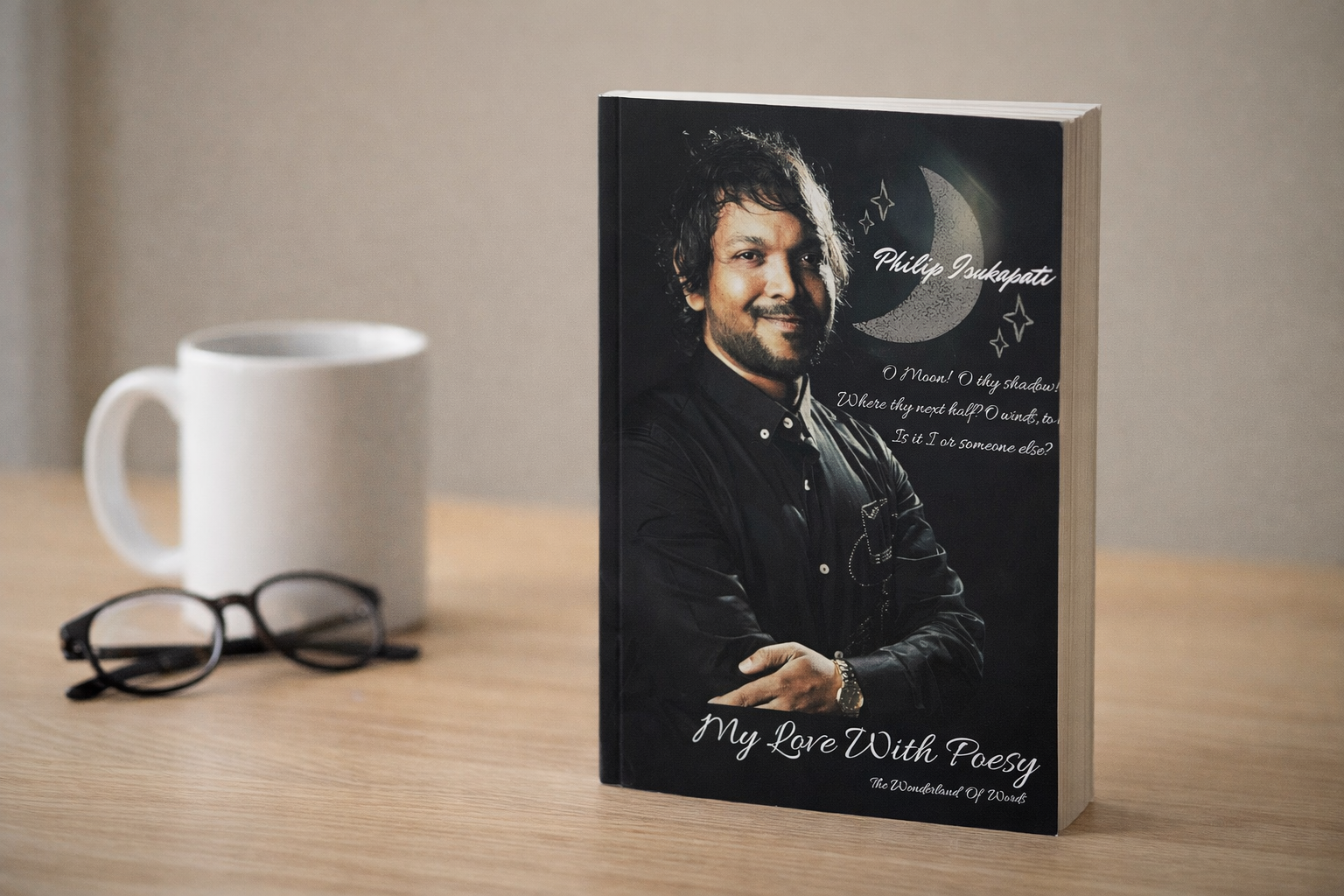
When I first looked at the cover, I paused. Not because it was flashy, but because it felt intimate. The author looking directly at the reader, the crescent moon behind him, the handwritten style lines. It gave the impression of someone inviting you into his inner world rather than performing for you. I remember thinking, this feels personal. And honestly, that expectation stayed with me as I read the blurb and sat with what this book is trying to say.
What the Book Is About
My Love with Poesy: Wonder Land of Words is a poetry collection that does not limit itself to one emotion or one voice. From the blurb alone, it is clear that Philip Isukapati is not trying to box poetry into a single theme. Instead, he moves through many lives and perspectives.
There are poems that seem to come from the mind of a poet thinking about existence and inner space. There are verses that carry the voice of a mother, which immediately made me think of how rarely motherhood is written with simplicity and sincerity in poetry. There is the struggle of an orphan, which suggests pain without sensationalising it. There is a tender attention to a girl child, to unity, to festivals, to love that is both romantic and nostalgic.
What I appreciate here is that the book is not presented as an abstract experiment. It is grounded in lived experiences. The blurb talks about fatherly love, soul connections, inner reflection. These are things most readers understand instinctively, even if they have never put words to them. The collection promises a wide emotional range, and that is exactly what it sets out to offer.
What Stood Out to Me
In my years reviewing poetry, I have learned that intention matters a lot. You can feel when a poet is writing to impress, and you can feel when a poet is writing to express. From everything presented here, My Love with Poesy leans toward expression.
The language used in the blurb suggests that Philip Isukapati enjoys imagery and metaphor. Phrases like wonder land of words, inner space, nostalgia, and soulmate feelings point toward a poet who likes to sit with emotions rather than rush through them. I think readers who enjoy reflective poetry will notice that immediately.
Another thing that stood out to me is the multiplicity of voices. Writing from the voice of a mother, an orphan, a lover, and an observer of society is not easy. It requires empathy. It requires stepping outside oneself. Even without reading the full poems, the intention to represent different emotional states suggests maturity in thought.
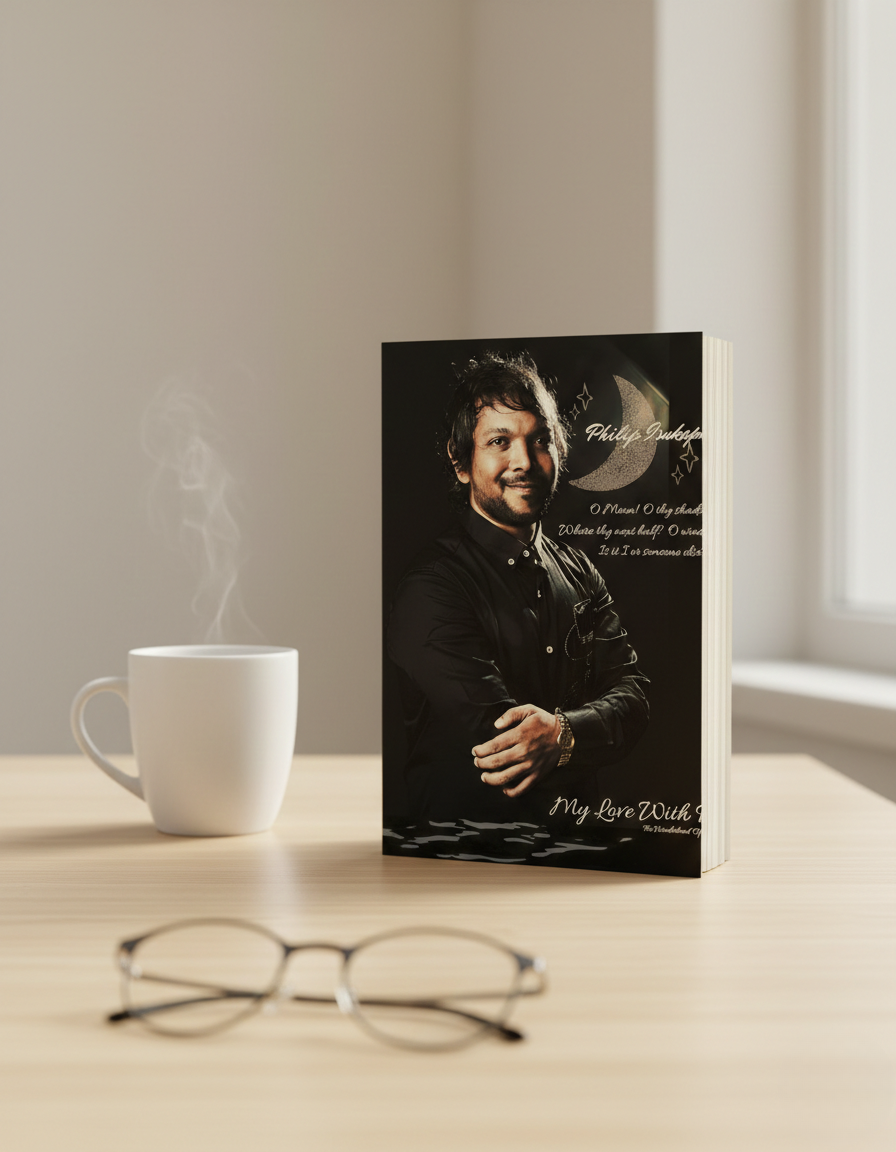
The cover design also deserves a mention because it aligns with the tone of the book. The moon imagery, the handwritten style font, and the subdued color palette all reinforce a feeling of contemplation and softness. As an editor, I always notice when the visual language supports the written language, and here it does.
The Emotional Core
At its heart, this book seems to be about connection. Connection between parent and child. Connection between lovers. Connection between self and memory. Connection between individual and society.
There is something deeply human about poetry that talks about everyday emotions without trying to elevate them artificially. The blurb mentions nostalgia, inner space, unity, and festivities. These are not dramatic concepts, but they are powerful because they are familiar. I found myself thinking about moments in my own life. Sitting quietly during a festival after the noise fades. Watching a parent care in small, unspoken ways. Feeling close to someone without needing grand declarations.
I think readers might feel comforted by this book. Not in a loud way, but in a gentle one. It feels like a collection you would pick up when you want to slow down, when you want to read something that understands emotional complexity without turning it into spectacle.
Some parts might feel abstract to readers who prefer direct storytelling. Poetry that leans into feeling rather than narrative can sometimes ask more patience. But for readers who enjoy sitting with a poem and letting it unfold slowly, this will likely feel rewarding.
Who This Book Is For
This book is for readers who enjoy poetry that reflects everyday emotions and relationships. If you like poems about family bonds, inner thoughts, love that feels real rather than cinematic, this might resonate with you.
It is also well suited for readers who are new to poetry. The themes are accessible. You do not need academic knowledge to engage with them. At the same time, readers who have been reading poetry for years may appreciate the emotional range and sincerity.
That said, if you are looking for sharply political poetry or highly experimental forms, this might not be the right fit. This collection seems more focused on emotional expression than on pushing formal boundaries.
Final Thoughts
As an editor and as a reader, I value honesty in writing. My Love with Poesy feels honest in its intent. It does not promise to change your life. It does not claim to redefine poetry. Instead, it offers a window into the many emotions that make us human.
Philip Isukapati comes across as a poet who writes because he needs to, not because he wants applause. That matters to me. In 2025, when so much writing is rushed and performative, there is something refreshing about a book that simply wants to connect.
Is it perfect. Probably not. Some readers may wish for tighter structure or clearer transitions between themes. But imperfections are part of sincerity. I would rather read a book that feels real than one that feels polished but empty.
If you are someone who enjoys reflective reading, who likes to pause after a poem and think about your own life, this book might sit with you longer than you expect.

With over 11 years of experience in the publishing industry, Priya Srivastava has become a trusted guide for hundreds of authors navigating the challenging path from manuscript to marketplace. As Editor-in-Chief of Deified Publications, she combines the precision of a publishing professional with the empathy of a mentor who truly understands the fears, hopes, and dreams of both first-time and seasoned writers.