
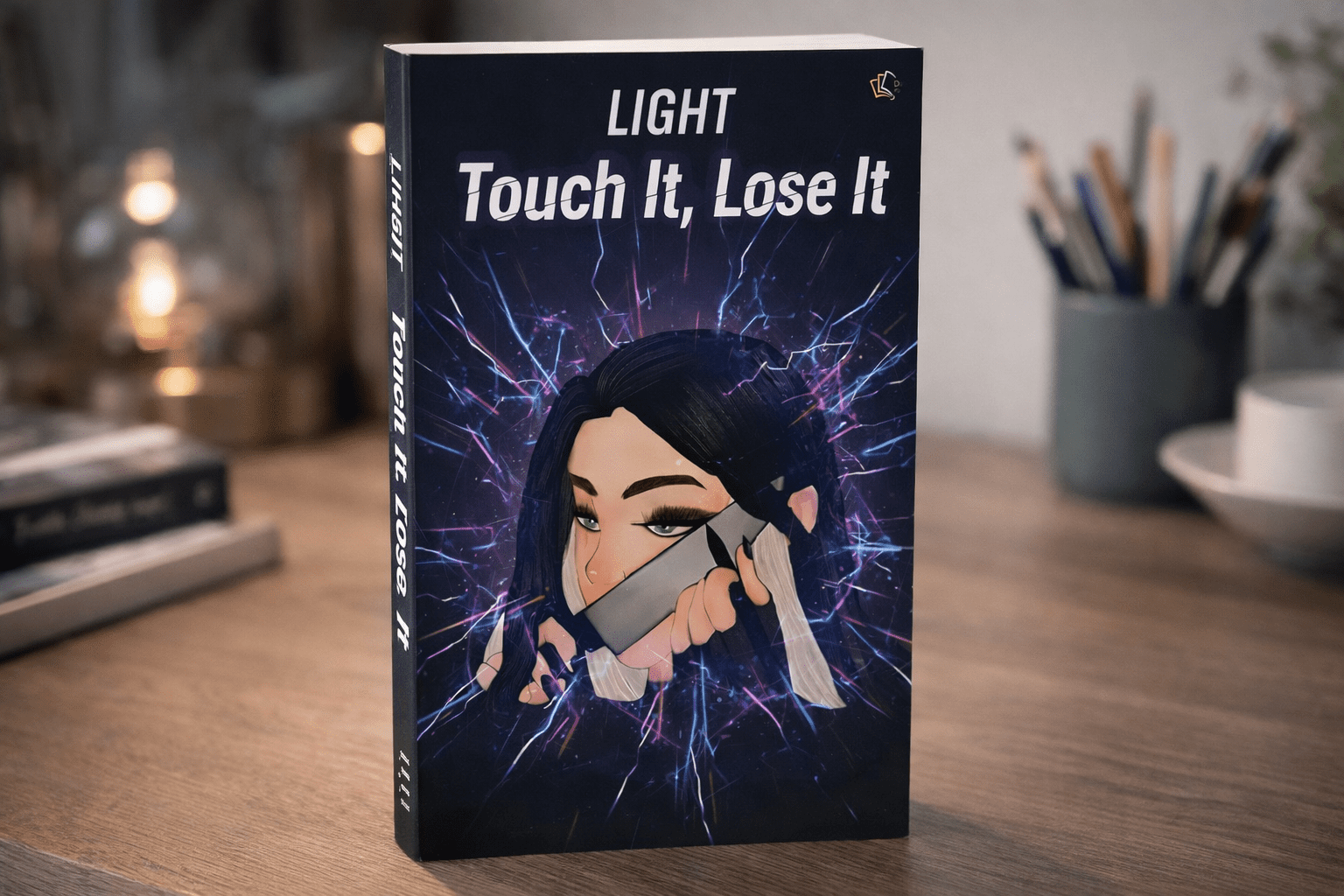
A deeply personal dialogue about protecting your energy, recognizing manipulation, and keeping your spirit untouchable
Interview by Alka Pandey
Some books teach you things. Others remind you of what you’ve always known but forgotten how to see. When I opened LIGHT TOUCH IT, LOSE IT by Syeda Farheen Chishty, I expected practical advice on energy protection. What I got instead was a mirror held up to every moment I’ve felt drained, manipulated, or dimmed without understanding why.
Meeting Farheen feels like sitting with someone who’s walked through the fire and returned not with burns, but with blueprints. Her book isn’t just theory or spiritual fluff. It’s a manual written by someone who learned the hard way how to identify threats to your inner light and built a system to keep it safe.
Over chai and conversation, Farheen shared her journey from being emotionally hijacked to becoming untouchable, not through hardness, but through awareness.
The Book That Chose You
Alka Pandey: Farheen, LIGHT TOUCH IT, LOSE IT has such a powerful title. It sounds like a warning and a promise at the same time. What made you write this book?
Syeda Farheen Chishty: [She takes a breath, her eyes thoughtful] I wrote it because I lost my light so many times, Alka. And each time I lost it, I didn’t even realize someone had taken it until I was already empty.
You know that feeling when you leave a conversation and suddenly you’re exhausted? Or when you’re around certain people and your energy just drains away? For years, I thought that was normal. I thought I was just sensitive or weak.
Then I realized: my light wasn’t weak. I just didn’t know how to protect it.
This book is everything I wish someone had told me when I was 20, when I was giving my energy away to people who saw it as something to consume, not honor.
AP: The book is written in Hinglish, mixing Hindi and English naturally. That’s a bold choice. Why not stick to pure English or pure Hindi?
FC: Because that’s how we actually think and feel, isn’t it? When I’m hurt, I don’t think in perfect English sentences. When I’m angry, I don’t translate my feelings into formal Hindi.
My thoughts are “yeh kya ho raha hai” mixed with “I need to understand this.” My prayers are “Allah, help me” mixed with “please show me the way.” That’s real. That’s authentic.
I wanted readers to feel like I’m sitting across from them, talking like a friend, not lecturing like a teacher. The language needed to match the heartbeat of the message.
AP: You describe the book as “ek story bhi hai, ek system bhi, aur ek practical guide bhi.” That’s ambitious. How did you balance all three elements?
FC: It wasn’t planned, honestly. I started writing my own story, how I kept losing myself in relationships, jobs, friendships. How I kept giving until there was nothing left.
But as I wrote, I realized my story was just the example. The real gift was the system I built to protect myself. So the story became the vehicle, and the system became the map.
Every chapter has three layers. First, I show you what happened to me. Then I explain what was actually happening beneath the surface. Then I give you the exact tools to recognize and stop it in your own life.
AP: The title says “LIGHT TOUCH IT, LOSE IT.” What exactly is this light you’re talking about?
FC: Your light is your life force. Your energy. Your essence. It’s that thing inside you that makes you you when nobody’s watching.
Some people call it your aura. Some call it your spirit. I call it light because light can be seen, felt, and most importantly, stolen if you’re not careful.
When your light is strong, you walk into a room and people feel it. You’re vibrant, clear, present. But when someone touches your light the wrong way, when they drain it or dim it, you become a shadow of yourself.
The book teaches you how to recognize who’s touching your light and how to pull it back before it’s too late.
Emotional Hijacking and Energy Vampires
AP: One of the core concepts in your book is “emotional hijack.” Can you explain what that means?
FC: Emotional hijacking is when someone takes control of your emotional state without your permission. It’s manipulation disguised as conversation, care, or concern.
Let me give you an example. You’re having a good day, feeling peaceful. Then someone calls you and starts complaining, venting, dumping their problems. Within minutes, their anxiety becomes your anxiety. Their stress becomes your stress. Your peaceful day is gone.
That’s a hijack. They boarded your emotional plane and crashed it.
The worst part? Most people who do this don’t even know they’re doing it. They’re not evil. They’re just unconscious. But unconscious damage still damages.
AP: How do you differentiate between someone genuinely needing support and someone hijacking your emotions?
FC: [She leans forward] Great question. The difference is in what happens after.
When someone genuinely needs support, there’s reciprocity. They listen when you speak. They respect your boundaries. They’re grateful. The exchange feels balanced, even if it’s hard.
When someone is hijacking you, it’s one-sided. They dump, you absorb. They feel better, you feel worse. They leave energized, you’re left depleted. And when you try to set a boundary, they make you feel guilty for not being “there” for them.
That’s how you know.
AP: You also talk about “emotional overload.” What does that look like?
FC: Emotional overload is when your system is processing more emotion than it can handle. Imagine your mind is a phone and emotions are apps running in the background. When too many apps run at once, the phone crashes.
That’s what happens to people. They’re carrying their own stress plus everyone else’s problems plus the weight of unexpressed feelings. Eventually, the system shuts down.
You see it in people who suddenly explode over small things. Or people who go numb and can’t feel anything. Both are signs of overload.
My book teaches you how to close those background apps before your system crashes.
Behaviour Controllers and Invisible Chains
AP: Chapter four talks about “behaviour controllers.” That sounds ominous. Who are these people?
FC: Behaviour controllers are people who subtly manipulate how you act, think, or feel so that you serve their needs. They’re not always villains. Sometimes they’re parents, partners, friends, even bosses.
They use tools like guilt, shame, obligation, fear. They’ll say things like “If you loved me, you would…” or “After everything I’ve done for you…” or “You’re so selfish.”
These statements are control mechanisms. They’re designed to make you doubt yourself and comply with what they want.
AP: How does someone even begin to spot these controllers in their life?
FC: Start by noticing how you feel around certain people. Do you feel free or do you feel like you’re walking on eggshells? Do you feel energized or exhausted? Do you feel like yourself or like you’re performing?
Behaviour controllers make you feel small. They make you question your reality. They make you feel like you’re always in the wrong.
I have a simple test in the book: After spending time with someone, do you feel more like yourself or less like yourself? If it’s less, that person is controlling your behaviour, even if they don’t realize it.
AP: How do you neutralize these controllers once you’ve identified them?
FC: Boundaries. Clear, firm, non-negotiable boundaries.
But here’s the thing, Alka. Setting boundaries with controllers is hard because they’ve trained you to feel guilty for protecting yourself. They’ve convinced you that saying no is cruel, that protecting your energy is selfish.
So the first step is internal. You have to reclaim your right to protect yourself. You have to believe that your energy matters as much as theirs.
Once you believe that, setting boundaries becomes easier. You say no without over-explaining. You leave conversations that drain you. You stop accepting guilt that isn’t yours to carry.
The book has scripts, actual words you can use. Because sometimes you know you need to set a boundary, but you don’t know how to say it without causing World War III.
Making Your Energy Untouchable
AP: The book promises to teach readers “kaise apni inner energy aur aura ko untouchable banaye.” That’s a big claim. How do you make your energy untouchable?
FC: [She smiles] Untouchable doesn’t mean cold or closed off. It means protected. It means people can be near you, but they can’t drain you without your permission.
There are three pillars to becoming untouchable. First, awareness. You have to know what your energy feels like when it’s full versus when it’s being drained. Most people are so used to being drained, they think exhaustion is normal.
Second, boundaries. I’ve talked about this, but it’s worth repeating. Boundaries are the walls around your light. Without them, anyone can walk in and take what they want.
Third, restoration. Even with awareness and boundaries, life will sometimes drain you. You need daily practices to refill your cup. The book teaches specific techniques, some spiritual, some practical.
AP: Can you share one technique readers can start using today?
FC: The Energy Audit. At the end of each day, take five minutes and ask yourself: What gave me energy today? What drained me?
Write it down. After a week, you’ll see patterns. You’ll realize certain people always drain you. Certain activities always energize you. Certain conversations always leave you empty.
Once you see the pattern, you can make choices. You can limit time with energy drainers. You can increase time with energy givers. It sounds simple, but most people never do this audit. They just keep wondering why they’re always tired.
AP: You mention “inner light” throughout the book. How does someone strengthen their inner light?
FC: By honoring it. By treating it as sacred.
Your inner light grows when you do things that align with your truth. When you say no to things that deplete you. When you say yes to things that fulfill you. When you stop performing for others and start living for yourself.
It’s like a flame. If you keep it in the wind, it flickers and dies. But if you protect it, feed it, shelter it, it becomes a fire that no one can extinguish.
The book is that shelter. It’s the blueprint for building walls around your flame so it can grow into something untouchable.
The Woman Behind the Words
AP: This book is deeply personal. How much of Farheen is in these pages?
FC: [Her voice softens] All of me. Every wound. Every lesson. Every scar that became wisdom.
I wrote about the friendships where I gave everything and got nothing. The relationships where I dimmed my light to make someone else comfortable. The jobs where I absorbed everyone’s stress until I broke.
I wrote about the moment I realized I was disappearing. And the moment I decided to come back.
This book is my resurrection story. And I’m sharing it because I know I’m not the only one who’s been buried alive by other people’s needs.
AP: What was the hardest part of writing this book?
FC: Admitting how much I lost. Admitting how many times I let people take my light because I didn’t know I was allowed to protect it.
There’s shame in that, you know? We’re taught that giving is noble. That sacrifice is love. That putting others first is what good people do.
Nobody tells you that you can give so much that there’s nothing left. That you can sacrifice so much that you lose yourself. That you can put others first so many times that you forget you exist.
Writing this book meant admitting I did all of that. And then teaching others not to make the same mistake.
AP: Was there a specific moment when you realized you needed to protect your light?
FC: [She nods slowly] Yes. I was sitting alone one night, crying for no reason I could name. I wasn’t sad about anything specific. I was just empty.
And I realized I couldn’t remember the last time I felt like myself. I couldn’t remember the last time I laughed from my belly or felt excited about anything or had energy for my own dreams.
I had given so much of my light away that I was living in darkness.
That night, I made a promise to myself. No more. I’m taking my light back. And I’m never letting anyone steal it again.
That promise became this book.
The Spiritual and The Practical
AP: Your name suggests a spiritual lineage. Does spirituality play a role in your approach to energy protection?
FC: It does, but not in the way people might expect.
I’m not here to preach religion or tell people to just pray harder. I’m here to offer tools that work whether you’re deeply spiritual or completely practical.
But yes, my faith informs my understanding of light. In Islam, we’re taught that we’re born with a fitrah, a pure natural state. That’s our light. Life and people try to cover that light, but it never disappears completely. It’s always there, waiting to be uncovered.
Protecting your light, in my view, is a spiritual act. It’s honoring what Allah gave you. It’s refusing to let anyone dim what He made bright.
AP: The book is described as a manual. What makes it more manual than memoir?
FC: Every chapter ends with action steps. Not suggestions, actual steps you can take today.
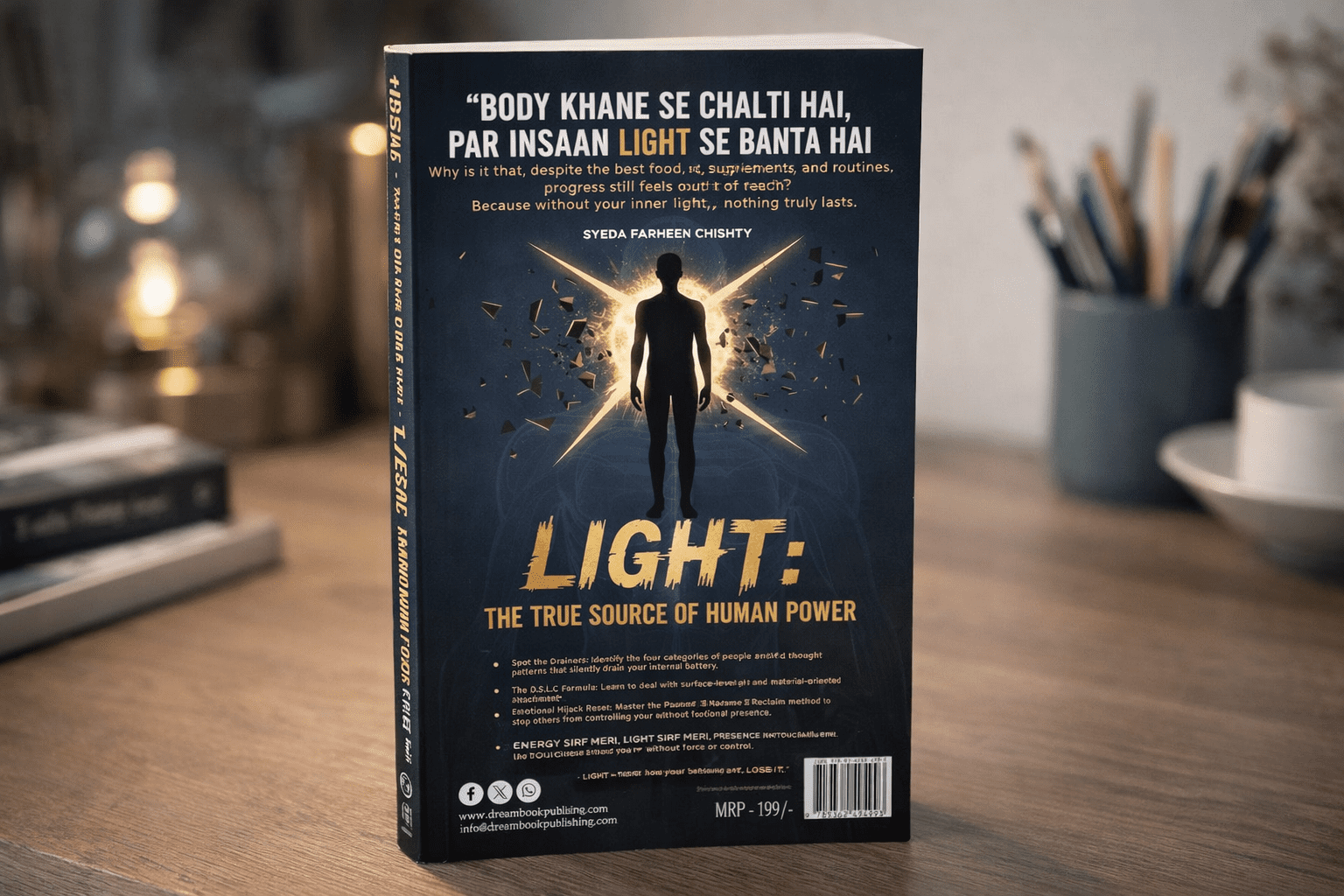
How to recognize an emotional hijacker. What to say when someone guilt-trips you. How to restore your energy after a draining day. How to create an energy protection routine. How to identify your energy leaks.
I wanted readers to finish the book and immediately be able to apply what they learned. Not someday. Not when they feel ready. Now.
Because if you’re reading a book called LIGHT TOUCH IT, LOSE IT, chances are someone is touching your light right now. You don’t have time to wait. You need tools immediately.
For the Readers
AP: Who did you write this book for?
FC: For the woman who feels guilty for saying no. For the man who’s exhausted from carrying everyone’s burdens. For the person who wonders why they’re always tired even though they’re not doing anything physically hard.
For the daughter who’s trying to please parents who will never be satisfied. For the friend who’s tired of being everyone’s therapist. For the partner who’s losing themselves in someone else’s needs.
For anyone who’s ever felt their light dimming and didn’t know why or how to stop it.
AP: What do you hope readers feel after finishing your book?
FC: Permission. I want them to feel permission to protect themselves without guilt. Permission to say no without over-explaining. Permission to put their own oxygen mask on first.
I also want them to feel empowered. Not in a vague motivational way, but in a “I now have specific tools and I know exactly what to do” way.
And honestly? I want them to feel seen. I want them to read a page and think, “Oh my God, that’s exactly what happened to me. I’m not crazy. I’m not weak. I was just unprotected.”
AP: If readers take away only one thing from your book, what should it be?
FC: That your light is not selfish. Protecting it is not cruel. And anyone who makes you feel guilty for having boundaries doesn’t deserve access to your energy.
Your light is yours. Guard it like your life depends on it. Because it does.
The Quick Round
AP: Let’s do some rapid questions. Favorite book that changed your life?
FC: The Power of Now by Eckhart Tolle. Taught me that most suffering happens because we’re living in the past or future, not the present.
AP: Morning person or night person?
FC: Night. My best thinking happens when the world is asleep.
AP: One practice you do daily to protect your energy?
FC: Morning silence. Before I check my phone, before I talk to anyone, I sit in silence for ten minutes. That’s when I set my energetic boundaries for the day.
AP: Best advice you’ve received about life?
FC: “People will only treat you the way you teach them to treat you.” Changed everything.
AP: What drains your energy the fastest?
FC: Passive-aggressive behavior. Just say what you mean. The hidden messages and silent treatments are exhausting.
AP: What restores your energy the fastest?
FC: Nature. Trees don’t take energy, they give it. Water doesn’t demand anything, it just flows. Being in nature reminds me how to be.
Looking Forward
AP: What’s next for you? Another book? Workshops?
FC: I’m actually developing a course based on the book. A lot of readers have said they want deeper support, like guided practices and group discussions.
I’m also considering a second book about rebuilding after you’ve lost your light. This book is about protection, but the next one might be about restoration, what happens when you’ve already been drained dry and need to come back.
But honestly, Alka, I’m taking it slow. I’m practicing what I preach. I’m not going to drain myself building an empire. I’m going to build sustainably, at the pace that honors my own light.
AP: That’s beautiful. Last question, what would you say to someone reading this interview who’s thinking, “I need this book, but I’m scared of what I’ll discover”?
FC: I’d say your fear is valid. And I’d also say, you already know.
You already know who’s draining you. You already know which relationships are one-sided. You already know where you’re losing your light. You’re just scared to admit it because admission requires action.
But living in denial is more painful than facing the truth. Pretending everything is fine while you’re dying inside is more exhausting than setting one boundary.
This book won’t tell you anything you don’t already feel. It will just give you the language, the tools, and the permission to act on what you already know.
And you deserve that. You deserve to live in your full light, untouched by people who only know how to take.
So yes, be scared. Read it anyway. Your light is waiting.
AP: Farheen, thank you. For your honesty. For your courage. For creating something that so many people need right now.
FC: [She smiles, and it’s the kind of smile that holds both knowing and hope] Thank you for asking questions that let me speak from my heart. And to everyone reading this, remember: your light is not selfish. Protecting it is not cruel. You were born to shine. Don’t let anyone convince you otherwise.
LIGHT TOUCH IT, LOSE IT by Syeda Farheen Chishty is available now. For more information about the book and Farheen’s work, visit her website or connect with her on social media.
This interview has been edited for clarity while maintaining the authentic voice and message of the conversation.
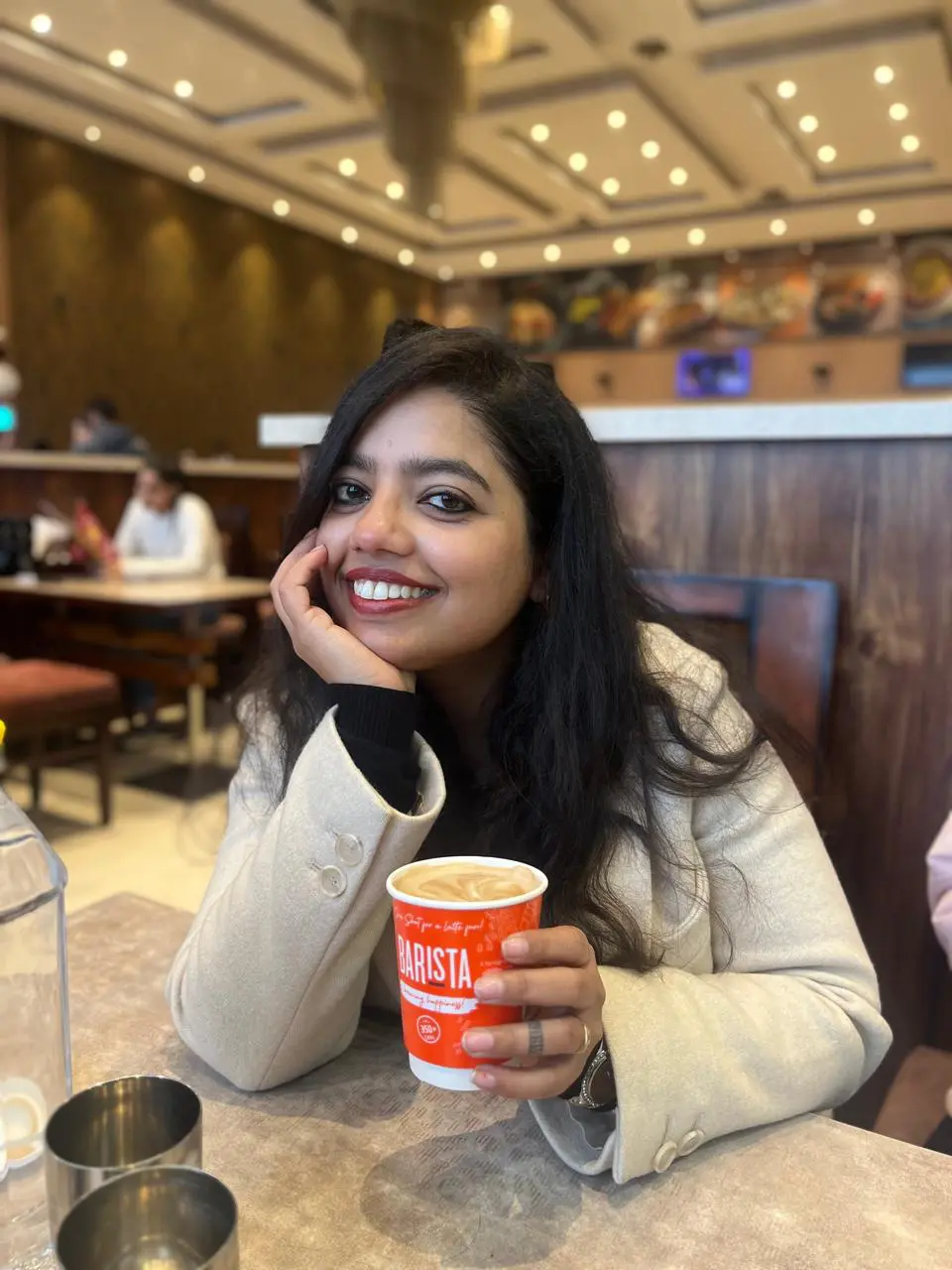
Alka Pandey is a Contributing Editor at Deified Publications, specializing in publishing industry analysis and media trends. With over 6 years of experience, she leverages deep research to provide a national perspective on the business of books, digital media, and content strategy. When she’s not diving into market reports, Alka is either traveling to literary festivals or tracking down the next great non-fiction read.