
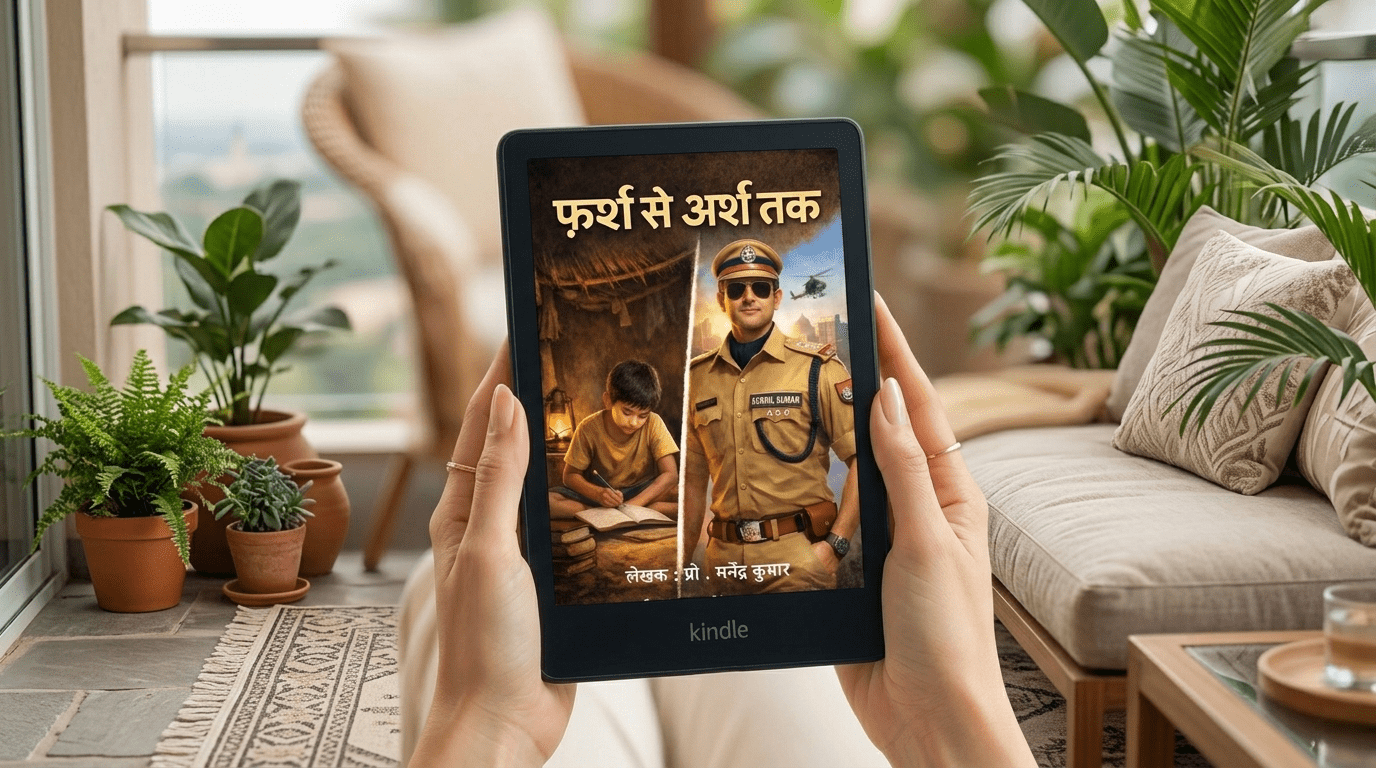
Rating:
⭐⭐⭐⭐ (4.4 out of 5)
I don’t say this lightly, but some stories don’t leave you even after you close the book. They linger in small, unexpected ways. While making tea, while sitting in silence, or even while watching someone walk past you on a busy road.
That’s exactly what happened to me with फर्श से अर्श तक by प्रो. मनेंद्र कुमार.
In my years as Editor-in-Chief at Deified Publication, I’ve read countless stories about struggle and success. Many of them follow a familiar arc. But every once in a while, a book comes along that feels less like a constructed story and more like someone quietly telling you their life, without trying too hard to impress you. This one felt like that.
There’s a certain honesty here. Not polished, not overly dramatic. Just… real. And honestly, that stayed with me more than anything else.
What the Book Is About
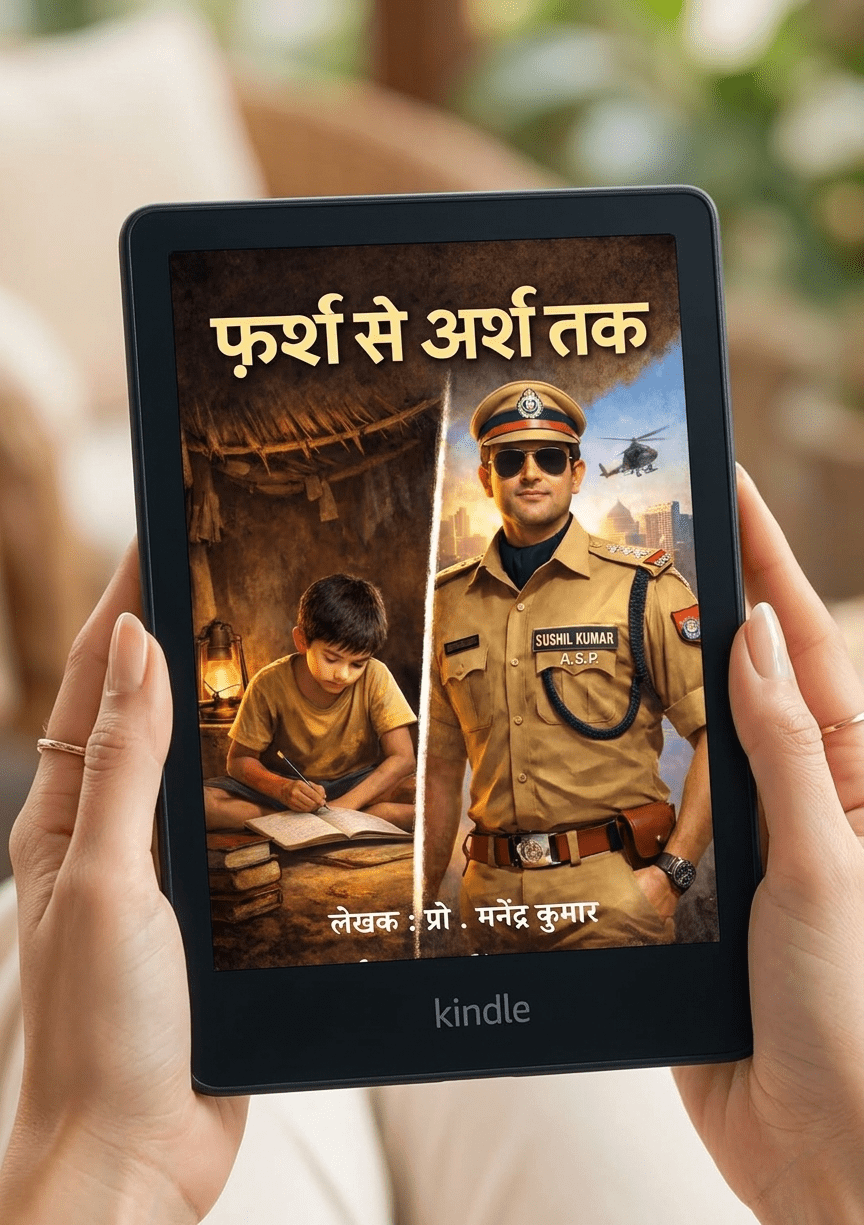
At its heart, फर्श से अर्श तक is the story of Sushil, a boy from a small village in Bihar. But saying just that feels incomplete. Because this is not just his story. It feels like the story of thousands of young people who grow up in similar conditions, carrying big dreams in very small spaces.
We meet Sushil in a setting that feels deeply rooted in rural life. The descriptions of the village, the slow rhythm of daily routines, the limitations, the quiet acceptance of hardship. It all feels familiar if you’ve ever seen or lived even close to such an environment.
What I found especially touching is how the story doesn’t rush his journey. His childhood is not romanticized. There are struggles that feel very real. Financial difficulties, limited access to resources, and that constant tension between dreams and reality.
There’s a moment where electricity is unreliable, where studying itself becomes a challenge. And yet, there’s this inner push in him. Not loud, not rebellious. Just persistent.
As Sushil grows, the story moves with him. From village to city, from school struggles to competitive exams, and eventually into a life of responsibility and service. His journey into becoming an IPS officer is not shown as a sudden leap but as something built slowly, through discipline and repeated effort.
But what really anchors the story is not his career. It’s his relationships. Especially with his parents.
What Stood Out to Me
There are a few things I kept thinking about even after finishing the book.
First, the portrayal of the father.
There’s this recurring feeling that the father is not just a character but a silent force shaping everything. His sacrifices are not always loudly expressed. In fact, they’re often understated. And maybe that’s why they hit harder.
There’s a scene where the father encourages Sushil to study despite their limitations. It’s simple. No grand speech. Just belief. And I don’t know why, but that felt very familiar. I’ve seen this in real life too. Parents who don’t have much, but somehow carry big hopes for their children.
Then there’s the turning point. The father’s death.
I’ll be honest, this part was difficult to read. Not because it’s overly dramatic, but because it feels so sudden and so unfair. One moment, he is there. The next, he isn’t. The way Sushil reacts, the shock, the helplessness, it all feels very human.
I remember pausing there. Just sitting with that moment.
Another thing that stood out is the writing style. It is simple. Sometimes even a bit repetitive. But I don’t think that’s a weakness here. It almost feels intentional. Like the author wants to keep things accessible, grounded, and close to real speech.
Also, the presence of the mother in the story is something I appreciated deeply. She isn’t just in the background. Her quiet strength, her emotional support, her sacrifices, they all shape Sushil’s journey in ways that feel very real.
There’s a line about how a mother is the first teacher. I’ve read similar ideas before, but here it feels earned because you actually see it play out.
The Emotional Core
If I had to describe what this book made me feel, I’d say it reminded me of resilience. Not the loud, motivational kind. But the quiet kind. The kind that wakes up every day and continues, even when things are uncertain.
There’s this constant push and pull in Sushil’s life. Between hope and doubt. Between responsibility and ambition.
After his father’s death, something changes in him. It’s not just grief. It’s a shift in identity. He is no longer just a student chasing a dream. He becomes someone carrying a legacy.
That part stayed with me for a long time.
Also, the transition from village life to city life is handled in a way that feels grounded. It’s not shown as glamorous. There’s struggle there too. Loneliness. Pressure. Adjustment.
In 2026, when so many young people are still navigating similar journeys, this story feels very relevant. The competition, the uncertainty, the emotional weight of expectations. It’s all still very real.
I also appreciated that the book doesn’t present success as a final destination. Even after achieving his goal, Sushil’s focus shifts toward responsibility and service. That felt like a meaningful choice.
Who This Book Is For
I think this book will connect deeply with certain readers.
If you come from a small town or village, you might see parts of your own life here. The struggles, the environment, the emotional dynamics. It might feel familiar in a way that’s hard to explain.
If you’re someone preparing for competitive exams or going through a phase of uncertainty, this story might feel encouraging. Not in a preachy way, but in a quiet, steady way.
It’s also a good read for people who appreciate simple storytelling. If you’re looking for complex narrative structures or experimental writing, this might not be that kind of book. But if you value sincerity and emotional connection, you’ll probably find something here.
I’ll also say this honestly. The pacing can feel uneven at times. Some sections move quickly, while others linger. And the language, while heartfelt, could have been sharper in a few places. But these are small things compared to what the story offers emotionally.
Final Thoughts
I think what stayed with me the most after reading फर्श से अर्श तक was not just Sushil’s success, but everything it took to get there.
The long hours of study. The uncertainty. The sacrifices of his parents. The loss that changed everything.
In my experience of reading and reviewing books, stories like this don’t always stand out because of how they’re written. They stand out because of how they make you feel.
And this one… it made me pause. It made me remember people I’ve known. It made me think about the invisible struggles behind visible success.
It’s not perfect. But it’s honest. And sometimes, that matters more.
FAQs
Is फर्श से अर्श तक worth reading?
I think it is, especially if you connect with stories about real-life struggles and personal growth. It’s simple but emotionally strong.
What is फर्श से अर्श तक about?
It’s about Sushil’s journey from a small village in Bihar to becoming an IPS officer, shaped by hardship, family support, and personal determination.
Who should read फर्श से अर्श तक?
Students, aspirants, and anyone who enjoys grounded, realistic stories about ambition and resilience.
Is this book inspiring or emotional?
It leans more toward emotional. The inspiration comes naturally through the story rather than being forced.

With over 11 years of experience in the publishing industry, Priya Srivastava has become a trusted guide for hundreds of authors navigating the challenging path from manuscript to marketplace. As Editor-in-Chief of Deified Publications, she combines the precision of a publishing professional with the empathy of a mentor who truly understands the fears, hopes, and dreams of both first-time and seasoned writers.