
Rating:
⭐⭐⭐⭐ (4.4 out of 5)
I don’t always pause while reading poetry collections. Sometimes I read them like a stream, one poem flowing into another, and then I move on. But with तुकबन्दी, something different happened. I found myself stopping… going back… reading a few lines again, not because they were complex, but because they felt oddly familiar.
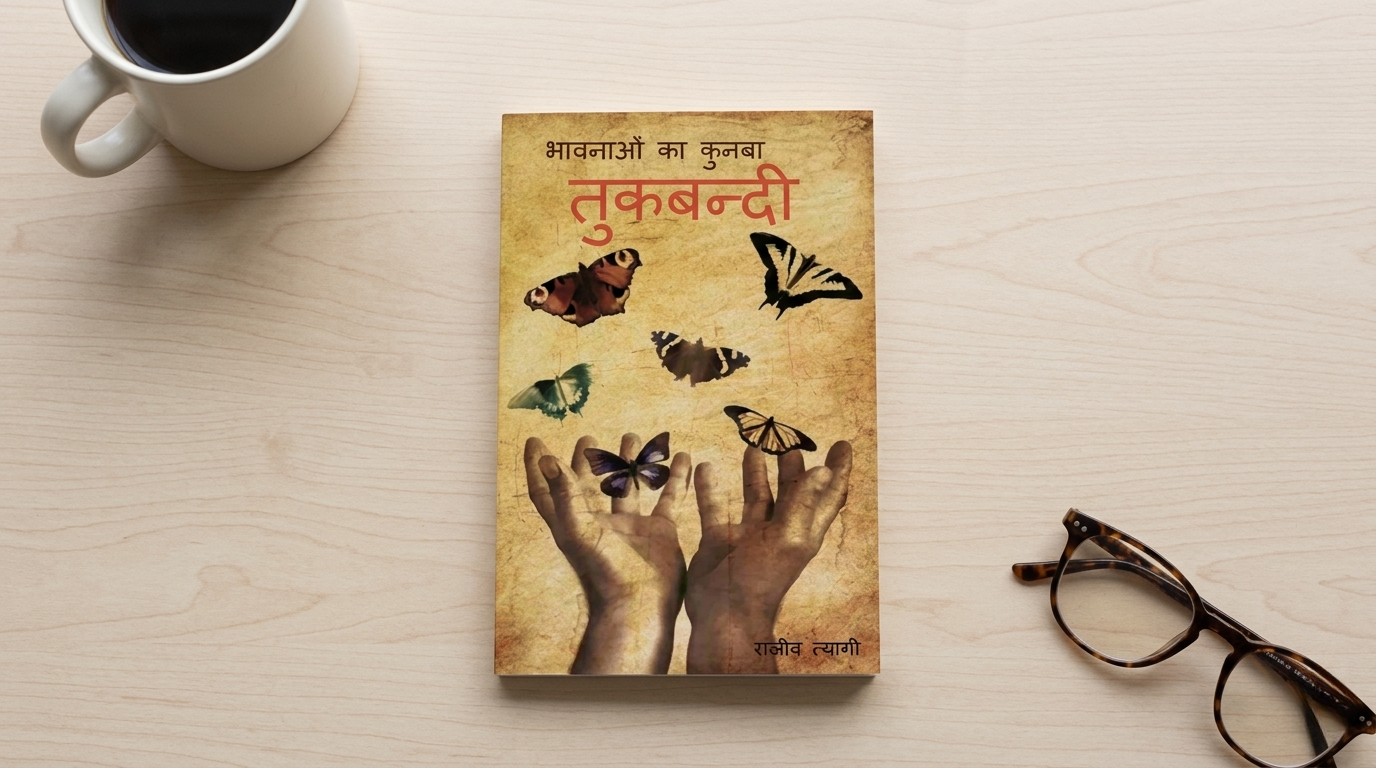
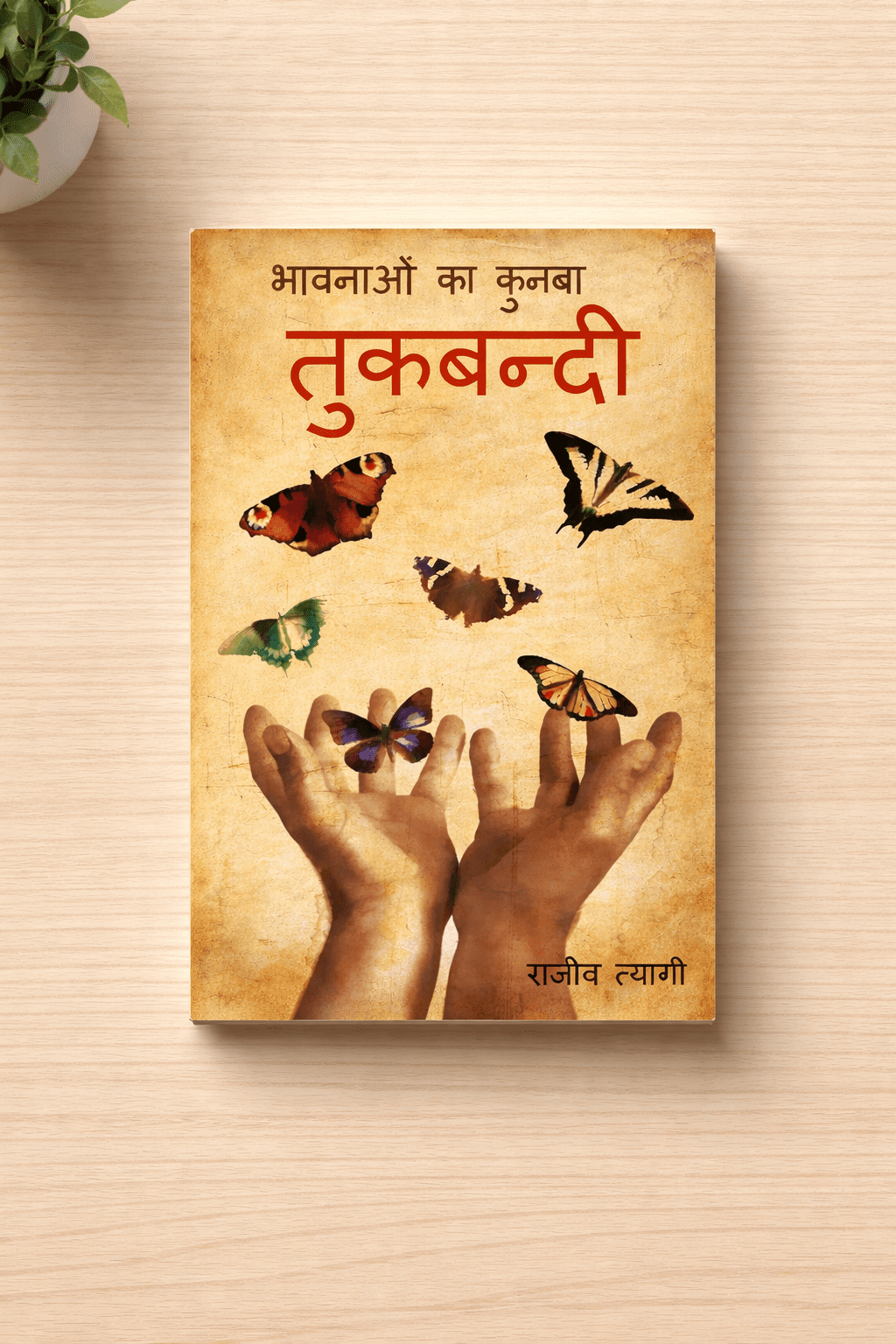
As someone who has spent over 15 years reading manuscripts at Deified Publication, I’ve seen poetry that tries very hard to sound deep. And then there’s poetry that doesn’t try at all, it just speaks. Rajiv Tyagi’s तुकबन्दी: भावनाओं का कुनबा falls somewhere in that second space. It doesn’t pretend. It just sits with you.
And honestly, that simplicity stayed with me longer than I expected.
What the Book Is About
At its core, तुकबन्दी is a Hindi poetry collection that brings together everyday emotions. Love, devotion, anger, confusion, faith, family, society, even small personal frustrations, they’re all here. But not in a heavy, philosophical way. More like how someone would express these thoughts sitting alone, or talking to themselves.
The table of contents itself gives you a sense of the emotional range. You move from poems like “प्रकृति की धुन” and “दीप उजियारे” to something like “श्रद्धा के फूल” and “जिन्दाबाद,” and then suddenly into pieces like “फितरत,” “हिसाब,” or “दानव दुनिया.”
That shift is interesting. It feels like flipping through someone’s diary where one page is hopeful and the next is slightly bitter.
There’s also a strong presence of spirituality and devotion. Poems like “राम राम रटते रटते,” “स्वागत मेरे राम,” and “वैकुंठ” carry a very rooted, cultural tone. They don’t feel ornamental. They feel lived.
And then, in contrast, you have poems like “फुरसत,” where the poet talks about sitting with himself and asking questions. That one, personally, made me pause. There’s a line about talking to yourself, questioning yourself. It felt very current, especially in 2026, when everyone is constantly distracted.
What Stood Out to Me
I think the first thing that stood out was the language. It’s simple. Very simple. No heavy metaphors, no complicated imagery. And sometimes, I’ll admit, I wondered if it was too simple. But then I realised something.
Not every poem needs to impress. Some just need to connect.
Take the poem “जिन्दगी.” There’s a line comparing life to loose elastic in pajamas. I actually smiled when I read that. It’s such an ordinary image, almost funny, but it works. It says something about unpredictability, about lack of control, in a way that doesn’t feel forced.
Then there’s “हिसाब.” The idea of death asking about the “measure of the shroud” and then turning into a question about life’s accounting. That shift is subtle but effective. It reminded me of conversations I’ve heard growing up, where elders casually mix philosophy into everyday talk.
“दानव दुनिया” is another one that stayed with me. It talks about chaos, darkness, people hurting each other, and a future that might become unlivable. It’s not layered with symbolism, but the tone carries a kind of frustration. You can sense the poet observing the world and not feeling entirely comfortable with what he sees.
And then, on the other side, there are deeply tender poems like “अम्मा” and “माँ का आँचल.” These feel personal. There’s warmth, nostalgia, and a kind of softness that you can’t really fake. I’ve read many poems about mothers over the years, but when something feels genuine, you can tell. These did.
I also noticed how the poet moves between social commentary and personal emotion without making a big deal out of it. It’s not structured like “now I will talk about society” and “now I will talk about love.” It just flows.
If I had to describe the writing style in one line, I’d say it feels like spoken thoughts rather than crafted poetry.
The Emotional Core
What surprised me most about तुकबन्दी is how it doesn’t try to overwhelm you emotionally, yet it still leaves an impression.
There’s no single dominant emotion here. Instead, it’s a mix. A little devotion, a little frustration, a little longing, a little humour. And maybe that’s what makes it feel real.
Some poems feel like they’re written in moments of faith. Others feel like they come from irritation or confusion. And then there are a few that feel like quiet acceptance.
I kept thinking about the poem “फुरसत.” The idea of finally getting time and deciding to sit with yourself, to question yourself. It sounds simple, but it’s not something most people actually do. That poem felt like a mirror in a way.
And then there’s “अनोखी किस्मत,” where the tone shifts into something almost ironic. The idea of fate being strange, even unfair, but still something you accept. That blend of humour and helplessness felt very relatable.
Even the poems around festivals, like “होली,” carry warmth. There’s a sense of community, togetherness, and shared emotion. It reminded me of how poetry used to be more connected to daily life, not just something you read in isolation.
I wouldn’t say this book made me emotional in an intense way. But it did something quieter. It made me think of small things. People. Moments. Conversations.
And sometimes, that stays longer.
Who This Book Is For
I think this is important to say honestly. तुकबन्दी may not be for everyone.
If you’re someone who enjoys highly layered poetry, where you spend time decoding metaphors and literary devices, you might find this collection a bit straightforward.
But if you like poetry that feels close to everyday life, something you can read in short bursts, maybe even read aloud, then this might work for you.
It’s also a good fit for readers who are more comfortable with Hindi and enjoy culturally rooted expressions. The devotional poems, in particular, will resonate more if you connect with that space.
And I’d say it’s especially suited for readers who are just getting into poetry. There’s nothing intimidating here. You don’t feel like you need to “understand” it. You just read it.
I can even imagine someone picking this up after a long day, reading one or two poems, and closing the book. Not rushing through it.
Final Thoughts
In my years as an editor, I’ve learned that not every book needs to be extraordinary to be meaningful. Some books are like conversations. You don’t analyse them deeply, but you remember how they made you feel.
तुकबन्दी feels like that kind of book.
It’s not trying to redefine poetry. It’s not trying to impress you with complexity. And yes, there are moments where I felt the poems could have gone a little deeper, or pushed a little further. A few pieces end just when you expect them to expand.
But at the same time, there’s honesty here. And that’s harder to find than people think.
Rajiv Tyagi writes like someone who is observing life closely and putting those observations into words without overthinking the craft. That approach has its limitations, but it also has its charm.
I think this is a collection you don’t rush. You keep it nearby. You return to it.
And maybe, on a random day, one line will hit differently.
FAQ
Is तुकबन्दी worth reading?
I think it is, especially if you enjoy simple, relatable Hindi poetry. It’s not heavy, but it stays with you in small ways.
Who should read तुकबन्दी by Rajiv Tyagi?
Readers who like everyday themes, devotional elements, and straightforward language. Also good for beginners in poetry.
What is तुकबन्दी about?
It’s a collection of poems covering life, emotions, society, family, and faith, written in a very accessible style.
Is this book suitable for deep literary analysis?
Not really. It leans more towards emotional connection than layered literary complexity.

With over 11 years of experience in the publishing industry, Priya Srivastava has become a trusted guide for hundreds of authors navigating the challenging path from manuscript to marketplace. As Editor-in-Chief of Deified Publications, she combines the precision of a publishing professional with the empathy of a mentor who truly understands the fears, hopes, and dreams of both first-time and seasoned writers.