
Rating:
⭐⭐⭐⭐ (4.3 out of 5)
As someone who has spent more than fifteen years reading and reviewing books, I have learned that not every memorable book arrives with a grand plot, dramatic twists, or larger than life characters. Some books earn their place in your memory because they remind you of ordinary people. People you may have met once. People you may have forgotten. People whose stories rarely make headlines but deserve to be told.
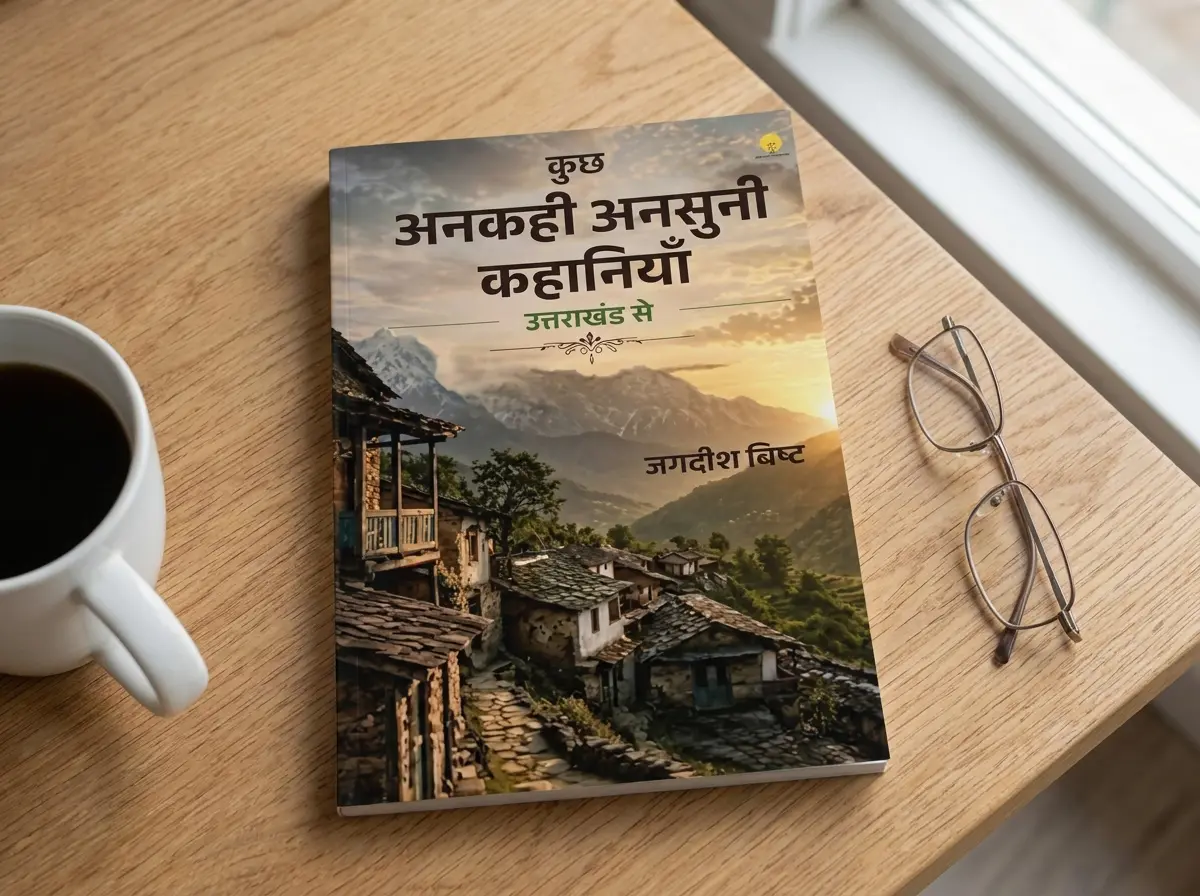
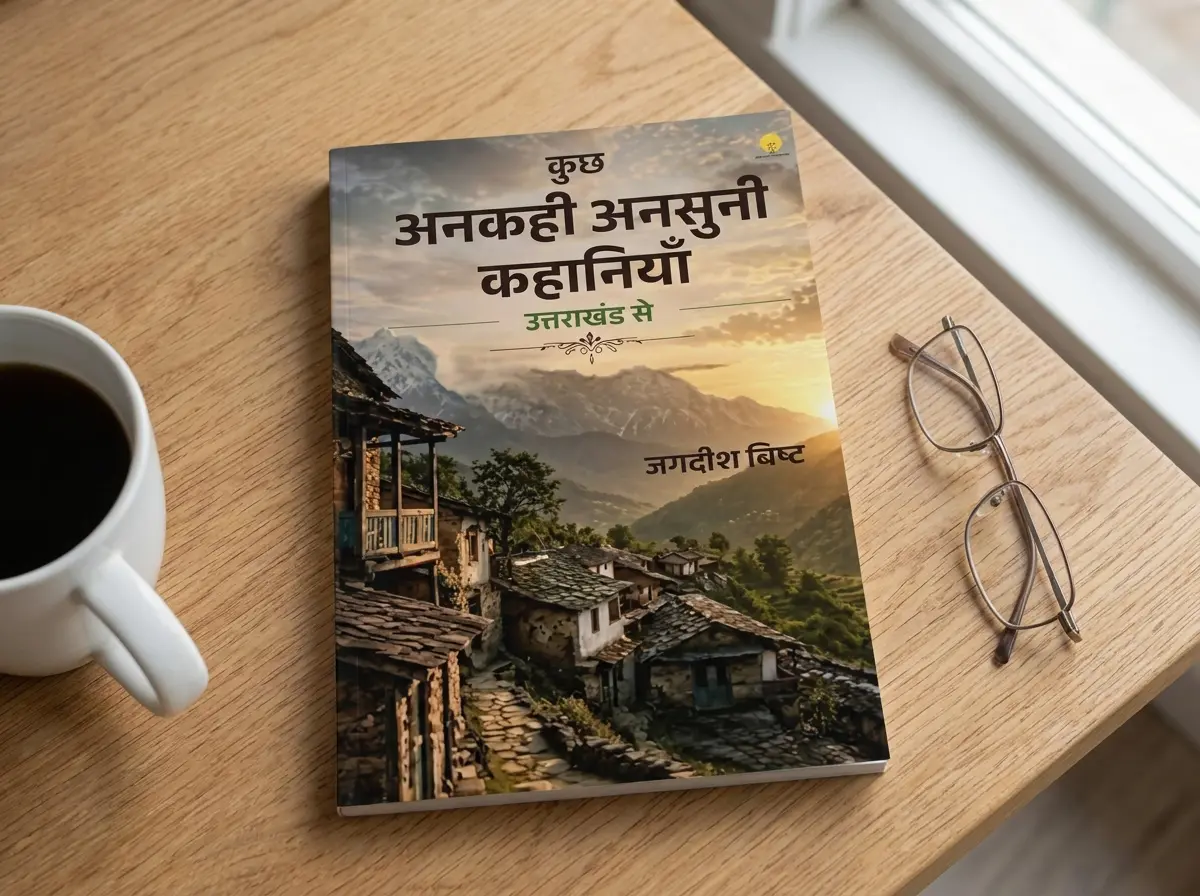
That was my experience with कुछ अनकही अनसुनी कहानियाँ उत्तराखंड से by Jagdish Bisht.
Before opening the book, I expected a collection of regional stories rooted in Uttarakhand’s culture and landscapes. What I found instead was something much more human. These stories are not really about mountains, villages, cities, or specific places. They are about love, sacrifice, responsibility, loss, motherhood, poverty, dignity, and the complicated emotions that shape everyday lives.
What struck me early was the sincerity of the writing. There is no attempt to impress readers with complicated language or literary experimentation. Jagdish Bisht writes with the confidence of someone who trusts the power of human experiences. That approach works remarkably well because many of these stories feel as if they could have happened to someone we know.
By the time I finished reading, I found myself thinking less about individual plots and more about the people inhabiting them.
What the Book Is About
कुछ अनकही अनसुनी कहानियाँ उत्तराखंड से is a collection of twenty stories, each focusing on different individuals, families, and emotional situations. While the stories are independent, they are connected by a common thread: ordinary people facing extraordinary emotional circumstances.
The collection opens with माई के लिए गुलाब, which immediately establishes the tone of the book. It is narrated through the eyes of a young boy whose innocent attachment to a compassionate woman gradually becomes one of the most touching stories in the collection. What begins as a childhood encounter slowly transforms into a reflection on affection, memory, and longing.
Other stories move into very different emotional territories. घर जो इंतजार करता रहा presents a heartbreaking situation involving a young girl and a crowded bus station. The story develops with a growing sense of unease and vulnerability that many readers will find difficult to forget.
In ईजा, रो मत, the focus shifts toward motherhood, abandonment, and emotional reconciliation. The relationship between a mother and daughter forms the center of the narrative, creating some of the book’s most emotionally charged moments.
Stories such as ज़िम्मेदारी, अंधकार से उजाले तक, and वह आखिरी रात… जो आखिरी नहीं थी deal with financial hardship, family obligations, social realities, and the difficult choices people sometimes make when circumstances leave them with very few options.
The final story, एक-दूसरे के लिए, introduces themes of friendship, love, missed opportunities, and emotional misunderstanding. It captures the kind of relationships that often exist in real life, where people feel deeply but struggle to express what truly matters until it may already be too late.
Throughout the collection, Jagdish Bisht repeatedly returns to one idea: every person carries a story that outsiders rarely see.
What Stood Out to Me
The first thing that impressed me was the author’s understanding of human emotions.
Many writers can create dramatic situations. Fewer writers can make readers genuinely care about the people involved. Jagdish Bisht succeeds because he spends time establishing emotional connections before introducing conflict.
Take माई के लिए गुलाब as an example. On the surface, it is a simple story about a young boy and a caring woman he calls “Mai.” Yet beneath that simplicity lies a powerful exploration of childhood innocence. The boy’s desire to give her a rose becomes symbolic of affection that remains unspoken. When circumstances prevent him from doing so, the emotional impact feels surprisingly strong because the story has carefully earned that moment.
I also appreciated the author’s ability to write children convincingly. Many stories featuring children end up sounding like adults trapped in smaller bodies. Here, the children’s thoughts, fears, and misunderstandings feel authentic. Their innocence often becomes the lens through which larger social realities are revealed.
Another strength is the focus on family relationships.
In ज़िम्मेदारी, Kamlesh’s life changes when family responsibilities arrive far earlier than expected. What I found particularly effective was how the story avoids melodrama. Instead of portraying sacrifice as something heroic and glamorous, it shows the practical burdens that come with responsibility. Readers who have supported family members during difficult times will likely recognize themselves in parts of this narrative.
Similarly, ईजा, रो मत examines the emotional consequences of separation between a mother and daughter. The story does not rely on dramatic confrontations alone. Instead, it draws strength from accumulated years of pain, misunderstanding, and longing.
Another aspect worth mentioning is the social consciousness running through the collection.
Several stories address poverty, labor conditions, alcoholism, gender expectations, and social inequality. Yet the author rarely turns these issues into lectures. They emerge naturally through characters and circumstances.
I found अंधकार से उजाले तक especially interesting in this regard. Through the story of a factory manager and a young girl named Bhagwati, the narrative highlights realities many people prefer not to think about. The story raises important questions about education, labor, and opportunity without becoming preachy.
The writing style itself is straightforward and accessible. Some literary readers may prefer more layered prose or greater stylistic experimentation. Personally, I think the simplicity works in the book’s favor. These stories are designed to communicate emotion rather than showcase technical brilliance.
That said, there were a few occasions where I felt certain stories could have benefited from tighter editing. Some scenes linger longer than necessary, and a few dialogues repeat emotional points already understood by the reader. These are relatively minor issues, but trimming certain sections might have increased the overall impact.
The Emotional Core
If I had to identify the emotional center of this collection, I would say it is empathy.
Again and again, Jagdish Bisht invites readers to see the world through someone else’s eyes.
- A child waiting for affection.
- A mother carrying guilt.
- A daughter carrying confusion.
- A father struggling to provide.
- A worker burdened by responsibility.
- A friend hiding heartbreak behind humor.
What makes these stories effective is that they rarely present people as entirely good or entirely bad. Most characters are simply trying to survive circumstances they did not choose.
One moment that particularly affected me came from वह आखिरी रात… जो आखिरी नहीं थी. The story examines despair through the perspective of a father facing overwhelming financial and personal difficulties. While reading those sections, I found myself thinking about how many people quietly carry burdens that remain invisible to everyone around them.
Another emotionally powerful story is घर जो इंतजार करता रहा. The sense of vulnerability surrounding the young girl creates genuine tension. As the story unfolds, it becomes less about external events and more about the fear experienced by a child navigating a world she barely understands.
Then there is एक-दूसरे के लिए, which explores romantic feelings with a mixture of humor and sadness. What I liked most was its realism. Relationships in real life rarely follow perfect storybook patterns. Miscommunication, hesitation, and timing often shape outcomes just as much as love itself.
In 2026, when conversations increasingly revolve around technology, productivity, and constant speed, books like this feel valuable because they redirect attention toward human experiences that remain unchanged across generations.
Who This Book Is For
I think this collection will resonate most strongly with readers who enjoy emotional, character driven storytelling.
If you appreciate stories about families, personal struggles, social realities, and everyday acts of kindness, there is a good chance you will connect with these narratives.
Readers from Uttarakhand may find an additional layer of familiarity because of the cultural setting and local references. However, the emotional themes are universal enough that readers from any region can relate to them.
This book may not appeal as strongly to readers seeking fast paced thrillers, fantasy worlds, or plot heavy fiction. The focus here is firmly on people and emotions rather than action.
I would particularly recommend it to readers who enjoy short story collections that feel grounded in real life.
Final Thoughts
As Editor in Chief at Deified Publication, I read books across many genres every year. Some impress me intellectually. Some entertain me for a few days and then fade from memory.
कुछ अनकही अनसुनी कहानियाँ उत्तराखंड से belongs to a different category.
What I appreciated most was its sincerity. Jagdish Bisht does not attempt to overwhelm readers with literary complexity. Instead, he focuses on ordinary lives and trusts readers to find meaning within them.
Not every story affected me equally. A few felt stronger than others, and some could have been edited more tightly. But even when a particular story was not my personal favorite, I could still see the compassion behind it.
By the end, I felt I had spent time with people rather than characters. Their hopes, disappointments, sacrifices, and moments of happiness felt familiar.
And honestly, that is often what I look for in a story. Not perfection. Connection.
FAQs
Is कुछ अनकही अनसुनी कहानियाँ उत्तराखंड से worth reading?
If you enjoy emotional short stories centered on family, relationships, social realities, and human resilience, I think it is worth your time.
Who should read this book?
Readers who enjoy literary fiction, short story collections, regional Indian literature, and character driven narratives will likely appreciate it.
What is the book about?
It is a collection of twenty stories exploring themes such as motherhood, responsibility, poverty, love, friendship, sacrifice, and hope through ordinary people living extraordinary emotional experiences.
Is this book only for readers from Uttarakhand?
Not at all. While the setting reflects Uttarakhand, the emotions and life situations are universal.

With over 11 years of experience in the publishing industry, Priya Srivastava has become a trusted guide for hundreds of authors navigating the challenging path from manuscript to marketplace. As Editor-in-Chief of Deified Publications, she combines the precision of a publishing professional with the empathy of a mentor who truly understands the fears, hopes, and dreams of both first-time and seasoned writers.