
Rating:
⭐⭐⭐⭐ (4.3 out of 5)
As Editor in Chief at Deified Publication, I read books from many genres every year. Some books entertain, some inform, and some simply pass through your hands without leaving much behind. Then there are books that keep returning to your mind unexpectedly. You remember a line while reading the news. You remember an image while walking home. You remember a question because the author refused to provide an easy answer.
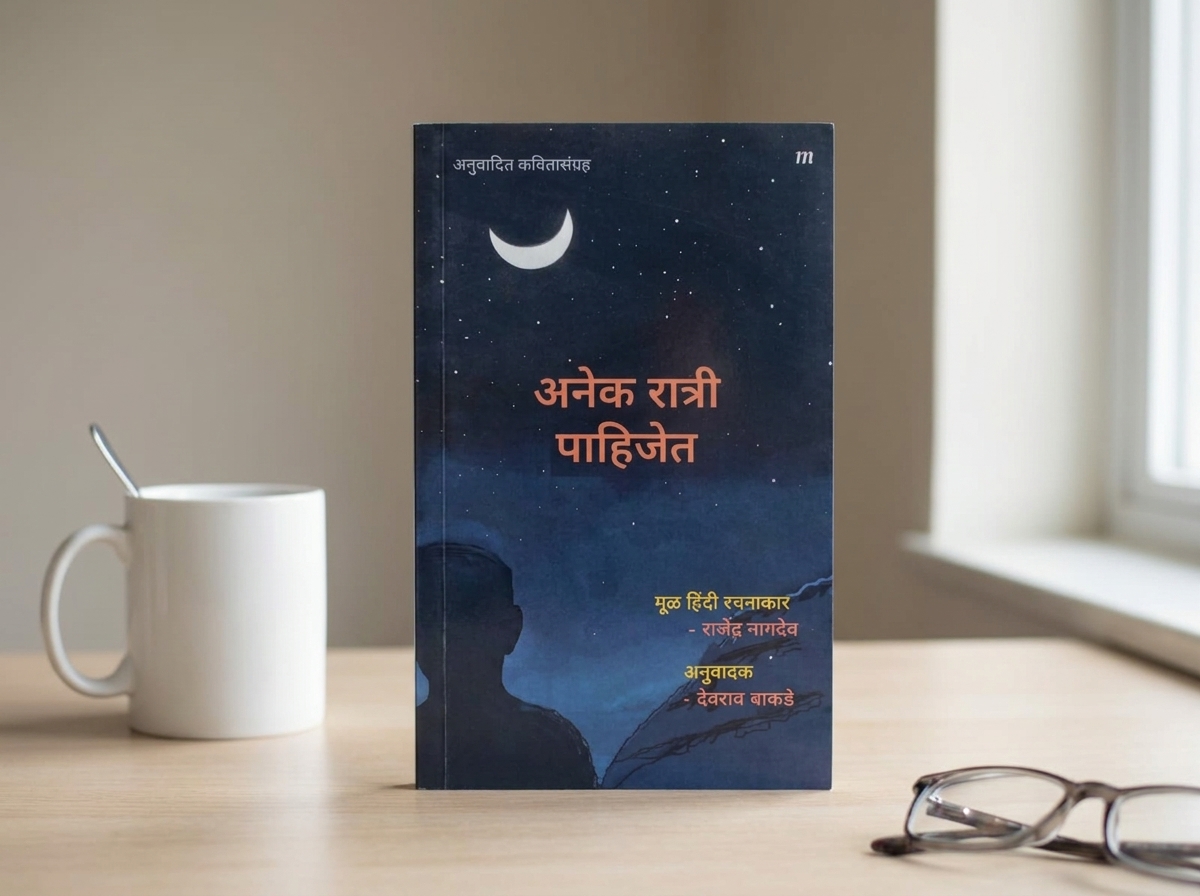
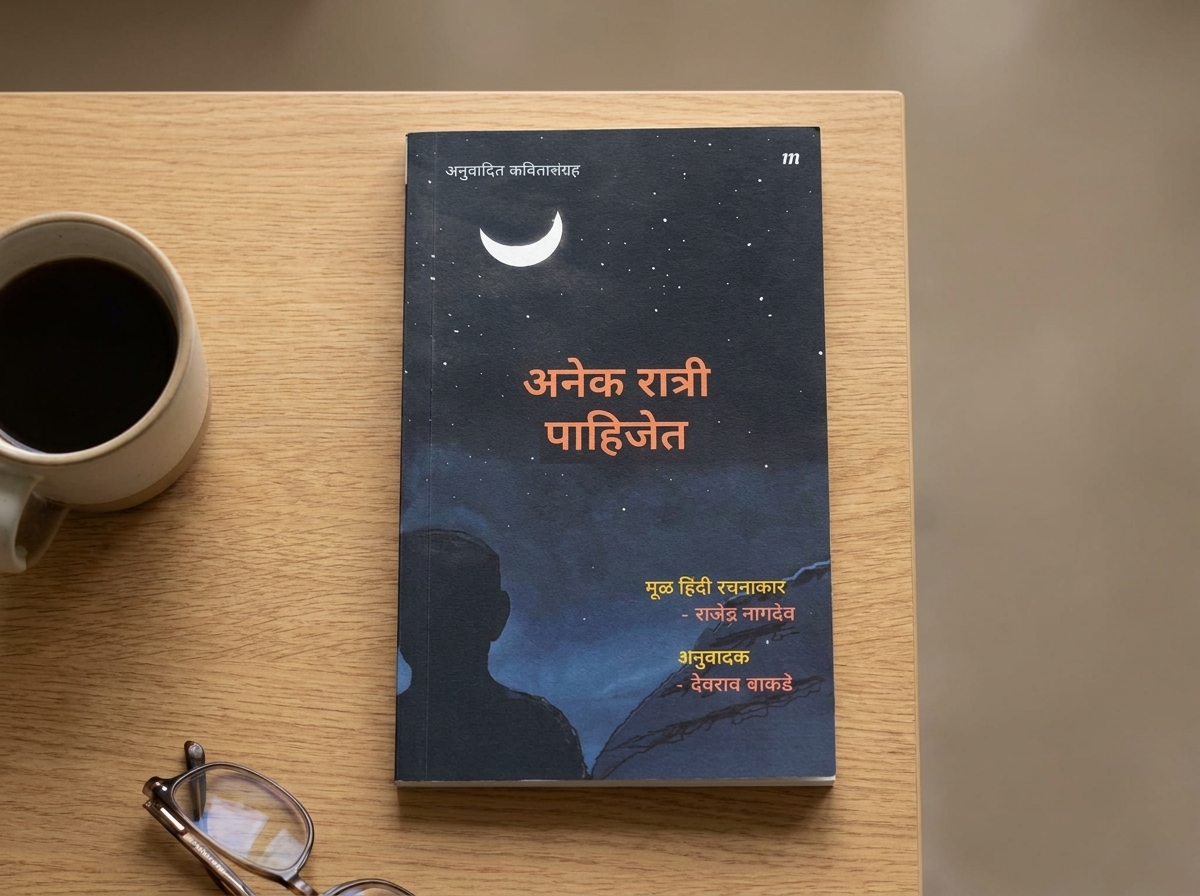
That was my experience with अनेक रात्री पाहिजेत by राजेंद्र नागदेव, translated into Marathi by देवराव बाकडे.
What struck me first was how deeply human this collection feels. These poems are not trying to impress the reader with difficult language or intellectual acrobatics. Instead, they speak about things we encounter every day but often stop noticing: war, poverty, migration, death, loneliness, memory, children, birds, cities, hospitals, stations, and the fading of human sensitivity.
I think many readers expect poetry collections to revolve around personal emotions alone. This book does something different. The poet repeatedly shifts the focus outward toward society. The individual is present, but the larger concern is humanity itself. Again and again, the poems ask whether we are becoming less compassionate, less attentive, and less aware of the suffering around us.
Reading this collection in 2026 feels especially relevant because many of the anxieties reflected in these poems remain unresolved. Technology has advanced. Cities have expanded. Yet the questions raised here still feel current.
What the Book Is About
At its heart, अनेक रात्री पाहिजेत is a collection of socially conscious poems that examine modern life through vivid images, observations, and reflections.
The table of contents itself gives readers a sense of the range covered in the collection. Poems such as युद्ध (War), आत्महत्या (Suicide), प्रश्न (Question), घर (Home), स्टेशनची रात्र (Night at the Station), मारल्या गेला माणूस (The Killed Man), माझ्या अंगणातले पक्षी (The Birds in My Courtyard), and महामहिम यांवले suggest a poet interested not only in private emotions but also in social realities.
One thing I appreciated is that the poems are connected by a common moral concern. Even when the subjects change, the underlying question remains similar: What happens when human beings become disconnected from one another?
In दिवस: काही रेखाचित्रे, the poet paints a portrait of urban life filled with crows, smoke, factories, crowded buildings, and restless movement. The city appears alive, yet there is also a sense of exhaustion running beneath the surface.
In मूल रंगावली नव्हती, one of the most emotionally difficult poems in the collection, the poet presents a heartbreaking situation involving children and institutional indifference. The poem avoids excessive sentimentality, which actually makes it more powerful.
उशीर झाला जरा examines delayed human response. It made me think about how often people recognize tragedy only after it becomes irreversible.
Then there is आत्महत्या, a poem that uses the image of the sun itself contemplating despair. The symbolism is striking because the sun traditionally represents hope and continuity. Here, the poet transforms it into a figure wrestling with existential questions.
Throughout the book, everyday scenes become vehicles for larger reflections. A station platform, a bird, a newspaper, a wounded individual, a conversation with a child, all become opportunities to examine society.
What Stood Out to Me
The strongest aspect of this collection is its ability to combine simplicity with depth.
I have read poetry collections where the language is so abstract that readers feel excluded. Rajendra Nagdev takes a different path. Most poems are built around recognizable images and situations. The reader is not forced to decode complicated symbolism before engaging emotionally.
Take संवाद चिमुकलीशी, for example. The poem unfolds as a conversation between a child and an elder. On the surface, the questions appear innocent. Yet beneath those questions lies an entire commentary on innocence, knowledge, and human experience. I found myself smiling at certain exchanges and then reflecting on their implications a few moments later.
Another memorable poem is घर. What begins as an exploration of a house gradually becomes a meditation on belonging, memory, and emotional attachment. Anyone who has ever associated a physical place with childhood memories will probably connect with it.
The poem युद्ध deserves special mention. I have encountered countless poems about war over the years. What impressed me here was the focus not on military glory but on ordinary people. The poem repeatedly directs attention toward those who suffer without having chosen the conflict. Children, women, civilians, and families occupy the center of the emotional landscape.
Similarly, मारल्या गेला माणूस examines the death of an individual in a way that extends beyond one person’s fate. The poem raises uncomfortable questions about society’s role in destroying human potential. I kept thinking about the final implication that sometimes people are not destroyed by weapons alone but by collective indifference.
I also enjoyed माझ्या अंगणातले पक्षी. Birds appear repeatedly throughout world poetry, but here they become carriers of memory. They return with fragments of the past, carrying traces of experiences that have not completely disappeared.
The translation by देवराव बाकडे deserves recognition as well. Translation is a difficult art. A translator must preserve meaning while also retaining emotional texture. Based on the poems presented here, the Marathi version flows naturally and rarely feels artificial.
The Emotional Core
The emotional center of this book is not sadness alone.
Yes, there is grief. There is loss. There are references to death, suicide, war, displacement, and social injustice.
But underneath all of that lies something else: concern for humanity.
I think that is why the collection never feels hopeless despite dealing with painful subjects. The poet criticizes society because he still believes society can do better.
The poem प्रश्न illustrates this beautifully. The poem is built around questions rather than answers. In my experience, strong poetry often trusts readers enough to complete the emotional equation themselves. This poem does exactly that.
Another poem that affected me was महामहिम यांवले. Through references to emergency response and delayed intervention, the poem highlights the fragile distance between life and death. The social criticism is present, but so is empathy.
Even स्टेशनची रात्र, with its imagery of darkness, passengers, waiting, and uncertainty, feels less like a description of a location and more like a portrait of human vulnerability.
Many poems in the collection contain images of movement. Trains move. Birds move. People move. Cities expand. Yet emotionally, people often seem stranded. That contrast appears repeatedly and creates a powerful undercurrent throughout the book.
Honestly, there were moments when I found myself reading certain poems twice. Not because they were difficult, but because I wanted to revisit particular images and understand why they affected me.
Who This Book Is For
This collection will appeal most strongly to readers who enjoy poetry that engages with society rather than focusing exclusively on personal romance or private emotions.
If you enjoy poets who ask moral questions, observe everyday life carefully, and pay attention to marginalized voices, there is a good chance you will appreciate this book.
Readers interested in contemporary Marathi poetry will find plenty to engage with here. Students of literature may also appreciate how ordinary images are transformed into social commentary.
That said, this book may not be ideal for readers looking for light entertainment. Many poems deal with serious subjects. They demand emotional engagement from the reader.
I should also mention a minor limitation. Because the collection consistently addresses social concerns, some readers may occasionally wish for greater tonal variation. A few lighter pieces could have created additional contrast. However, this is ultimately a small observation rather than a major criticism because the seriousness is clearly part of the book’s identity.
Final Thoughts
After finishing अनेक रात्री पाहिजेत, I felt I had spent time with a poet who pays attention to people often overlooked by society.
Rajendra Nagdev writes with empathy, moral urgency, and a strong awareness of human suffering. Whether he is writing about war, children, birds, stations, homes, or memory, his focus remains remarkably consistent: human dignity matters.
The Marathi translation by Devarao Bakade helps bring these poems to a wider audience without losing their emotional resonance.
In my years of reviewing books, I have learned that the most memorable poetry collections are not necessarily those with the most elaborate language. They are the ones that make readers look at familiar things differently. A bird becomes a memory. A station becomes a metaphor. A question becomes a challenge.
That is exactly what happens in अनेक रात्री पाहिजेत.
If you enjoy socially aware poetry that combines accessibility with emotional depth, this collection deserves your attention.
FAQ
Is अनेक रात्री पाहिजेत worth reading?
Yes, especially if you enjoy poetry that reflects on society, human relationships, injustice, memory, and moral responsibility.
Who should read अनेक रात्री पाहिजेत?
Readers of Marathi poetry, students of literature, and anyone interested in socially conscious writing will likely find value in this collection.
What is अनेक रात्री पाहिजेत about?
The book is a poetry collection that addresses themes such as war, death, home, compassion, social inequality, memory, and the human condition through vivid everyday imagery.
Does the translation work well?
Yes. Devarao Bakade’s Marathi translation reads naturally and successfully conveys the emotional and thematic strength of Rajendra Nagdev’s poems.

With over 11 years of experience in the publishing industry, Priya Srivastava has become a trusted guide for hundreds of authors navigating the challenging path from manuscript to marketplace. As Editor-in-Chief of Deified Publications, she combines the precision of a publishing professional with the empathy of a mentor who truly understands the fears, hopes, and dreams of both first-time and seasoned writers.