
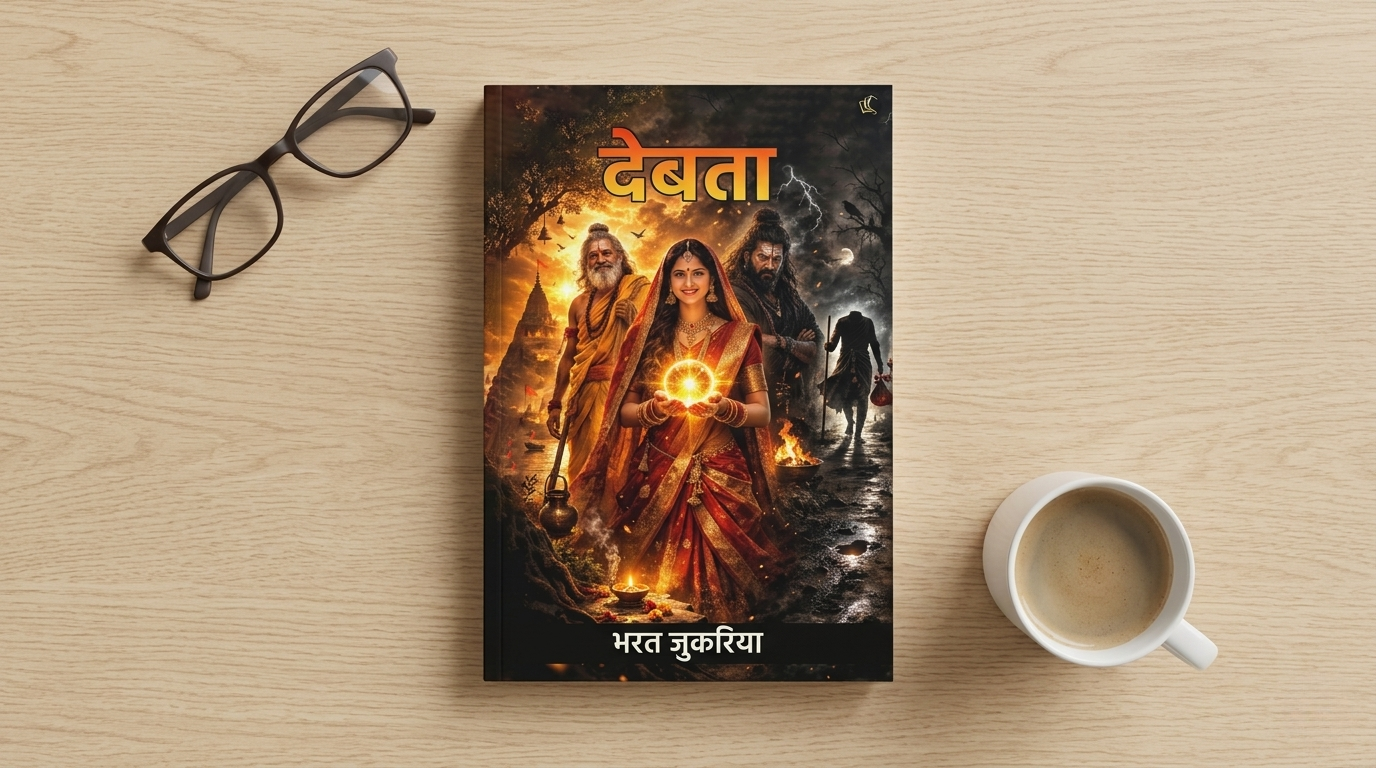
Rating:
⭐⭐⭐⭐ (4.4 out of 5)
This felt like folklore whispered by firelight
As Priya Srivastava, Editor-in-Chief at Deified Publication, I read a lot of fiction that borrows from mythology, village memory, and spiritual fear. But every once in a while, a book comes along that feels less like “fiction” and more like something that might have been told by an elder in a mountain village on a stormy night.
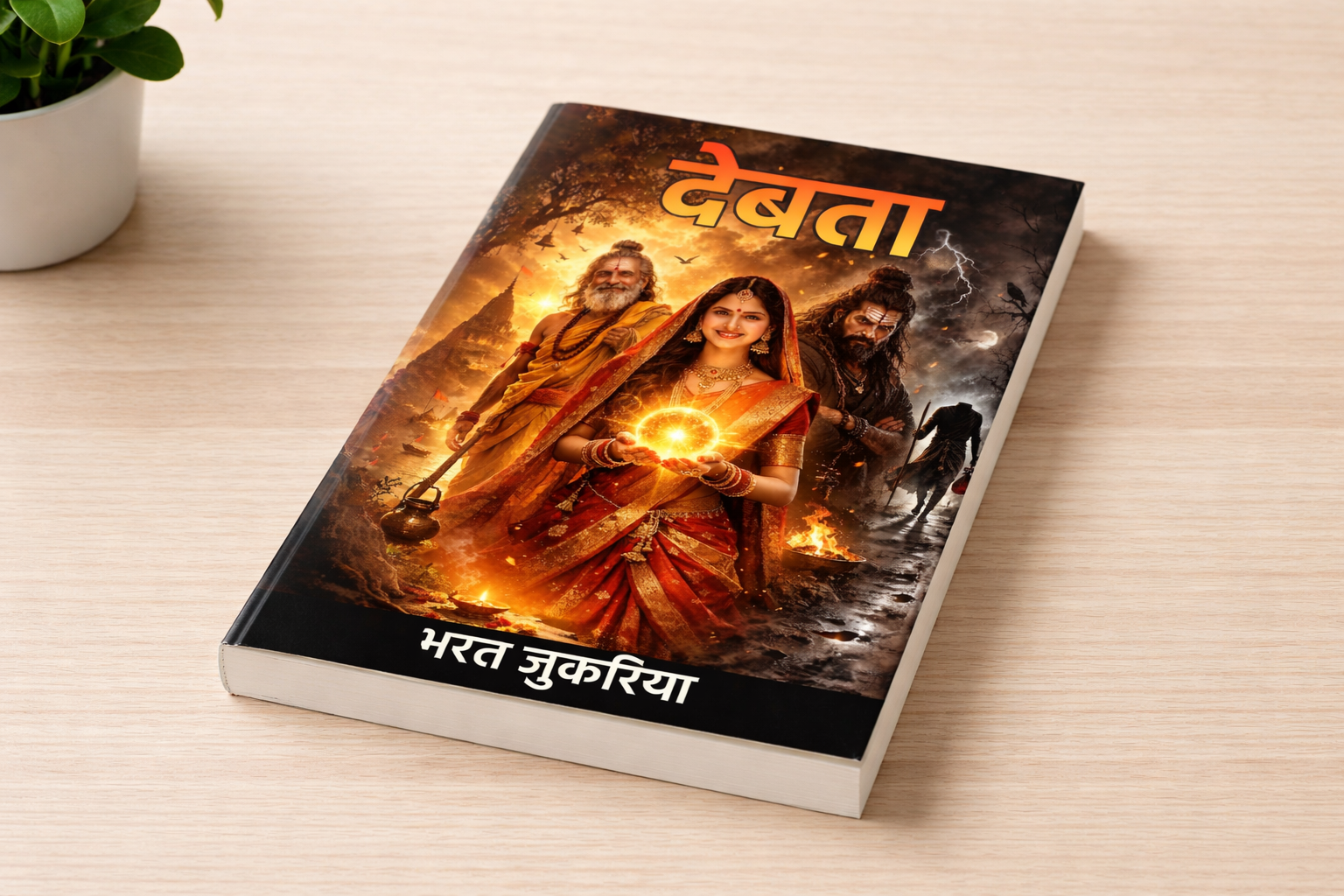
That is exactly how Debta by Bharat Jukaria felt to me.
From the very first chapters, with the Himalayan forests, temple traditions, wandering ascetics, village deities, and unseen energies moving around human lives, I felt the book was doing something larger than simply narrating events. It is building a world where nature, faith, greed, love, and revenge are all part of the same living system.
Honestly, I kept thinking about how rare it is to find a Hindi novel that carries the texture of Uttarakhand’s folk belief, devta traditions, tantra-mantra mysticism, and family tragedy in such an immersive way. The atmosphere alone stayed with me for days.
And maybe that’s what struck me first: the book doesn’t rush to explain itself. It lets the mountains breathe.
What the Book Is About: A story of devotion, rise, jealousy, and haunting consequences
At the heart of Debta is Dhruvya, a deeply sincere man whose life begins in hardship but is guided by devotion to his village deity.
The early chapters beautifully establish the spiritual ecosystem of the Himalayas: wandering saints, sacred shrines, forests treated as living entities, and village communities whose daily lives are shaped by deity worship and seasonal fairs. Out of this world emerges Dhruvya, a hardworking, kind-hearted villager whose honesty and devotion gradually bring him prosperity.
I really liked how Bharat Jukaria turns success into the emotional pivot of the novel.
Dhruvya’s rise through trade, his love for his wife and daughters, and his decision to protect his abandoned sister Chetan all make him deeply human. These aren’t heroic gestures in a cinematic sense. They feel rooted in everyday morality. That made his arc hit harder for me.
But as happens in many stories born from oral traditions, prosperity attracts darkness. Jealousy from relatives, resentment from villagers, and the old poison of comparison slowly gather around him. What begins as a deeply grounded village story gradually transforms into something darker, almost supernatural, especially after the brutal destruction of his family and his own death.
From there, Debta moves into ghostly memory, curse-like consequences, possession, and the lingering presence of unresolved pain.
It’s folklore, horror, family drama, and spiritual allegory all woven together.
What Stood Out to Me: The worldbuilding and emotional pacing
What stood out most to me was the worldbuilding rooted in local belief systems.
In my years of reading Indian mythic fiction, many books use gods and spirituality as decoration. Debta feels different because the deity tradition is part of the social structure itself. The temple isn’t just a setting. It is governance, psychology, justice, memory, and fear all at once.
I loved the way the Himalayan setting shapes the rhythm of the story:
- the forests as sacred and dangerous
- seasonal temple fairs as economic hubs
- trade routes through mountain paths
- villagers tied to kul devta traditions
- ascetics and tantrics moving at the edge of ordinary life
This gives the novel a lived-in authenticity.
The second thing that stayed with me was the slow build of jealousy. Bharat Jukaria understands something very human: people rarely hate success in the abstract. They hate seeing someone close to them rise beyond the place they mentally assigned them.
Dhruvya’s brothers, cousins, and villagers aren’t cartoon villains. Their resentment grows through little moments: gud brought home from fairs, better clothes for the children, a larger house, public respect. Those details make the betrayal feel frighteningly believable.
If I had one gentle critique, it’s that the novel sometimes lingers long in descriptive and philosophical passages before the next major incident. Personally, I enjoyed that because it deepens mood, but readers who prefer fast movement may feel the pacing stretch in places.
Still, for this kind of mythic horror-folk narrative, I think the slower unfolding actually helps.
The Emotional Core: Love, betrayal, and what remains after death
For me, the emotional center of Debta is grief that refuses to disappear.
There’s this devastating contrast between Dhruvya bringing sweets and gifts for his daughters and the horror waiting for him back home. I wasn’t expecting that section to land so hard, but it did.
As a reader, what broke me a little was that his love remains active even after death. The image of the severed presence by the river, still holding the staff and little bundles, is the kind of haunting visual that folklore remembers for generations.
This is where Debta becomes more than a supernatural novel.
It becomes a meditation on unfinished love and unfinished justice.
I’ve seen in real life how unresolved family wounds echo across generations. This book transforms that emotional truth into something mythic. The spirit is not merely horror. It is memory refusing erasure.
In 2026, this feels timely because readers are returning to rooted Indian storytelling, especially narratives tied to regional cosmologies and forgotten folk worlds. Debta feels deeply relevant in that sense.
Some parts genuinely gave me that old-school dread you feel after listening to a village ghost story and then stepping outside at night.
Who This Book Is For: Readers who love folklore, Himalayan mystery, and mythic horror
This book will especially work for readers who enjoy:
- Himalayan folklore and Uttarakhand culture
- kul devta and local deity traditions
- family sagas with betrayal
- supernatural village horror
- mythic realism with spiritual undertones
- Hindi fiction rooted in landscape and oral storytelling
If you like stories where the setting itself feels alive, Debta offers that in abundance.
This might not be for readers looking for urban thrillers or ultra-fast plot twists. It asks you to settle into atmosphere, belief, and the slow shaping of fate.
But if that’s your kind of reading, this one really rewards patience.
Final Thoughts: A rooted Hindi novel with soul and shadow
I think Debta succeeds because it trusts its soil.
Bharat Jukaria writes from a place of visible affection for Himalayan geography, folk systems, temple culture, and the emotional complexity of village life.
What stayed with me most was not just the haunting, but the tenderness before the haunting. The daughters, the sweets, the sister finding dignity again, the temple rituals, the mountain fairs. Without that warmth, the darkness would not hit the same way.
As an editor, I also appreciate how the novel lets spiritual belief remain mysterious rather than over-explained. That restraint makes the world feel more believable.
For readers asking “Is Debta worth reading?”, I’d say yes, especially if you want Hindi fiction that feels rooted, atmospheric, emotional, and deeply connected to Indian folk memory.
FAQ
Is Debta worth reading?
Yes, especially if you enjoy Himalayan folklore, spiritual horror, and family tragedy.
Who should read Debta?
Readers of Hindi mythic fiction, folk horror, and Uttarakhand-rooted storytelling.
What is Debta about?
It follows Dhruvya’s rise, betrayal, and the supernatural consequences that follow his death.
Should you read it in 2026?
Absolutely, especially with the growing love for regional Indian mythic storytelling.

With over 11 years of experience in the publishing industry, Priya Srivastava has become a trusted guide for hundreds of authors navigating the challenging path from manuscript to marketplace. As Editor-in-Chief of Deified Publications, she combines the precision of a publishing professional with the empathy of a mentor who truly understands the fears, hopes, and dreams of both first-time and seasoned writers.