
Rating
⭐⭐⭐⭐ (4.1 out of 5)
Opening thoughts that stayed with me
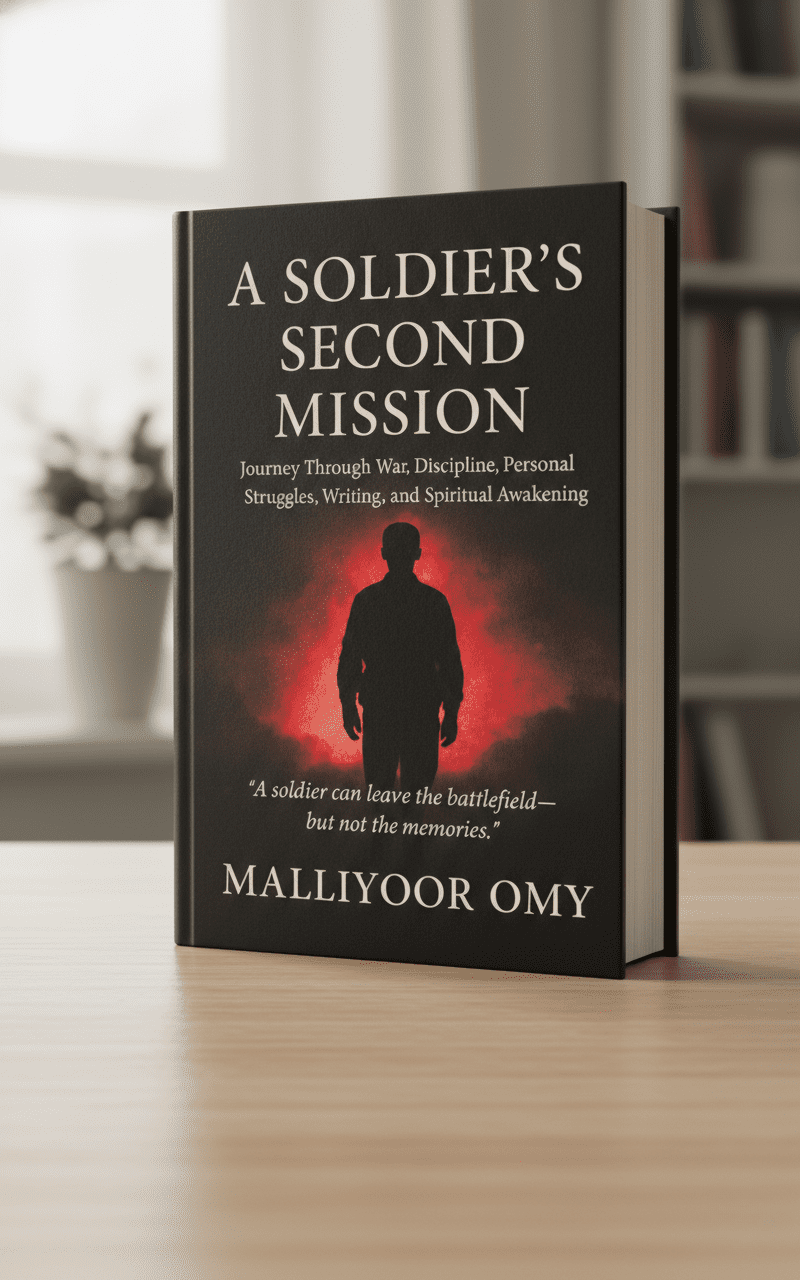
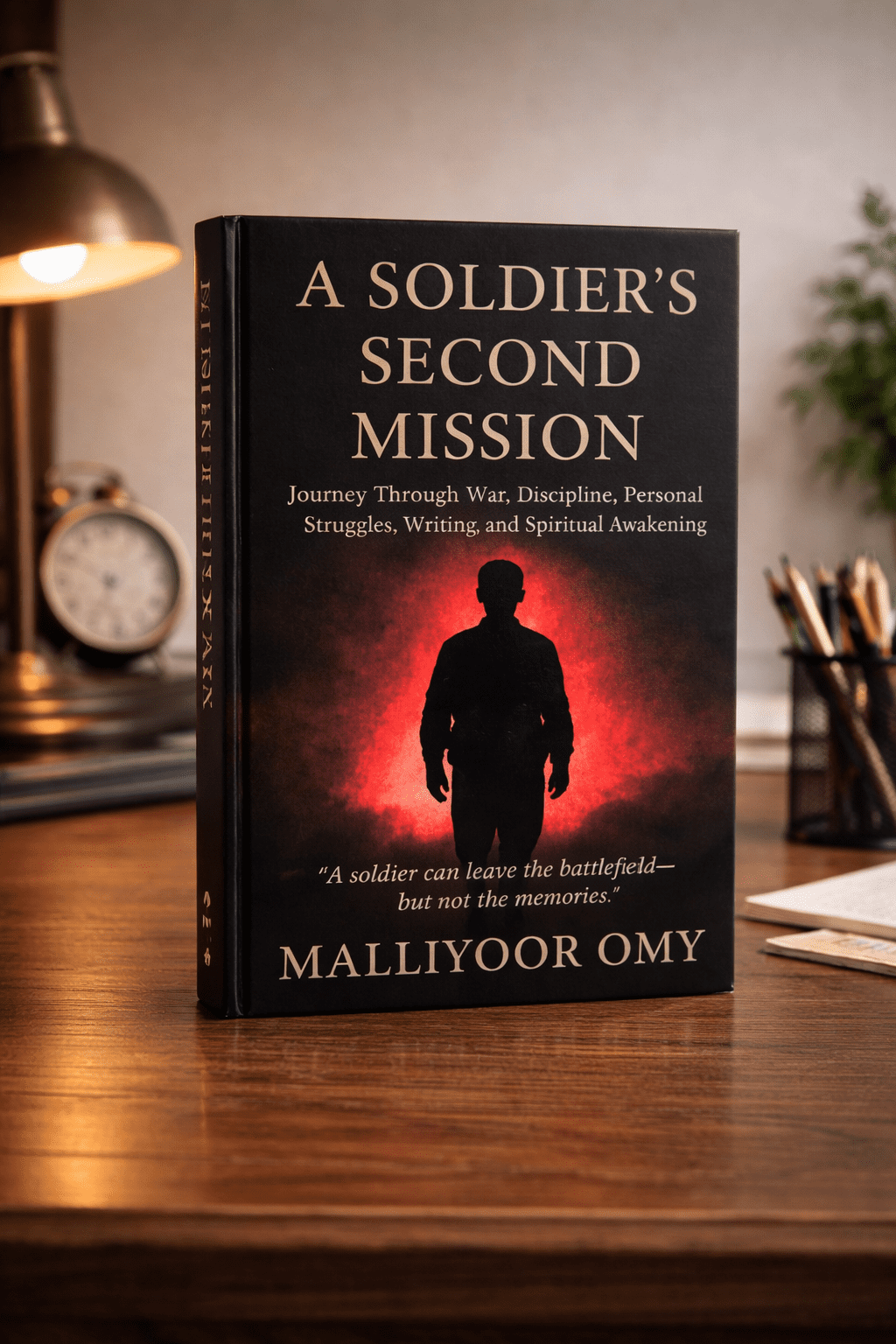
I picked up A Soldier’s Second Mission by Malliyoor Omy with a certain expectation. I thought it would mainly talk about war stories, discipline, maybe some patriotic reflections. What I did not expect was how much of myself I would find in a man whose life looks nothing like mine on the surface.
This book does not shout. It does not try to impress. It simply speaks, in a voice that feels lived in. And that is exactly why it works.
By the time I finished the last chapter, I felt like I had been listening to someone across a table, not reading a carefully manufactured memoir. Someone older, experienced, slightly tired, but still searching. That honesty is rare, especially in books about soldiers, where bravery often gets polished and pain gets wrapped in heroic language. This book refuses to do that.
What the book is truly about
Yes, this is a memoir of a soldier. Yes, it talks about service, discipline, and life shaped by the uniform. But that is only the outer layer.
At its core, A Soldier’s Second Mission is about what happens when structure disappears. When orders stop coming. When the identity that defined you for decades suddenly no longer exists in daily life.
Malliyoor Omy writes about leaving the battlefield, but the more powerful part is what follows. The internal wars. The mental noise. The questions that do not wait for permission. The slow realization that surviving combat does not automatically teach you how to live peacefully with yourself.
This book is not about glorifying war. It is about dealing with its aftershocks.
The transition from soldier to civilian
One of the strongest aspects of this book is how it handles transition. Many people underestimate how hard it is to step out of a role that once decided everything for you. The author explains this without drama. He shows how discipline, once a strength, can also become a limitation when life stops following clear rules.
There were moments where I found myself nodding without realizing it. Not because I have been to war, but because I have known what it feels like to outgrow an identity. To wake up one day and realize the thing that shaped you no longer fits the person you are becoming.
The book captures that confusion gently. It does not rush to answers. It allows uncertainty to exist.
Writing as survival, not performance
Another part that stayed with me was the author’s relationship with writing. This is not writing as ambition or career. This is writing as necessity. As a way to sit with thoughts that refuse to settle.
Malliyoor Omy does not portray himself as a natural writer. That honesty matters. He shows writing as an extension of self examination, not as a polished craft from day one. You can sense how words became a place for him to unload questions about faith, meaning, and purpose.
As a reader, this made the book feel grounded. There is no artificial wisdom. The insights grow slowly, sometimes unevenly, just like real life.
From disbelief to seeking
One of the boldest elements of this memoir is the author’s openness about his past atheism. He does not treat it as a flaw or something to apologize for. It is presented as a phase shaped by logic, experience, and the harsh clarity of military life.
What follows is not a sudden conversion or dramatic awakening. It is gradual. Curious. Sometimes resistant. Sometimes conflicted.
That is what makes it believable.
The spiritual side of the book does not preach. It does not claim answers. Instead, it explores the idea that strength can exist alongside surrender, and that faith does not always arrive with certainty. Sometimes it arrives with questions that feel heavier than before.
This section of the book will resonate deeply with readers who have wrestled with belief, especially those who feel uncomfortable with rigid definitions of faith.
Emotional honesty without exaggeration
What impressed me most was the emotional restraint. The author could have amplified his struggles for impact. He did not. Pain is present, but it is not exploited.
There are moments of loneliness, self doubt, and internal fatigue that feel painfully familiar. The kind of fatigue that does not show on the outside. The kind that people often misunderstand because it does not come with visible scars.
This emotional honesty makes the book trustworthy. It feels earned, not staged.
Why this book matters in real life
This book matters because many people are living their own version of a second mission.
Not everyone leaves the army, but many leave phases of life that once defined them. Careers end. Roles change. Beliefs shift. Relationships evolve. And suddenly, the structure that once guided everything disappears.
A Soldier’s Second Mission speaks directly to that space. The uncomfortable in between. The time when you are no longer who you were, but not yet sure who you are becoming.
It reminds readers that seeking meaning is not weakness. That reflection is not laziness. And that starting over does not cancel past strength.
Writing style and readability
The writing is simple, but not simplistic. It feels conversational. Sometimes sentences run longer than they need to. Sometimes thoughts repeat. But that actually adds to the human feel of the book.
Life is repetitive. Healing is repetitive. Growth is rarely linear. The writing reflects that.
This is not a book you read to admire sentence construction. You read it to sit with someone else’s experience and quietly compare it with your own.
Who should read this book
This book will resonate with
Former service members and veterans
People facing retirement or major life transitions
Readers questioning faith without wanting doctrine
Anyone who values lived experience over polished advice
Readers tired of exaggerated self help narratives
If you are looking for battle tactics or military history, this may not be what you want. If you are looking for emotional truth, reflection, and slow clarity, this book delivers.
Where it could improve
At times, the book could benefit from tighter editing. Some sections feel longer than necessary. A clearer division between phases of life might help readers navigate the narrative more smoothly.
But these are minor issues. They do not take away from the sincerity of the work.
Final reflection
By the time I closed A Soldier’s Second Mission, I felt calm, not inspired in a loud way, but settled. The book does not hand you lessons. It invites you to notice your own.
Malliyoor Omy does not position himself as a guide. He stands beside the reader as someone still learning. That humility is the book’s greatest strength.
This is not a story about becoming extraordinary. It is about becoming honest. And that stays with you far longer.

With over 11 years of experience in the publishing industry, Priya Srivastava has become a trusted guide for hundreds of authors navigating the challenging path from manuscript to marketplace. As Editor-in-Chief of Deified Publications, she combines the precision of a publishing professional with the empathy of a mentor who truly understands the fears, hopes, and dreams of both first-time and seasoned writers.