
⭐ Rating
★★★★½ (4.5 out of 5)
Picking Up the Book and Not Knowing What to Expect
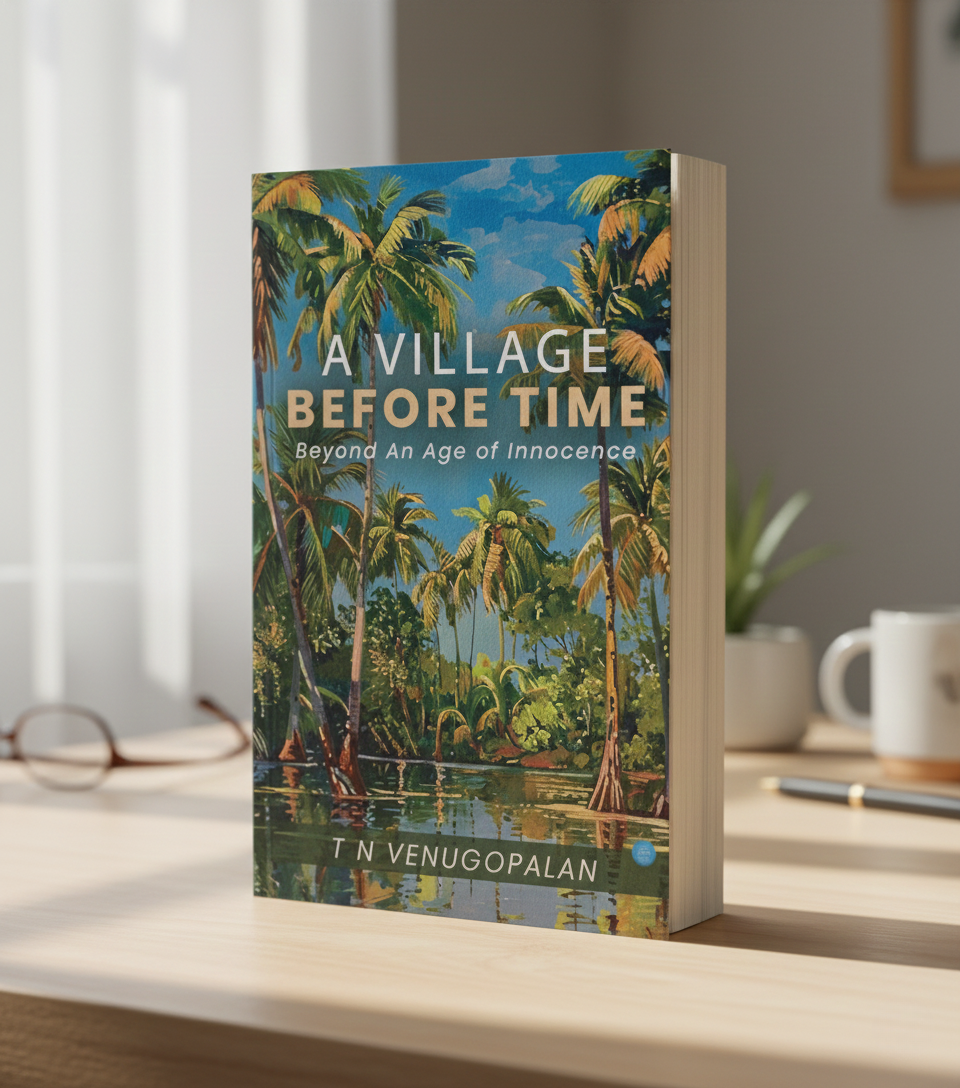
When I started reading A Village Before Time by T N Venugopalan, I had a general idea of what I was getting into. A memoir. Childhood memories. A village in Kerala. I expected nostalgia, maybe some cultural detailing, maybe a soft remembrance of the past. What I did not expect was how deeply the book would settle into me, slowly, chapter by chapter, without asking for attention.
This is one of those books that does not try to impress you in the first few pages. It simply begins. And before you realize it, you are standing inside someone else’s childhood, watching ordinary people live their ordinary lives in a way that feels extraordinary now.
What the Book Is Really About
At its core, A Village Before Time is about memory. But not memory in a sentimental or decorative sense. This book is about how places shape people, how communities functioned before speed took over, and how relationships were built when life moved at a different pace.
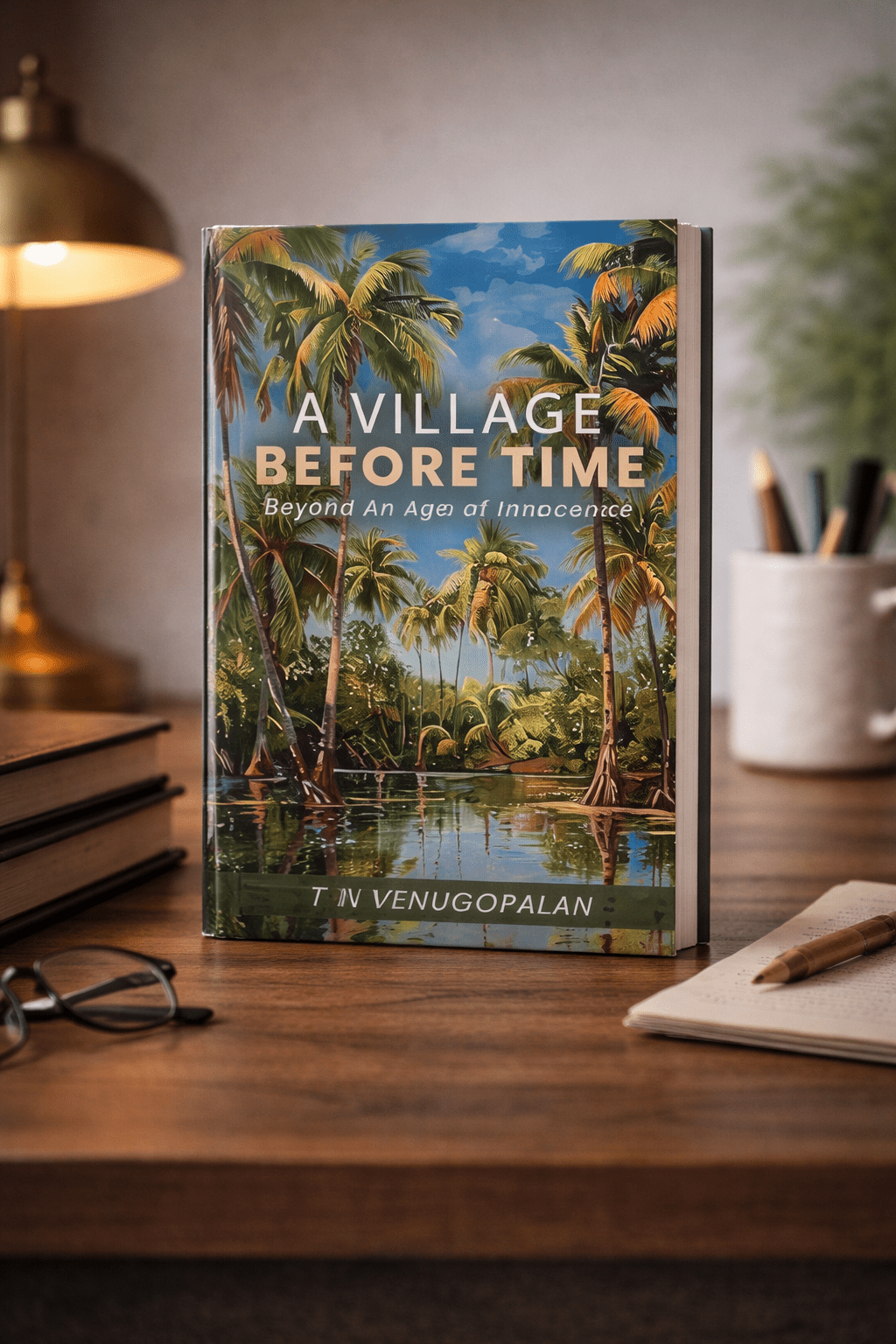
Venugopalan writes about a Kerala village near Kochi that feels untouched by urgency. The people, the festivals, the rituals, the rivers, the palm trees, the sandy paths, all come together to form a living, breathing environment. This is not a postcard version of village life. It includes beauty, warmth, conflicts, limitations, and human flaws.
The memoir traces the transformation of this village as time moves forward. Slowly, almost reluctantly, modern life creeps in. Traditions fade. Social structures shift. What once felt permanent begins to feel fragile.
The Power of Ordinary Lives
One of the strongest aspects of this book is its focus on ordinary men and women. There are no grand heroes here. No exaggerated achievements. Instead, you meet neighbors, relatives, friends, elders, and children who exist exactly as they are.
Venugopalan gives these people dignity simply by paying attention to them. He writes about their habits, beliefs, celebrations, and struggles with a sincerity that never feels forced. It reminded me of elders in my own family, the way they spoke about their childhoods, often casually, not realizing how precious those stories were.
There were moments when I felt an unexpected ache reading about simple things like shared meals, community festivals, and unspoken bonds. Not because they were dramatic, but because they felt increasingly rare.
The Writing Style and Narrative Structure
The narrative is non linear, and that works beautifully here. Life does not happen in neat chapters, and neither does memory. The book moves back and forth in time, following emotional logic rather than chronology.
The language is simple, clear, and deeply effective. Venugopalan does not rely on heavy literary tricks. His strength lies in observation. He notices details that many people would overlook, and those details bring scenes alive.
There is a calm confidence in the writing. It feels like the author trusts the reader. He does not over explain. He lets moments sit as they are.
Personal Reflection While Reading
There were parts of this book that made me pause and think about my own childhood. About how places change, and how we rarely notice the shift while it is happening. One day, something is just gone, and you cannot explain exactly when it disappeared.
Reading this memoir made me realize how much of our identity is tied to physical spaces. The smell of wet earth, the sound of water, the way festivals brought people together without planning apps or invitations.
I also felt a sense of gratitude. Gratitude that someone took the time to record these memories with care. Because once a generation passes, so much is lost if it is not written down.
Cultural and Historical Significance
This book matters beyond personal memory. It documents a cultural ecosystem. The religious harmony, the social fabric, the shared values of trust and coexistence are all presented naturally, without preaching.
Venugopalan writes about people of different faiths living together, celebrating together, and supporting each other. It does not feel idealized. It feels lived.
For readers unfamiliar with Kerala, this book offers insight into a way of life shaped by geography, history, and collective memory. For readers from similar backgrounds, it feels like recognition.
Memoir That Reads Like Fiction
One thing that stood out to me is how easily this memoir reads like a novel. The characters feel real, the settings are vivid, and the emotional arcs are gentle but present.
You do not feel like you are reading facts. You feel like you are being told stories by someone who remembers them clearly, even if time has softened the edges.
This balance between non fiction honesty and narrative warmth is not easy to achieve. Venugopalan manages it without effort.
About the Author and Credibility
Knowing a bit about T N Venugopalan’s background adds another layer to the reading experience. A man born in 1961, raised in a middle class family, educated in botany and industrial fisheries, and later leading a seafood exporting company, he brings both sensitivity and structure to his writing.
This is not someone romanticizing poverty or rural life from a distance. This is someone writing from inside the experience, with respect and clarity.
His previous recognition, including the Golden Book Award for his debut, feels well deserved after reading this memoir.
What Might Not Work for Everyone
To be honest, this book may not appeal to readers looking for fast moving plots or dramatic twists. It requires patience. It asks you to slow down and pay attention.
Some readers might find the reflective pace challenging. Others may wish certain events were explored in more depth. These are valid reactions.
But I believe the book knows exactly what it wants to be, and it stays true to that vision.
Why This Book Matters Today
In a time when life feels increasingly fragmented, A Village Before Time reminds us of what connection looked like when it was not optimized.
It encourages readers to value memory, community, and presence. Not in a preachy way, but through example.
This book is not about going back in time. It is about understanding what we are losing as we move forward, and deciding what is worth carrying with us.
Final Thoughts
A Village Before Time feels like an offering. Not a performance. Not a product. An offering of memory, culture, and lived experience.
T N Venugopalan writes with honesty and affection. The book left me reflective, grounded, and grateful for stories that refuse to disappear quietly into history.
If you are someone who values human stories, cultural roots, and the beauty of everyday life, this book will stay with you longer than you expect.

With over 11 years of experience in the publishing industry, Priya Srivastava has become a trusted guide for hundreds of authors navigating the challenging path from manuscript to marketplace. As Editor-in-Chief of Deified Publications, she combines the precision of a publishing professional with the empathy of a mentor who truly understands the fears, hopes, and dreams of both first-time and seasoned writers.