
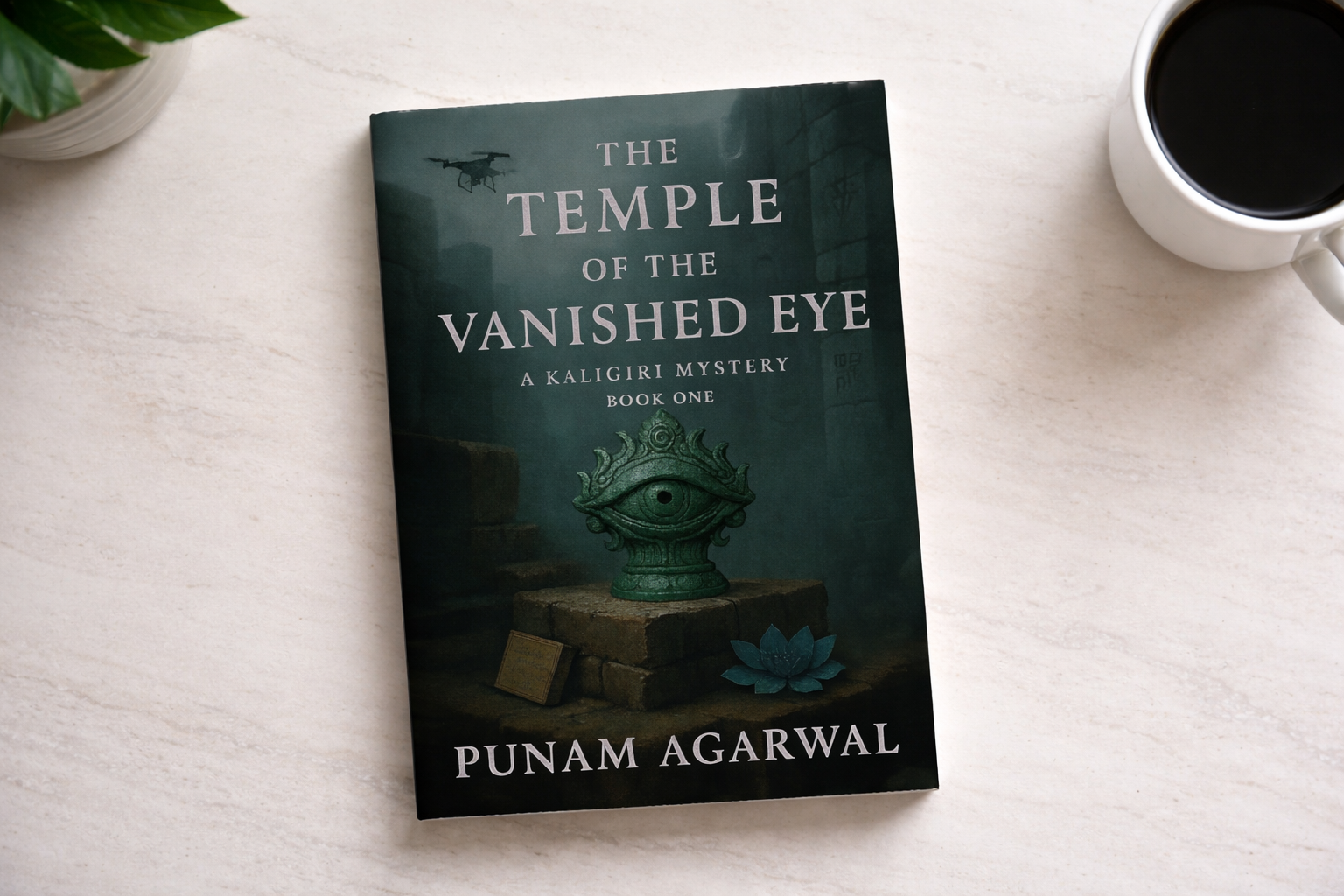
Rating:
⭐⭐⭐⭐ (4.3 out of 5)
I’m Priya Srivastava, Editor-in-Chief at Deified Publication, and I’ve spent years reading stories across genres. Still, every once in a while, a book comes along that doesn’t just tell a story, it lingers somewhere in your mind like a half-remembered dream.
The Temple of the Vanished Eye Book Review is a strange one for me to write, because even now, I feel like I’m still inside its world a little. There’s something about this book that doesn’t fully leave you when you close it. Maybe it’s the symbols. Maybe it’s the way memory itself becomes a character. Or maybe it’s just that unsettling feeling that something is watching, even when nothing is happening.
What the Book Is About
At its core, The Temple of the Vanished Eye by Punam Agarwal follows three young women, Ivy, Nola, and Kira. They are not your typical mystery-solving trio. They feel real, slightly messy, curious in different ways. Nola is sharp and restless, always decoding things. Ivy feels grounded, observant, almost like she’s holding the emotional center. Kira has this mystical edge, a connection to symbols and meanings that go beyond logic.
The story begins in a place that feels very familiar, a railway platform, chai, conversations, everyday chaos. And then, slowly, something shifts. A stolen jade oracle. A temple that is said to remember. A scent that doesn’t belong. A message written in green ink that feels too intentional to ignore.
From there, the narrative moves into Kaligiri and its surrounding spaces. Mango orchards, temples, hidden markings, strange rituals, coded messages. But this is not just a treasure hunt kind of story. It’s layered. Every clue feels like it carries weight beyond the immediate plot.
What I found interesting is how the book plays with recursion. Events echo. Symbols repeat. Choices feel like they’ve already been made somewhere before. It’s almost like the story itself is aware of its past.
What Stood Out to Me
In my years of reviewing books, I’ve learned that mysteries often fall into a pattern. Clues, tension, reveal. This book does follow that structure to some extent, but it also bends it.
There’s this moment early on with the blue lotus scent. It seems small. Just a sensory detail. But the way it keeps returning, the way it connects to memory, ritual, and something almost sacred, it builds this quiet unease. I kept thinking about it even when the plot moved ahead.
The writing has a certain texture. It doesn’t rush. It allows scenes to breathe. The Vashi platform scene, for example, felt alive. The noise, the chai, the humor between the girls. It reminded me of real life conversations I’ve had with friends where something serious is unfolding but people are still joking, still eating, still being human.
And then suddenly, there’s a shift. A line like “The Eye has vanished. Don’t trust the smiling one.” And you feel the ground change a little.
I also really appreciated the illustrations. They’re not just decorative. They add mood. That image of the three cups of chai with the blue lotus beside them stayed with me. It quietly mirrors the story’s themes without explaining them. I wish more books used visuals this thoughtfully.
Character-wise, I felt connected to the trio. Not in a dramatic way, but in a familiar way. Ivy’s calm logic. Nola’s curiosity that borders on obsession. Kira’s instinctive understanding of things she cannot fully explain. Together, they create a balance that keeps the story grounded even when it moves into more symbolic territory.
If I had to point out one small thing, it would be that at times, the layering of symbols and ideas can feel a bit dense. There were moments where I paused and thought, wait, should I be decoding this more deeply or just feel it? Some readers might love that complexity. Others might find it slightly overwhelming.
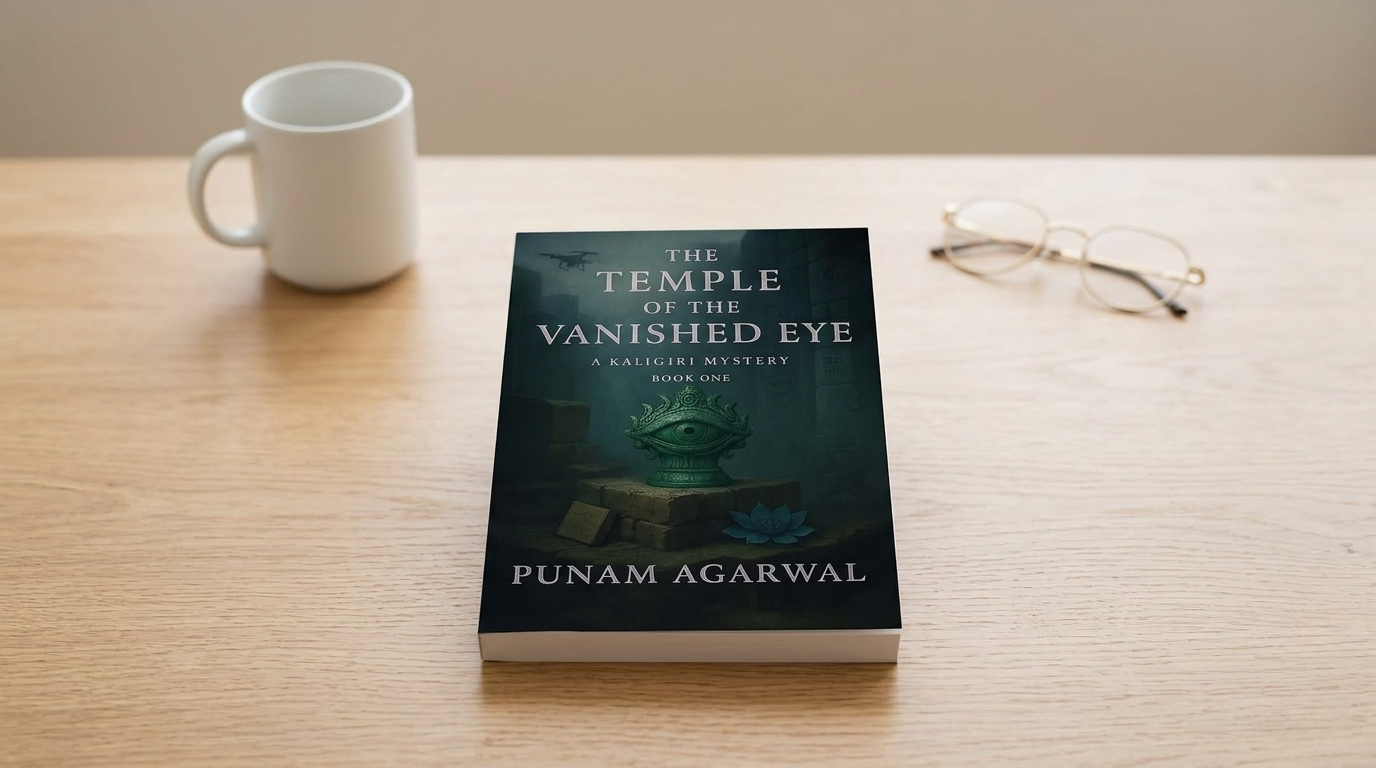
The Emotional Core
What stayed with me most was not the mystery itself, but the feeling underneath it.
This is a story about memory. Not just remembering things, but how memory shapes identity. There’s this idea that the temple doesn’t just watch, it remembers. And that idea expands beyond the temple. The characters themselves carry memories they don’t fully understand.
There’s also a quiet thread of fear. Not loud, dramatic fear, but something subtler. The kind that comes from realizing you might not be in control. That something older, something unseen, might already know you.
And yet, there’s warmth too. The friendship between Ivy, Nola, and Kira feels genuine. Their banter, their small arguments, the way they support each other without making it a big moment. It reminded me that even in the middle of something strange and unsettling, human connection stays simple.
I think these days, when so many stories are either overly fast or overly polished, this kind of emotional layering feels refreshing. It doesn’t try to explain everything. It lets you sit with uncertainty.
Who This Book Is For
If you’re someone who enjoys clean, straightforward mysteries where everything is neatly explained, this might not fully satisfy you.
But if you like stories where meaning unfolds slowly, where symbols matter, where atmosphere is as important as plot, then this book might really connect with you.
Readers who enjoy myth mixed with modern settings will probably feel at home here. There’s a nice balance between everyday life and something ancient, almost sacred.
Also, if you appreciate strong female characters who feel distinct from each other, this is worth picking up. Ivy, Nola, and Kira are not interchangeable. Each brings something unique.
And honestly, if you’re the kind of reader who underlines lines or goes back to re-read certain passages, you’ll probably enjoy this more. It’s the kind of story that invites a second look.
Final Thoughts
Writing this The Temple of the Vanished Eye Book Review feels a bit like trying to describe a feeling rather than just a story.
Punam Agarwal has created something that sits somewhere between mystery and mythology, between logic and intuition. It doesn’t rush to give answers, and I think that’s intentional.
I found myself thinking about small moments even after finishing. The scent of the blue lotus. The message in green ink. The idea that something might remember you even when you forget yourself.
It’s not perfect. At times, the narrative leans heavily into its symbolic side, which might slow things down for some readers. But there’s sincerity here. A sense that the story believes in what it’s trying to say.
And that matters.
As someone who has read thousands of books, I can say this one feels different. Not louder. Not bigger. Just different in a way that stays with you.
I’ll be reading and sharing my thoughts on the next part of this story in my upcoming review. And honestly, after how this one ends… I’m curious to see where it all leads.
FAQ
Is The Temple of the Vanished Eye worth reading?
I think yes, especially if you enjoy layered mysteries with a touch of mythology. It’s not a quick read, but it’s rewarding if you give it time.
Who should read The Temple of the Vanished Eye by Punam Agarwal?
Readers who like symbolic storytelling, strong female characters, and stories that blend modern settings with ancient themes.
What genre is this book?
It sits between mystery, mythological fiction, and a bit of psychological storytelling.
Is it easy to read or complex?
It’s readable, but it does ask you to pay attention. Some parts feel dense with meaning, which can either be exciting or slightly heavy depending on your preference.

With over 11 years of experience in the publishing industry, Priya Srivastava has become a trusted guide for hundreds of authors navigating the challenging path from manuscript to marketplace. As Editor-in-Chief of Deified Publications, she combines the precision of a publishing professional with the empathy of a mentor who truly understands the fears, hopes, and dreams of both first-time and seasoned writers.