
Rating:
⭐⭐⭐⭐ (4.3 out of 5)
That Strange Silence Inside Busy Offices
A few years ago I was sitting in a publishing meeting where everyone looked incredibly accomplished. Laptops open. Slides moving. Deadlines flying around the room.
And yet something felt… off.
People were talking about growth, numbers, expansion. But nobody looked particularly alive.
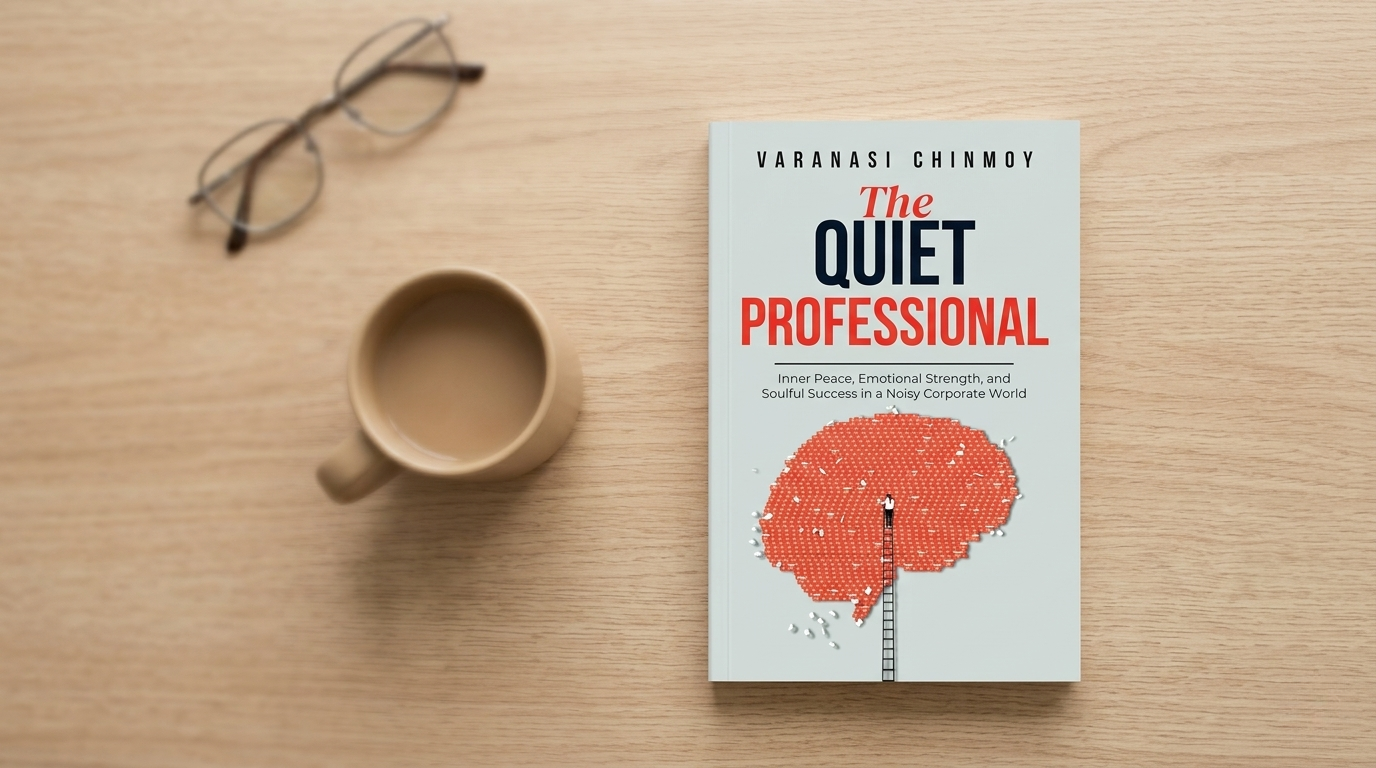
When I opened The Quiet Professional by Varanasi Chinmoy, that memory came back immediately. Because the author actually begins with a similar moment. In the preface he describes sitting in a corporate meeting where everything looked successful on the outside, yet something deeper felt missing inside the people present. That question becomes the starting point of the book.
Have we built workplaces where work succeeds but people fail silently?
As someone who has spent more than fifteen years reading books across genres as Editor in Chief at Deified Publication, I’ve noticed something interesting. Books about corporate life usually go in one of two directions.
Either they become purely motivational.
Or they become extremely analytical.
This book sits somewhere in the middle.
And I think that’s what makes it interesting.
What the Book Is About
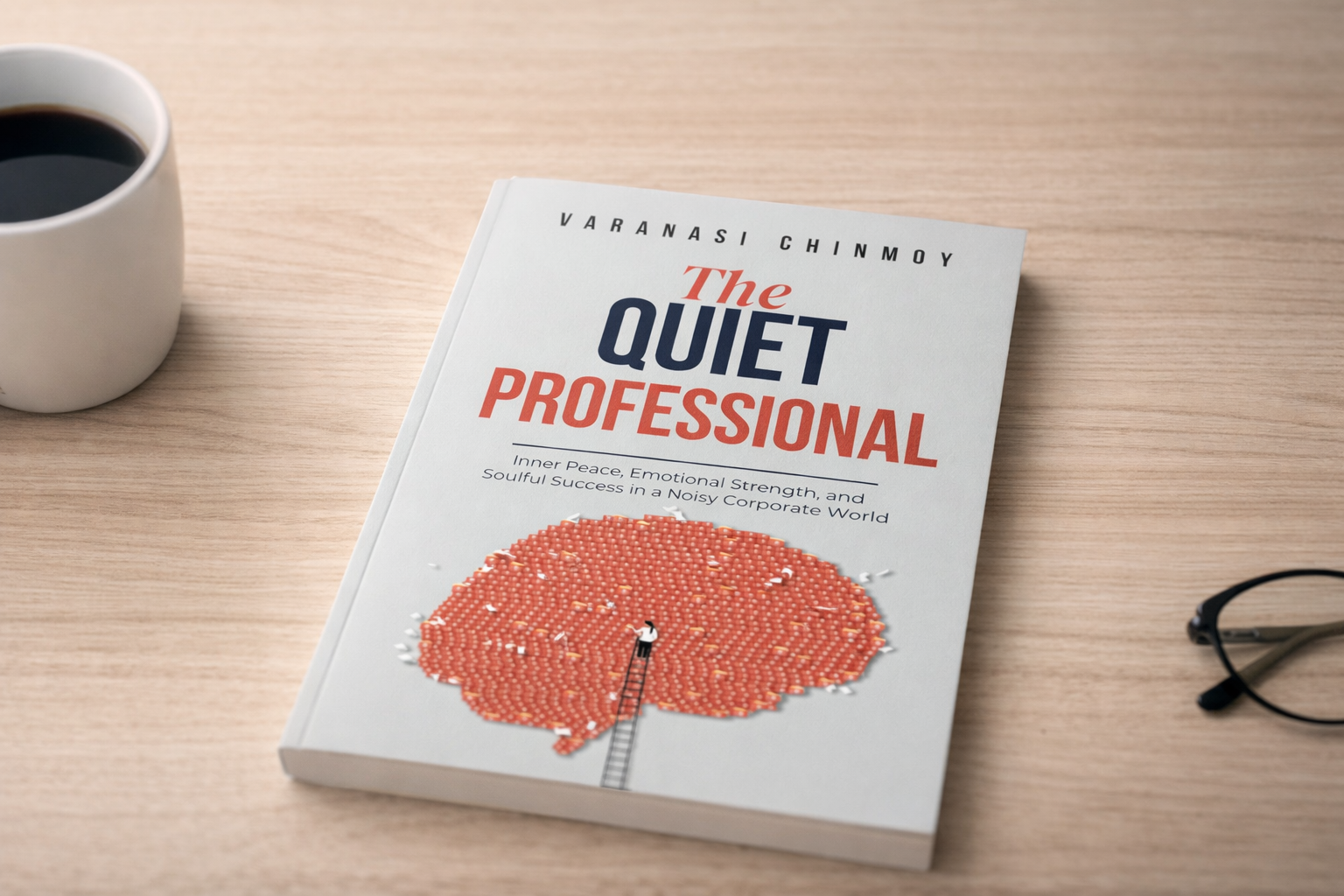
At its core, The Quiet Professional is about surviving and growing inside modern corporate life without losing your inner clarity.
Varanasi Chinmoy writes for professionals who appear successful on the outside but feel emotionally drained on the inside. The book openly addresses burnout, identity loss, and the sense of disconnection many employees experience despite performing well at work. The structure of the book is thoughtful. It moves through four broad parts.
The first section looks at what the author calls the “inner corporate world.” This includes ideas like applying ancient wisdom from the Bhagavad Gita to workplace behaviour, learning detachment from outcomes, and understanding emotional resilience.
For example, one chapter reflects on the famous Gita idea of Karmanyavaadhikaraste and explains how focusing on effort rather than outcomes can help professionals maintain balance in high pressure environments. The second section shifts toward workplace realities that many employees recognize but rarely discuss openly. Toxic competition, ego driven ambition, and the strange identity crisis that happens when hustle becomes your personality.
Then the book turns toward something more human. It talks about invisible contributors in organisations. The people who keep systems running but rarely receive recognition. Administrators, support staff, freelancers, and even family members who silently support professionals behind the scenes.
Finally, the book ends with a return to purpose. Asking what kind of legacy professionals want to build beyond promotions, salaries, and performance reviews.
It’s a thoughtful arc.
You start with confusion.
You move through awareness.
You end with reflection.
What Stood Out to Me
The first thing that struck me while reading parts of this book was the tone.
It doesn’t feel like a typical corporate handbook.
Instead it feels like a conversation between someone who has lived inside organisations for many years and is now stepping back to ask deeper questions.
Varanasi Chinmoy has experience across education, corporate learning, leadership training, and organizational psychology. That background clearly shapes the way he writes about workplace dynamics. One chapter introduces the idea of “Corporate Kirayedar.”
The phrase basically describes professionals who work inside companies but never truly feel they belong there. They perform their roles well, attend meetings, deliver results, yet emotionally they remain outsiders.
I paused there for a moment.
Because honestly, I’ve seen this happen so often.
People who are technically excellent but emotionally disconnected from their organisation.
Another concept that stayed with me is something the author calls “Wet Umbrella Syndrome.”
The idea is simple but powerful.
During storms we rely heavily on umbrellas. But once the rain stops, we throw them aside and forget them.
The author uses this metaphor for employees who support teams during difficult phases but are forgotten once the crisis passes.
I kept thinking about that metaphor.
It’s painfully accurate.
Another interesting theme is the use of Indian philosophical ideas inside corporate conversations.
Instead of importing Western productivity frameworks, the author often references cultural concepts like dharma, detachment, and inner discipline.
There is a section explaining how ancient wisdom traditions can actually help professionals manage modern workplace stress.
And honestly, that felt refreshing.
We rarely see management books rooted in Indian philosophical thinking.
The Emotional Core
If I had to describe the emotional center of The Quiet Professional, I would say the book is trying to answer a very specific question.
How do you stay human in systems that often reward speed more than depth?
Throughout the book, Chinmoy repeatedly returns to the idea that professionals are not machines. They carry emotional worlds inside them.
Deadlines affect them.
Recognition affects them.
Even silence affects them.
The book talks about emotional labor inside organisations. The invisible effort people invest to keep teams stable during stressful phases. This part felt particularly honest.
Anyone who has worked in teams knows that some people hold the emotional center of the group. They mediate conflicts. They calm tensions. They help others through difficult days.
Yet their contribution rarely appears in performance metrics.
Another theme I appreciated is the idea of building emotional immunity.
The author suggests simple practices like journaling, mindful pauses, reflection, and breath awareness to help professionals maintain clarity during chaotic work cycles. It reminded me of conversations I’ve had with friends who work in high pressure corporate roles.
Many of them aren’t struggling with work itself.
They’re struggling with the emotional noise around work.
And this book acknowledges that reality openly.
Who This Book Is For
This book will likely resonate with a very specific kind of reader.
First, mid career professionals who have spent years inside corporate structures and are starting to question the deeper meaning of success.
Second, young professionals entering corporate life who want guidance beyond basic career advice.
Third, leaders who want to build more human centered workplaces.
The book might not appeal to readers who want purely tactical management strategies or productivity hacks.
This isn’t that kind of book.
It leans more toward reflection than instruction.
Some readers may also find the philosophical references slower compared to fast paced business books. But honestly, that slower rhythm is part of its charm.
Final Thoughts
After finishing The Quiet Professional, I found myself thinking about a simple line from the preface.
The author writes that the book began with a quiet question inside a loud corporate meeting. That image stayed with me.
Because I think many professionals have experienced that moment.
The moment when the external world looks successful but something inside feels disconnected.
Varanasi Chinmoy doesn’t pretend to have perfect answers. Instead he offers reflections, stories, and frameworks that encourage readers to rethink their relationship with work.
And honestly, that kind of honesty is refreshing.
Some ideas may feel familiar if you already read philosophy or leadership books. But the way the author blends Indian wisdom with corporate psychology gives the book a distinctive voice.
It’s not flawless. A few sections repeat ideas slightly, and some chapters could probably be tighter.
But the intention behind the book feels sincere.
And sincerity is something readers recognise immediately.
In 2026, when burnout conversations are becoming louder across industries, The Quiet Professional feels timely.
Not because it promises instant transformation.
But because it asks a question many professionals are already quietly asking themselves.
What does success actually mean if it costs your inner balance?
FAQ
Is The Quiet Professional worth reading?
If you are interested in workplace psychology, emotional resilience, and Indian philosophical ideas applied to corporate life, the book offers thoughtful insights.
Who should read The Quiet Professional?
Professionals experiencing burnout, mid career reflection, or leadership responsibility may find the book particularly relevant.
What is The Quiet Professional about?
The book examines emotional challenges inside modern corporate environments and suggests ways to maintain inner clarity while pursuing professional success.
Is The Quiet Professional a typical business book?
Not really. It blends corporate observations with philosophy and personal reflection rather than focusing purely on management techniques.

With over 11 years of experience in the publishing industry, Priya Srivastava has become a trusted guide for hundreds of authors navigating the challenging path from manuscript to marketplace. As Editor-in-Chief of Deified Publications, she combines the precision of a publishing professional with the empathy of a mentor who truly understands the fears, hopes, and dreams of both first-time and seasoned writers.