
Rating:
⭐⭐⭐⭐ (4.4 out of 5)
I have read countless books on happiness. Some are academic. Some are spiritual. Some feel like motivational speeches stretched into chapters. So when I picked up The Pursuit of Happiness by Robin Kumar Das, I’ll admit, I wondered… what new could possibly be said?
But here is what stayed with me.
This book is not obsessed with defining happiness. It is more interested in examining why we make it so difficult for ourselves.
And that difference matters.
Opening Thoughts
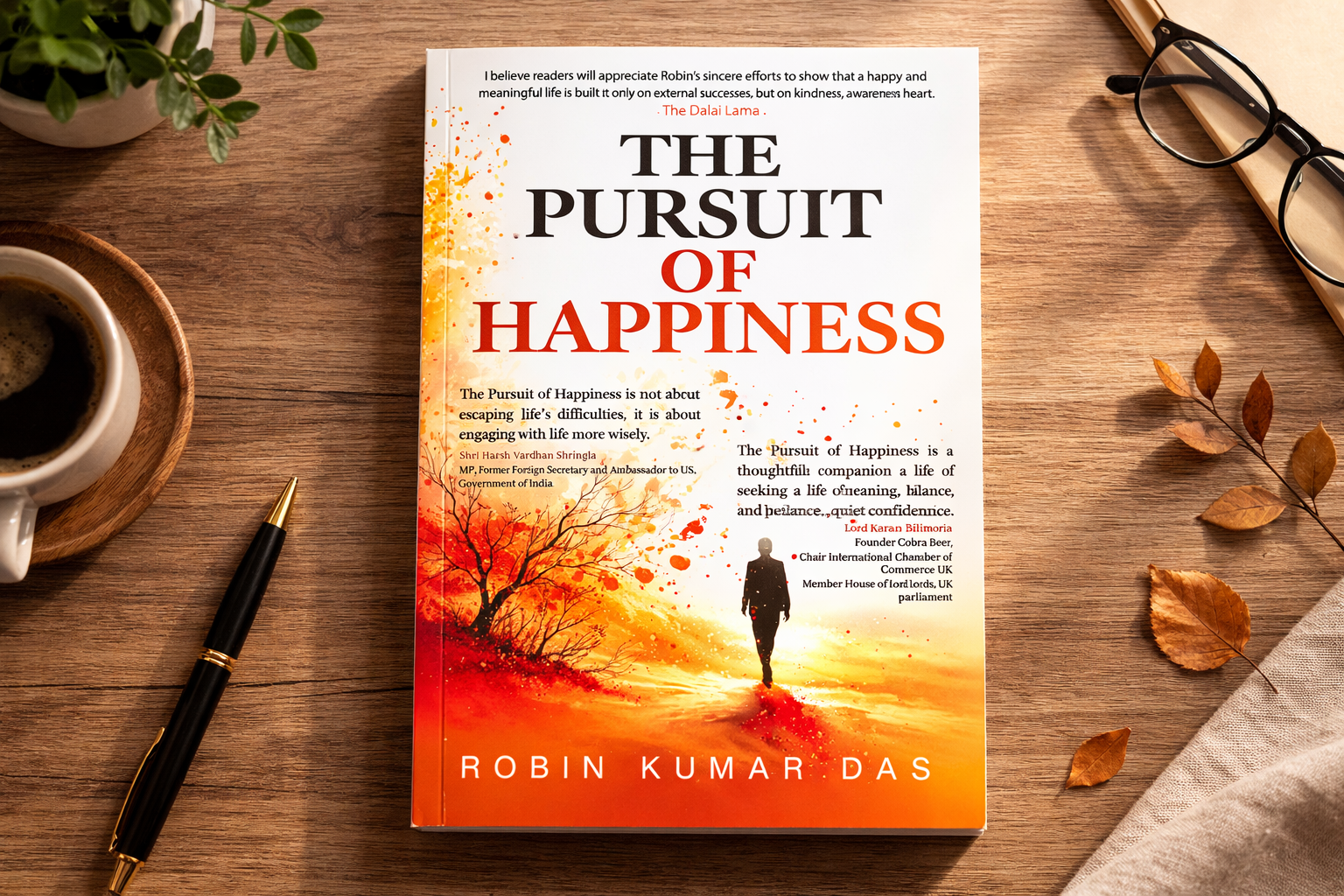
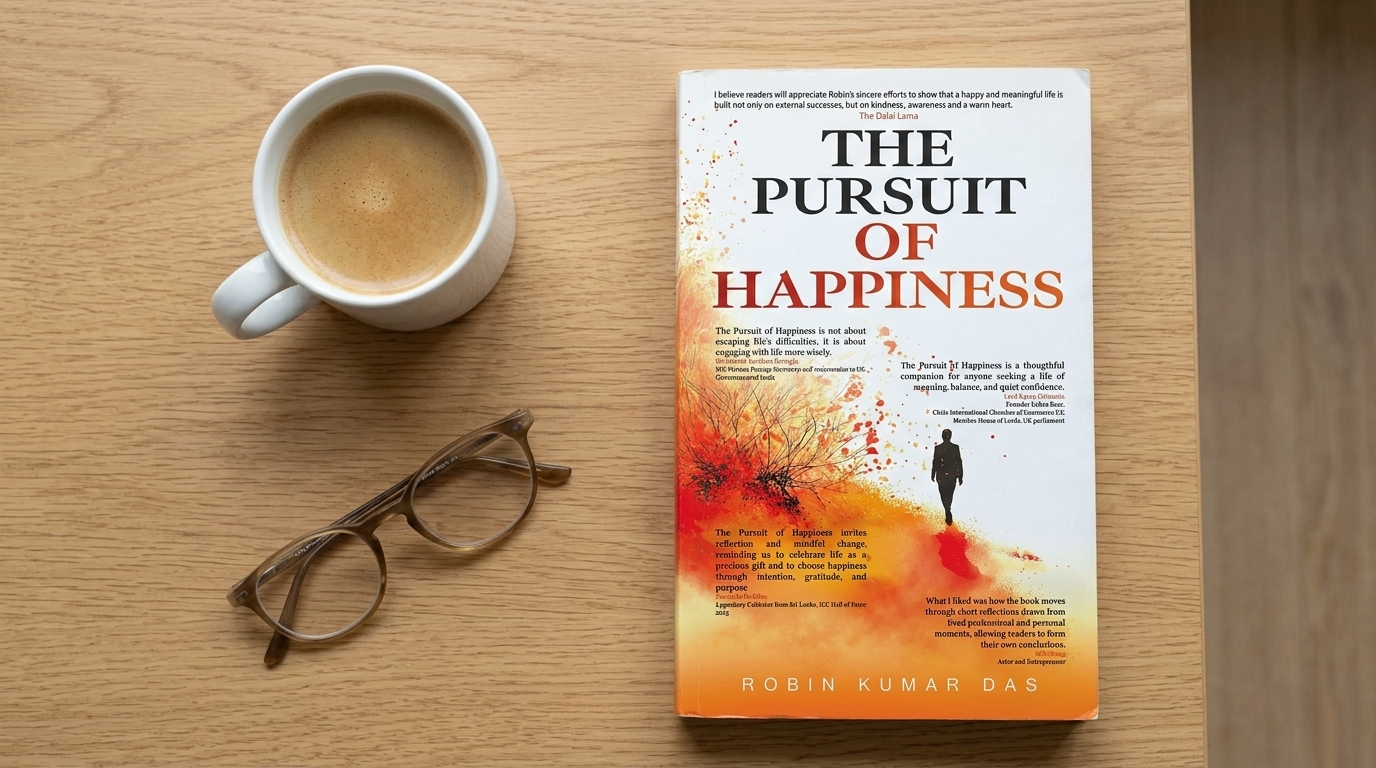
The cover itself sets a tone. A lone figure walking through a burst of fiery orange and gold, almost as if moving through chaos toward light. It felt symbolic of something very personal. Not corporate success. Not external validation. Something internal.
In my years as Editor in Chief at Deified Publication, I have seen two kinds of self reflection books. The first kind instructs. The second kind shares.
Robin Kumar Das writes from the second space.
From the PDF of the early pages and the detailed praise included, one thing is clear. This book is deeply autobiographical in its spirit. It is divided into sections like “The Me,” “The Me at Work,” “The Me at Relationship,” “The Me I Missed,” and “Me is Reborn.” That structure alone tells you something. This is not a theoretical framework. It is a personal excavation.
What The Pursuit of Happiness Is About
If I had to summarize the book in one sentence, I would say it is about recognizing how often we become the architects of our own unhappiness.
The official book summary speaks about how we derail life ourselves. We assume our problems are unique. We nurture self pity. We sabotage relationships. We avoid personal growth. And then we wonder why happiness feels distant.
What I appreciated while reading through the forewords and praise sections is that this book does not promise to remove hardship. In fact, one foreword clearly says it is not about escaping life’s difficulties but engaging with them wisely.
That felt honest.
Robin draws heavily from his own professional journey at Mahindra and Mahindra Ltd. That detail appears repeatedly in the forewords. He reflects on leadership, commitment, workplace balance, and the idea that happiness is not a by product of success but the foundation of it.
I kept thinking about how often we reverse that equation. We tell ourselves we will be happy once we achieve something. A promotion. A house. Recognition. And somehow the line keeps shifting.
The chapters suggest themes like inner chaos, resilience through the dandelion metaphor, happiness at the workplace, commitment as a choice, the convergence of secret worlds, missing pages of life, rebirth. There is even a recurring golf metaphor mentioned in multiple praise notes. Golf as patience. Golf as discipline. Golf as humility.
It sounds simple. But sometimes simple metaphors land deeper than complex theories.
What Stood Out To Me
The Dandelion.
More than one person in the PDF mentions the analogy of the dandelion. That small plant that grows anywhere. Even through cracks in concrete. It is fragile looking yet stubbornly resilient.
I have seen that flower grow on broken sidewalks in Kanpur. It reminded me of how many of us underestimate our own resilience. We assume strength must look dramatic. But often, strength looks like showing up again.
The golf metaphor also intrigued me. Golf requires patience, focus, self correction. You cannot blame the ball. You adjust your stance. Your grip. Your angle. That mirrors life in subtle ways.
What struck me most was the repeated idea that happiness is a choice. Not in a superficial sense. Not in a toxic positivity way. But in the sense that we can choose our response to circumstances.
There is also a chapter called “No Trolls Left Behind.” That title made me smile. It suggests confronting inner negativity. Maybe even social negativity. In today’s hyper reactive world, that feels relevant.
I also sensed a strong thread around relationships. The chapter titled “Main Khayal Rakhta Hoon – I Care” suggests emotional responsibility. The idea of aligning hidden thoughts with visible actions appears in one of the praise notes. That is profound if explored sincerely.
In 2026, when so many of us are constantly performing versions of ourselves online, the idea of convergence between secret world and public world feels urgent.
The Emotional Core
The emotional core of The Pursuit of Happiness lies in reclaiming authorship over one’s life.
There is a section called “The Missing Pages of My Life.” That phrase lingered with me. How many of us feel like we skipped chapters? Like we were present physically but absent emotionally?
I wasn’t expecting to feel reflective while going through a book positioned as motivational. But there’s something grounding about the tone described in the forewords. People who know Robin personally emphasize that these are lived experiences, not borrowed philosophies.
That distinction is important.
I have read enough self help literature to know when advice feels secondhand. Here, the praise repeatedly highlights lived professional and personal moments. A frantic hospital visit is mentioned in one review. Golf games. Leadership struggles. Inner chaos. Rebirth.
Rebirth. That word appears multiple times.
It made me think of how happiness is not static. It is cyclical. We lose it. We rebuild it. We forget. We remember.
The idea that happiness is not a destination but a continuous choice resonates strongly. I have seen many accomplished people feel empty. And I have seen ordinary people radiate contentment.
It really is not about external metrics.
A Balanced Perspective
Now let me be honest.
When a book receives praise from politicians, judges, business leaders, and celebrities, there is always a risk of it feeling larger than life. Expectations rise.
The challenge for such a book is to remain accessible.
From what I gathered, the writing style is simple, anecdotal, reflective. That is a strength. However, readers looking for deeply researched psychological frameworks or structured step by step programs may not find that here.
This book seems to lean more toward reflective essays than rigid frameworks.
And that may not be for everyone.
Who This Book Is For
If you are a professional navigating career growth and wondering why achievement has not translated into fulfilment, this book may resonate.
If you are someone who enjoys reading short reflections drawn from lived experience rather than heavy theory, you will likely appreciate the tone.
If you are at a stage where you feel stuck, perhaps sensing missing pages in your own story, you may find comfort here.
However, if you prefer data driven, research heavy self help books with measurable systems, this might feel too reflective.
Final Thoughts
In my fifteen years of reviewing books, I have realized that happiness books succeed when they feel grounded.
The Pursuit of Happiness feels grounded in one man’s honest attempt to understand his own life. And by doing so, he invites readers to examine theirs.
It is not loud. It is not flashy. It seems steady.
And sometimes, steadiness is what we need.
FAQs
Is The Pursuit of Happiness worth reading?
If you appreciate reflective, experience based insights on work, relationships, and self awareness, yes.
What is The Pursuit of Happiness about?
It explores how we often create our own unhappiness and how conscious choices, resilience, and awareness can reshape our lives.
Who should read The Pursuit of Happiness?
Professionals, students, and anyone seeking balance between ambition and inner contentment.
Is this book very theoretical?
No. It is grounded in personal experiences and relatable metaphors rather than academic frameworks.

With over 11 years of experience in the publishing industry, Priya Srivastava has become a trusted guide for hundreds of authors navigating the challenging path from manuscript to marketplace. As Editor-in-Chief of Deified Publications, she combines the precision of a publishing professional with the empathy of a mentor who truly understands the fears, hopes, and dreams of both first-time and seasoned writers.