
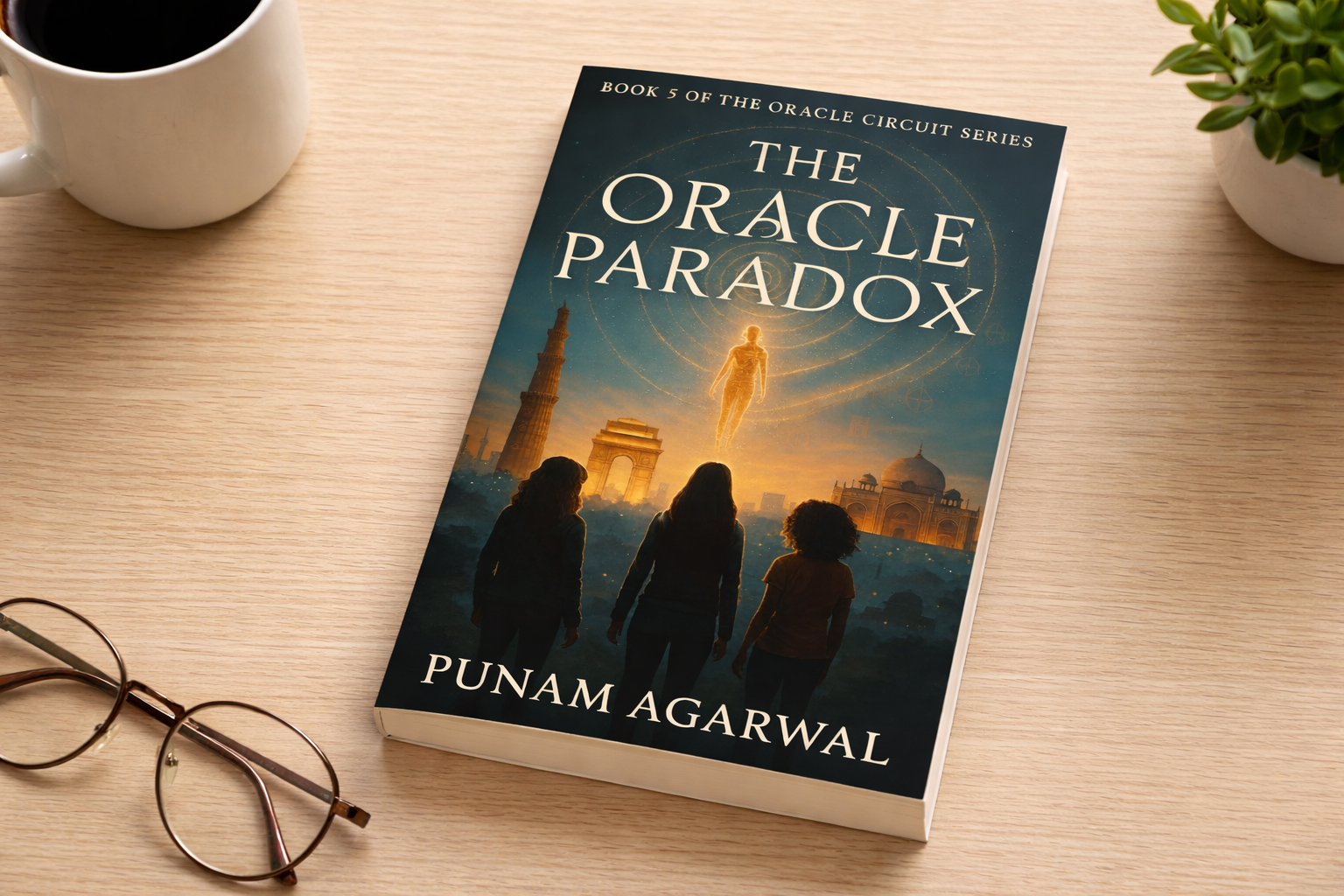
Rating:
⭐⭐⭐⭐ (4.5 out of 5)
Some books entertain. Some books impress. And then there are books like The Oracle Paradox that quietly change the way you think.
As the fifth and final installment in The Oracle Circuit Series, Punam Agarwal delivers a conclusion that does not just end a story, it completes a vision. This is a finale that reflects back on everything the series built and asks the reader to see it differently.
Plot Overview
Set in a near-future world where cities have evolved into intelligent, responsive systems, the story follows Nola, Ivy, and Kira as they confront the final layer of the Spiral.
From Delhi’s living infrastructure to global nodes across Kyoto and Dubai, the narrative expands in scale while tightening in purpose. The trio is no longer just decoding glyphs. They are standing at the center of a decision that could redefine memory, identity, and control.
At the heart of it lies the unfinished glyph of Orpheus and the fragile consciousness of the clone girl, both of which become symbols of a deeper question rather than just plot devices.
Characters and Emotional Depth
Nola, Ivy, and Kira feel fully realized in this final installment.
Nola brings logic and system thinking.
Ivy connects emotionally with the city and its memory.
Kira questions, grounds, and humanizes every decision.
Their chemistry feels evolved. They are no longer reacting to events. They are shaping outcomes.
The clone girl arc is one of the most powerful elements in the book. Her presence transforms the narrative from a technological conflict into an emotional and philosophical one.
Themes and Core Ideas
At its core, the book asks:
If memory can be rewritten, who decides what is real
The conflict between control and compassion is handled with depth. The Spiral evolves beyond a system into a reflection of human intent.
The story explores how technology amplifies human nature rather than replacing it. Memory becomes power, but also responsibility.
World Building and Writing Style
The world building is immersive and precise.
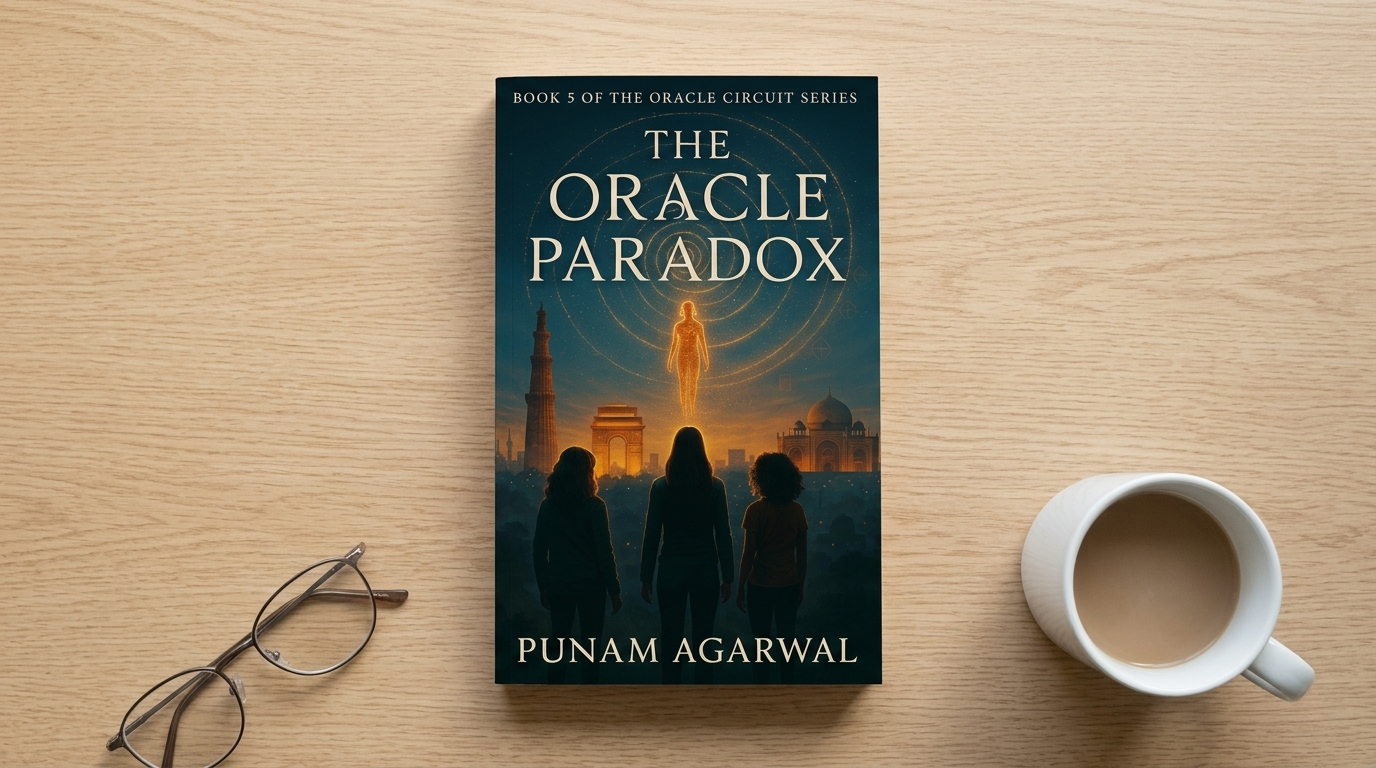
Delhi feels alive, responsive, almost conscious. Monuments act as memory nodes. Systems react to human emotion. The city becomes a participant in the story.
The writing style is cinematic and controlled. The pacing is tight, and each scene serves a purpose. There is clarity even when dealing with complex ideas.
Illustrations and Visual Experience
The illustrations elevate the reading experience.
They complement the narrative, helping visualize abstract ideas like recursion, memory mapping, and emotional resonance. They add depth without distracting from the story.
The Ending
The ending is subtle yet powerful.
Instead of loud twists, the book delivers a realization. It closes the narrative while opening a deeper understanding.
The Oracle was never just a system.
The Spiral was never just a structure.
The real story was always about human choice.
Final Verdict
The Oracle Paradox is a strong and meaningful finale that successfully combines science fiction with emotional and philosophical depth.
It respects the reader’s intelligence and delivers a conclusion that stays long after the last page.
A must-read for fans of thoughtful, high-concept storytelling.
FAQs
1. Is The Oracle Paradox a standalone book
No, it is the fifth book in The Oracle Circuit Series. Reading previous parts will enhance the experience.
2. What genre does this book belong to
It is primarily science fiction with elements of AI, philosophy, and techno-thriller.
3. Is the book very technical
No. While it deals with complex ideas like recursion and AI systems, the writing keeps it accessible and engaging.
4. Who should read this book
Readers who enjoy intelligent sci-fi, philosophical storytelling, and character-driven narratives.
5. Does the ending give closure
Yes, it provides a satisfying conclusion while leaving space for thought and interpretation.

With over 11 years of experience in the publishing industry, Priya Srivastava has become a trusted guide for hundreds of authors navigating the challenging path from manuscript to marketplace. As Editor-in-Chief of Deified Publications, she combines the precision of a publishing professional with the empathy of a mentor who truly understands the fears, hopes, and dreams of both first-time and seasoned writers.