
Rating
⭐⭐⭐⭐ (4.2 out of 5)
I have spent more than fifteen years reading manuscripts, poetry collections, and novels as both a reader and Editor in Chief at Deified Publication. Over the years I have noticed something about poetry. It either speaks directly to the heart within the first few pages, or it keeps you at a distance.
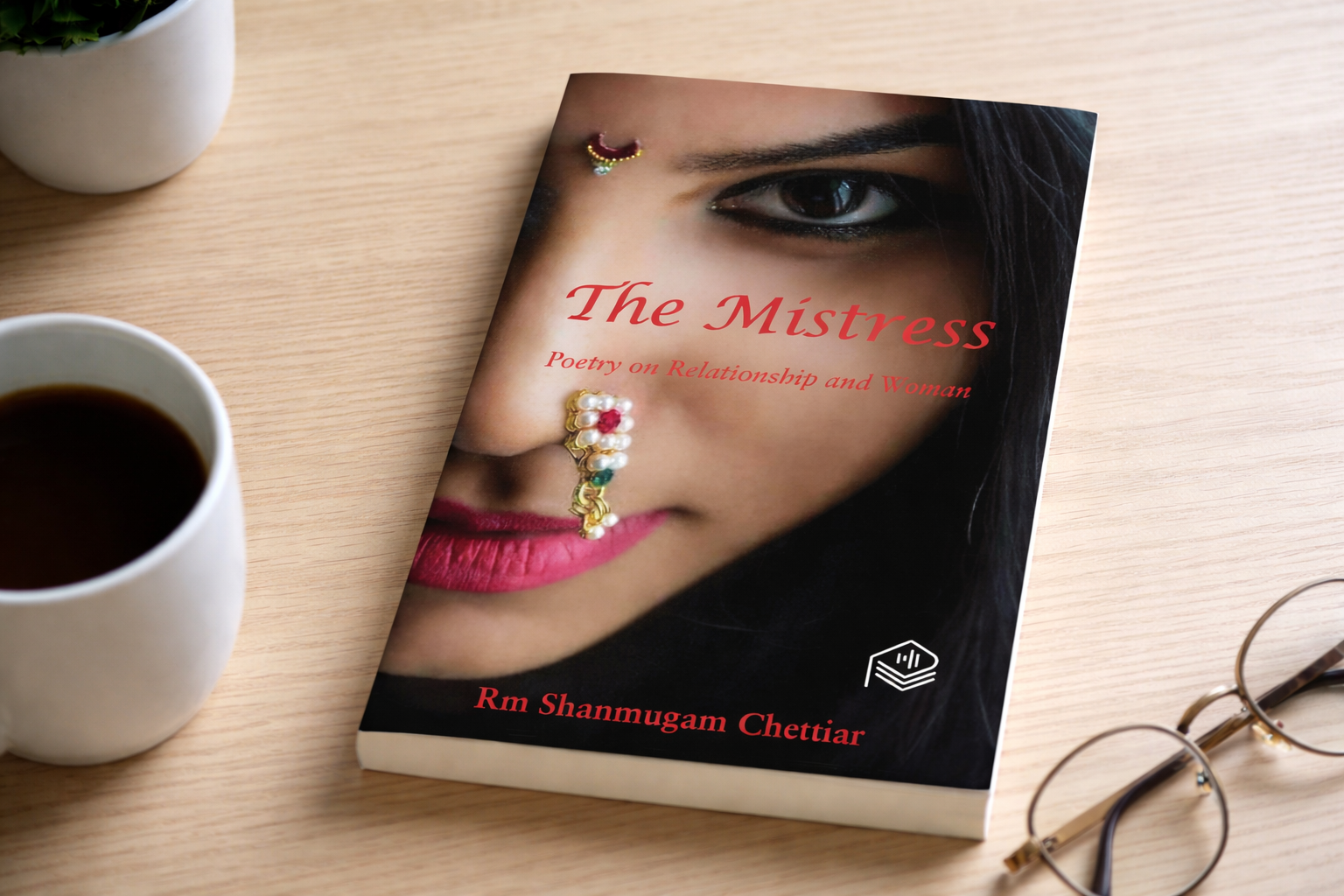
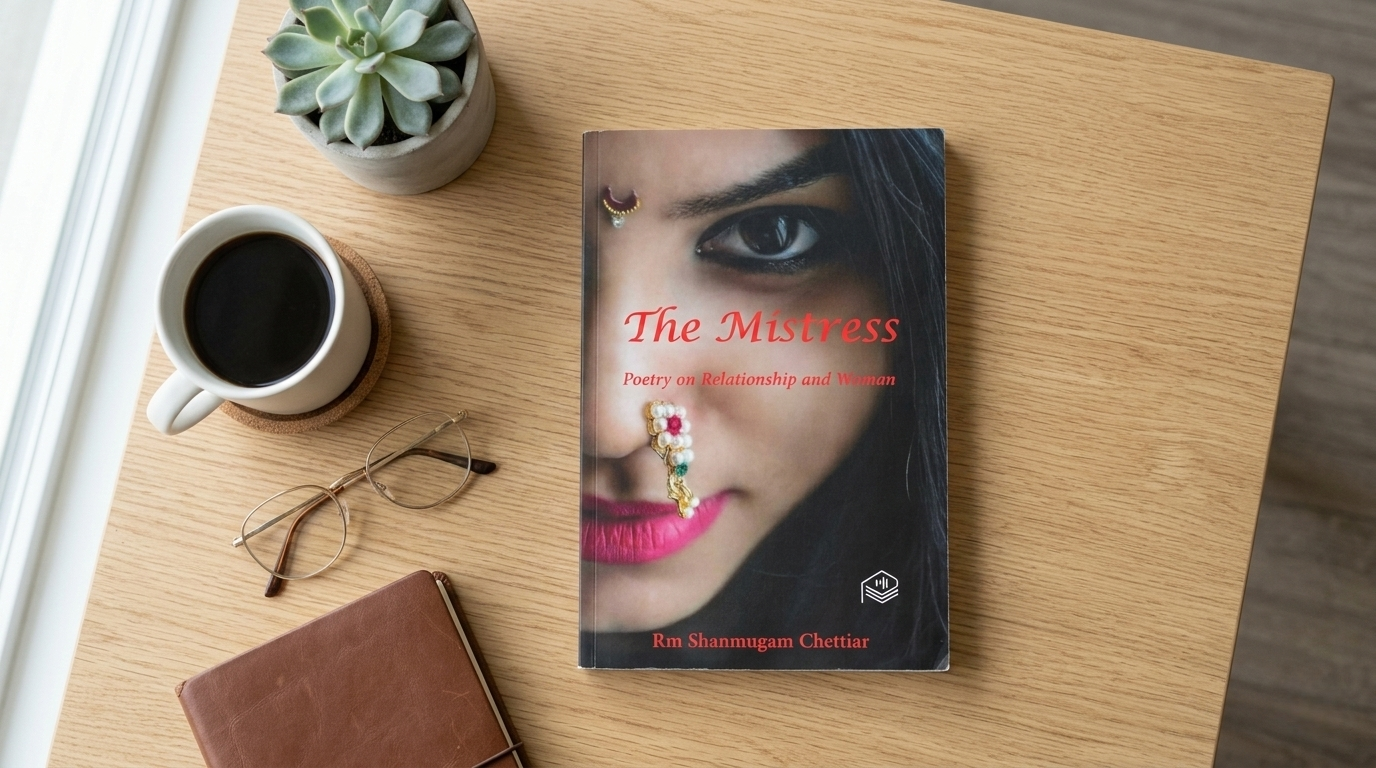
When I first opened The Mistress by Rm. Shanmugam Chettiar, I paused for a moment before reading. The title itself carries a certain tension. It suggests romance, temptation, maybe even discomfort. And then the cover image, that intense eye staring back at the reader, almost challenges you.
So I began reading slowly.
And somewhere around the early poems, especially lines like the ones describing how love begins with attraction, moves through obsession, and finally settles into attachment, I felt that familiar feeling as a reader. The sense that the poet is not just writing about love. He is dissecting it, observing it, sometimes even arguing with it.
Honestly, I found myself stopping after certain poems and just sitting there for a few seconds.
Poetry that makes you pause like that always interests me.
What the Book Is About
The Mistress is not a traditional poetry book built around one storyline. Instead it is a large collection of poems about love, sexuality, relationships, and women. The author Rm. Shanmugam Chettiar has arranged the poems into several thematic sections.
The first and largest section focuses on love itself. Then the book moves into areas such as forbidden love, relationships, and reflections on women. The table of contents alone shows how wide the subject matter is, with hundreds of short poems exploring different aspects of human attraction and intimacy. What makes this interesting is that the poems are often very concise. Some are just a few lines long. Yet they carry strong opinions about how men and women behave with each other.
For example, in one poem the poet compares love to rain. He writes about how each drop falls mysteriously, with its beginning and ending hard to see, just like love itself. In another poem he explains love as a three stage process. Attraction, obsession, and attachment. That framework appears again and again in different ways across the book.
There are also poems that look at modern relationships in a surprisingly analytical way. Topics such as live in relationships, infidelity, desire, marriage expectations, and even the psychology of attraction appear throughout the collection.
This makes the book feel less like a romantic poetry anthology and more like a long meditation on human relationships.
What Stood Out to Me
One thing I noticed very early while reading The Mistress is how direct the poet’s voice is.
Some poets rely heavily on symbolism and abstraction. Rm. Shanmugam Chettiar does the opposite. His poems speak plainly, sometimes almost like observations written in a diary.
For instance, the poem about “Eye Contact” describes eyes as battlefields where love is won through glances that pretend innocence or indifference. That image stayed with me.
It is simple, but also very relatable. Anyone who has ever felt the tension of attraction in a room full of people probably recognizes that moment instantly.
Another poem that caught my attention describes how love can begin quickly but forgetting it can take a lifetime. The contrast between the speed of falling in love and the slowness of letting go feels painfully accurate.
I also appreciated how the poet draws inspiration from literature and philosophy. In the foreword, the comparison with poets such as Shakespeare and Edmund Spenser is mentioned, highlighting how love has always been a central theme across centuries of poetry. Yet the poems themselves remain grounded in everyday human behavior rather than grand romantic gestures.
That balance between philosophy and observation is something I respect as a reader.
The Emotional Core
At its emotional center, The Mistress is really a book about desire.
Not only romantic desire. But curiosity, attraction, insecurity, jealousy, and the complicated dynamics between men and women.
Some poems are romantic and gentle. Others are provocative. A few might even make readers uncomfortable.
And I think that is intentional.
The author does not seem interested in presenting love as purely beautiful or purely tragic. Instead he treats it as a powerful force that shapes human life in unpredictable ways.
There are poems about longing, about one sided love, about marriages losing passion over time, and about how society tries to control sexuality.
Reading these sections I was reminded of how poetry can sometimes function almost like sociology. It becomes a way of observing how people behave.
One poem describes how lovers sleep differently as they age, moving from close embrace to facing opposite directions, and eventually sleeping separately. The shift from physical attraction to companionship felt surprisingly touching.
Another moment that stayed with me was the poem suggesting that love can be an illusion created to escape loneliness.
That line lingered in my mind for quite a while.
Who This Book Is For
Poetry can be very personal. Not every collection works for every reader.
I think The Mistress will resonate most with readers who enjoy reflective poetry about relationships and human psychology.
If someone is looking for gentle romantic poetry alone, they may find parts of this book more confrontational than expected. The poet is not afraid to discuss sexuality directly or question social norms.
Readers who appreciate philosophical reflections on love will likely find many passages interesting.
It may also appeal to readers interested in how traditional cultural ideas about gender and relationships intersect with modern realities.
At the same time, I should mention that the sheer number of poems might feel overwhelming to some readers. The book contains hundreds of pieces, and reading them all in one sitting might feel intense.
Personally, I found it more enjoyable to read a few poems at a time and return later.
Poetry sometimes needs space to breathe.
Final Thoughts
By the time I finished reading The Mistress, I had the feeling that the poet had spent many years observing relationships very closely.
That observation appears throughout the book in small, sometimes surprising insights.
Rm. Shanmugam Chettiar writes about love not only as a romantic experience but also as a psychological and social phenomenon. That approach makes the collection feel unusual compared with many poetry books that focus purely on emotion.
Is every poem equally strong. Probably not. With a collection this large, some pieces naturally resonate more than others.
But that is also part of the experience.
You read a poem, pause, move on to another, and suddenly one line catches your attention in a way you did not expect.
In my years reviewing poetry I have learned something simple. A good poetry collection does not need every poem to be perfect. It only needs enough moments that stay with the reader.
The Mistress has quite a few of those moments.
And sometimes that is enough.
FAQ
Is The Mistress worth reading?
If you enjoy poetry that reflects on love, relationships, and human desire from many angles, this book offers a large collection of thoughtful pieces.
What genre is The Mistress by Rm. Shanmugam Chettiar?
It is a poetry collection focused on themes of love, sexuality, relationships, and reflections on women.
Who should read The Mistress?
Readers interested in philosophical poetry about relationships and human psychology will likely appreciate this collection.
Is The Mistress easy to read?
Most poems are short and straightforward, though the themes sometimes challenge traditional ideas about love and relationships.

With over 11 years of experience in the publishing industry, Priya Srivastava has become a trusted guide for hundreds of authors navigating the challenging path from manuscript to marketplace. As Editor-in-Chief of Deified Publications, she combines the precision of a publishing professional with the empathy of a mentor who truly understands the fears, hopes, and dreams of both first-time and seasoned writers.