
Rating:
⭐⭐⭐⭐ (4.6 out of 5)
I have been reading books for more than fifteen years now. Fiction, non fiction, poetry, debut novels that barely found readers, and books that changed people’s lives quietly. I say this not to sound important, but to be honest about where my reactions come from. After a while, you develop a kind of instinct. You can tell, sometimes just from a cover and a blurb, whether a book is trying to impress or trying to say something real.
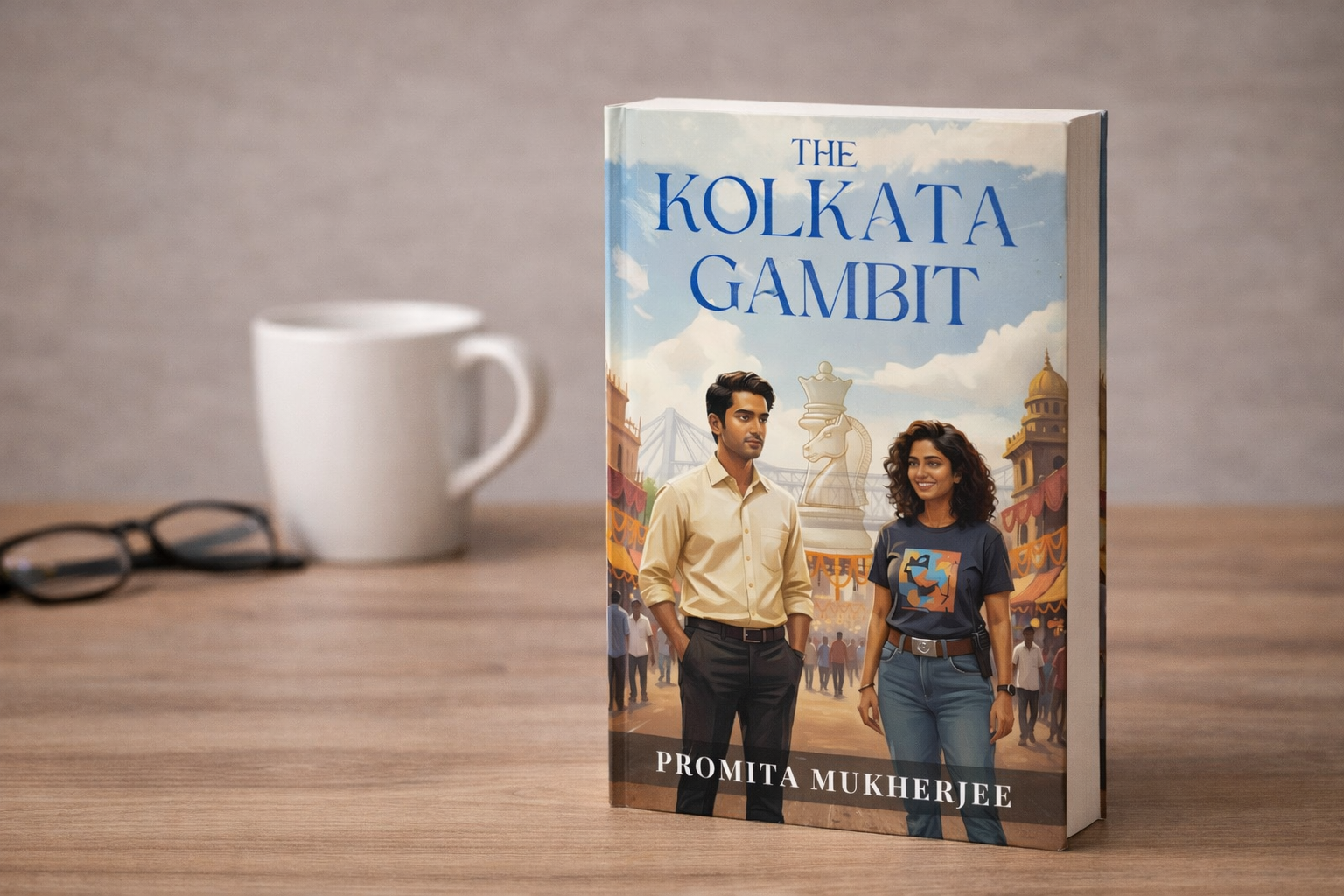
When I first saw The Kolkata Gambit, I paused. Not because it screamed for attention, but because it felt controlled. The cover has movement, color, and warmth, yet there is restraint. Two people walking side by side, a chess piece looming behind them, Kolkata breathing in the background. It made me think of choices. Of strategy. Of how often we pretend love is accidental, when in truth, it is full of decisions we are afraid to admit we make.
I did not expect this book to feel as layered as it does.
What the Book Is About
At its heart, The Kolkata Gambit is a romantic thriller, but calling it that alone would feel incomplete. The story revolves around Deepmalyo Mukherjee, an economist by training and the reluctant heir to a criminal empire. He sees the world through the logic of Game Theory. Payoffs, losses, equilibrium, risk. His life is structured, controlled, and deeply unsatisfying. He is trapped in a political marriage, bound to a ruthless father, and living what the book smartly calls a Nash Equilibrium of comfortable misery. That phrase stayed with me longer than I expected.
Then there is Hirakdyuti Ganguli, Hia, a Kolkata Police detective who does not operate on equations. She trusts instinct, experience, and her own moral compass. During Durga Puja, when the city is loud, emotional, chaotic, and alive, her investigation pulls her straight into the Mukherjee syndicate. And suddenly, the story tilts.
Hia becomes captive in Deep’s world. But instead of a simple captor hostage dynamic, something more unsettling begins to happen. Deep is asked to break her. Instead, he finds himself unraveling. The book frames this as a Prisoner’s Dilemma, and honestly, that metaphor works far better than I thought it would. The stakes are not just about escape or survival. They are about defection. About choosing love, or morality, or freedom, when every system you have known punishes such choices.
From Ballygunge’s polished drawing rooms to the shadowed safehouses of Kolaghat, the novel moves through spaces that feel distinctly Kolkata. Not postcard Kolkata, but lived in Kolkata. The city is not decoration here. It feels like an active board where every move is watched.
What Stood Out to Me
The first thing that stood out was the confidence of the premise. Using Game Theory as a metaphor for love can easily become gimmicky. I have seen books try something similar and collapse under their own cleverness. But here, it feels grounded. Deep does not quote theory to sound smart. He lives inside it. He hides inside it. Logic becomes his armor.
Hia, on the other hand, is written as someone who disrupts systems simply by existing. She does not fit into Deep’s models. She is the unpredictable variable. And that contrast works. Their interactions feel tense, layered, sometimes uncomfortable. There is an imbalance of power, and the book does not pretend otherwise. I appreciated that. Too many romantic thrillers rush past that complexity. This one sits with it.
I also noticed the way betrayal is handled. Not as a twist for shock value, but as something inevitable in systems built on control. Family betrayals. Political betrayals. Self betrayal. The book keeps asking, quietly, who taught us to live this way.
And then there are the Harry Potter metaphors the author mentioned. I smiled when I noticed them. Not in an obvious wand and wizard sense, but in the idea of legacy, inheritance, and chosen defiance. Deep reminded me, in moments, of a character born into darkness, expected to carry it forward, yet secretly questioning it. The idea that love can be the most dangerous magic of all felt present without being stated outright.

The Emotional Core
Honestly, I was not expecting the emotional weight to creep up on me the way it did. This is not a book that overwhelms you with sentiment. It does something quieter and more unsettling. It makes you think about the deals you have made with yourself.
There is a sadness running through Deep’s character that feels earned. Not dramatic sadness, but the slow erosion that comes from living a life chosen by others. I have seen this in real life. People who look successful, powerful even, but are emotionally frozen because choosing differently feels too risky.
Hia brings a different kind of ache. Her independence does not protect her from fear or vulnerability. It sharpens it. Some parts hit differently because the book allows her strength and her doubt to exist together.
The love story here is not soft. It is dangerous. It is inconvenient. It asks both characters to lose something. And I think that is why it works. There is a moment, hinted at in the blurb, where the line between captor and hostage blurs. I kept thinking about that for days. Who is really trapped? Who has the real power? The book does not hand you easy answers.
Who This Book Is For
I want to be honest here. This book will not be for everyone.
If you want a fast paced thriller where emotions are secondary to action, this may feel reflective at times. If you want a romance that avoids moral discomfort, this will challenge you. But if you enjoy stories that blend intellect with emotion, that use ideas like Game Theory without turning into lectures, this is worth your time.
Readers who enjoy romantic thrillers with psychological depth will find a lot here. People who love stories set deeply in Indian cities, with cultural moments like Durga Puja woven into the tension, will appreciate the texture. And if you like novels that respect your intelligence, that trust you to sit with ambiguity, this book will likely stay with you.
Final Thoughts
In my years reviewing books, I have learned that debut novels often reveal the truest intentions of a writer. They are less polished sometimes, but more honest. The Kolkata Gambit feels like a writer who knows exactly what story she wants to tell, and is not afraid to let it unfold patiently.
There are moments where the pacing could tighten slightly. A few sections linger longer than they need to. But honestly, that also mirrors the emotional state of the characters, trapped in loops they cannot escape easily. It did not pull me out of the story.
What I admire most is that this book does not try to moralize. It does not tell you what choice is right. It simply lays the board out in front of you and asks you to watch what happens when two people refuse to keep playing by inherited rules.
As Editor in Chief at Deified Publication, I read a lot of manuscripts that try to impress. This one feels more interested in being honest. And that, for me, always matters more.
FAQs
Is The Kolkata Gambit worth reading?
If you enjoy romantic thrillers with emotional and intellectual depth, yes. It rewards attention and patience.
What genre is The Kolkata Gambit?
It sits at the intersection of romantic thriller, psychological drama, and literary fiction.
Who should read this book?
Readers who enjoy morally complex characters, Indian urban settings, and love stories that challenge comfort zones.

With over 11 years of experience in the publishing industry, Priya Srivastava has become a trusted guide for hundreds of authors navigating the challenging path from manuscript to marketplace. As Editor-in-Chief of Deified Publications, she combines the precision of a publishing professional with the empathy of a mentor who truly understands the fears, hopes, and dreams of both first-time and seasoned writers.