
Rating:
⭐⭐⭐⭐½ (4.4 out of 5)
Some books don’t announce themselves loudly. They don’t promise transformation in ten steps or pretend they have answers neatly boxed. They arrive almost apologetically, like someone sitting beside you without speaking, just being there. The Flickering Flame felt like that to me.
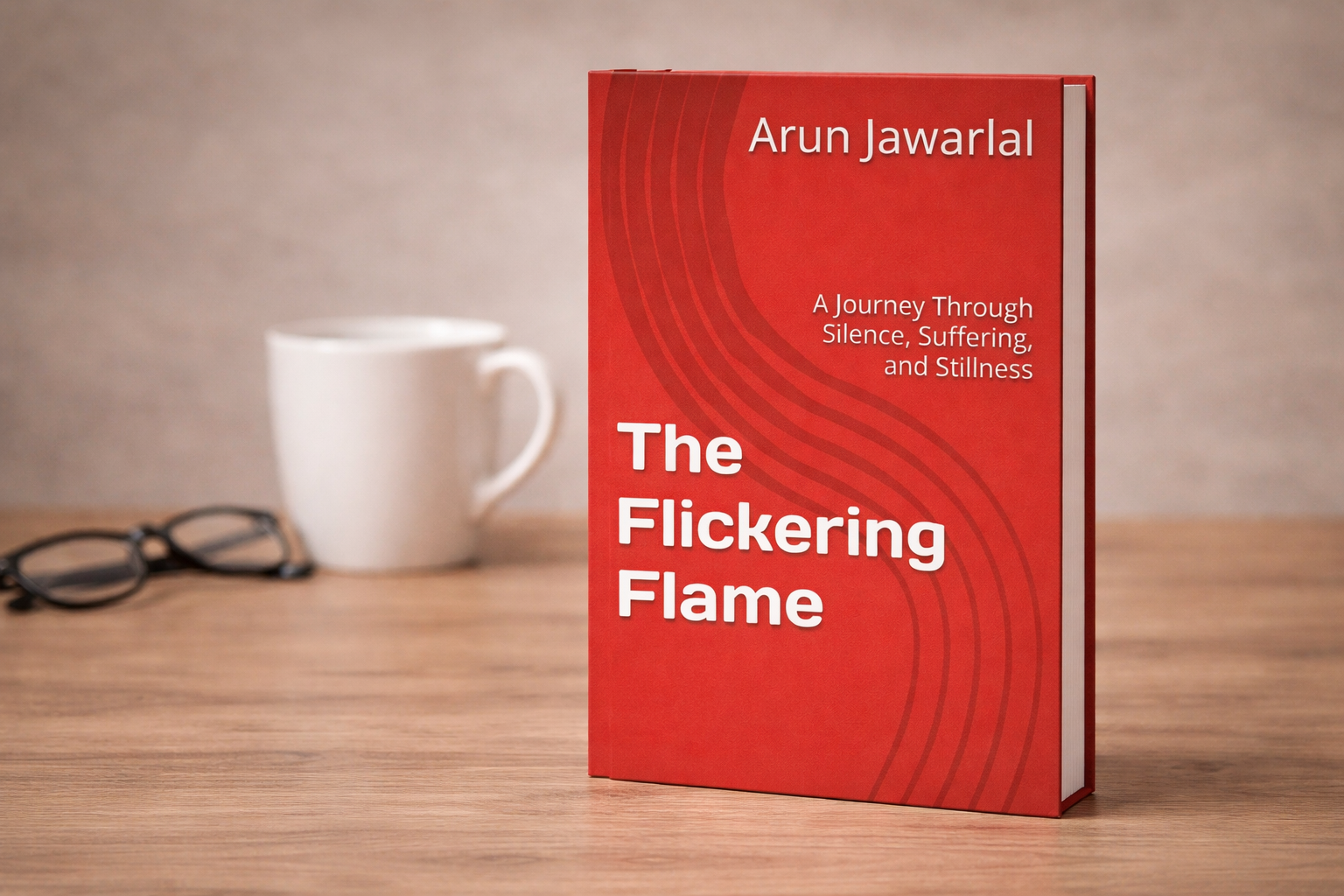
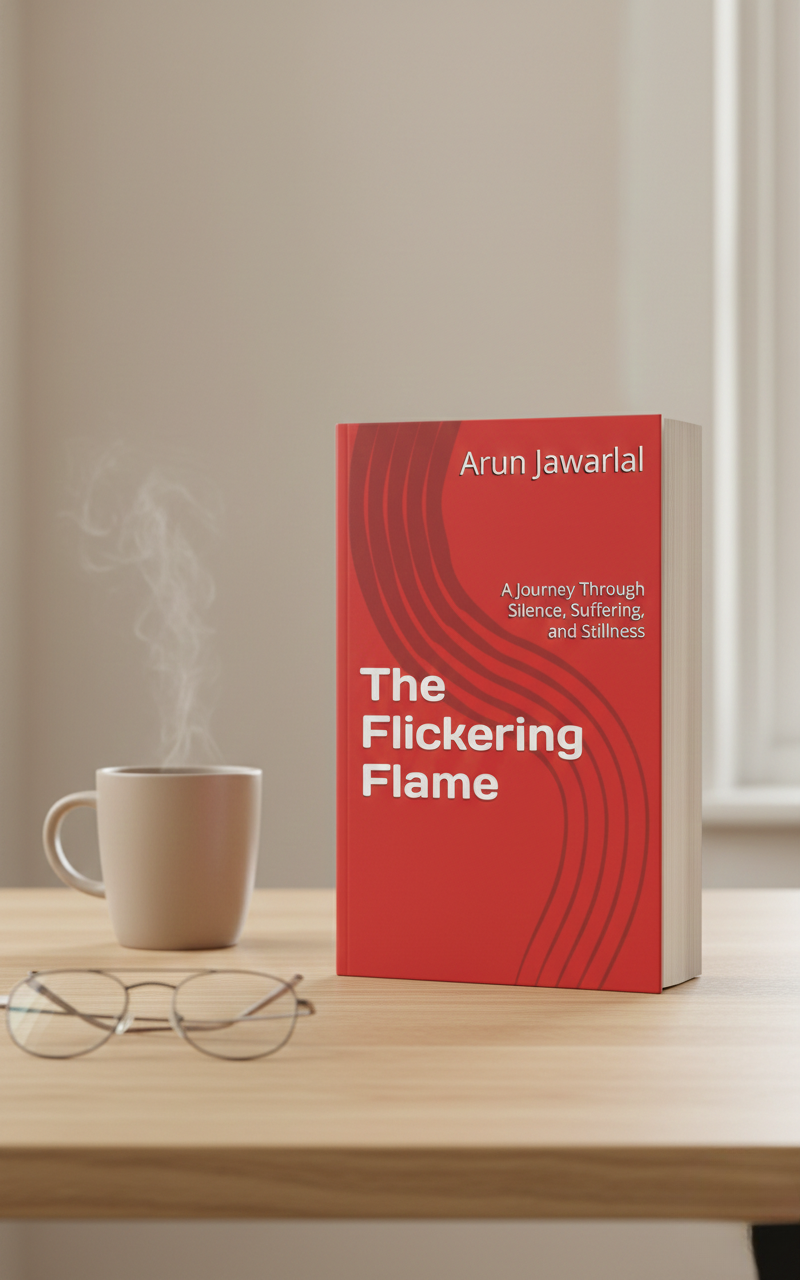
I didn’t open this book expecting comfort. Honestly, the cover itself told me that much. The red is not soothing red. It’s insistent. The curved lines feel like movement trapped inside a boundary. Even before reading a word, I felt this wasn’t going to be a “feel good” read in the usual sense. It felt more like someone saying, sit with me for a bit. Let’s not rush this.
As an editor, and as someone who’s been reading for over fifteen years now, I’ve learned to trust that first bodily reaction to a book. Sometimes it’s wrong. Sometimes it’s exactly right. In this case, it stayed with me through the pages.
What the Book Is About
At its core, The Flickering Flame is a deeply personal meditation on suffering, awareness, and what remains when ambition, identity, and certainty begin to fall apart. Arun Jawarlal doesn’t position himself as a teacher standing above the reader. If anything, he keeps reminding us that this book was written because he was trying to stay afloat.
The structure moves through twelve chapters that mirror an inner unraveling rather than a linear self-help arc. There’s the confrontation with fear during the pandemic. Sleepless nights. Anxiety that doesn’t announce itself dramatically but hums constantly in the background. A sense of having chased the wrong things for too long.
From there, the book opens outward, pulling wisdom from Zen Buddhism, Stoicism, Christian mysticism, Krishnamurti, Camus, Rumi, Vivekananda. But what I appreciated was that these references never felt ornamental. They arrive when the author needs them, not to impress, but to steady himself.
You see this clearly in the early chapters. Meditation doesn’t save him immediately. Running exhausts him before it helps. Suffering doesn’t arrive as a spiritual teacher. It arrives as disruption. And slowly, almost reluctantly, something begins to glow underneath all that resistance.
That glow is what he calls the flame.
Not happiness. Not success. Not peace in the Instagram sense. Something quieter. More stubborn. Something that flickers but doesn’t disappear.
What Stood Out to Me
In my years reviewing reflective nonfiction, I’ve noticed a common pitfall. Many books tell us about suffering after it’s already been resolved. The edges are sanded down. The language becomes tidy. The Flickering Flame resists that urge.
What stood out immediately was the author’s willingness to admit failure without turning it into a lesson too quickly. Meditation “fails spectacularly.” Running becomes escape before it becomes grounding. Even self-inquiry feels exhausting at times.
That honesty matters.
The chapter on the mind during COVID, where insomnia, fear, and isolation begin to merge, reminded me of conversations I had with friends during that period. People who were functioning on the surface but quietly unravelling. I’ve seen this happen in real life so many times, especially in people who are outwardly capable, responsible, admired.
Another thing that stayed with me was the refusal to label suffering as something noble. It’s not romanticized. It’s not glorified. It’s just there. Heavy. Sometimes pointless. And then, occasionally, strangely instructive.
The philosophical references are handled with care. Krishnamurti’s idea of choiceless awareness isn’t explained academically. It’s wrestled with. Camus’ absurdity isn’t quoted to sound clever. It’s used to describe the frustration of trying to force meaning where none seems to stick.
As an editor, I also noticed the pacing. This is not a book you skim. Some sections slow down deliberately. A few passages linger longer than they need to. And I think that’s intentional. This book isn’t in a hurry to get you somewhere else.
The Emotional Core
The emotional heart of The Flickering Flame is not hope in the conventional sense. It’s endurance. Presence. The ability to remain without numbing or escaping.
There’s a recurring sense that life doesn’t become easier, but our relationship with it changes. That’s a subtle distinction, but an important one. The flame doesn’t remove suffering. It changes how suffering is held.
I found myself pausing often. Not because the language was difficult, but because certain lines landed in the body before the mind caught up. Especially in the later chapters, where the author speaks about integrating awareness into work, parenting, loss, relocation. Ordinary life. The parts we usually separate from “spiritual” thinking.
There’s a moment where joy is described not as something earned or chased, but as something that shows up when resistance softens. I wasn’t expecting to feel that resonate as deeply as it did. Honestly, I had to sit with it for a while.
This is the kind of book that doesn’t end when you close it. It follows you into quiet moments. During a commute. While washing dishes. In the middle of a thought you didn’t know you were having.
Who This Book Is For
This book won’t be for everyone, and that’s worth saying clearly.
If you’re looking for fast solutions, motivational energy, or prescriptive routines, this may frustrate you. It asks more questions than it answers. It sits in uncertainty longer than most readers are comfortable with.
But if you’ve reached a point where striving feels exhausting, where achievement hasn’t delivered what it promised, or where suffering has stripped things down to their essentials, this book might feel like company.
I would especially recommend it to readers who appreciate reflective writing, spiritual inquiry without dogma, and philosophical exploration grounded in lived experience. Educators, seekers, people in midlife transitions, or anyone who has felt disoriented by recent years may find something familiar here.
Final Thoughts
As Editor in Chief at Deified Publication, I read a lot of books that talk about inner peace. Very few feel earned. The Flickering Flame does.
It doesn’t pretend to have arrived anywhere final. It doesn’t ask you to believe. It invites you to look. To notice what remains when noise settles.
There were moments I wished certain sections were tighter. A few reflections repeat themselves. But even that repetition felt honest. When we’re stuck, our thoughts do circle.
By the time I finished, I felt less instructed and more accompanied. And honestly, that’s rarer, and more valuable, than advice.

With over 11 years of experience in the publishing industry, Priya Srivastava has become a trusted guide for hundreds of authors navigating the challenging path from manuscript to marketplace. As Editor-in-Chief of Deified Publications, she combines the precision of a publishing professional with the empathy of a mentor who truly understands the fears, hopes, and dreams of both first-time and seasoned writers.