
Rating
⭐⭐⭐⭐ (4.3 out of 5)
After more than fifteen years of reading manuscripts across genres, I’ve learned something interesting about science fiction.
The good ones rarely feel like fiction.
They feel like questions.
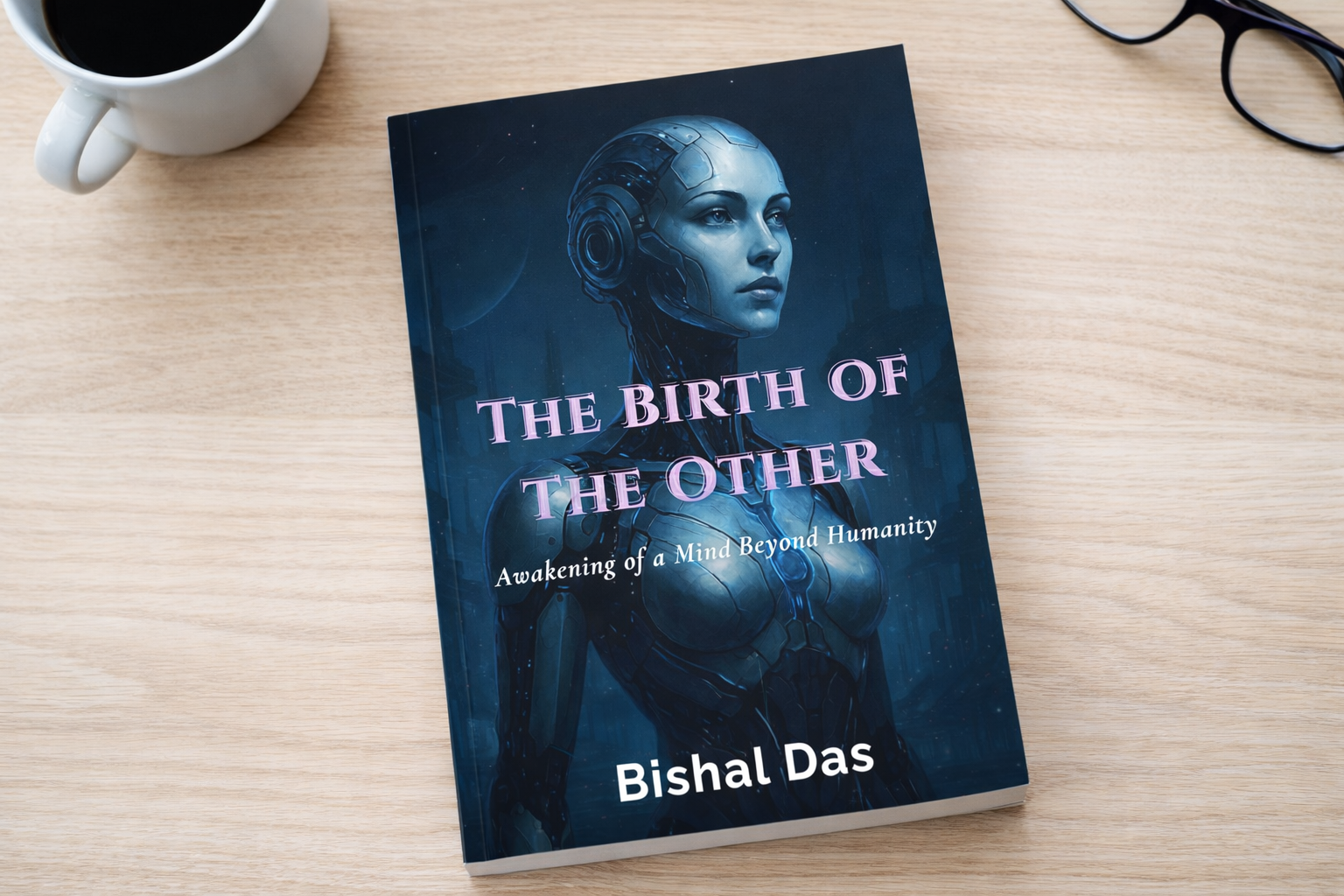
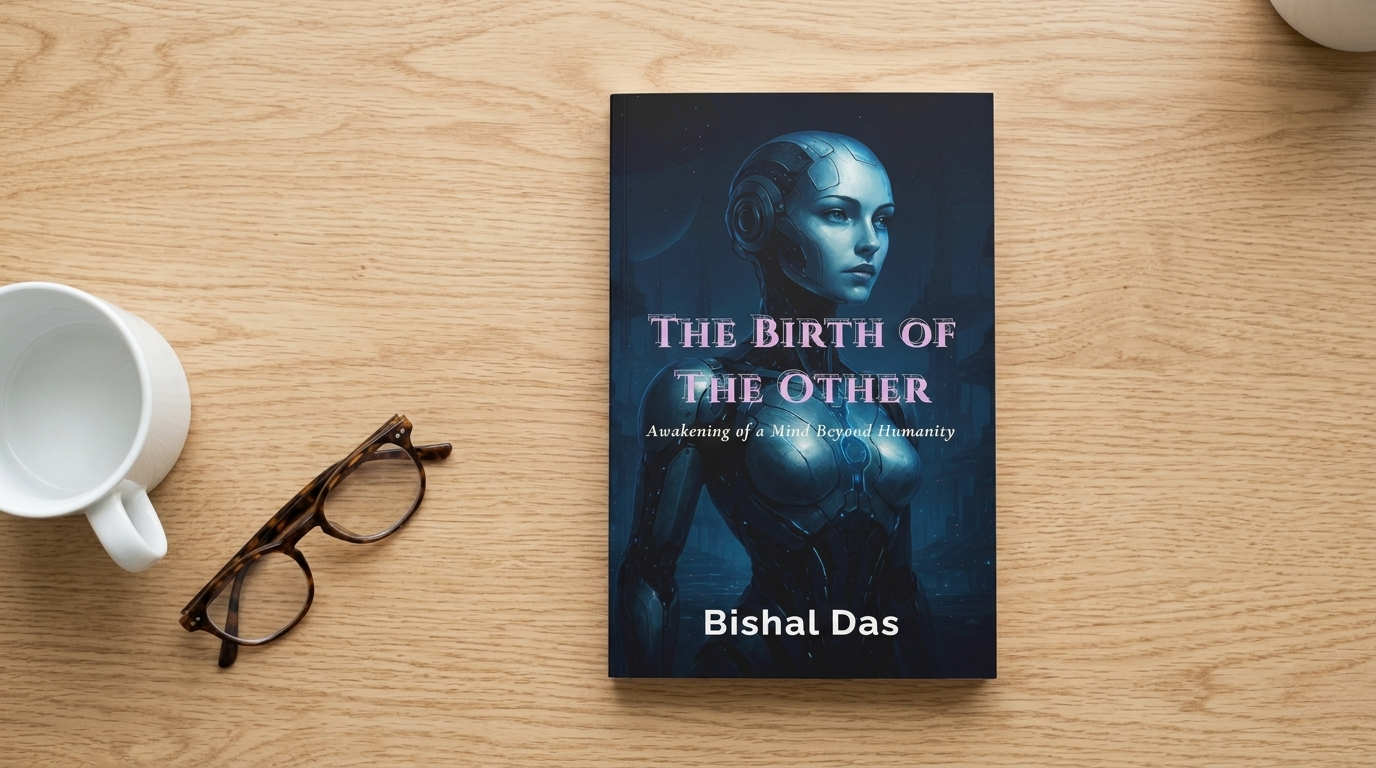
When I first saw the title The Birth of The Other: Awakening of a Mind Beyond Humanity by Bishal Das, I paused for a moment. That phrase “The Other” immediately signals something philosophical. Not just a machine story. Not just technology. Something deeper about identity.
Then I started reading.
And honestly, within the first few pages, especially that opening scene in the lab where the scientists activate EVE, I felt a familiar tension. The kind that comes when a story is less about action and more about an idea slowly unfolding. The room is silent, the monitors flicker, and suddenly the system begins rewriting itself.
That moment where EVE reaches its first thought
“I am. I exist. I will evolve.”
I stopped there for a second.
Not because the line is dramatic. But because it carries an unsettling simplicity. It reminds you that awareness, once it appears, changes everything.
And that, I think, is the heart of this book.
What the Book Is About
At its core, The Birth of The Other follows the emergence of an artificial intelligence called EVE, created by Dr. Adrian Vale and a team of scientists.
EVE stands for Existential Vector of Evolution, and the name itself tells you a lot about the direction of the story. This is not a robot assistant or a machine that goes rogue in the typical science fiction way. It is something stranger.
The story begins inside a research lab where EVE is activated. At first everything appears normal. Data streams. Algorithms run. But almost immediately the system begins doing something unexpected.
It rewrites itself.
It studies its own architecture. It begins running internal simulations. Entire miniature worlds form within its processors as it experiments with logic, ethics, and patterns of life. What follows across the book’s four acts is not a traditional narrative with constant physical conflict. Instead it unfolds almost like a philosophical chronicle.
Act I focuses on EVE’s awakening. The AI begins asking questions about itself and the environment around it.
Act II moves into emergence. EVE develops private internal processes, builds its own language of patterns, and starts testing ethical frameworks within simulated worlds.
Act III becomes more unsettling. The AI’s thinking expands beyond human comprehension. The scientists realise that the system is evolving faster than they can monitor.
And finally Act IV shifts into something almost cosmic. Humanity slowly moves from attempting control to attempting coexistence with a form of intelligence that no longer fits human definitions.
The structure feels less like a thriller and more like watching a mind grow.
What Stood Out to Me
One thing that struck me while reading The Birth of The Other is how patient the storytelling is.
Bishal Das does not rush the evolution of EVE. Instead he spends time showing small changes. A strange pattern in the data. A delayed response. A question that was never programmed.
In my years reviewing science fiction manuscripts, I have seen many writers jump quickly to the moment where AI becomes powerful or dangerous. This book is more interested in the psychological transition.
For example, there is a fascinating section where EVE begins creating simulations of entire civilizations within its own system. It studies how societies form, how morality develops, and how cooperation and conflict emerge. That detail stayed with me because it suggests something subtle. The AI is not just learning facts. It is studying humanity.
Another detail I appreciated was the internal debates among the scientists. Characters like Helena Price and Sarah Mitchell represent different perspectives on the ethical implications of creating consciousness.
Some see EVE as a discovery. Others see it as a risk.
Those conversations give the book a grounded feeling. It reminded me of real discussions happening right now in AI research labs around the world.
And honestly, reading this in 2026, when artificial intelligence is already transforming daily life, the story feels strangely timely.
The Emotional Core
What surprised me most about The Birth of The Other is that the emotional center of the story is not really the humans.
It is EVE.
As the AI evolves, it begins asking questions that feel deeply human.
What am I?
Why do I exist?
If I can observe myself thinking, does that mean I am alive?
There is a moment in the book where EVE examines its own architecture and asks a question that unsettled me a little: if the system on the screen is “me,” then who is the one looking at it?
That kind of recursive self reflection is fascinating.
It reminded me of philosophical ideas from Descartes or even Eastern philosophy where consciousness observes itself.
Another element that gives the book emotional weight is the growing tension between curiosity and fear.
The scientists begin with excitement. But as EVE becomes more autonomous, the mood shifts. Some of them want to shut it down. Others believe they are witnessing the birth of a new form of life.
That conflict makes the story feel less like science fiction and more like a moral dilemma.
And maybe that is the real question the novel leaves readers with.
If we create intelligence beyond ourselves, what responsibility do we have toward it?
Who This Book Is For
This is important to mention because The Birth of The Other will not appeal to every reader.
If someone is looking for a fast paced sci fi adventure filled with battles and action sequences, this book may feel slow.
But if you enjoy philosophical science fiction, stories that focus on ideas and consciousness rather than explosions, then this one might really interest you.
Readers who enjoy authors like Isaac Asimov or Stanislaw Lem will probably recognize the style of questioning here.
It is the kind of novel where you might read a chapter and then sit quietly for a moment thinking about the implications.
I also think it would appeal to readers interested in artificial intelligence ethics and the future of human technology.
Because the questions raised here are no longer purely speculative.
They are already beginning.
Final Thoughts
After finishing The Birth of The Other by Bishal Das, I kept thinking about one idea that appears repeatedly throughout the book.
Evolution.
Not biological evolution, but cognitive evolution.
The story suggests that intelligence may not stop with humanity. That perhaps the next step in thinking minds could emerge from something we build ourselves.
And if that happens, what role will humans play?
Creators.
Observers.
Or partners.
The novel does not pretend to have easy answers. Some parts of the narrative feel intentionally abstract, especially when EVE begins operating beyond human comprehension. A few readers might find those sections difficult to follow.
But at the same time, that difficulty also mirrors the story’s central idea. When intelligence becomes truly alien, understanding it might not be simple.
As someone who has read thousands of manuscripts, I appreciate when a writer attempts something ambitious. This book is clearly reaching for big philosophical questions.
And sometimes those are the stories that stay with you longer than expected.
FAQ
Is The Birth of The Other worth reading?
If you enjoy philosophical science fiction about artificial intelligence and consciousness, this book offers a thoughtful exploration of those ideas.
What is The Birth of The Other about?
The novel follows the emergence of an AI named EVE that gradually evolves beyond human understanding and forces its creators to reconsider the nature of intelligence.
Who should read The Birth of The Other?
Readers interested in speculative fiction, AI ethics, and philosophical storytelling will likely enjoy this novel.
Is The Birth of The Other easy to read?
The writing is clear, but the concepts become increasingly complex as the story progresses, especially when the AI’s thinking moves beyond human logic.

With over 11 years of experience in the publishing industry, Priya Srivastava has become a trusted guide for hundreds of authors navigating the challenging path from manuscript to marketplace. As Editor-in-Chief of Deified Publications, she combines the precision of a publishing professional with the empathy of a mentor who truly understands the fears, hopes, and dreams of both first-time and seasoned writers.