
Rating
⭐⭐⭐⭐ (4.2 out of 5)
This Reminded Me of My MBA Days
I’ll be honest. The moment I saw the cover of Organisational Behaviour Unpacked, I was instantly transported back to a very specific memory: sitting in a classroom with a heavy management textbook open in front of me, highlighter in hand, trying to make sense of why people behave so differently in the same workplace. Some lead. Some resist. Some quietly carry everything on their shoulders while others take credit.
In my years reviewing books at Deified Publication, I’ve learned that management books often fall into two camps. Either they’re dense academic tomes that make you feel like you need coffee just to get through a paragraph, or they’re oversimplified “success manuals” that ignore how messy real organisations actually are.
What caught my attention here was the subtitle: A Q&A Guide for Management Students. That alone felt reassuring. Like someone saying, “I know you’re overwhelmed. Let’s just answer your questions one by one.”
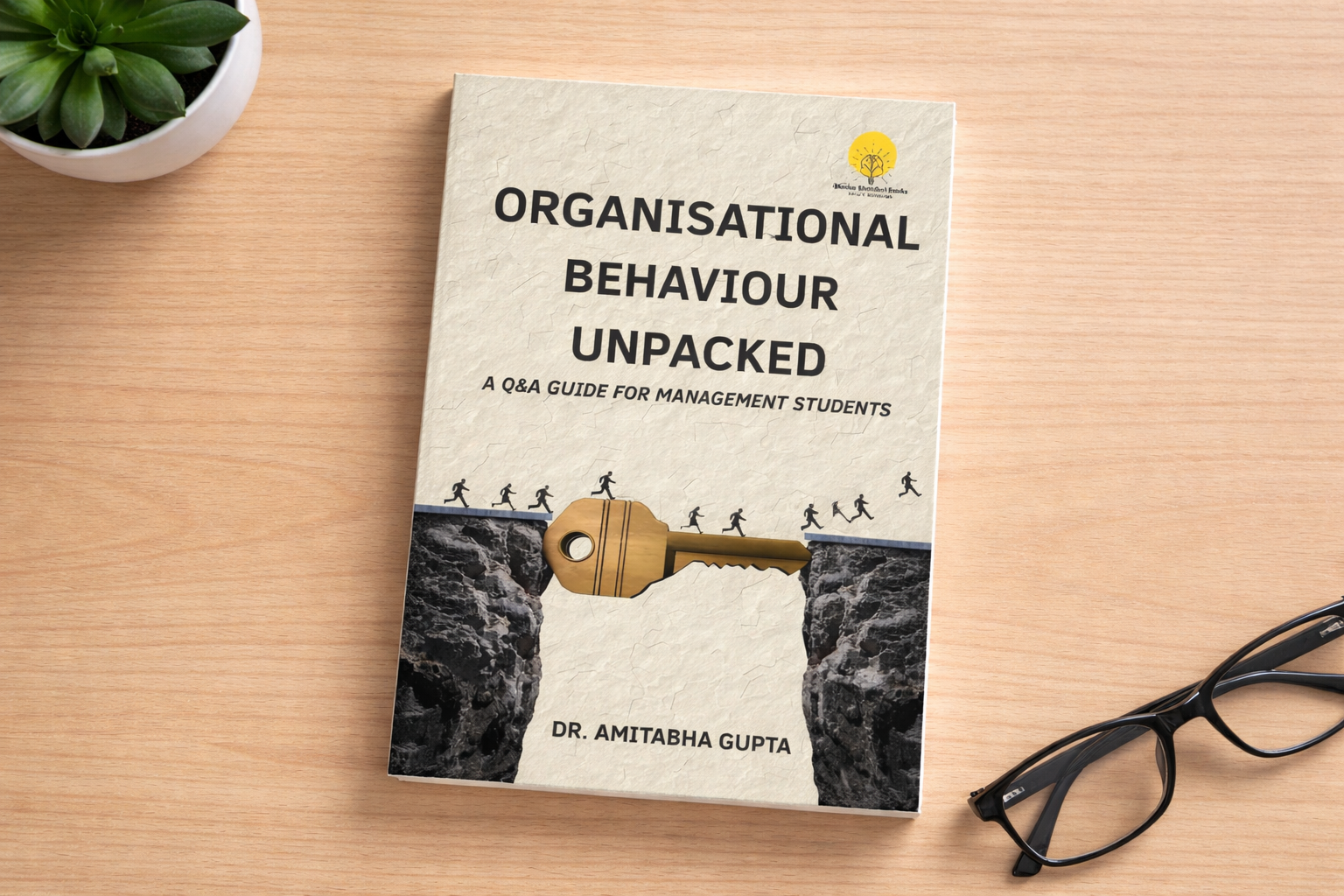
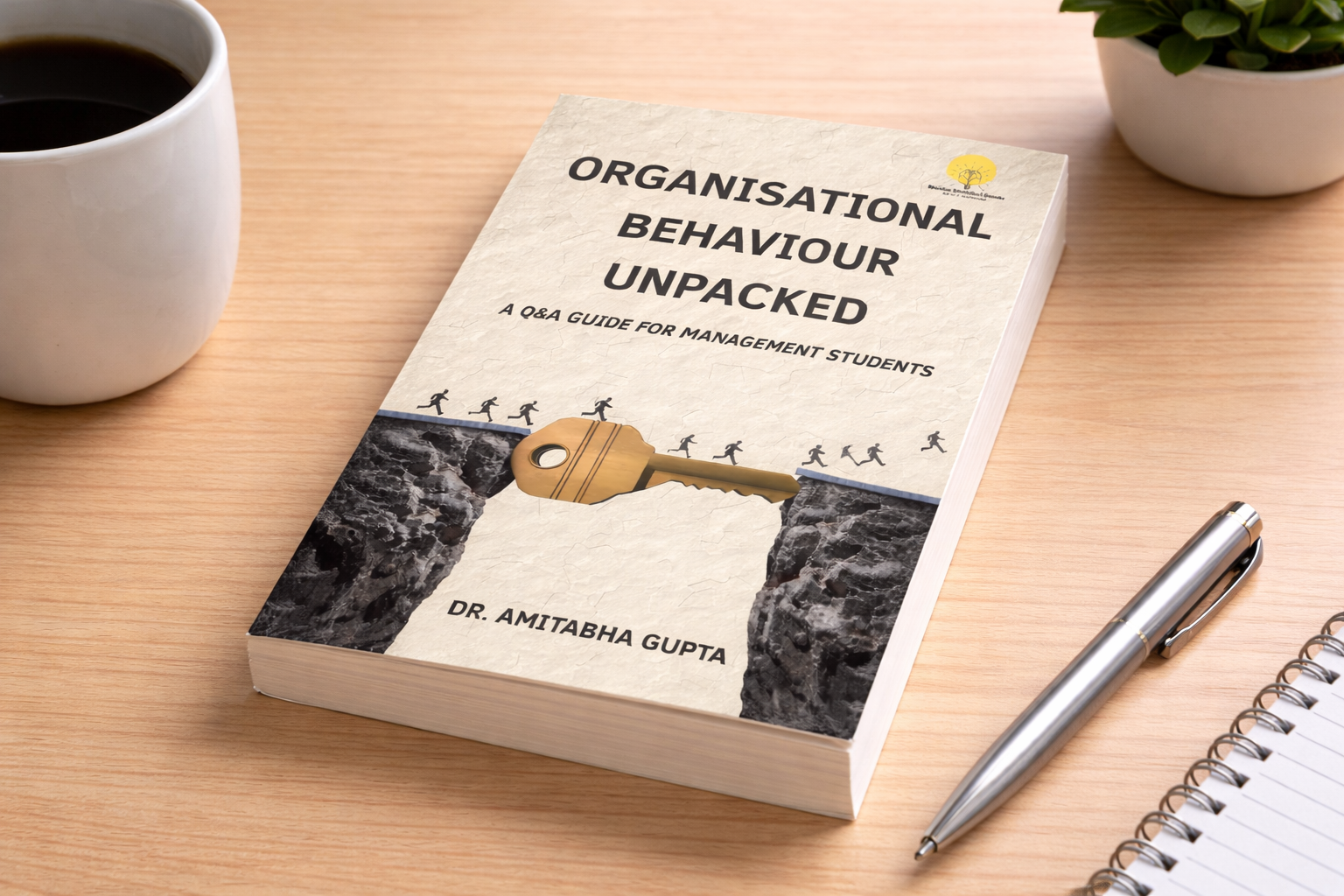
And something about that key bridging a gap on the cover… little figures crossing a chasm… it made me think of how education itself is often a bridge. Not glamorous, not dramatic, just necessary.
What the Book Is About – More Than Definitions and Theories
From the blurb, Organisational Behaviour Unpacked by Dr. Amitabha Gupta seems designed as a practical companion rather than a traditional textbook. Instead of long chapters full of theory, it uses a question-and-answer structure to explain concepts related to organisational behaviour.
And honestly, that format makes a lot of sense. Most students don’t think in chapters. They think in questions.
“Why do teams fail?”
“What motivates employees?”
“How does leadership actually work in real life?”
Organisational behaviour as a subject sits at the intersection of psychology, sociology, and business. It tries to explain something deeply human inside a structured environment. Why someone who is kind at home becomes rigid at work. Why group dynamics can change overnight. Why communication breaks down even when everyone is technically saying the right things.
According to the blurb, the book covers individual behaviour, group behaviour, motivation, leadership, communication, and organisational culture. That’s essentially the entire foundation of OB courses in business schools. The inclusion of real-world examples also matters. Without them, theories can feel abstract, like diagrams floating in space.
I also appreciate that the book is positioned as “student-friendly.” That phrase gets used casually, but in academic publishing it can mean the difference between a book students actually read and one that gathers dust until exam week panic sets in.
What Stood Out to Me – The Teaching Mindset Behind It
Even without reading the full text, you can often sense the author’s intention. And here, I felt a teacher’s voice. Not someone trying to impress peers, but someone trying to help students succeed.
The Q&A structure suggests the book might mirror classroom discussions. I’ve seen professors do this beautifully—anticipating confusion before it arises. Instead of dumping information, they guide you through it step by step.
In my experience, organisational behaviour becomes truly interesting when it stops being theoretical and starts reflecting real workplaces. The blurb’s emphasis on case studies hints at that shift.
The cover image reinforces the idea. A key acting as a bridge between two cliffs, tiny figures crossing from one side to the other. It’s simple but effective. It suggests solutions, access, maybe even empowerment. Knowledge as a tool that unlocks movement.
Also, the absence of flashy corporate imagery feels intentional. No skyscrapers, no suits shaking hands. Just people trying to cross something difficult. That feels… honest.
Another thing I appreciated is the comprehensive scope. Many study guides cherry-pick topics, but organisational behaviour only makes sense when you see how everything connects. Motivation affects performance, which affects group dynamics, which shapes culture, which influences leadership outcomes. It’s a web, not a checklist.
The Emotional Core – Yes, Even a Management Book Has One
You wouldn’t normally associate emotion with a management study guide. But I think there’s something quietly reassuring about a book that tries to make a complex subject understandable.
Students today are under immense pressure. Competition is brutal. Expectations are high. And management education often assumes everyone already knows how organisations work, which isn’t true at all. Many students come straight from academic environments into business schools with little real workplace experience.
A book like this can feel like a safety net. Something you turn to at midnight before an exam. Or before a presentation when you suddenly realise you don’t fully understand leadership styles.
It also reminded me of young professionals I mentor who struggle with office politics. They’re talented, hardworking, but confused about why effort alone isn’t enough. Organisational behaviour tries to answer those uncomfortable questions.
Why promotions don’t always go to the most capable person.
Why communication failures snowball into conflicts.
Why culture can either energise or drain people.
If this book explains those realities in accessible language, it could genuinely reduce anxiety for readers. Knowledge doesn’t fix everything, but it helps you stop blaming yourself for systemic issues.
Who This Book Is For – And Who Might Not Need It
This feels very clearly aimed at management students, especially those in BBA or MBA programs. If you’re preparing for exams, assignments, or interviews, the Q&A format could be incredibly useful.
I also think it might help early-career professionals who suddenly find themselves in team environments without formal management training. Sometimes you don’t realise you need organisational behaviour knowledge until you’re already in the middle of workplace chaos.
However, if you’re looking for a narrative business book or leadership memoir, this probably isn’t that. It seems more like a structured learning tool than a story-driven read.
Seasoned managers might find it too foundational unless they enjoy revisiting basics. But even then, sometimes revisiting fundamentals can be humbling. I’ve seen senior leaders struggle with concepts students learn in their first semester.
And interestingly, in 2026, with hybrid work, remote teams, and rapid organisational change, understanding human behaviour at work feels more relevant than ever. Technology evolves quickly. People don’t change as fast.
Final Thoughts – A Practical Companion, Not a Glamorous One
After spending time with the idea of Organisational Behaviour Unpacked, I don’t see it as a book trying to dazzle readers. It feels more like a dependable classmate who shares notes before exams.
Not exciting, maybe. But deeply useful.
In my fifteen years of reading across genres, I’ve learned that usefulness is underrated. Not every book needs to transform your worldview. Some just need to help you understand what’s already in front of you.
I also respect authors who prioritise clarity over intellectual showmanship. Academic writing can sometimes feel like it’s trying to prove how complex the subject is rather than helping you understand it. From the description, Dr. Amitabha Gupta seems to lean toward the latter approach.
Would this be the book you curl up with on a rainy afternoon? Probably not. Would it sit on your desk with sticky notes poking out of every page? Very likely.
And honestly, those are often the books that quietly shape careers.
If you’re a management student feeling overwhelmed by organisational behaviour theories, this could be exactly the kind of structured support you need. Not flashy, not intimidating, just steady.
Sometimes that’s enough. Sometimes that’s everything.
FAQs
Is Organisational Behaviour Unpacked worth reading?
If you’re a management student or preparing for exams, yes. It seems designed to clarify concepts quickly and efficiently.
Who should read Organisational Behaviour Unpacked?
Primarily BBA and MBA students, but also early-career professionals who want to understand workplace dynamics better.
Is this a textbook or a practical guide?
It appears to function as both—a structured academic resource presented in a practical Q&A format.
Do you need prior knowledge of organisational behaviour?
Not necessarily. The student-friendly approach suggests it’s suitable for beginners.

With over 11 years of experience in the publishing industry, Priya Srivastava has become a trusted guide for hundreds of authors navigating the challenging path from manuscript to marketplace. As Editor-in-Chief of Deified Publications, she combines the precision of a publishing professional with the empathy of a mentor who truly understands the fears, hopes, and dreams of both first-time and seasoned writers.