
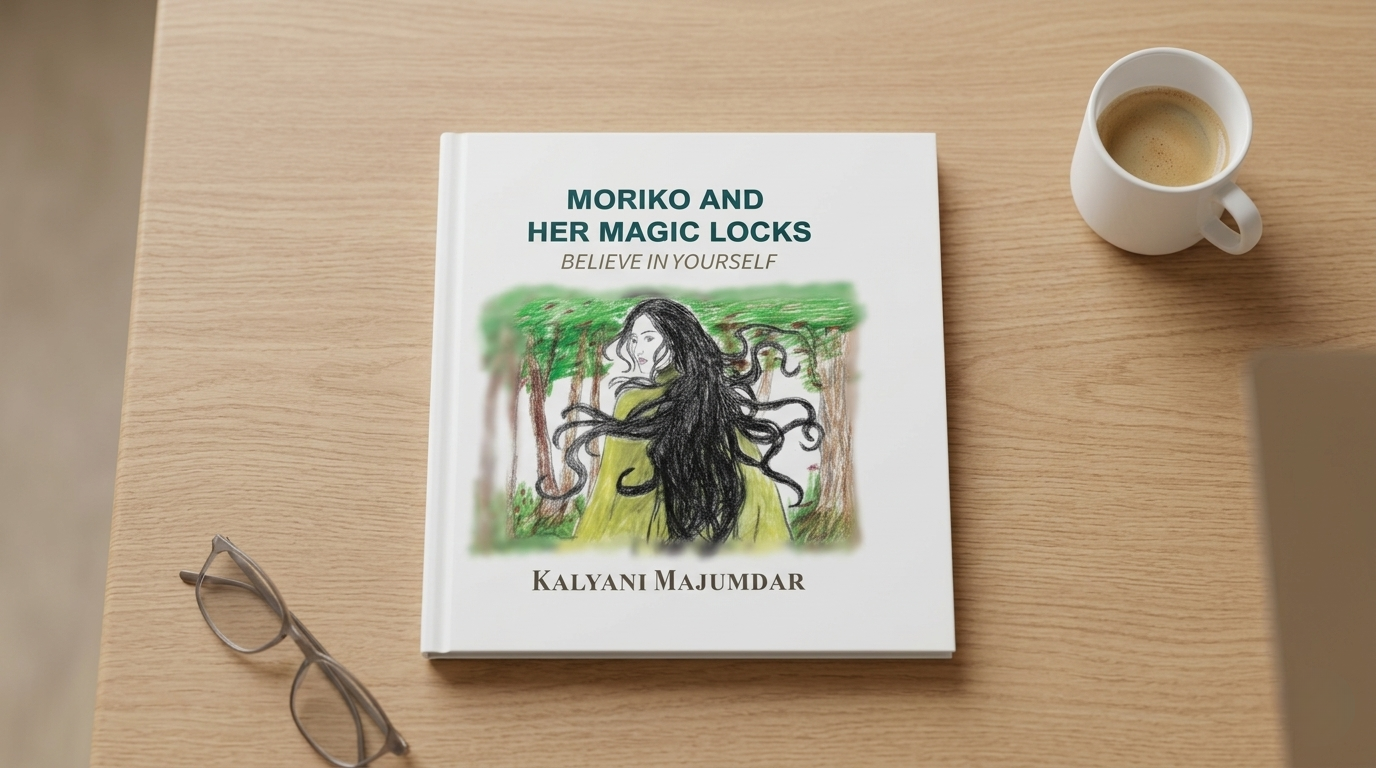
Rating:
⭐⭐⭐⭐ (4.5 out of 5)
A Story That Feels Like a Bedtime Memory
As Priya Srivastava, Editor-in-Chief at Deified Publication, and someone who has spent over fifteen years living inside stories of every kind, I can honestly say Moriko and Her Magic Locks: Believe in Yourself by Kalyani Majumdar gave me a very specific feeling I rarely get now.
It felt like sitting beside an old lamp, holding a storybook that still smells faintly of paper and childhood.
Some books for children entertain. Some teach. And then there are books like this one that seem to reach for something softer and deeper. They speak to fear, courage, grief, patience, and the strange ways strength hides inside what first appears to be vulnerability.
I went through the full book carefully, page by page, and what stayed with me most was not just Moriko’s magical hair or her beautiful voice. It was the emotional wisdom hidden in the gentleness of the storytelling.
There’s this lovely old world fairy tale texture here, but it never feels distant. In 2026, when children are surrounded by fast visuals and noisy storytelling, this book’s slower, reflective rhythm actually feels refreshing. It gives young readers space to feel.
And honestly, I think adults reading aloud will feel it too.
What the Book Is About
At its heart, Moriko and Her Magic Locks is about a young girl blessed with extraordinary gifts.
Moriko’s hair is magical. When someone else cuts it, it turns into gold. Her singing voice is equally enchanting. Trees sway, birds listen, and animals gather around her in peace. From the opening garden scenes with her loving parents, Kalyani Majumdar establishes a deeply nurturing emotional world.
The early chapters, especially “The Garden” and “The Tower,” beautifully set up contrast.
First we see abundance:
a home full of flowers, orchards, birdsong, and parental warmth.
Then suddenly, everything fractures.
Moriko is abducted by brutal men who want to exploit the magic in her hair. She is taken to a lonely tower in the forest, separated from the people who love her. What follows is not simply an escape story. It becomes a gradual story of emotional awakening.
What I appreciated is that the rescue doesn’t arrive in the expected way.
Instead of a heroic prince or magical outside savior, the book introduces the Sparrows and then the deeply memorable Mr Owl, who becomes the moral and emotional anchor of the story.
Mr Owl’s guidance shapes the real heart of the book:
eat, regain your strength, understand your weakness, train your mind, and discover the power already inside you.
That progression is handled with surprising emotional maturity for a children’s story.
By the time Moriko reaches chapters like “The Escape” and “The Reunion,” the story has gently transformed from fairy tale danger into something more meaningful:
a child learning self-reliance, emotional regulation, and courage.
I really liked that.
What Stood Out to Me
The biggest strength of Moriko and Her Magic Locks is how clearly its themes are woven into the plot rather than inserted as lessons.
For example, Mr Owl’s advice about anger stood out to me.
There’s a moment where Moriko feels rage hearing the men destroy the forest, and instead of reacting impulsively, she remembers:
stay calm, breathe, still the mind.
That’s such a useful emotional lesson for young readers, and because it emerges from danger, it lands naturally.
I also loved the symbolic use of her hair.
At first, it is her weakness.
It is literally the reason she is imprisoned.
But through training, patience, and self-understanding, that same hair becomes her tool of freedom.
I’ve read enough children’s allegorical fiction to know when symbolism feels forced. Here it feels beautifully earned.
It mirrors something many children experience in real life:
the thing that makes them feel “different” may eventually become their strength.
The pacing also deserves appreciation.
The chapters are short, distinct, and almost episodic, which makes the book excellent for bedtime reading or classroom sessions. Each chapter offers a complete emotional beat while still pulling the story forward.
And I have to talk about the illustrations, because they genuinely elevate the reading experience.
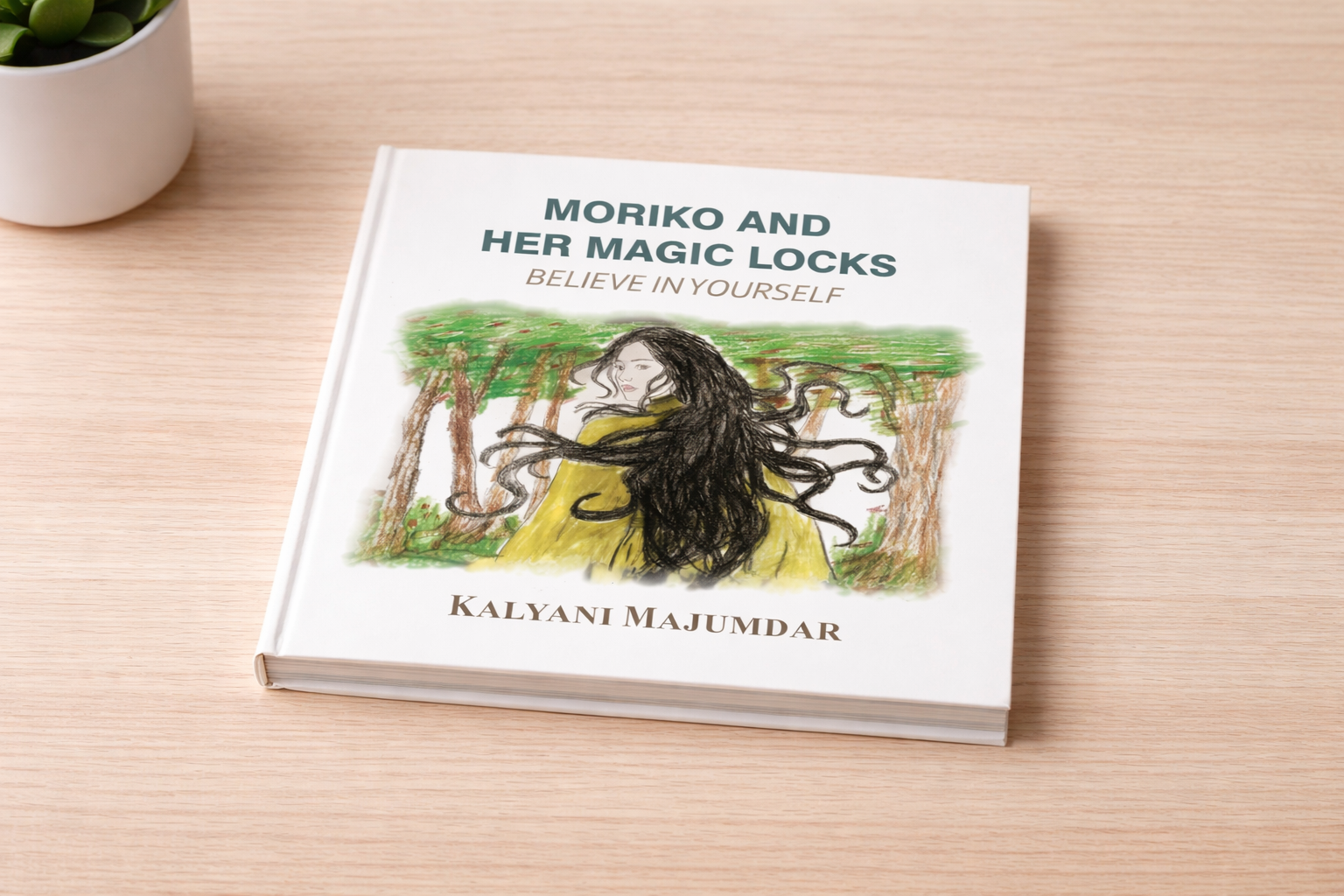
The pencil style artwork, with soft hand drawn textures and selective touches of color, gives the book an intimate, almost heirloom quality. Some illustrations feel like they came from the margins of an old family fairy tale collection.
The image of Moriko in the forest with her flowing black hair, the expressive Sparrows, the wise face of Mr Owl in his round glasses, the reunion embrace with her parents, these stayed with me.
I especially loved how the floral chapter headers and grass borders create continuity across the pages. It makes the book feel handcrafted with affection.
The visual language supports the emotional tone beautifully.
The Emotional Core
What touched me most in this Moriko and Her Magic Locks book review is how honestly the story handles fear and helplessness.
There’s a section where Moriko stops eating, crying on the cold floor of the tower, and the Sparrows tell her something simple but deeply humane:
crying alone won’t solve it, first regain your strength.
That moment reminded me of real life more than fantasy.
Sometimes resilience does not begin with bravery.
Sometimes it begins with food, sleep, breath, and one kind voice.
I found the reunion sequence especially moving.
When Moriko returns home and realizes her parents have aged under the grief of losing her, the story suddenly introduces the emotional reality of absence. Children reading this may understand, maybe for the first time, how deeply they are loved.
Honestly, I teared up a little at the mother opening the door and asking if she was dreaming.
That scene is written with restraint, and because of that, it works.
There’s also a gentle ecological thread running through the book. The forest matters. Birds matter. Trees matter. Mr Owl is not just a helper, he represents wisdom rooted in nature itself.
Given Kalyani Majumdar’s background in heritage, conservation, and storytelling, this connection to the natural world feels authentic rather than decorative.
Who This Book Is For
I think Moriko and Her Magic Locks is especially right for:
- children aged 7 to 12
- parents looking for bedtime stories with emotional value
- schools that want read aloud books with discussion themes
- children who enjoy fairy tales, nature stories, and magical realism
- readers who like stories about inner courage rather than flashy magic battles
It may especially resonate with sensitive children, children dealing with fear, or those learning confidence.
The book also works beautifully as a shared reading experience between parent and child because the emotional themes open up natural conversations:
What makes us strong?
How do we stay calm when angry?
Can something painful become our strength?
That said, if a child wants fast action from the first page, the reflective pace may feel a little slow in places. A few middle sections around Moriko’s training linger longer than necessary.
But personally, I think that slowness suits the emotional purpose.
Final Thoughts
So, is Moriko and Her Magic Locks worth reading?
Yes, absolutely, especially if you value children’s books that leave behind emotional wisdom instead of just plot excitement.
Kalyani Majumdar brings together folklore warmth, nature symbolism, and a deeply caring message about self belief. The hand drawn illustrations add tenderness, and the emotional arc from helplessness to strength feels genuinely earned.
What I admired most is the refusal to make rescue external.
Moriko saves herself because she learns herself.
That’s a message children need, and honestly, many adults do too.
As someone who reads constantly in my role at Deified Publication, I can say this is the kind of children’s story that lingers after the cover closes.
Not because it is loud.
Because it is sincere.
FAQ: Moriko and Her Magic Locks Book Review
Is Moriko and Her Magic Locks worth reading?
Yes, especially for children who enjoy fairy tales, magical gifts, and emotionally rich stories about courage.
Who should read Moriko and Her Magic Locks?
Young readers aged 7 to 12, parents, teachers, and anyone looking for a meaningful illustrated children’s story.
What genre is this book?
It sits between children’s fantasy, fairy tale fiction, and emotional coming of age storytelling.
What stands out most in the book?
The symbolic magical hair, the wisdom of Mr Owl, the nature themes, and the soft, beautiful illustrations.

With over 11 years of experience in the publishing industry, Priya Srivastava has become a trusted guide for hundreds of authors navigating the challenging path from manuscript to marketplace. As Editor-in-Chief of Deified Publications, she combines the precision of a publishing professional with the empathy of a mentor who truly understands the fears, hopes, and dreams of both first-time and seasoned writers.