
Rating:
⭐⭐⭐⭐½ (4.5 out of 5)
The kind of children’s book that feels like warmth before sleep
By Priya Srivastava, Editor-in-Chief at Deified Publication
Some children’s books are beautiful to look at. Some are emotionally nourishing. And then once in a while, you come across one that feels like it can gently become part of a family’s rituals. Krishna Balarama and the Gopas of Vrindavan felt like that to me.
The first thing that stayed with me was the feeling of sweetness. Not sugary sweetness, but the kind that comes from innocence, friendship, cows in flower-filled forests, changing seasons, and the deeply loved image of child Krishna among His friends. As someone who has spent over fifteen years reading everything from literary fiction to spiritual books to children’s picture stories, I’ve learned that books for very young readers succeed not just through plot, but through emotional atmosphere. This one gets that right.
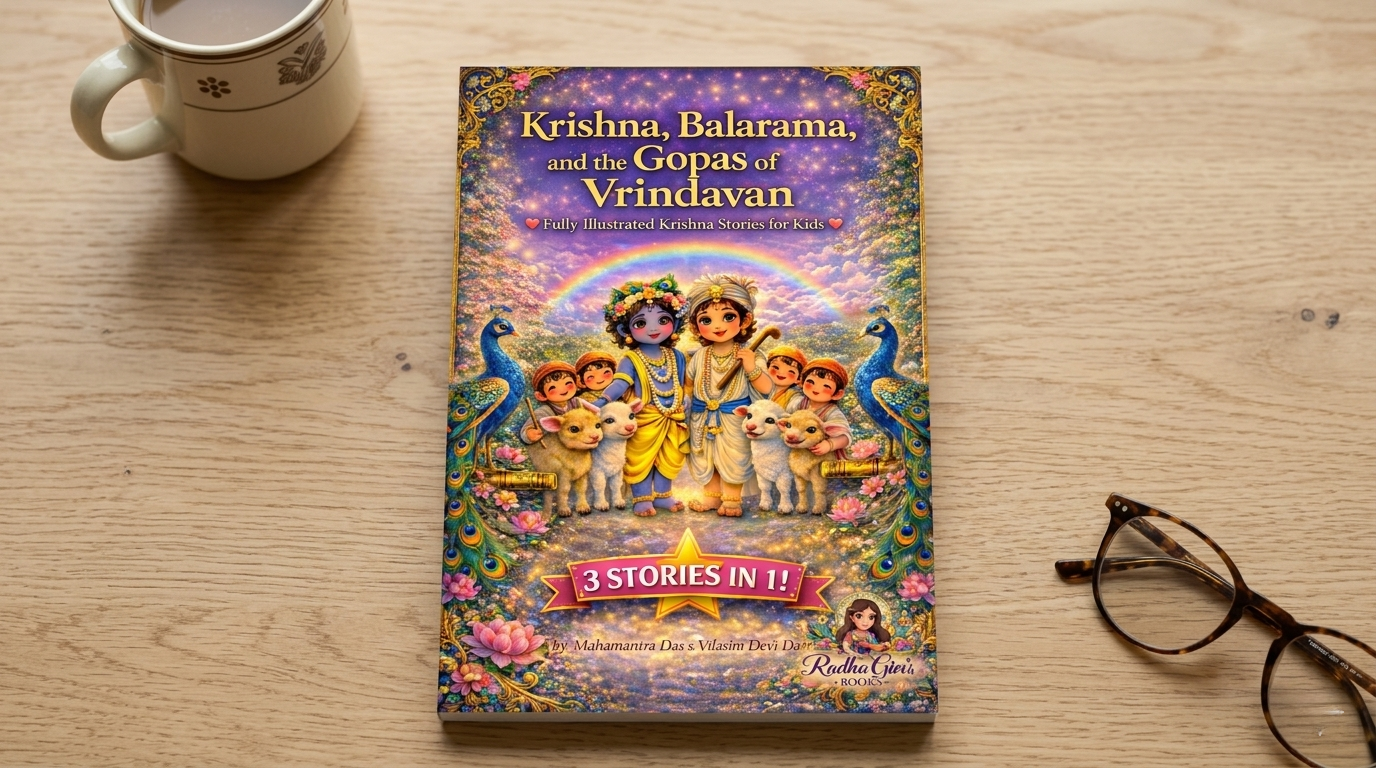
I could instantly imagine this being read at bedtime by a parent sitting beside a sleepy four-year-old, pausing over the illustrations, pointing at Krishna’s peacock feather, the calves, the smiling faces of the gopas, and the glowing forests of Vrindavan. That visual softness matters. At ages 2 to 7, children often remember feeling before they remember story structure. I think this book understands that beautifully.
What also makes it special in 2026 is how rare it is to find spiritual children’s books that feel both devotional and visually enchanting without becoming heavy. This book seems to offer faith through wonder, which is exactly how early storytelling should work.
What the Book Is About
At its heart, Krishna Balarama and the Gopas of Vrindavan is a fully illustrated 3 in 1 Krishna story collection for kids, inspired by the Srimad Bhagavatam and centered on the joy of Krishna’s childhood pastimes.
The collection brings together three beloved stories.
The first, Krishna and the Gopas Through the Seasons, focuses on the rhythms of nature in Vrindavan. Krishna and His cowherd friends move through forests, fields, and seasonal beauty, turning everyday exploration into delight. I loved this inclusion because it introduces children not only to Krishna bhakti but also to nature awareness, friendship, and wonder.
The second story, Brahma Vimohana Lila, introduces one of the most beautiful divine episodes from Krishna lore in a child-friendly way. Brahma hides the calves and cowherd boys, and Krishna responds with a miracle that reveals His divine nature. For adults familiar with the Bhagavatam, this is a profound theological moment. For children, it becomes awe, surprise, and the reassurance that Krishna’s love protects everyone.
The third, Balarama Returns to Vrindavan, brings emotional warmth through reunion. There is joy in return, belonging, and sacred geography. Even very young readers understand the happiness of coming back to a loved place.
So if a parent is searching for a Krishna Balrama and the Gopas of Vrindavan book summary, I would describe it as a devotional picture storybook that combines friendship, miracles, nature, and divine love in an age-appropriate format.
What Stood Out to Me
What stood out most to me was the story architecture for young minds.
Writing for ages 2 to 7 is harder than many people think. The pacing has to feel gentle. The emotional beats need clarity. The stakes cannot overwhelm, yet there still needs to be enough wonder for the child to stay emotionally involved.
This book seems to balance that very well.
The choice of three distinct stories is smart because it creates variety without exhausting the child’s attention span. One story offers seasonal discovery, one offers miracle and divine surprise, and one offers reunion and belonging. That range helps keep repeated bedtime readings fresh, and any parent knows repeated reading is where a children’s book either survives or disappears from the shelf.
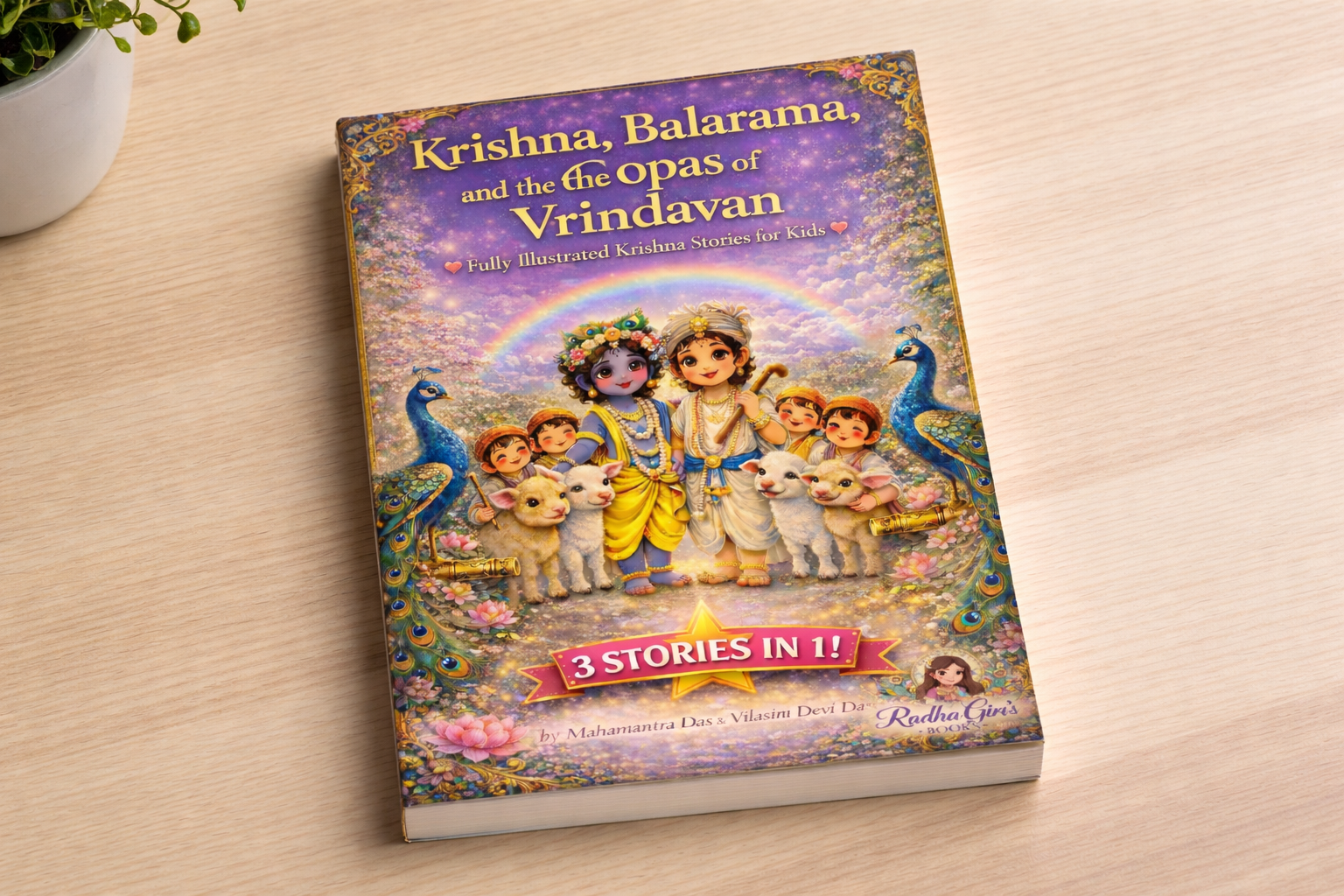
The illustrations, based on the cover and preview material, are another major strength. The glowing rainbow skies, lotus borders, peacocks, lamb-like calves, jeweled ornaments, and expressive childlike faces create a visual world that children will want to revisit. Honestly, I think the art may become as memorable as the stories themselves.
I also appreciated the gentle devotional tone. The book introduces Krishna not as a distant theological concept, but as a lovable child among friends and animals. That emotional accessibility matters deeply in Hindu children’s literature.
If I had one small note, it’s that some parents who prefer more text-heavy mythological retellings may find the storytelling intentionally simple. But for the target age group, I actually think that simplicity is exactly right.
The Emotional Core
The emotional center of Krishna Balarama and the Gopas of Vrindavan is belonging.
Everything in the concept points toward emotional safety: friends staying together, calves being cared for, seasons changing beautifully, Krishna protecting His companions, Balarama returning home, forests responding with joy.
For children, these feelings are foundational. They may not yet intellectually grasp the significance of Brahma’s astonishment in the Brahma Vimohana Lila, but they absolutely understand the feeling that Krishna makes everything okay.
That is what moved me most.
There’s also something deeply comforting for parents here. In a time when children’s content is often overstimulating, hyper-fast, or emotionally shallow, this book seems rooted in slowness, softness, and sacred affection. I can see it becoming part of bedtime not just because it entertains, but because it calms.
I kept imagining grandparents reading this too. Especially in devotional homes, this could become one of those books children associate with love itself, not just story time.
And honestly, those are the books we remember for life.
Who This Book Is For
If you are wondering is Krishna Balarama and the Gopas of Vrindavan worth it, I’d say yes for the right families.
This book is ideal for:
- Parents of children ages 2 to 7
- Families looking for Krishna books for kids
- Devotional Hindu homes
- Bedtime story routines
- Grandparents gifting spiritual picture books
- Early classrooms teaching Indian culture and mythology
- Families wanting gentler alternatives to screen time
I also think this is especially lovely for parents trying to introduce the Bhagavatam in a way children can emotionally connect with first.
This may not be the best fit for older children who want dense mythology chapters, but for preschool and early readers, it seems beautifully pitched.
Final Thoughts
My honest feeling after spending time with Krishna Balarama and the Gopas of Vrindavan is that it understands something essential: children first fall in love with feeling, then with philosophy.
By giving them Krishna as friend, protector, playful child, and source of wonder, this book plants devotion through affection instead of instruction.
As Editor-in-Chief at Deified Publication, I read many books built for young audiences, and the ones that stay are the ones adults don’t mind reading the tenth time. I genuinely think this is one of those books.
The spiritual warmth, the seasonality, the miracle element, and the visual richness all come together in a way that feels memorable and comforting.
It’s the kind of book a child may ask for again tomorrow night.
Quick Reader FAQ
Is Krishna Balarama and the Gopas of Vrindavan good for bedtime?
Yes, it feels especially suited for bedtime and family devotional reading.
Who should read this book?
Parents, grandparents, and teachers looking for Krishna stories for children ages 2 to 7.
What is the book about?
It includes three illustrated Krishna and Balarama stories about seasons, miracles, friendship, and return to Vrindavan.
Is it good for devotional homes?
Absolutely, especially for families introducing Bhagavatam stories early.

With over 11 years of experience in the publishing industry, Priya Srivastava has become a trusted guide for hundreds of authors navigating the challenging path from manuscript to marketplace. As Editor-in-Chief of Deified Publications, she combines the precision of a publishing professional with the empathy of a mentor who truly understands the fears, hopes, and dreams of both first-time and seasoned writers.